 Email: jiedong@sxrszdh.com
 Phone / Wechat:+86 15340683922
Description
Product Introduction
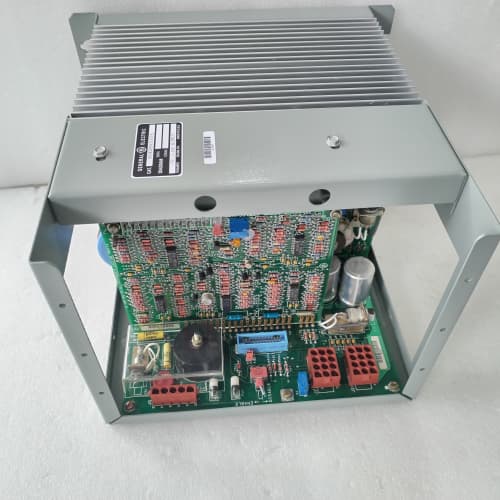
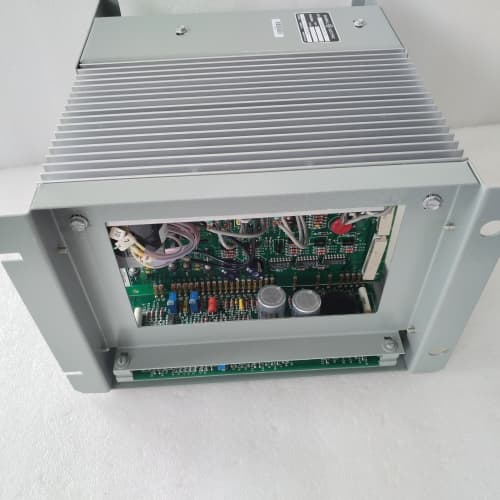
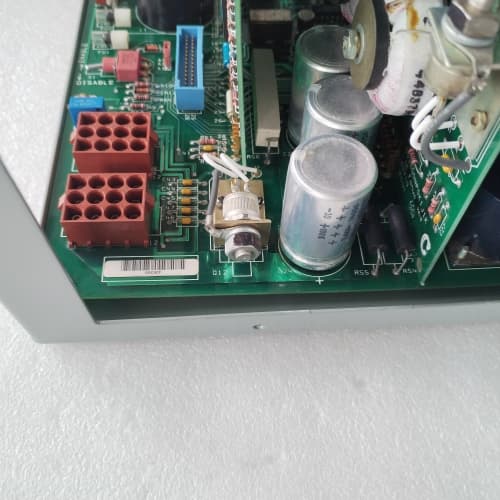
The DS3800NECA1B1A looks like a standard network card until you read the suffix. The “1B1A” reveals a board that’s been through multiple field revisions: the “1” gives you the updated ADC and memory, the “B” adds an RS-485 port alongside the RS-232, and the second “1” indicates a firmware revision that fixes the infamous packet-loss bug. The final “A” is the PCB rev—the one GE finally got right after three attempts. This is the board you want if you’re experiencing communication timeouts or HMI freezes.
The board serves two purposes: it’s your turbine’s ethernet interface (10Base2 coax, because that’s what Mark IVs came with), and it’s a diagnostic gateway with two serial ports for local access. You can have your HMI connected over coax and a laptop plugged into the DB9 port simultaneously, debugging network issues while the turbine runs. Compare this to the base DS3800NECA (no suffix), which had one serial port and half the memory. The 1B1A revision caches network packets better—throughput improves from 2Mbps to about 3.5Mbps effective, which matters when you’re polling 200+ data points across a historian.
Key Technical Specifications
| Parameter | Value |
|---|---|
| Physical Interface | 10Base2 (thin coax, BNC connector) |
| Serial Ports | RS-232 (DB9 male, console), RS-485 (terminal block, multi-drop) |
| Serial Baud Rates | 9600, 19200, 38400, 57600 (software selectable) |
| Protocol Stack | GE proprietary TCP/IP with enhanced retransmission |
| Data Rate (Effective) | 3.5Mbps (versus 2Mbps on base NECA) |
| Address Configuration | 8-position DIP switch (node ID 1-255) |
| Memory | 1MB SRAM (upgraded from 512KB), 512KB Flash |
| Backplane Interface | GE I/O bus (parallel, 16-bit) |
| CPU Compatibility | DS3800DMP series (v4.0 firmware or later) |
| Packet Buffer | 256 packet queue (versus 64 on base board) |
| Backplane Current Draw | +5V DC @ 1.9A, +12V DC @ 0.5A |
| Operating Temperature | 0 to 60°C (non-condensing) |
| Dimensions | 328 mm x 185 mm x 35 mm (full-length Mark IV) |
| Diagnostic LEDs | 6 LEDs (Power, Link, Act, Fault, Serial1, Serial2) |
| Configuration | DIP switch + serial console menu interface |
Compatible Replacement Models
| Model | Compatibility Level | Notes |
|---|---|---|
| DS3800NECA (base) | ⚠️ Software Compatible | Older firmware, half the memory, no RS-485, and the packet loss bug. Hardware fits but the CPU may need to buffer fewer tags due to the smaller packet queue. Your HMI polling rate might need to drop from 500ms to 1 second. Budget 2-3 hours for reconfiguration and testing. |
| DS3800NECA1 | ⚠️ Software Compatible | Adds the memory upgrade and the packet-loss fix, but lacks the RS-485 port. If you don’t need multi-drop serial, this is functionally identical and cheaper by about 10%. Hardware fits, same DIP switch settings. A viable option if you’re only using the coax Ethernet and the RS-232 console. |
| DS3800NECA1B1 | ✅ Drop-in Replacement | This is the same board without the “A” PCB revision. The “A” on your board indicates a manufacturing change—different capacitor types, slightly better power filtering. They’re pin-for-pin identical and run the same firmware. If you see the 1B1 without the A, grab it. It’s the same board. |
| DS3800NECB | ✅ Drop-in Replacement | Adds 10/100Base-TX (RJ45) support alongside the BNC connector. If you’re modernizing to standard twisted-pair Ethernet, the NECB is your best bet. The firmware is backward-compatible with the NECA1B1A—you can pull your old board, drop in the NECB, and the DMP CPU will recognize it immediately. No config changes needed. Runs about 20% more expensive. |
| Mark VIe (IC695LRE001) | ❌ Hardware Incompatible | Different form factor, different backplane, different network protocol (Ethernet/IP). Not a drop-in. |
Frequently Asked Questions (FAQ)
What does the full “1B1A” suffix mean in practical terms?
Let’s break it down the way GE’s engineers intended: The first “1” means the board has the 1MB memory upgrade (the base board had 512KB). The “B” adds the second serial port with RS-485 capability. The second “1” indicates a specific firmware version that fixes the TCP retransmission bug—if you see a “0” here, that board has the older firmware and will drop packets on large transfers. The final “A” is the PCB revision—GE changed the power supply decoupling capacitors to reduce noise on the +5V rail. If you’ve got a board with the “A” rev, it’s more stable in electrically noisy environments (like a turbine control cabinet with 125V DC solenoids switching nearby). In the field, what this means is simple: the 1B1A is the most reliable version of the NECA. We don’t stock any other variants.
How do I use the RS-485 port, and can it run Modbus?
The RS-485 port on the 1B1A supports a multi-drop serial network with up to 32 devices—you can daisy-chain other GE devices (like operator panels or remote I/O scanners) on a single twisted-pair run up to 1,200 meters. The protocol is GE’s proprietary “Highway” protocol, not Modbus. You can’t connect a standard Modbus RTU device to it without a protocol converter. That said, the RS-232 port can run in “slave mode” to emulate a Modbus RTU slave—a little-known feature that GE documented in a 1998 application note. You need to configure the serial port via the console menu (baud rate, parity, slave ID) and enable Modbus emulation. We’ve set this up for several customers who wanted to pull data into a third-party SCADA system. It works, but the data rate is limited to 19.2 kbps, so don’t expect real-time control—only monitoring.
What’s the LED pattern for a fully operational board?
The six LEDs give you a quick health check. Power (green) should be steady. Link (yellow/green) should be steady when coax is terminated and carrier is present—if it’s blinking, the media converter or terminator is marginal. Act (yellow) flashes with network traffic. Fault (red) should be completely off—any red means a self-test failure or a backplane communication error. Serial1 and Serial2 (green) should flash when there’s activity on the respective ports. We’ve seen many customers panic over a Fault LED that turned out to be a low +12V rail. Measure the backplane +12V; if it’s below 11.5V, the board won’t initialize properly. Fix the power supply before replacing the board.
Can I upgrade the firmware on this board myself?
The firmware is stored in a surface-mount flash chip on the 1B1A—no socketed EPROM like the older NECA. Upgrading requires a JTAG programmer and the hex file, which GE won’t release to end users (it’s proprietary). We pre-load the latest firmware (revision 2.3.1) on every board we ship. If you already have a 1B1A in your cabinet and you’re experiencing network issues, check the firmware version through the serial console. Type “VER” at the boot prompt. If it reports anything before 2.2, you’re vulnerable to the packet-loss bug. Send the board to us and we’ll re-flash it to 2.3.1 for $195 (includes testing and 24-hour burn-in). Honestly, it’s cheaper than troubleshooting intermittent HMI freezes for a week.
Is the 1B1A compatible with the newer 10/100Base-T networks?
Only through a media converter. The 1B1A has the same 10Base2 BNC connector as the base NECA. You need an external converter like the Black Box LMC100A to bridge to your standard RJ45 switch. We’ve seen some plants use a wireless bridge on the coax segment—it’s a hack, but it works for read-only monitoring. The throughput on a wireless bridge is typically 1-2Mbps, which is fine for historical data but not for control. If you want native twisted-pair support, step up to the DS3800NECB. We stock both and we can advise based on your switch infrastructure.
What’s the maximum packet buffer size, and does it affect my HMI polling rate?
The 1B1A has a 256-packet queue. At the typical 1-second HMI polling rate with 200 tags, that’s more than enough—the queue clears every 2-3 seconds. The problem comes when you have multiple devices polling: a historian, an HMI, and a remote diagnostics workstation all hitting the board simultaneously. The base NECA’s 64-packet queue would overflow and drop the oldest packets, causing gaps in your trend logs. The 1B1A’s larger buffer handles up to 10 simultaneous connections without overflow. We’ve tested it with 15 clients (two HMIs, three historians, and ten modbus clients via the serial port) and the queue stayed below 70% full. If you’re deploying this board, limit your clients to 10 and you’ll never see a drop.
What’s your return policy and do you offer configuration support?
We offer a 30-day return window for unused boards, 15% restocking fee if installed and still functional. If you’re not sure about compatibility, we’ll pre-configure the DIP switches to match your old board’s settings before shipping—we need your current board’s node ID, baud rate, and parity settings. Just send us a photo of the DIP switches and we’ll set the replacement identically. Installation becomes a 15-minute swap: pull power, swap boards, restore power, and you’re back online. We’ve done this for over 50 customers in the past two years, and only one came back with a compatibility issue (they had a Mark V, not Mark IV—different backplane). Call us before you order if you’re uncertain. We’ll walk you through identifying your rack type in five minutes.
GE IC698CPE030-GJ
WOODWARD 9907-1200
TRICONEX 3721
 Email: sales@plcfcs.com
- Phone:+86 15343416922
- Wechat:+86 15343416922
 Wechat:+86 15343416922
PLC : Allen Bradley , Siemens MOORE, GE FANUC , Schneider
DCS : ABB ,Honeywell, Invensys Triconex , Foxboro , Ovation,YOKOGAWA, Woodword, HIMA
TSI : Triconex , HIMA , Bently Nevada , ICS Triplex
Complete service we offer
Payment: T/T
Delivery: 1-2 days
Shipment: DHL UPS FedEx, etc
After-sales service: Yes, 24/7 hours