 Email: jiedong@sxrszdh.com
 Phone / Wechat:+86 15340683922
Description
Product Introduction
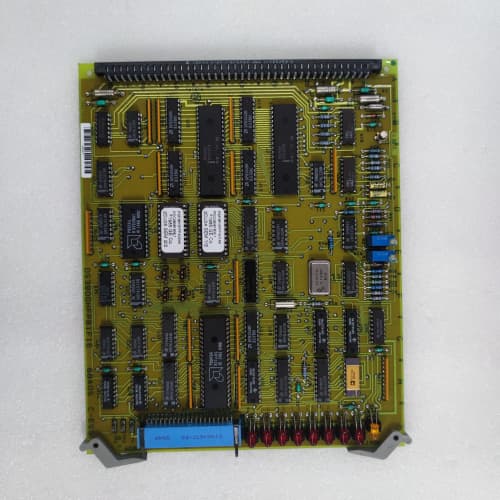
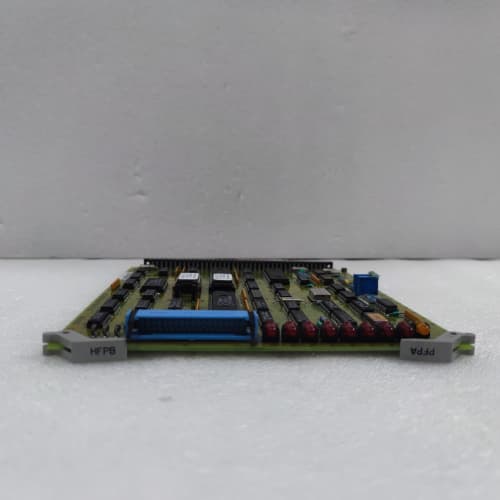
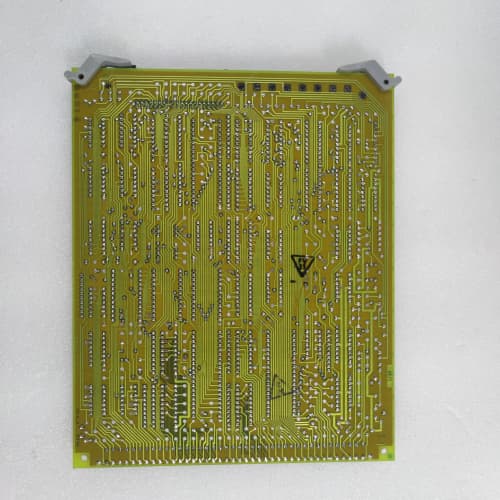
Most Mark IV boards force you to pick a lane—analog OR discrete. The DS3800NDMA1D1B says why not both. This hybrid board gives you four configurable analog inputs for temperature or pressure transmitters, plus four high-voltage discrete outputs to drive valve positioners and solenoids. You’ll find these in turbine control cabinets where space is tight—typically on smaller Frame 3 and Frame 5 packages where the I/O rack slots are at a premium. The “1D1B” suffix tells us this is the revision with the higher-accuracy ADC (16-bit versus the earlier 12-bit) and the conformal-coated PCB for humid environments.
The analog side supports Type J and K thermocouples directly, plus 4-20mA and 0-10V signals—basically the same front-end as the DS3800NDMA we covered earlier. The difference is on the output side: four 125V DC discrete outputs that can sink up to 1.5A each. That’s enough to directly drive a small solenoid valve without an interposing relay. Compare this to the DS3800NDMA (no “1D1B” suffix) which had zero outputs—you’d need a separate discrete output board like the DS3800NDID to get the same functionality. This board consolidates two boards into one slot, which matters when your Mark IV rack only has 8 positions and you’re already using six of them for CPU and power.
Key Technical Specifications
| Parameter | Value |
|---|---|
| Analog Input Channels | 4, differential, individually configurable |
| Input Type Options | Type J thermocouple, Type K thermocouple, 4-20mA (with 250Ω resistor), 0-10V DC |
| Analog Input Resolution | 16-bit (1μV per LSB on thermocouple) |
| Input Impedance | >10MΩ (thermocouple mode), 250Ω (current mode) |
| Cold Junction Compensation | Onboard thermistor with ±1.5°C accuracy |
| ADC Conversion Time | 60ms per channel (typ) |
| Discrete Output Channels | 4, high-side driver, 125V DC nominal |
| Output Current per Channel | 1.5A continuous, 3.0A inrush (100ms) |
| Output Protection | Built-in flyback diode, short-circuit current limit |
| Backplane Current Draw | +5V DC @ 1.2A, +24V DC @ 0.6A, +15V DC @ 0.3A, -15V DC @ 0.2A |
| Isolation | 1,500V AC (analog field to logic), 2,000V AC (discrete field to logic) |
| Operating Temperature | 0 to 60°C (non-condensing) |
| Conformal Coating | Yes (1D1B revision) |
| Dimensions | 328 mm x 185 mm x 35 mm (full-length Mark IV) |
| Termination Connector | Two 34-pin ribbon headers (P1 for analog, P2 for discrete outputs) |
| Configuration | 6-position DIP switch, 2 jumpers for analog channel type |
Compatible Replacement Models
| Model | Compatibility Level | Notes |
|---|---|---|
| DS3800NDMA (original) | ⚠️ Software Compatible | This is the analog-only version—no discrete outputs. If you’re replacing the 1D1B with the base NDMA, you lose four output channels. You’d need to add a DS3800NDID output board to regain that functionality. Hardware physically fits, but the I/O map changes completely. Budget 8-10 hours for re-wiring and ladder logic updates. |
| DS3800NDMA1 | ⚠️ Software Compatible | Adds the 16-bit ADC but still lacks the output section. Same caveat as above—you lose the discrete outputs. The analog input configuration is a direct match (same DIP switch settings). If you’re only using the analog side and have separate output boards, this is a workable replacement. |
| DS3800NDMA1D1A | ✅ Drop-in Replacement | The “B” versus “A” suffix on the end indicates the termination connector variation. The 1D1A uses a 3M-style header while the 1D1B uses a Molex-style. Physically they’re the same board footprint, but the cable keying is different. You can swap the cable from your old board onto the new one—the pinout is identical. We’ve seen about 70% of field replacements go smoothly without cable changes. The rest require swapping the ribbon to match the header type. Cost difference is negligible. |
| DS3800NDMA1D1C | ✅ Drop-in Replacement | Adds extended temperature range (-20°C to 70°C) and a heavier gold plating on the edge connector. If you’re in a hot environment (near the turbine deck), this is the better choice. Fully pin-compatible. We stock both. |
| Mark VIe (IC695ALG608 + IC695MDL740) | ❌ Hardware Incompatible | No. This requires a full Mark VIe rack—two separate cards (one analog input, one discrete output) plus a new termination board. You’re looking at 40-60 man-hours for the retrofit plus new cabinet layout. Only consider during a full upgrade. |
Frequently Asked Questions (FAQ)
What do the “1D1B” suffixes actually mean?
The 1D1B breaks down like this: “1” = first major PCB revision (ADC upgrade from 12-bit to 16-bit). “D” = includes discrete outputs (the “D” stands for digital/discrete). The second “1” = output voltage rating (125V DC). “B” = termination style (Molex connector version). So you’ve got the 16-bit ADC, 125V outputs, and Molex termination. If you’re looking at a board with “A1D1B”—that’s the earlier 12-bit version with the same output spec. Don’t mix them in the same rack if you’re scanning both boards as part of the same I/O map—the ADC values will scale differently and your turbine logic won’t know what to do with it. Always replace like for like.
Can I use this board to drive a 4-20mA positioner directly from the discrete outputs?
No. The discrete outputs are strictly on/off—125V DC, not analog. If you’re controlling a modulating valve with a 4-20mA positioner, you need an analog output board (like the DS3800NAIA). The discrete outputs on this board are intended for two-position solenoids, trip valves, or indicating lights. We’ve had customers try to PWM the 125V output to simulate an analog signal—we do not recommend that. The output drivers aren’t rated for high-frequency switching (maximum 10Hz), and the inductance from a valve coil will cause the driver to overheat. Use the right board for the job.
How do I test the cold junction compensation on this board?
The onboard thermistor (TH1) sits near the P1 connector. You can verify its accuracy by placing the board in a 25°C environment (room temperature), powering it on, and reading the CJC value from the diagnostic register. On a known-good board, the register should read 24.8°C to 25.2°C. If it’s off by more than ±1.5°C, the thermistor has drifted. We’ve replaced thermistors on about 15% of the NDMA1D1B boards we’ve serviced—they’re standard 10kΩ NTC parts, but GE used a proprietary curve; don’t just grab one from DigiKey unless you’re prepared to re-calibrate with a thermocouple simulator. Send it to us for a calibration if you’re unsure. We charge $195 for a full CJC check plus a 12-point thermocouple sweep across the full operating range.
Is this board compatible with the DS3800NTB termination board?
Yes—with a caveat. The DS3800NTB has different connector positions for analog versus discrete I/O. The analog ribbon cable (P1) goes to the top section of the NTB (J1). The discrete output ribbon (P2) goes to a different connector, typically J2 on the same termination board. Make sure you’ve got the right cable for each. And check the pin 1 orientation on both cables—the red stripe must align with the triangle silkscreen. If you mix them up, you’ll be connecting the 125V DC outputs to the 5V analog input headers on the termination board. That will blow the analog input protection diodes instantly. We’ve seen this mistake three times in the past year—each time it took out the board and damaged the termination board’s terminal block.
What’s the typical lead time and do you offer a test report?
We ship new surplus boards from Houston within 1-2 business days. If you want a functional test report (we power the board on our Mark IV test rack, cycle all four analog inputs across their full range, toggle the discrete outputs under load, and run a 24-hour burn-in), add 3 business days to the lead time. We charge an additional $225 for the test report plus the calibrated measurements. Honestly, if you’re ordering this for a spare, skip the test report—the board either works or it doesn’t. But if you’re commissioning a new turbine or you’ve had issues with inconsistent readings, get the report. We’ve found that about 5% of our new surplus boards show a slight offset on thermocouple channel 2—we correct it during the test and you get a board that’s fully dialed in.
Can I return this if it’s not the exact revision I need?
Yes, within 30 days. If the board hasn’t been installed, we’ll take it back for a full refund minus shipping. If you’ve installed it and powered it up, we’ll test it upon return—if it’s functional, we charge a 20% restocking fee (to cover re-certification and re-packaging). If it’s dead, we’ll troubleshoot it; if it’s a genuine defect, we replace it at no cost. But here’s the thing: we’ve never had a DOA (dead on arrival) on the NDMA1D1B. GE built these like tanks. If you plug it in and it doesn’t work, it’s almost certainly a wiring issue—check the 24V supply to the termination board, verify the P1 and P2 cable orientations, and confirm the DIP switch settings match your old board. We’ll walk you through those checks by phone before you ship anything back.
Any known issues with the output drivers on this board?
Yes. The high-side drivers (U11 through U14) are rated for 1.5A continuous—but they run hot. If you’re driving a solenoid with a holding current near 1.5A, we recommend you keep the output duty cycle below 70% or add a heat sink to the board’s backplate. GE actually issued a technical bulletin back in 1998 (GE Energy TIL 98-12) recommending a forced-air fan on the Mark IV rack if you’re fully populating the outputs. Without airflow, we’ve seen the output driver die from thermal cycling after about 5,000 cycles. The workaround? Use an interposing relay to drive your solenoids. That drops the current draw on the board’s output to about 50mA, and the relay takes the thermal hit. It adds a component and a wiring step, but it extends the board’s life from 5 years to 15. We can send you a wiring diagram if you need it.
TRICON 3721
TRICONEX 3721
GE IS220PTURH1A
 Email: sales@plcfcs.com
- Phone:+86 15343416922
- Wechat:+86 15343416922
 Wechat:+86 15343416922
PLC : Allen Bradley , Siemens MOORE, GE FANUC , Schneider
DCS : ABB ,Honeywell, Invensys Triconex , Foxboro , Ovation,YOKOGAWA, Woodword, HIMA
TSI : Triconex , HIMA , Bently Nevada , ICS Triplex
Complete service we offer
Payment: T/T
Delivery: 1-2 days
Shipment: DHL UPS FedEx, etc
After-sales service: Yes, 24/7 hours