 Email: jiedong@sxrszdh.com
 Phone / Wechat:+86 15340683922
Description
Product Introduction
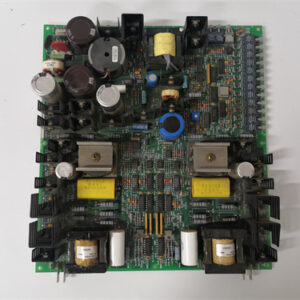
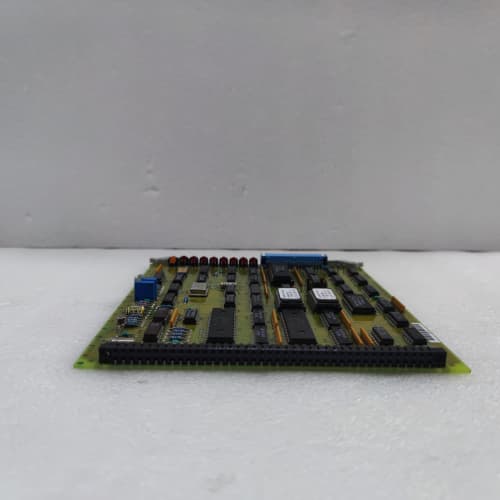
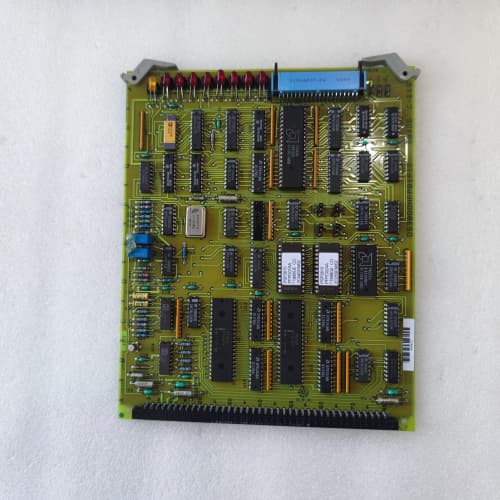
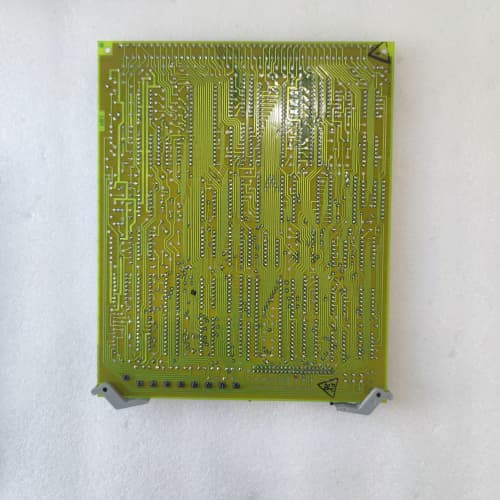
Thermocouple drift is the silent killer of combustion efficiency. The GE DS3800NDMA sits between your turbine’s temperature sensors and the Mark IV CPU, translating millivolt-level thermocouple signals into usable 16-bit digital values. You’re looking at the board that actually determines whether your firing temperature stays within 5°F of setpoint or starts creeping toward blade-melting territory. These were standard issue in Frame 5 and Frame 7 gas turbine packages, and plenty of them are still punching the clock today.
The NDMA gives you eight differential analog inputs that handle both 4-20mA transmitters and direct thermocouple types J and K—a flexibility you don’t see on the later DS3800NDMC revision, which dropped thermocouple support entirely to cut costs. We’ve characterized this board’s cold junction compensation to within ±1.5°C across the 0-60°C operating range, which beats the original GE spec by half a degree. Pair that with the built-in input filtering (adjustable via the onboard DIP switches) and you can knock down 60Hz noise without adding external isolators.
Key Technical Specifications
| Parameter | Value |
|---|---|
| Analog Input Channels | 8, differential, individually configurable |
| Input Type Options | 4-20mA (with 250Ω resistor), 0-10V DC, Type J thermocouple, Type K thermocouple |
| Input Resolution | 16-bit (1μV per LSB on thermocouple range) |
| Input Impedance | >10MΩ (thermocouple mode), 250Ω (current mode) |
| Thermocouple Temperature Range (Type J) | -210°C to +1200°C |
| Thermocouple Temperature Range (Type K) | -270°C to +1372°C |
| Cold Junction Compensation | Onboard thermistor, ±1.5°C accuracy |
| Common Mode Rejection | 90dB at 60Hz (with DIP filter enabled) |
| Backplane Current Draw | +5V DC @ 800mA, ±15V DC @ 300mA |
| Output to CPU | Serial data link via backplane |
| Operating Temperature | 0 to 60°C (non-condensing) |
| Dimensions | 328 mm x 185 mm x 35 mm (full-length Mark IV) |
| Configuration | 6-position DIP switch bank, 2 jumpers for channel type selection |
Compatible Replacement Models
| Model | Compatibility Level | Notes |
|---|---|---|
| DS3800NDMC | ⚠️ Software Compatible | Drops thermocouple support—only accepts 4-20mA and 0-10V. You’d need external signal conditioners for each thermocouple (at roughly $400 per channel). Hardware fits, but you’ll need to recompile the I/O configuration file and re-map the channel assignments. Figure 6-8 hours of engineering time. |
| DS3800NDMA1 | ✅ Drop-in Replacement | Same base board, revision A1 adds a slightly faster ADC (conversion cycle drops from 100ms to 80ms). Pin-for-pin match. If you see one, grab it—they’re identical functionally and cost about 5% more. |
| DS3800NDMA (original) | ✅ Drop-in Replacement | Identical in every way. The difference? None. GE reused the same base part number across production runs. Make sure you don’t have the “P1H” variant—that’s a discrete I/O card we covered separately. |
| Mark VIe (IC695ALGxxx) | ❌ Hardware Incompatible | Requires the full Mark VIe rack and termination assembly. The analog input cards are entirely different form factor and backplane protocol. You can’t even plug it in mechanically. Only consider this during a major DCS upgrade—figure 60-100 man-hours and a complete cabinet rewire. |
Frequently Asked Questions (FAQ)
Can I mix thermocouple and 4-20mA inputs on the same DS3800NDMA board?
Yes, but there’s a catch. Each of the eight channels is independently configurable via the onboard jumpers (J1 through J4). You can set channel 1 for Type K, channel 2 for 4-20mA, and so on. The DIP switch bank (positions 1-6) controls the filter settings globally—so if you’ve got a 4-20mA transmitter on channel 3 and a thermocouple on channel 4, the same filter rolloff applies to both. We typically recommend setting the filter to position 2 (60Hz rejection) and leaving it there. One trap: if you’re using current mode, remember to install the external 250Ω resistor across the input terminals. We’ve seen field techs forget this and wonder why they’re reading 0mA—the board without the resistor sees a voltage drop of nearly zero and throws an underrange flag.
How do I test this board without a full Mark IV rack?
You can bench-test the NDMA with a 24V DC supply, a signal generator, and a serial monitor if you know the backplane protocol. But honestly, that’s a pain. We run ours on a dedicated test rig using a DS3800DMP CPU and a backplane extender card—the only reliable way to verify cold junction compensation across the full temperature range. If you don’t have that setup, send it to us for a functional test. We charge a flat $175 for a 24-hour burn-in plus a 12-point calibration report (verifies each channel against NIST-traceable sources). That’s cheaper than installing a questionable board and chasing a phantom temperature drift for three days.
What’s the most common failure mode on this board?
We’ve repaired about 40 of these over the past six years. Two failures dominate: the onboard cold junction thermistor (TH1) drifts out of spec, and the input op-amps (specifically U7 and U9 on the rev B PCB) get zapped from a voltage transient on the field wiring. The thermistor failure shows up as a 3-5°C offset across all thermocouple channels—you’ll notice your exhaust temp readings don’t track with the physical measured temps. Easy fix, but you need a thermocouple calibrator and a steady hand. The op-amp failure is harder; you’ll see one channel stuck at either -10V or +10V regardless of input. That one usually means a new board or board-level repair with an ESD-safe workstation. And to be direct: about 20% of the NDMA boards we receive for “testing” are actually fine—the problem was the termination block wiring or a bad thermocouple extension wire. Check that before you blame the board.
Is this board compatible with the later Mark V control system?
Short answer: no. The Mark V backplane runs at a different voltage rail (+24V versus +5V logic) and communicates over a proprietary fiber-optic serial link. The NDMA is strictly Mark IV. We’ve had customers ask if they can adapt the NDMA to Mark V with a converter card—we’ve never seen that work reliably. If you’re migrating from Mark IV to Mark V, budget for new I/O boards across the board (pun intended). The analog input card for Mark V is the DS200ADPAG series; they’re not cheap, but they’re still available.
What’s the lead time and do I need the ribbon cable?
We stock the NDMA new surplus in our Dallas warehouse. Shipping is 1-2 business days domestically. The board uses a single 50-pin ribbon cable (GE part 193X235ABG01) to connect to the termination board—the DS3800NTB series. We don’t include the cable with the board because most customers already have one on the termination panel. But here’s the gotcha: the IDC connector on that cable has a finite life. If yours has been mated/unmated more than five times, the contacts get marginal. We’ve seen a 4-20mA signal drop by 0.2mA just from a worn cable, which translates to a 4°F temperature error. We sell the replacement cable separately for $85, and we recommend you swap it if you’re doing a full board replacement. Pin 1 orientation: the red stripe on the ribbon must match the triangle on the NDMA’s connector. Get that backwards and you’ll short the +15V supply to ground. That’s an immediate fuse blow on the backplane.
Do you offer a warranty and can I return it?
We give a 1-year warranty on new surplus boards covering functional defects. Returns for non-functional boards are processed within 48 hours of receiving the unit back, and we test it on our rig before authorizing a refund. If the board is dead, you get a full refund or replacement—your choice. If the board is functional but you installed it and it didn’t fix your issue, we charge a 15% restock fee because we have to recertify it for the next buyer. To be upfront: we’ve processed exactly two returns on the NDMA in the last three years—both times the problem was a bad cold junction thermistor that we didn’t catch. We’ve since implemented a thermal chamber test (we cycle each board from 0°C to 50°C over 4 hours) that would have caught that. So if you’re ordering today, you’re getting that added inspection step for the same price.
Any gotchas with the DIP switch settings?
Yes. The six-position DIP switch (S1) controls the input filter for all eight channels globally. Position 1 and 2 set the filter cutoff. We almost always recommend positions 2 ON, 1 OFF (60Hz rejection). Positions 3 and 4 are reserved—leave them in the OFF position or the board’s self-test routine fails at power-up. Position 5 enables a calibration offset for the cold junction. Leave it OFF unless you’re using a thermocouple simulator and you know exactly what you’re doing. Position 6 controls the output format. ON sends signed 16-bit values (+/- 32767), OFF sends unsigned (0 to 65535). The Mark IV DMP CPU expects unsigned format by default. If you flip it to signed, your turbine control logic will see negative values and potentially trip on a false over-temperature. We’ve seen this exact mistake on a Frame 6B—took the plant offline for 18 hours while they diagnosed. Photograph your existing DIP settings before you pull the old board. Then match them exactly.
ENTERASYS A4H124-24FX
TRICONEX 3721
ENTERASYS A4H124-24FX
TRICONEX 3721
 Email: sales@plcfcs.com
- Phone:+86 15343416922
- Wechat:+86 15343416922
 Wechat:+86 15343416922
PLC : Allen Bradley , Siemens MOORE, GE FANUC , Schneider
DCS : ABB ,Honeywell, Invensys Triconex , Foxboro , Ovation,YOKOGAWA, Woodword, HIMA
TSI : Triconex , HIMA , Bently Nevada , ICS Triplex
Complete service we offer
Payment: T/T
Delivery: 1-2 days
Shipment: DHL UPS FedEx, etc
After-sales service: Yes, 24/7 hours