 Email: jiedong@sxrszdh.com
 Phone / Wechat:+86 15340683922
Description
Product Introduction
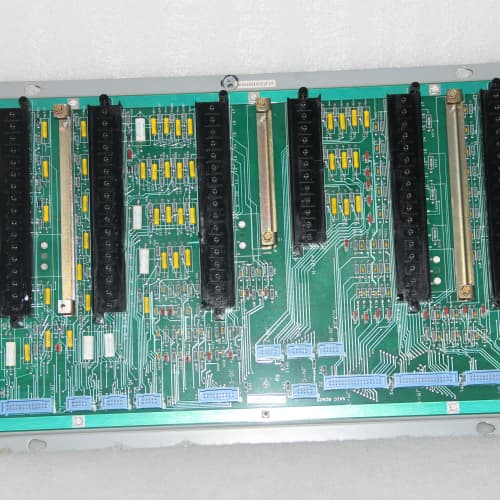
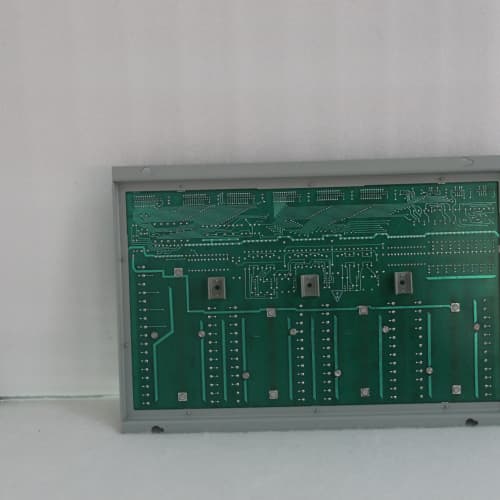
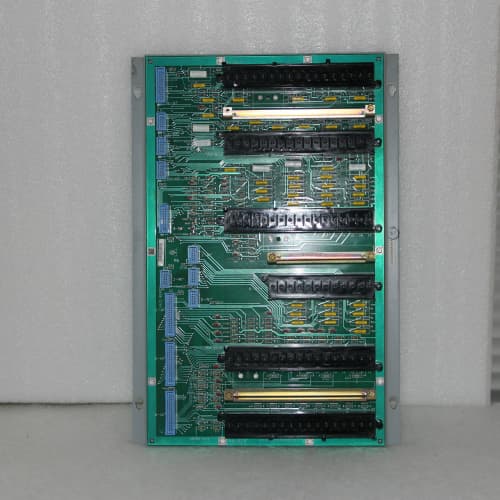
The DS3800HFXB is the output counterpart to the frequency input boards—it generates pulse signals for test, calibration, and control applications. This board can output 24V DC pulses at frequencies from 0Hz to 10kHz, with 12-bit resolution for fine frequency control. It’s commonly used for driving test equipment, simulating speed sensor signals, or generating pulse trains for external devices. The 8-channel capacity makes it useful for multi-channel simulation or control applications.
We’ve used the HFXB in a test cell to simulate turbine speed signals for controller testing. The board’s 24V DC outputs matched the proximity sensors normally used, and the 10kHz frequency range covered the full speed range of the turbine. The status LEDs showed the output state, and the board’s 0.5A per channel output current was sufficient for driving optocouplers and logic inputs. The HFXB is a practical choice for applications that require controlled pulse generation.
Key Technical Specifications
| Parameter | Value / Range |
|---|---|
| Pulse Output Channels | 8 (MOSFET outputs) |
| Output Voltage Range | 10-30V DC (24V nominal) |
| Frequency Range | 0-10kHz |
| Frequency Resolution | 12-bit (4096 steps) |
| Frequency Accuracy | ±0.1% of setting (typical) |
| Output Current | 0.5A per channel (max) |
| On-Resistance | < 0.2Ω |
| Isolation Voltage | 1500V AC (field-to-logic) |
| Logic Supply Voltage | 5 VDC (from backplane) |
| Backplane Current Draw (5V) | 0.8A (max) |
| Channel Status Indicators | Green LEDs per channel |
| Operating Temperature | 0°C to 55°C (derate above 45°C) |
| Storage Temperature | -40°C to 85°C |
| Terminal Block Type | Screw-clamp, pitch 5.08mm (suffix-dependent) |
Compatible Replacement Models
| Model | Compatibility Class | Notes & Caveats |
|---|---|---|
| DS3800HFXB (same revision) | ✅ Drop-in Replacement | Exact match on all hardware and firmware. No adjustments needed. |
| DS3800HFXB (different suffix) | ⚠️ Software Compatible | Suffix variations affect termination only. Electronics identical. Verify connector pitch matches your harness. |
| DS3800HFXC | ⚠️ Software Compatible | Higher frequency version (0-100kHz). The HFXB is 0-10kHz. |
| DS3800HEDB | ❌ Hardware Incompatible | Discrete output board, not frequency output. The HFXB generates pulses, not static outputs. |
Frequently Asked Questions (FAQ)
Q: What’s the difference between the HFXB and a discrete output board?
A: The HFXB generates pulses at a programmable frequency, while a discrete output board provides static on/off control. The HFXB is for applications that require a varying frequency output—speed simulation, pulse train generation, or control of devices that accept frequency inputs. The HEDB, for comparison, is for switching 24V DC loads on and off.
Q: Can I use the HFXB to simulate a speed sensor signal?
A: Yes, the HFXB is commonly used for speed sensor simulation. You can program the output frequency to match the expected speed sensor signal, allowing you to test the Mark V’s speed measurement logic without running the turbine. This is a common application in test cells and factory acceptance testing.
Q: What’s the frequency range of the HFXB?
A: The HFXB generates frequencies from 0Hz to 10kHz, with 12-bit resolution. The frequency accuracy is ±0.1% of setting. This covers the typical speed range of 60Hz turbines (up to 7.2kHz for a 120-tooth gear). If you need higher frequencies (up to 100kHz), consider the HFXC variant.
Q: Can I use the HFXB to drive a 24V DC load?
A: Yes, the HFXB’s MOSFET outputs can drive 24V DC loads up to 0.5A per channel. However, the board is intended for pulse generation, not static on/off control. If you need to switch a load on and off, a discrete output board like the HEDB is more appropriate. The HFXB is for applications where the frequency is varied.
Q: How do I program the frequency on the HFXB?
A: The frequency is set by the Mark V controller. The controller sends a frequency value to the HFXB via the backplane, and the board generates the corresponding pulse output. The specific register mapping is in GE’s application manual (GEI-100874). You’ll need to configure the Mark V to output the appropriate frequency values.
Q: Does the HFXB have conformal coating?
A: Not by default. The HFXB’s suffix typically indicates termination type, not coating. If you need conformal coating for harsh environments, look for a suffix with a “G” (e.g., DS3800HFXB1G1G). The standard HFXB is suitable for indoor environments. If your plant has high humidity or corrosive conditions, consider a coated variant.
Q: The HFXB has a 0.8A backplane current draw. Is that typical?
A: Yes, the 0.8A draw is typical for frequency output boards. The Mark V power supply is rated at 6A on the 5V rail, so the HFXB is within the limit. If your rack has multiple HFXB boards, check your total backplane current. We recommend keeping total backplane current below 5.5A for margin.
GE DS200TCEAF1BDE
GE DS200TCEAF1BEA
GE DS200TCEAF1BEB
 Email: sales@plcfcs.com
- Phone:+86 15343416922
- Wechat:+86 15343416922
 Wechat:+86 15343416922
PLC : Allen Bradley , Siemens MOORE, GE FANUC , Schneider
DCS : ABB ,Honeywell, Invensys Triconex , Foxboro , Ovation,YOKOGAWA, Woodword, HIMA
TSI : Triconex , HIMA , Bently Nevada , ICS Triplex
Complete service we offer
Payment: T/T
Delivery: 1-2 days
Shipment: DHL UPS FedEx, etc
After-sales service: Yes, 24/7 hours