 Email: jiedong@sxrszdh.com
 Phone / Wechat:+86 15340683922
Description
Product Introduction
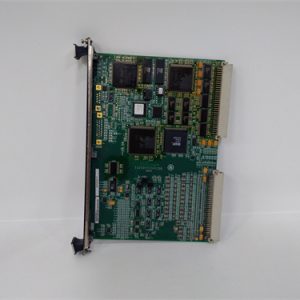
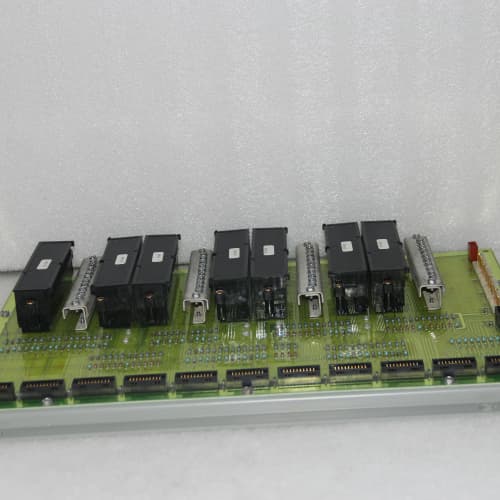
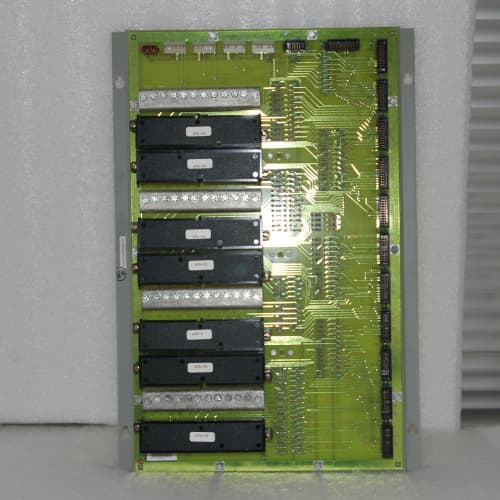
The HDDB is the output counterpart to the HDDA—the 120V AC high-voltage discrete output board that controls solenoids, contactors, and indicator lamps in turbine cabinets. This board takes logic-level signals from the Mark V controller and switches 120V AC loads through triac outputs. It’s commonly used for emergency trip solenoids, cooling fan contactors, and status indicators. The triac outputs are zero-crossing switched, meaning they turn on at the AC zero crossing, which reduces inrush current and electromagnetic interference (EMI). If your plant uses 120V AC loads, this board is a key part of your control chain.
The HDDB’s output rating is 1.0A per channel for resistive loads, with derating for inductive loads. A solenoid might only draw 0.5A steady-state, but it can have an inrush of 3-4A for a few cycles. The HDDB’s triac is rated for 5A peak, so it can handle that inrush as long as it’s brief. However, we’ve seen inrush limitations on long cable runs—the capacitance can cause current spikes beyond the triac’s peak rating. The 2.5kV isolation is a step up from the HDDA’s 1.5kV, reflecting the higher risk from inductive kickback. The status LEDs show the output state, which is useful for troubleshooting.
Key Technical Specifications
| Parameter | Value / Range |
|---|---|
| Discrete Output Channels | 16 (triac outputs) |
| Output Voltage Range | 100-132V AC (50/60Hz) |
| Output Current (Resistive) | 1.0A per channel (continuous) |
| Output Current (Inductive) | 0.5A per channel (continuous) |
| Peak Surge Current | 5A (for 1 cycle) |
| Isolation Voltage | 2500V AC (field-to-logic) |
| Logic Supply Voltage | 5 VDC (from backplane) |
| Backplane Current Draw (5V) | 1.2A (max) |
| Channel Status Indicators | Green LEDs per channel |
| Operating Temperature | 0°C to 55°C (derate above 45°C) |
| Storage Temperature | -40°C to 85°C |
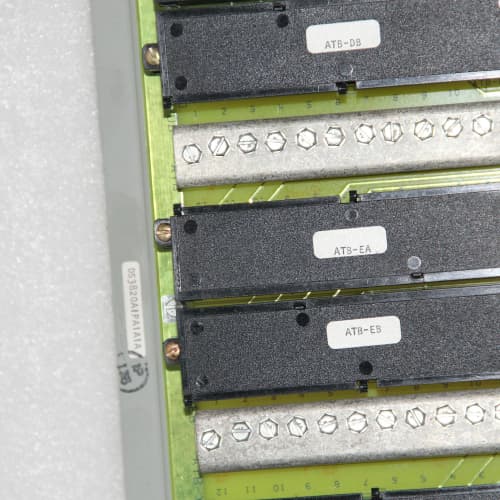
| Terminal Block Type | Screw-clamp, pitch 5.08mm (suffix-dependent) |
Compatible Replacement Models
| Model | Compatibility Class | Notes & Caveats |
|---|---|---|
| DS3800HDDB (same revision) | ✅ Drop-in Replacement | Exact match on all hardware and firmware. No adjustments needed. |
| DS3800HDDB (different suffix) | ⚠️ Software Compatible | Suffix variations affect termination and fusing only. Electronics identical. Verify connector pitch matches your harness. |
| DS3800HDOB | ⚠️ Software Compatible | Similar 16-channel 120V AC output board, but with higher current rating (2.0A per channel) and different backplane addressing. Check compatibility before swapping. |
| DS3800HDDA | ❌ Hardware Incompatible | 120V AC input board—not output. The HDDB is for outputs. |
| DS3800HCIB (any suffix) | ❌ Hardware Incompatible | 24V DC output board. The HDDB serves 120V AC loads. |
Frequently Asked Questions (FAQ)
Q: Can the HDDB drive a 0.5A inductive load, like a solenoid?
A: Yes, but the triac outputs are designed for resistive loads up to 1.0A. For inductive loads like solenoids, derate to 0.5A per channel. The inrush current of a solenoid can be 5-10x the holding current, so the 5A peak surge rating is important—it can handle brief inrush spikes. However, if your solenoid has a long inrush (more than 1 cycle), you may need an external contactor or an RC snubber. We’ve used the HDDB with small solenoids (0.3A steady-state) without issues, but large solenoids can cause triac failure.
Q: How does the zero-crossing switching work on the HDDB?
A: The triac turns on at the zero crossing of the AC waveform. This reduces inrush current and EMI. When the controller turns the output off, it turns off at the next zero crossing. This means there’s a delay of up to 1/2 cycle (about 8ms at 60Hz) between the controller command and the actual output state. For most applications, this delay is acceptable. For critical timing applications, you might need a different output board with faster switching. The zero-crossing feature is built into the HDDB’s hardware—you can’t disable it.
Q: The HDDB has a 1.2A backplane current draw. Why is it higher than the input board?
A: The output board’s triac drivers and isolation circuitry require more power than the input board’s optocouplers. The 1.2A draw is typical for high-voltage output boards. If you have multiple HDDAs and HDDBs in the same rack, you can easily exceed the Mark V power supply’s 6A limit. Check your total backplane current before adding a board. A fully populated rack with three HDDBs and two HDDAs can draw over 5A, leaving little margin for other boards.
Q: Do I need external fuses for each output channel?
A: The HDDB has no per-channel fusing. The board has a single field supply fuse (suffix-dependent, typically 2.5A or higher). For individual channel protection, we recommend external fuses. We’ve seen a short on one output channel take down the entire board’s field supply. Adding 1A fuses on each output is a cheap way to prevent a single fault from shutting down multiple loads. If you’re driving critical loads, per-channel fusing is a good practice. GE’s design assumed you’d use external protection.
Q: Can the HDDB drive a 24V DC load with an external power supply?
A: No. The HDDB is designed for AC loads only. The triac outputs will not turn off properly with DC loads—they’ll stay on or switch erratically. If you need to drive DC loads, use the HCIB or HDBB boards, which are designed for DC operation. Some engineers have tried to use the HDDB with DC and had the triac latch on—don’t do it.
Q: The status LEDs on my HDDB are not lighting up for some outputs. What’s wrong?
A: The status LEDs are driven from the AC output voltage. If the output is commanded on but the LED is off, check the load voltage at the terminal. If you have 120V at the terminal but the LED is off, the LED is likely burned out. If you have 0V at the terminal, the triac is not switching—possibly due to a faulty output or a blown fuse. We’ve seen LEDs burn out after years of operation—they’re optional indicators, not critical. Measure the output voltage with a multimeter to confirm the output state.
Q: What’s the difference between the HDDB and the HDOB?
A: The HDOB has a 2.0A per-channel rating (resistive) and higher inrush capacity. It was designed for heavier loads. The HDDB is the standard 1.0A version. If you’re driving small solenoids and indicators, the HDDB is fine. If you’re driving contactors or heaters, you might need the HDOB. However, the HDOB has different backplane addressing, so you can’t just swap them without software changes. Check your I/O mapping before upgrading.
.GE DS200SLCCF1AEB
GE DS200SLCCF1AEC
GE DS200SLCCF1AZZ
 Email: sales@plcfcs.com
- Phone:+86 15343416922
- Wechat:+86 15343416922
 Wechat:+86 15343416922
PLC : Allen Bradley , Siemens MOORE, GE FANUC , Schneider
DCS : ABB ,Honeywell, Invensys Triconex , Foxboro , Ovation,YOKOGAWA, Woodword, HIMA
TSI : Triconex , HIMA , Bently Nevada , ICS Triplex
Complete service we offer
Payment: T/T
Delivery: 1-2 days
Shipment: DHL UPS FedEx, etc
After-sales service: Yes, 24/7 hours