 Email: jiedong@sxrszdh.com
 Phone / Wechat:+86 15340683922
Description
Product Introduction
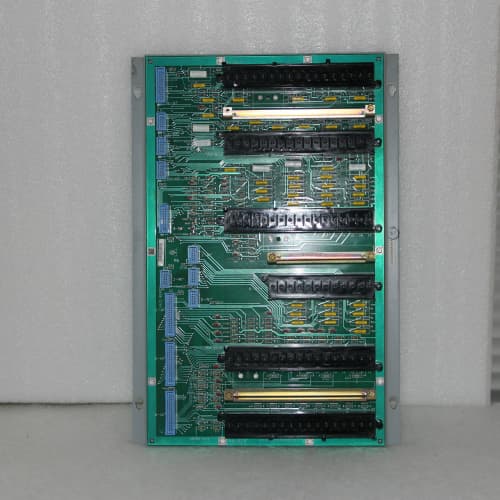
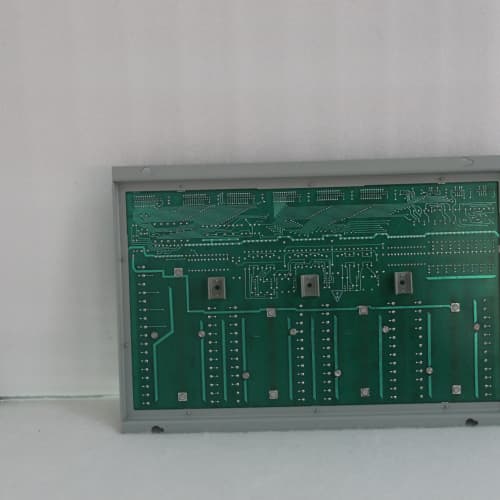
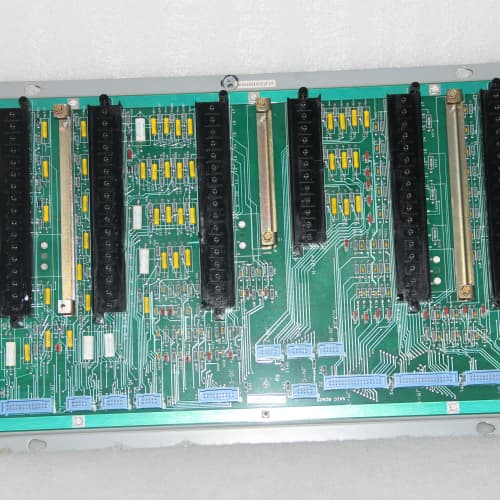
The 120V AC digital input is a workhorse in industrial controls—contact closures from pushbuttons, limit switches, and proximity sensors often use this voltage level. The DS3800HDDA takes these signals and converts them into logic-level inputs the Mark V can understand, with optical isolation to protect the controller from transients. This board is common in retrofit applications where existing field wiring is already 120V AC and re-wiring to 24V DC would be cost-prohibitive. If your plant has 120V AC field devices, this board will likely be in your Mark V rack.
We’ve tested the HDDA’s response time at about 10ms from input change to backplane update. That’s fast enough for basic control logic, but not for high-speed counting. The board’s optical isolators provide 1.5kV isolation, which is adequate for plant-floor noise but not for high-voltage motor circuits. If you have surge-prone circuits, we recommend adding external surge suppressors. The HDDA draws about 1.0A from the 5V backplane rail—high, but typical for high-voltage input boards. The board also has filter jumpers to debounce noisy contacts—a field-settable option that’s been a lifesaver for older equipment with worn limit switches.
Key Technical Specifications
| Parameter | Value / Range |
|---|---|
| Discrete Input Channels | 32 (optically isolated) |
| Input Voltage Range | 100-132V AC (50/60Hz) |
| Input Current (Typical) | 5mA at 120V AC |
| Input Impedance | 24kΩ (typical) |
| Isolation Voltage | 1500V AC (field-to-logic) |
| Scan Rate | 10ms (typical) |
| Input Filtering | Jumper-selectable: 3ms or 10ms (debounce) |
| Logic Supply Voltage | 5 VDC (from backplane) |
| Backplane Current Draw (5V) | 1.0A (max) |
| Channel Status Indicators | Green LEDs per channel (if equipped) |
| Operating Temperature | 0°C to 55°C (derate above 45°C) |
| Storage Temperature | -40°C to 85°C |
| Terminal Block Type | Screw-clamp, pitch 5.08mm (suffix-dependent) |
Compatible Replacement Models
| Model | Compatibility Class | Notes & Caveats |
|---|---|---|
| DS3800HDDA (same revision) | ✅ Drop-in Replacement | Exact match on all hardware and firmware. No adjustments needed. |
| DS3800HDDA (different suffix) | ⚠️ Software Compatible | Suffix variations affect termination and fusing only. Electronics identical. Verify connector pitch matches your harness. |
| DS3800HDA (any suffix) | ⚠️ Software Compatible | Earlier 32-channel 120V AC input board with similar specs but older firmware. Some software mapping differences—test before full deployment. |
| DS3800HDDB | ❌ Hardware Incompatible | 120V AC output board—not input. Different signal direction. Backplane addressing differs. |
| DS3800HCIB (any suffix) | ❌ Hardware Incompatible | 24V DC discrete input board. The HDDA is for 120V AC—they serve different voltage levels. |
Frequently Asked Questions (FAQ)
Q: Can I use the HDDA with 240V AC field signals?
A: No. The board is rated for 120V AC nominal. Inputs above 132V AC can damage the optocouplers. If you have 240V AC field devices, you’ll need an interposing relay or a voltage divider. We’ve seen plants try to use the HDDA with 240V by adding series resistors—it’s not recommended. The optocoupler’s current-limiting resistor is sized for 120V; at 240V, the current doubles and the optocoupler will fail prematurely.
Q: How do I set the input filter for debounce?
A: There’s a jumper block on the board, typically labeled “FILTER” near the edge. One position selects 3ms filtering (fast response, no debounce), the other selects 10ms filtering (slow response, debounce). The 10ms setting is useful for mechanical contacts, like limit switches, that bounce for 5-8ms. The 3ms setting is for clean signals, like solid-state outputs. We’ve found that many plants use the 10ms setting across all channels to reduce nuisance trips, but if you’re counting pulses (e.g., speed switches), you need the 3ms setting. Choose based on your specific inputs.
Q: The HDDA has a 1.0A backplane current draw. Is that typical for this board?
A: Yes. The optical isolators and input conditioning circuits draw more power than low-voltage digital boards. 1.0A is within the Mark V backplane’s capacity, but if your rack is fully populated with similar high-current boards, you might exceed the power supply’s rating. The Mark V standard power supply is rated at 6A on the 5V rail. If you have four HDDAs (4A total) plus other boards, you’ll need to check your total current. We’ve seen plants hit the limit—in that case, you’ll need a second power supply or a rack reconfiguration.
Q: Does the HDDA support AC signals from a transformer secondary?
A: Yes, the board is designed for AC inputs from potential transformers or control transformers, as long as the voltage is within the 100-132V range. The input current is low (5mA), so you can feed it from a small control transformer. However, if the transformer is shared with other loads, the voltage can sag under load—check that the voltage stays above 100V AC at the board’s terminals. We’ve seen brownout conditions where the input threshold (typically 70V) is crossed, causing intermittent false readings.
Q: The status LEDs on my HDDA are not lighting up for some channels. Is the board broken?
A: Not necessarily. The status LEDs are driven by the input voltage itself—they’re not powered by the 5V backplane. If the LED isn’t lit, either there’s no input voltage, the LED has failed, or the optocoupler has failed. First, measure the AC voltage at the terminal—if you have 120V and the LED is off, the LED is likely dead. If you have 0V, the problem is in the field wiring, not the board. We’ve seen this confusion happen on field startups—the LED is a simple indicator, not a diagnostic tool.
Q: Can I use the HDDA with a solid-state output (SSR) from a PLC?
A: Yes, as long as the SSR switches 120V AC and can supply 5mA. Many SSRs are designed for higher currents, so you’re fine. However, if the SSR has a leakage current (common with solid-state devices), it might keep the input on even when the SSR is off. The HDDA’s input threshold is about 70V, so a leakage of 0.5mA might be enough to trigger it. Add a bleeder resistor (e.g., 10kΩ) across the input to lower the impedance and prevent leakage from causing false triggers. We’ve seen this fix intermittent false inputs on SSRs.
GE DS200SHVMG1B
GE DS200SHVMG1BB
GE DS200SIOBH1ABA
 Email: sales@plcfcs.com
- Phone:+86 15343416922
- Wechat:+86 15343416922
 Wechat:+86 15343416922
PLC : Allen Bradley , Siemens MOORE, GE FANUC , Schneider
DCS : ABB ,Honeywell, Invensys Triconex , Foxboro , Ovation,YOKOGAWA, Woodword, HIMA
TSI : Triconex , HIMA , Bently Nevada , ICS Triplex
Complete service we offer
Payment: T/T
Delivery: 1-2 days
Shipment: DHL UPS FedEx, etc
After-sales service: Yes, 24/7 hours