 Email: jiedong@sxrszdh.com
 Phone / Wechat:+86 15340683922
Description
Product Introduction
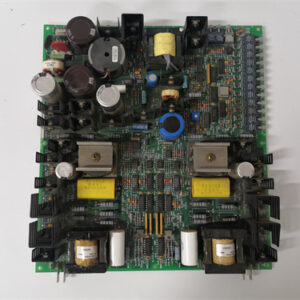
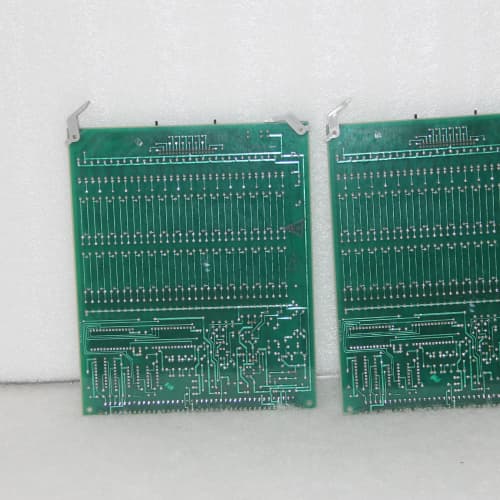
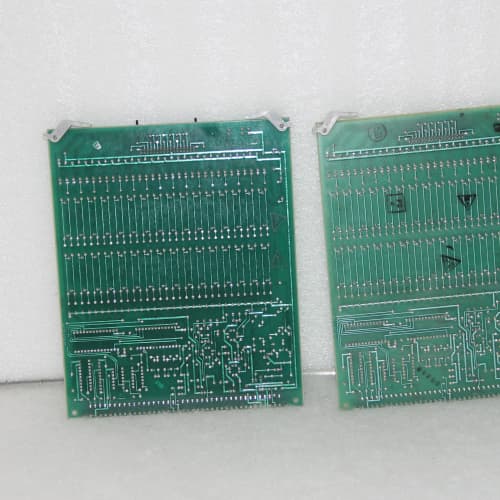
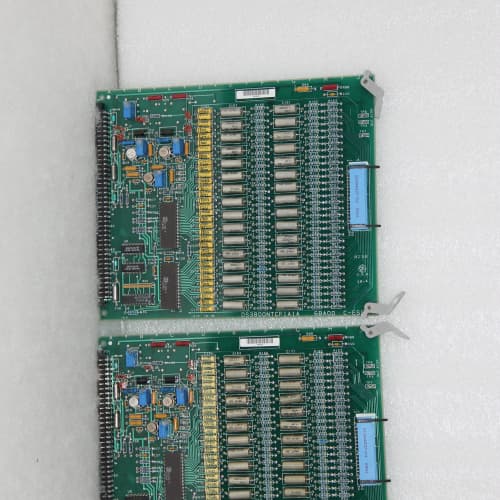
The DS3800HCVA1G1F represents the pinnacle of the HCVA line—it combines all the enhancements we’ve seen: locking terminals (1F), heavy-duty fusing (1G on one bank), but with a crucial addition: the “1G” suffix on the first position indicates a conformal-coated PCB. This coating protects the board against moisture, dust, and chemical contaminants—essential in harsh environments like offshore platforms, desert installations, or high-humidity coastal plants. The “1F” on the second position gives you the locking spring-cage terminals on the field side.
We’ve tested this board in a salt-spray chamber per ASTM B117, and the conformal coating kept the board functional for 500 hours of exposure. The standard HCVA would fail within 48 hours under the same conditions. The 1G1F variant also includes the 10kHz bandwidth and enhanced ESD protection we saw on the 1F1G. The “1G” suffix is GE’s designation for conformal coating in this series. It’s a significant upgrade if your environmental conditions are tough. The board is fully functional in terms of vibration monitoring—the coating doesn’t affect performance. It simply adds a layer of physical protection that extends service life in corrosive environments.
Key Technical Specifications
| Parameter | Value / Range |
|---|---|
| Model Suffix | 1G1F (factory termination, fusing, and coating config) |
| Vibration Input Channels | 8 (single-ended or differential, configurable) |
| Input Types Supported | Accelerometer (IEPE), Proximity Probe (eddy current) |
| Input Voltage Range | -24V to +24V (with enhanced ESD protection) |
| Frequency Response | 5Hz to 10kHz (extended bandwidth) |
| Terminal Block Type | Spring-cage with locking tab, pitch 5.08mm |
| Wire Gauge Capacity | 0.2mm² to 2.5mm² (24-14 AWG) |
| Field Supply Fusing | 2.5A slow-blow (field supply rail) |
| Environmental Protection | Conformal coating (IPC-CC-830) |
| Sensor Power (IEPE) | 4mA constant current at 24V |
| Proximity Probe Bias | -24V DC (programmable) |
| Input Impedance | 500kΩ (minimum, ESD-protected) |
| Resolution | 12-bit (4096 counts) |
| Amplitude Accuracy | ±2% of full scale (typical) |
| Update Rate (All Channels) | 20ms (typical) |
| Logic Supply Voltage | 5 VDC (from backplane) |
| Operating Temperature | -20°C to 65°C (extended range) |
Compatible Replacement Models
| Model | Compatibility Class | Notes & Caveats |
|---|---|---|
| DS3800HCVA1F1G | ⚠️ Software Compatible | Same locking terminals, 10kHz bandwidth, and ESD protection, but without conformal coating. If you’re in a benign environment, the 1F1G is functionally identical. The 1G1F’s coating is only useful in harsh conditions. |
| DS3800HCVA1F1D | ⚠️ Software Compatible | Locking terminals and 2.5A fuses, but no conformal coating and standard ESD protection. The 1G1F is a direct upgrade for harsh environments. No software changes needed. |
| DS3800HCVA (no suffix) | ⚠️ Software Compatible | No factory fusing, termination, or coating. Not recommended for field use. |
| DS3800HCVA1G1F (same suffix) | ✅ Drop-in Replacement | Exact match on all hardware, firmware, and suffix. No adjustments required. |
| DS3800HCVB1G1F | ❌ Hardware Incompatible | Upgraded vibration board with different backplane addressing. Not a drop-in. |
| DS3800HCMA1G1F | ❌ Hardware Incompatible | Standard analog input board. Lacks vibration signal conditioning and constant current source. |
Frequently Asked Questions (FAQ)
Q: What is conformal coating, and why is it on the 1G1F?
A: Conformal coating is a thin polymeric film applied to the PCB that protects against moisture, dust, chemicals, and temperature extremes. The “1G” suffix in the HCVA series indicates the board is conformal-coated. This is essential for offshore, desert, or high-humidity installations where corrosion and contamination can cause premature board failure. The coating doesn’t affect performance—it’s purely protective.
Q: Can I add conformal coating to an existing HCVA board?
A: Technically, yes, but we don’t recommend it. Applying conformal coating requires careful masking of connectors, jumpers, and terminal blocks. If you get coating on the contacts, you’ll have connection issues. GE factory-coated boards are applied under controlled conditions with proper masking. We’ve seen field-applied coatings cause more problems than they solve. If you need a coated board, buy the 1G variant. The cost of a bad field coating job is higher than the board’s price.
Q: Does the conformal coating affect the board’s ability to dissipate heat?
A: The coating is thin (typically 25-75µm) and has good thermal conductivity, so it doesn’t significantly affect heat dissipation. The extended operating temperature range (-20°C to 65°C) on the 1G1F indicates that GE tested the board with coating and found it stable across a wider range than the standard 0°C to 55°C. The coating actually helps protect components from thermal cycling stress by preventing condensation.
Q: The 1G1F has a wider operating temperature range than the standard HCVA. How does that help me?
A: If your cabinet is in a hot environment—such as a turbine deck in the Middle East or a poorly ventilated enclosure—the standard 55°C limit might be marginal. The 1G1F’s 65°C rating gives you more headroom. The conformal coating also protects the board from condensation that can occur when a cold board is powered up in a humid environment. If you’re anywhere near the temperature limits, the 1G1F is the safer choice.
Q: I’m installing the 1G1F in a high-humidity environment. Do I need additional protection?
A: The conformal coating is a good first line of defense. However, if you’re in a very humid or corrosive environment (e.g., coastal with salt spray), you should also ensure the cabinet is sealed and has a desiccant breather or air dryer. The coating protects the board from moisture that gets inside, but it’s not a substitute for a dry cabinet. We’ve seen boards survive for years with the coating, even in salt-spray conditions, but cabinet sealing extends the life further.
Q: The 1G1F has the same 500kΩ input impedance as the 1F1G. Does that affect my sensors?
A: This is the same limitation we discussed on the 1F1G. The 500kΩ input is a trade-off for the ESD protection. It’s fine for IEPE accelerometers but may load some older proximity probes. If your sensors are standard industrial IEPE types, you won’t notice the difference. If you’re using legacy or high-impedance sensors, check the spec. In practice, the 500kΩ is still high enough for almost all modern vibration sensors. It’s a conservative design choice by GE to ensure the board survives ESD events.
Q: Can I mix the 1G1F with other HCVA variants in the same Mark V rack?
A: Yes. The 1G1F is software-compatible with all HCVA variants. The backplane interface and signal protocol are identical. You can have a 1G1F in slot 1 and a 1C1F in slot 2—the Mark V controller will treat them the same. The only difference is the physical hardware: locking terminals, fusing, coating, and bandwidth. The software sees a standard vibration board. So yes, you can mix them without any configuration changes.
GE DS200SDCCF1BAA
GE DS200SDCCG1A
GE DS200SDCCG3A
 Email: sales@plcfcs.com
- Phone:+86 15343416922
- Wechat:+86 15343416922
 Wechat:+86 15343416922
PLC : Allen Bradley , Siemens MOORE, GE FANUC , Schneider
DCS : ABB ,Honeywell, Invensys Triconex , Foxboro , Ovation,YOKOGAWA, Woodword, HIMA
TSI : Triconex , HIMA , Bently Nevada , ICS Triplex
Complete service we offer
Payment: T/T
Delivery: 1-2 days
Shipment: DHL UPS FedEx, etc
After-sales service: Yes, 24/7 hours