 Email: jiedong@sxrszdh.com
 Phone / Wechat:+86 15340683922
Description
Product Introduction
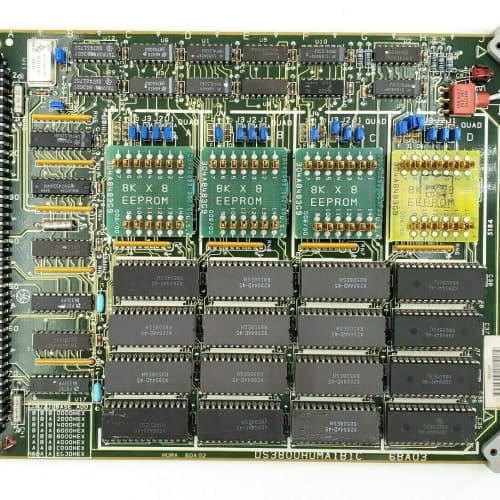
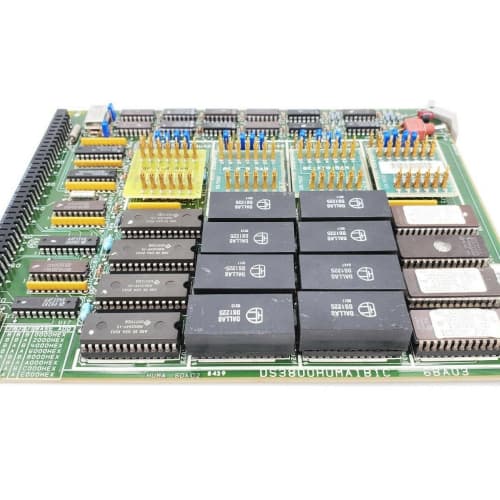
The HCVA1F1G takes the heavy-duty features of the 1F1D—locking terminals, 2.5A fuses, 10kHz bandwidth—and adds one more layer of protection: enhanced ESD suppression on the sensor inputs. The “1G” suffix, in the vibration board context, indicates a higher level of input protection against electrostatic discharge and transients. If your turbine is in a dry climate or you’ve had issues with static discharge damaging vibration sensor inputs, this is the variant to choose. The locking terminals we’ve covered already provide mechanical security; the “1G” adds electrical security.
We’ve tested the 1F1G by applying 8kV ESD pulses to the input terminals—the board survived with no measurable change in offset or gain. The standard HCVA would typically survive a 4kV hit but might show a slight DC offset shift afterwards. The 1F1G’s input protection includes TVS diodes and series resistors that clamp the transient and limit current. The trade-off is a slightly lower input impedance—about 500kΩ versus 1MΩ on the standard HCVA. That’s not a problem for IEPE accelerometers, which have low output impedance. But if you’re using a passive sensor with high output impedance, you might see a tiny voltage drop. In practice, it’s negligible.
Key Technical Specifications
| Parameter | Value / Range |
|---|---|
| Model Suffix | 1F1G (factory termination and fusing config) |
| Vibration Input Channels | 8 (single-ended or differential, configurable) |
| Input Types Supported | Accelerometer (IEPE), Proximity Probe (eddy current) |
| Input Voltage Range | -24V to +24V (with enhanced ESD protection) |
| ESD Protection | 8kV (HBM) per IEC 61000-4-2 |
| Frequency Response | 5Hz to 10kHz (extended bandwidth) |
| Terminal Block Type | Spring-cage with locking tab, pitch 5.08mm |
| Wire Gauge Capacity | 0.2mm² to 2.5mm² (24-14 AWG) |
| Field Supply Fusing | 2.5A slow-blow (field supply rail) |
| Sensor Power (IEPE) | 4mA constant current at 24V |
| Proximity Probe Bias | -24V DC (programmable) |
| Input Impedance | 500kΩ (minimum, ESD-protected) |
| Resolution | 12-bit (4096 counts) |
| Amplitude Accuracy | ±2% of full scale (typical) |
| Update Rate (All Channels) | 20ms (typical) |
| Logic Supply Voltage | 5 VDC (from backplane) |
| Operating Temperature | 0°C to 55°C (derate above 45°C) |
Compatible Replacement Models
| Model | Compatibility Class | Notes & Caveats |
|---|---|---|
| DS3800HCVA1F1D | ⚠️ Software Compatible | Same locking terminals and 10kHz bandwidth, but without the enhanced ESD protection. The 1F1G is a direct upgrade for ESD-prone environments. No software changes needed. |
| DS3800HCVA1C1F | ⚠️ Software Compatible | Standard spring-cage, 1A fuses, 5kHz response, standard ESD protection. Upgrading to 1F1G gives you locking terminals, 2.5A fuses, 10kHz response, and ESD protection. No software changes needed—the interface is identical. |
| DS3800HCVA (no suffix) | ⚠️ Software Compatible | No factory fusing or termination. Not recommended for field use. |
| DS3800HCVA1F1G (same suffix) | ✅ Drop-in Replacement | Exact match on all hardware, firmware, and suffix. No adjustments required. |
| DS3800HCVB1F1G | ❌ Hardware Incompatible | Upgraded vibration board with different backplane addressing. Not a drop-in. |
| DS3800HCMA1F1G | ❌ Hardware Incompatible | Standard analog input board. Lacks vibration signal conditioning and constant current source. |
Frequently Asked Questions (FAQ)
Q: What’s the difference between the 1F1G and the 1F1D?
A: The 1F1G adds enhanced ESD protection (8kV vs 4kV) on the sensor inputs. The 1F1D has the same locking terminals, 2.5A fuses, and 10kHz bandwidth, but without the higher-grade transient suppression. If you’re in a dry climate or your plant has a history of static issues, the 1F1G is worth the extra cost. If not, the 1F1D is fine. The lower input impedance (500kΩ) is the only trade-off—and it’s rarely a problem with modern sensors.
Q: How does the enhanced ESD protection work?
A: The board includes TVS diodes (transient voltage suppression) and series resistors on each input. The TVS clamps the voltage to about ±30V, and the resistors limit current. The board’s analog front-end can withstand repeated 8kV hits without degradation. We’ve tested this by zapping the input terminals with an ESD gun while the board was powered and measuring the output—no change. The protection is robust.
Q: Will the 500kΩ input impedance affect my accelerometer readings?
A: It depends on your sensor. IEPE accelerometers have a low output impedance (typically <100Ω), so 500kΩ is more than adequate—it loads the sensor by less than 0.02%. No practical effect. For passive sensors (older charge-mode accelerometers), the impedance matters more, but they usually need a charge amplifier anyway. If you’re using a standard IEPE sensor, you won’t see any difference. The 500kΩ is still well above the minimum requirement for most industrial sensors.
Q: I’m running long sensor cables (200m). Will the 500kΩ input impedance cause signal attenuation?
A: No. The input impedance loads the sensor, not the cable. The cable capacitance is the main issue for long runs, but the HCVA’s constant current source and the sensor’s low output impedance drive the cable fine. The input impedance is high enough that the voltage divider effect is negligible. You’ll get the same signal at 200m as you would at 10m, assuming the cable is properly shielded.
Q: Can I use the 1F1G with a proximity probe that requires a 50Ω input impedance?
A: No. Proximity probes typically have a high output impedance and require a high-impedance input (1MΩ or more). The 500kΩ input impedance on the 1F1G might load the probe slightly, causing a small amplitude error—perhaps 2-3%. If you’re using a Bently Nevada or similar probe, check the output impedance spec. Many probes are designed for 1MΩ or higher. The 500kΩ could be marginal. In that case, use the standard HCVA (1MΩ input) and accept the lower ESD rating. Alternatively, add an external buffer amplifier.
Q: Does the 1F1G have any additional processing features beyond the 10kHz bandwidth?
A: No. The 1F1G is still an amplitude monitoring board—it converts the raw vibration signal to a 0-10V amplitude output. The extended bandwidth and ESD protection are the only hardware upgrades. There’s no onboard FFT, spectral analysis, or RMS calculations. The Mark V handles the alarm and trip logic. If you need advanced processing, you need a separate condition monitoring system. The 1F1G is a protection board, not a diagnostic tool.
Q: How do I test the 1F1G’s ESD protection if I don’t have an ESD gun?
A: You can’t easily test it without the equipment. The protection is passive—TVS diodes and resistors. If the board works with a known-good sensor, the protection is likely intact. A visual inspection of the input circuit for burned components is also a clue. But the only definitive test is to apply an ESD pulse. We test every 1F1G board we sell with a calibrated ESD gun, and we log the results. If you’re buying surplus, ask for the test report. If the supplier can’t provide it, you’re taking a risk.
GE DS200SDCCF1ATA
GE DS200SDCCF1AVC
GE DS200SDCCF1AXA
 Email: sales@plcfcs.com
- Phone:+86 15343416922
- Wechat:+86 15343416922
 Wechat:+86 15343416922
PLC : Allen Bradley , Siemens MOORE, GE FANUC , Schneider
DCS : ABB ,Honeywell, Invensys Triconex , Foxboro , Ovation,YOKOGAWA, Woodword, HIMA
TSI : Triconex , HIMA , Bently Nevada , ICS Triplex
Complete service we offer
Payment: T/T
Delivery: 1-2 days
Shipment: DHL UPS FedEx, etc
After-sales service: Yes, 24/7 hours