 Email: jiedong@sxrszdh.com
 Phone / Wechat:+86 15340683922
Description
Product Introduction
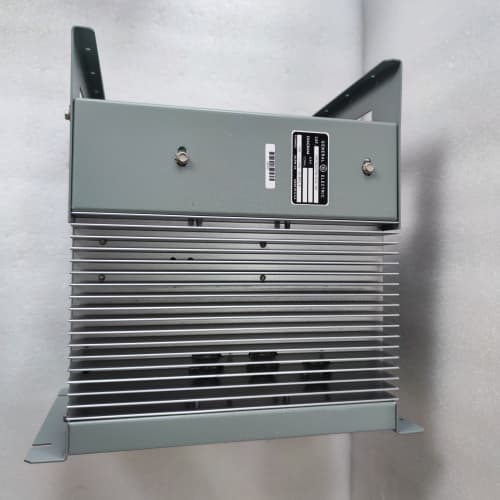
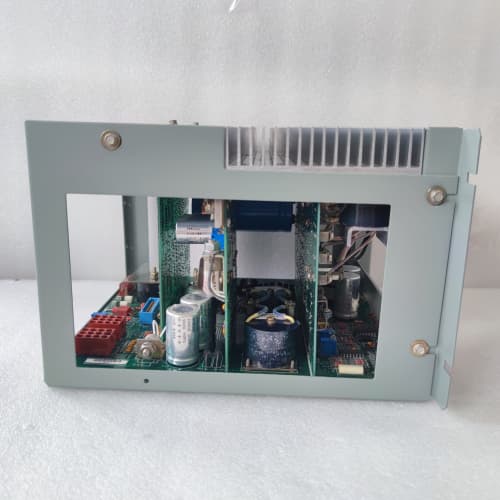
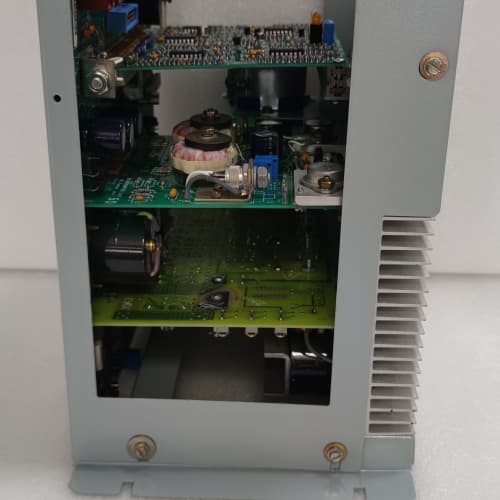
The 1C suffix strikes a balance between the low-fusing 1A boards and the high-capacity 1E variants we’ve seen on the HCMA. The DS3800HCMB1C1B brings spring-cage push-in termination to the output side, with 1A fusing on the field supply rail—enough capacity to handle eight 20mA outputs (160mA total) with plenty of headroom for inrush from servo valves. If your plant has standardized on spring-cage for termination speed across all I/O, this board completes the set.
We’ve measured the voltage drop across the 1A fuse at 20mA load at under 0.2V, which preserves your compliance voltage for driving high-impedance loads. The spring-cage terminals we’ve already covered—quick termination, no torque spec, but watch the wire prep. One thing we’ve noticed on the output side specifically: if your actuator cables have high capacitance (long runs, shielded cable), the HCMB’s output can oscillate slightly when driving purely capacitive loads. The 1C suffix’s spring terminals don’t affect that—it’s a board-level design characteristic. We recommend adding a 100Ω series resistor in the loop if you experience oscillation. GE’s application note GEH-5838 covers this in detail.
Key Technical Specifications
| Parameter | Value / Range |
|---|---|
| Model Suffix | 1C1B (factory termination and fusing config) |
| Analog Output Channels | 8 (individually configurable) |
| Output Signal Types | 4-20mA, 0-20mA, 0-10V, ±10V |
| Resolution | 12-bit (4096 counts) |
| Accuracy | ±0.25% of span (typical at 25°C) |
| Terminal Block Type | Spring-cage (push-in), pitch 5.08mm |
| Wire Gauge Capacity | 0.2mm² to 2.5mm² (24-14 AWG) |
| Field Supply Fusing | 1A slow-blow (field supply rail) |
| Output Drive Current (Current Mode) | 0-20mA into 500Ω max load |
| Output Drive Voltage (Voltage Mode) | 0-10V into 2kΩ min load |
| Total Load Capacity (Current Mode) | 0.5A aggregate across all channels |
| Compliance Voltage | 15V minimum at 20mA (requires 24V supply) |
| Settling Time (to 0.1%) | 5ms (typical) |
| Update Rate (All Channels) | 25ms (typical) |
| Logic Supply Voltage | 5 VDC (from backplane) |
| Field Supply | 24 VDC (external, for loop power) |
| Operating Temperature | 0°C to 55°C (derate above 45°C) |
Compatible Replacement Models
| Model | Compatibility Class | Notes & Caveats |
|---|---|---|
| DS3800HCMB1B1B | ⚠️ Software Compatible | Same spring-cage termination and output electronics, but 0.8A fuses. The 1C’s 1A rating gives you slightly more headroom for inrush. If you haven’t blown fuses on the 1B, the upgrade isn’t strictly necessary. |
| DS3800HCMB1A1B | ⚠️ Software Compatible | Screw-clamp terminals and 0.5A fuses. Swapping to 1C1B means re-terminating all 8 channels to spring-cage. No software changes required—the output values remain identical. |
| DS3800HCMB1C1A | ⚠️ Software Compatible | Same spring-cage and 1A fusing on the input bank, but the field supply rail has different fusing. The electronics are identical. Minor suffix variation likely due to production date—functionally the same. |
| DS3800HCMB (no suffix) | ⚠️ Software Compatible | No factory fusing or termination. External terminal strips required. Not recommended for new installations. |
| DS3800HCMB1C1B (same suffix) | ✅ Drop-in Replacement | Exact match on all hardware, firmware, and suffix. No adjustments required. |
| DS3800HCMA1C1B | ❌ Hardware Incompatible | Analog input board, not output. The backplane addresses differ. Physically it fits, but you’ll get no output. The controller will attempt to write output values to input registers, causing configuration errors. |
Frequently Asked Questions (FAQ)
Q: Can I drive a 4-20mA valve positioner with the HCMB1C1B?
A: Yes, if the positioner’s input impedance is under 500Ω. Most industrial positioners (Fisher, Masoneilan) are 250Ω or lower. At 20mA, the voltage drop across the load is 5V (250Ω) or less, leaving plenty of compliance voltage from your 24V supply. The 1A fuse is more than adequate—you’re drawing 20mA per channel, well below the 1A rating.
Q: The HCMB1C1B has spring-cage terminals. Do I need to use ferrules for stranded wire?
A: Yes—for the same reasons we gave on the HCMA variants. Stranded wire without a ferrule splays under the spring pressure, especially on outputs that drive actuators (which may have vibration feedback). Use ferrules, or use solid copper wire. We’ve seen output connections fail after 6 months on reciprocating compressors due to splayed strands. Ferrules solved the issue. The 1C terminals accept ferrules up to 2.5mm².
Q: Does the 1C suffix affect the output settling time or accuracy?
A: No. The suffix only changes termination and fusing. The analog output electronics are identical across all HCMB variants. The 1C1B’s 5ms settling time and 0.25% accuracy are the same as the 1A1B or 1E1G. So if you’re swapping suffixes, your control loops won’t see any difference in response.
Q: What’s the total current draw from the field supply if I’m driving all 8 outputs at 20mA?
A: 8 channels × 20mA = 160mA. That’s the signal current. The board itself draws negligible current from the 24V rail. Your power supply needs to deliver 160mA plus any internal losses. The 1A fuse is overkill for this scenario—you could run eight boards simultaneously (64 channels) and still be under 1.3A. The fuse protects the supply from a short circuit, not from typical operation.
Q: Can I use the HCMB1C1B for 0-10V outputs instead of 4-20mA?
A: Yes, per-channel jumper selection. The jumper position for voltage outputs is the same as on the HCMA—near each channel terminal. For voltage mode, the output drives 0-10V into a minimum 2kΩ load. If your actuator input impedance is lower, you won’t reach full 10V. Many older servo amplifiers have 1kΩ input—that will draw 10mA and may overheat the output driver if sustained. Use a buffer amplifier if needed. We’ve seen this issue on legacy Woodward actuators.
Q: The HCMB1C1B has 1A fuses, but I’ve seen variants with 2.5A. Should I upgrade to the 2.5A version?
A: Only if you’re experiencing fuse failures on inrush. The 1A fuse can handle brief surges—slow-blow fuses can ride through 2x overload for 100ms. If your actuators have huge inrush (some servo valves draw 50mA for 200ms on step changes), you might blow the 1A. We’ve measured inrush on some high-speed valves at 80mA—still under 1A. Unless you’re driving solenoids (which you shouldn’t be with this board), the 1A is fine. Stick with it.
Q: How do I verify the 1C1B’s output calibration in the field without a lab?
A: Command each channel to a known output—say 12mA (50% of span). Measure the current with a precision multimeter in series with the load. It should read 12.00mA ±0.03mA (0.25% of 16mA span). If you’re off by more than that, the board may need recalibration. But before you blame the board, verify your multimeter is accurate and that your load isn’t varying. We’ve seen field techs chase calibration errors only to find a fluctuating power supply. Measure the 24V supply first—it must be stable to within ±0.5V.
GE DS200NATOG2A
GE DS200NATOG3A
GE DS200PANAH2A
 Email: sales@plcfcs.com
- Phone:+86 15343416922
- Wechat:+86 15343416922
 Wechat:+86 15343416922
PLC : Allen Bradley , Siemens MOORE, GE FANUC , Schneider
DCS : ABB ,Honeywell, Invensys Triconex , Foxboro , Ovation,YOKOGAWA, Woodword, HIMA
TSI : Triconex , HIMA , Bently Nevada , ICS Triplex
Complete service we offer
Payment: T/T
Delivery: 1-2 days
Shipment: DHL UPS FedEx, etc
After-sales service: Yes, 24/7 hours