 Email: jiedong@sxrszdh.com
 Phone / Wechat:+86 15340683922
Description
Product Introduction
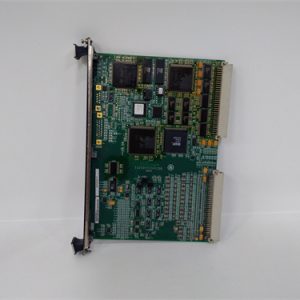
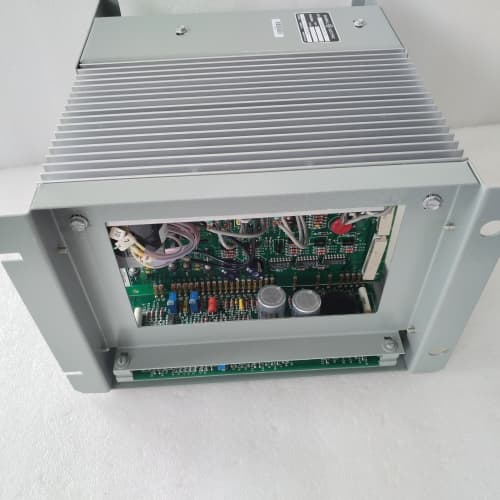
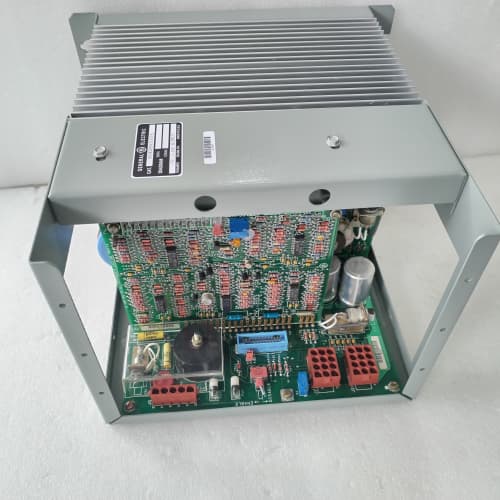
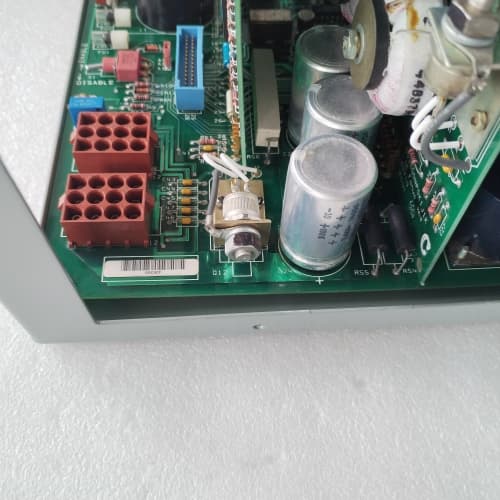
You’ve got the HCMA for analog inputs—temperature, pressure, position feedback. But what about the signals going the other way? The DS3800HCMB is the output counterpart, converting the Mark V’s digital control commands into analog signals that position fuel valves, guide vanes, and actuator servos. If the HCMA is the turbine’s eyes, the HCMB is its muscle—translating PID loop outputs into physical movement.
The HCMB gives you 8 channels, each configurable for 4-20mA or 0-10V output, with a 12-bit resolution that provides roughly 16µA or 4.9mV per count. The total load capacity on the current outputs is limited to 0.5A across all channels—so if you’re driving eight 4-20mA loops at full scale, that’s 160mA, well within spec. But the real constraint is the compliance voltage: you need a 24V supply that can deliver at least 10V across your load plus the board’s own overhead. We’ve seen plants undersize their 24V supply and the outputs max out at 17mA instead of 20mA. Check your external power supply capacity.
Key Technical Specifications
| Parameter | Value / Range |
|---|---|
| Analog Output Channels | 8 (individually configurable) |
| Output Signal Types | 4-20mA, 0-20mA, 0-10V, ±10V |
| Resolution | 12-bit (4096 counts) |
| Accuracy | ±0.25% of span (typical at 25°C) |
| Output Drive Current (Current Mode) | 0-20mA into 500Ω max load |
| Output Drive Voltage (Voltage Mode) | 0-10V into 2kΩ min load |
| Total Load Capacity (Current Mode) | 0.5A aggregate across all channels |
| Compliance Voltage | 15V minimum at 20mA (requires 24V supply) |
| Settling Time (to 0.1%) | 5ms (typical) |
| Update Rate (All Channels) | 25ms (typical) |
| Field-to-Logic Isolation | 1500VAC |
| Logic Supply Voltage | 5 VDC (from backplane) |
| Field Supply | 24 VDC (external, for loop power) |
| Operating Temperature | 0°C to 55°C (derate above 45°C) |
Compatible Replacement Models
| Model | Compatibility Class | Notes & Caveats |
|---|---|---|
| DS3800HCMB (same revision) | ✅ Drop-in Replacement | Exact match on hardware and firmware. No adjustments needed. |
| DS3800HCMB (different suffix) | ⚠️ Software Compatible | Suffix variations affect termination and fusing only. Electronics identical. Verify connector pitch matches your harness. |
| DS3800HCMA | ⚠️ Software Compatible | Input board with the same 8-channel configuration and pinout. The HCMA and HCMB are pin-compatible but address different backplane registers. If you plug an HCMA into an output slot, the controller will still send output values, but the board will read them as inputs—and you’ll get no physical output. Don’t mix them up. |
| DS3800HCMD | ❌ Hardware Incompatible | 16-channel analog input board (not output). Different pinout and backplane addressing. |
| IS200 series equivalents | ❌ Hardware Incompatible | Full system upgrade path only. |
Frequently Asked Questions (FAQ)
Q: Can I use the HCMB to drive a 4-20mA valve positioner directly?
A: Yes, as long as the positioner’s input impedance is under 500Ω. Most industrial positioners are 250Ω or 100Ω, so you’re fine. The board sources current up to 20mA into that load, drawing from the external 24V supply. Verify your supply can deliver at least 15V at the load—measure the voltage at the positioner terminals at 20mA. If it’s below 12V, you’ll get non-linear response. This is a common field issue we troubleshoot.
Q: What’s the difference between the HCMB and the HCMA in terms of signal routing?
A: The HCMA is an input board—it reads analog signals from field devices. The HCMB is an output board—it generates analog signals to control field devices. They look nearly identical physically, and they use the same 8-channel configuration. The backplane addresses are different. GE’s part numbering makes this distinction clear: “A” for analog input, “B” for analog output. If you’re troubleshooting a non-responsive valve, check which board type you’ve installed. We’ve seen plants swap them by mistake—it’s an easy error to make when they’re visually identical.
Q: Can I mix 4-20mA and 0-10V outputs on the same HCMB?
A: Yes. Each channel has a jumper setting for current (I) or voltage (V). The output signal type is per-channel configurable. However, the 24V field supply is common across all channels, so if you have voltage outputs, you’re just using the supply as a reference. There’s no conflict—voltage outputs don’t draw significant current from the 24V rail. We’ve run mixed configurations on many turbines without issues.
Q: What’s the settling time on the HCMB’s outputs, and does that affect control loops?
A: The settling time to 0.1% of final value is 5ms, which is typical for a 12-bit DAC with an RC filter. In a 100ms PID update loop, that 5ms is negligible. The real limiting factor is the update rate from the controller—the Mark V outputs refresh every 25ms. So the board can settle faster than the controller updates. No phase lag issues here.
Q: The HCMB is rated for 500Ω maximum load in current mode. What happens if I connect a 1kΩ load?
A: The output will saturate before reaching 20mA. The board’s compliance voltage is limited by the 24V supply minus the board’s internal drop. At 20mA into 500Ω, you’re dropping 10V across the load. With a 24V supply, that’s fine. At 1kΩ, you’d need 20V across the load to drive 20mA, leaving only 4V for the board’s internal circuitry—which won’t work. You’ll max out at about 12mA. The solution: use a positioner with a lower input impedance, or add a separate current booster. We’ve seen this mistake on older servo valves that have high impedance inputs.
Q: Can I power the HCMB’s field supply from the same 24V supply that’s running the HCMA’s transmitters?
A: Yes, but verify your power supply capacity. The HCMB’s total load (8 channels at 20mA = 160mA) plus the HCMA’s transmitter loads can add up. If your supply is rated at 2A, you’re fine. If it’s a 1A supply, you may be near the limit. We recommend a dedicated 24V supply for outputs if you’re driving actuators that require high inrush—servo valves can briefly draw 50mA or more during initial response. Your HCMB can handle it, but the supply might not.
Q: The HCMB outputs seem to drift over time. Is this normal?
A: A small drift—less than 0.1% per year—is normal due to DAC reference voltage aging. More than 0.5% drift indicates either a failing reference IC or a thermal issue. We’ve repaired boards where the drift was traced to a 25-year-old voltage reference chip. If you’re seeing drift in the field, the fix is either recalibration or board replacement. The calibration procedure requires a precision multimeter and GE’s test software—most plants don’t have the setup, so they replace the board. We’ve got a calibration rig in-house and can usually bring them back to spec, but on legacy gear, replacement is often the quicker route.
GE DS200MSTQF1BFF
GE DS200MSTQF1CHG
GE DS200NATOG1A
 Email: sales@plcfcs.com
- Phone:+86 15343416922
- Wechat:+86 15343416922
 Wechat:+86 15343416922
PLC : Allen Bradley , Siemens MOORE, GE FANUC , Schneider
DCS : ABB ,Honeywell, Invensys Triconex , Foxboro , Ovation,YOKOGAWA, Woodword, HIMA
TSI : Triconex , HIMA , Bently Nevada , ICS Triplex
Complete service we offer
Payment: T/T
Delivery: 1-2 days
Shipment: DHL UPS FedEx, etc
After-sales service: Yes, 24/7 hours