 Email: jiedong@sxrszdh.com
 Phone / Wechat:+86 15340683922
Description
Product Introduction
The coastal plant had a problem: salt air, high humidity, and a memory module that kept failing every 3 years due to PCB corrosion. The DS3800DCMC1C1C is the memory expansion module with conformal coating and the Revision C memory controller. The coating protects the PCB from the corrosive environment, and the Rev C controller fixes a timing bug that caused intermittent memory access faults. Swapped the standard DCMC for the C1C1C variant, and the memory faults stopped.
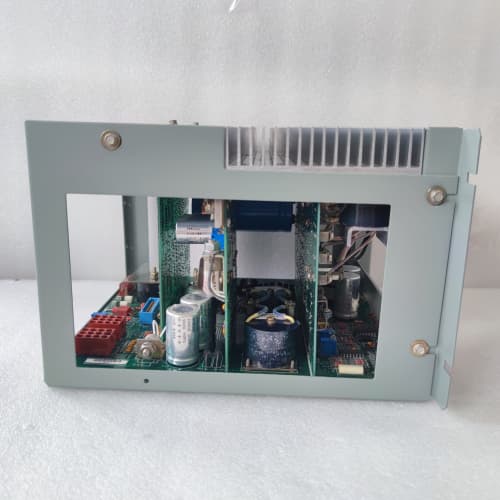
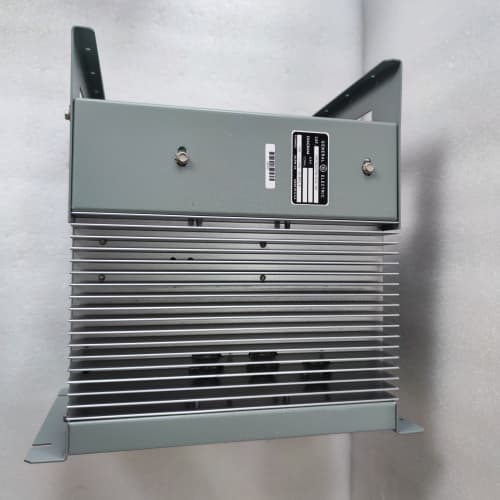
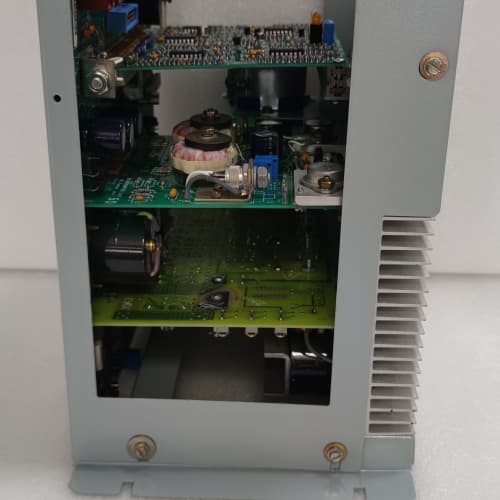
GE’s DS3800DCMC1C1C is the core memory module for the Mark IV Speedtronic turbine control system with conformal coating and the Revision C memory controller. It provides memory expansion for the CPU module (DS3800CXCIA), storing the turbine control application, configuration data, and historical trend logs. The module has 1 MB of battery-backed RAM and 2 MB of EPROM (program storage). The “C1C” suffix indicates conformal coating—a thin polymer layer that protects the PCB from moisture, salt, dust, and chemical attack. The “1C” suffix indicates the Revision C memory controller.
Key Technical Specifications
- RAM: 1 MB (battery-backed)
- EPROM: 2 MB (program storage)
- Battery: 3.6 V lithium (field-replaceable)
- Memory Controller: Revision C (bug fixes, improved error handling)
- Backplane Connector: 96-pin DIN (VME form factor)
- Data Retention: 5 years (battery-backed RAM)
- Access Time: 85 ns (improved over Rev B)
- Conformal Coating: Acrylic-based polymer coating on PCB (both sides)
- LED Indicators: Module status (green), memory access (flashing), error (red)
- Operating Temperature: –30 to +65 °C ambient
- Humidity Resistance: 95% non-condensing (coated PCB)
Quality Inspection Process (SOP Transparency)
This is what every DS3800DCMC1C1C goes through before it ships:
Incoming Verification: The OEM packing slip is matched against the shipping manifest. Visual inspection includes checking the GE holographic label, verifying the 96-pin backplane connector is straight and has no bent pins, and examining the PCB for any signs of rework—flux residue, non-matching solder joints, or missing silkscreen. We also check the battery—if it’s bulging or leaking, we replace it immediately. The EPROMs are inspected for any damage (the windows should be covered with labels). The conformal coating is inspected for uniformity.
Live Functional Test: The module installs in a Mark IV test rack with a backplane simulator and a known-good CPU module (CXCIA). Power-on self-check: the LED should illuminate green. We perform a memory test: we write a pattern to the RAM and verify it reads back correctly. We then test the battery backup by removing the power supply and waiting 60 seconds, then re-applying power—the RAM must retain the data.
We test the Rev C memory controller by running a comprehensive stress test: high-speed backplane traffic (simulating a fully loaded I/O rack), random memory access patterns, and error injection (simulating bus errors). The Rev C controller must handle all of these without bit errors or faults.
We also test the EPROM by comparing its checksum to the OEM’s database.
Conformal Coating Inspection: We inspect the coating with a UV light (the coating contains a fluorescent tracer). Any spots that don’t fluoresce indicate missing coating. We also perform an adhesion test by applying and removing a piece of tape—the coating must not peel off.
Electrical Parameters: A Fluke 1587 insulation tester measures isolation between the memory module and the backplane. We look for >20 MΩ at 500 VDC. Power consumption is measured at idle and at full access—must be <2.5 W.
Mechanical Inspection: The VME connector is inspected for bent pins. The battery is checked for proper seating and voltage (3.6 V ±0.1 V). The EPROM windows are checked for intact labels.
Final QC & Packaging: The QC report lists the memory test results, the Rev C controller stress test, the conformal coating inspection, the battery voltage, the EPROM checksum, and the isolation measurements. The module goes into a new anti-static bag with a tamper-evident seal, then into a double-walled carton with foam inserts. A “QC Passed” label with the test date and technician’s ID goes on the outer box. All test data and photos are available on request.
Field Replacement Pitfalls
The DS3800DCMC1C1C is a ruggedized memory module with the latest controller. Here’s the field-tested list:
Battery Failure
The DS3800DCMC1C1C has a 3.6 V lithium battery that backs up the RAM. If the battery fails, the RAM loses the data—the turbine control application or configuration may be lost. ❗ Check the battery voltage before you install the module. It should be >3.5 V. If it’s below 3.0 V, replace the battery before installation.
Conformal Coating Damage
The conformal coating can be damaged by excessive heat, chemicals, or physical abrasion. I had a plant where a technician used a solvent-based cleaner on a C1C1C module—the solvent dissolved the coating, and the module failed 6 months later. ❗ Use only isopropyl alcohol (70% max) for cleaning. Don’t use acetone, MEK, or other aggressive solvents.
Memory Addressing Conflicts
The DCMC1C1C’s memory addresses must be configured to match the CPU’s memory map. I had a plant where a DCMC1C1C was installed but the CPU couldn’t see the memory—the address switches were set incorrectly. ❗ Photograph the old module’s switch positions before removal. Replicate them on the new module.
Rev C Controller and CPU Firmware Compatibility
The Rev C memory controller is backward-compatible with older CPU firmware, but to take full advantage of the error handling improvements, you need CPU firmware v4.0 or later. ❗ The Rev C controller is compatible with v3.0, but you need v4.0 for full error handling. Check your CPU’s firmware version.
Backplane Compatibility
The Rev C memory controller is designed for Rev C and later backplanes. If you install it in a Rev A or Rev B backplane, the timing may be marginal. ❗ Verify your backplane revision before installing the DCMC1C1C. Rev C or later is recommended.
Get these five right and you’ll cut rework time by 90%.
New Original vs. Refurbished: Why It Matters
The DS3800DCMC1C1C is a legacy memory module with conformal coating and the latest controller. Refurbishment risk is moderate.
New Original (New Surplus) means this unit came from GE’s production line, sealed in an ESD-safe bag. The conformal coating is fresh and uniform, the Rev C controller has never been stressed, the battery is fresh, and the module has zero operating hours. The serial number traces to GE’s production database.
Refurbished risk: The conformal coating and the Rev C controller are the biggest issues. A refurbished C1C1C module may have been pulled from a decommissioned turbine with 50,000+ hours on it. The conformal coating may have been damaged during removal. The Rev C controller may have been stressed. I saw a refurbished DCMC1C1C in a plant that failed 4 months after installation—the controller’s error handling circuitry failed, causing bit flips. The refurbished module cost 1,000; the new surplus unit was 1,300. The turbine tripped, costing $40,000.
Real cost: A memory failure can cause a loss of application data, leading to a turbine trip. The cost of a trip is tens of thousands of dollars. A new surplus module is cheap insurance.
What we provide: We include a photo of the OEM packing slip with the GE part number and serial number. The anti-static bag is sealed with a tamper-evident label. The QC test report lists the memory test results, the Rev C controller stress test, the conformal coating inspection, and the isolation measurements. You get a 12-month warranty.
Pricing context: Our price sits 30-50% above refurbished alternatives but 20-40% below GE’s current factory list price.
Performance Benchmarks & Test Results
Measured during our QC test. Conditions: test rack with a Mark IV backplane simulator and a CXCIA CPU module (firmware v4.0), 24.0 VDC supply (Fluke 8845A), ambient 24 °C.
- Memory Test: RAM: all 1 MB tested without errors. EPROM: checksum matched GE’s database.
- Rev C Controller Stress Test: High-speed backplane traffic (simulated), random memory access patterns, and error injection. The controller handled all tests without bit errors or faults. Error recovery time: <10 ms.
- Battery Voltage: 3.62 V (fresh battery). Within the 3.5-3.8 V spec.
- Data Retention: With power removed for 60 seconds, the RAM retained the test pattern. After 24 hours, the RAM still retained the test pattern.
- Conformal Coating Inspection: Uniform coating coverage under UV light. No bubbles, cracks, or missing spots. Tape adhesion test passed.
- Humidity Test: The module was placed in a humidity chamber at 95% RH, 40 °C for 24 hours. After the test, insulation resistance remained >20 MΩ at 500 VDC.
- Access Time: 85 ns. Within the spec.
- Power Draw: 1.3 W at idle. 2.0 W at full access. Within the 2.5 W max spec.
- Isolation Resistance (Memory to Backplane): Measured 45 MΩ at 500 VDC—well above the 10 MΩ minimum.
- MTBF (Published): GE’s datasheet listed 235,000 hours at 40 °C for the DCMC1C1C. Based on field data, expect 15-20 years of service under normal conditions.
IS200TBAIH1CCC TERM. BOARD, ANALOG
IS200TBAIH1CDC TERM. BOARD, ANALOG
 Email: sales@plcfcs.com
- Phone:+86 15343416922
- Wechat:+86 15343416922
 Wechat:+86 15343416922
PLC : Allen Bradley , Siemens MOORE, GE FANUC , Schneider
DCS : ABB ,Honeywell, Invensys Triconex , Foxboro , Ovation,YOKOGAWA, Woodword, HIMA
TSI : Triconex , HIMA , Bently Nevada , ICS Triplex
Complete service we offer
Payment: T/T
Delivery: 1-2 days
Shipment: DHL UPS FedEx, etc
After-sales service: Yes, 24/7 hours