 Email: jiedong@sxrszdh.com
 Phone / Wechat:+86 15340683922
Description
Product Introduction
The solenoid valve was chattering—on, off, on, off—like a nervous woodpecker. The DS3800DBPF’s output driver was oscillating because the load was inductive, and the flyback diode wasn’t fast enough. The DBPF is the workhorse output module for the Mark IV Speedtronic system. It drives solenoids, contactors, and indicator lamps with 2.0 A per channel, and it has optoisolation and flyback diodes built in. But even with that protection, you can still get chattering if the load is wrong.
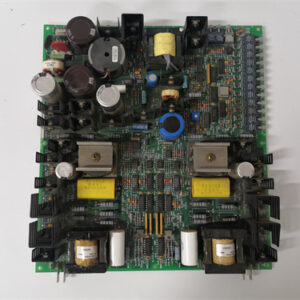
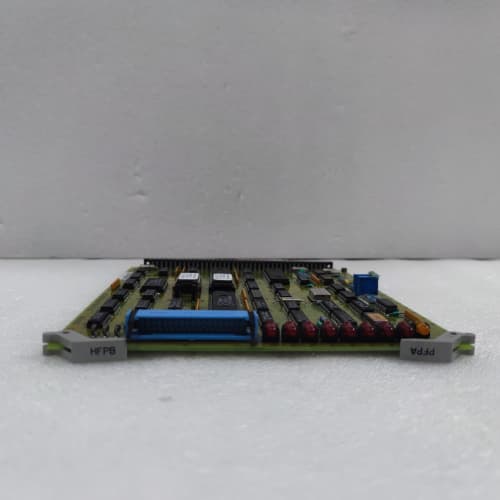
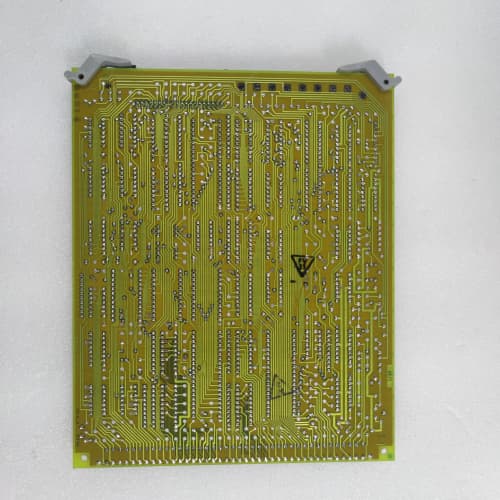
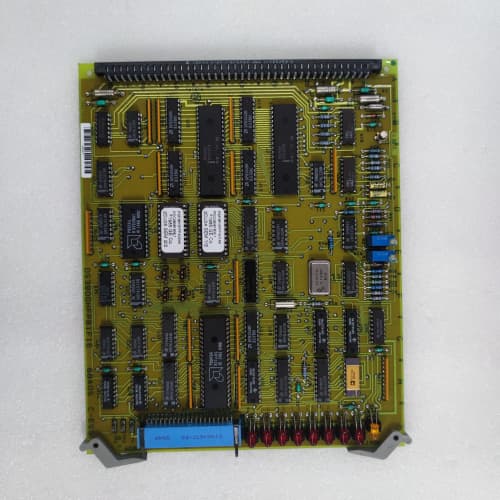
GE’s DS3800DBPF is the digital output module for the Mark IV Speedtronic turbine control system. It provides 32 discrete output channels, each capable of driving 2.0 A at 24 VDC (sinking type). The module has optoisolation on every channel (1500 VAC between field and logic), flyback diodes for inductive load protection, and short-circuit protection with foldback current limiting. It communicates with the Mark IV controller via the proprietary VME backplane and has a 5 ms response time.
Key Technical Specifications
- Channel Count: 32 discrete outputs
- Output Type: 24 VDC sinking (NPN, open collector)
- Output Current: 2.0 A continuous per channel
- Voltage Range: 18-36 VDC
- Output Voltage Drop: <0.5 V at 2.0 A
- Response Time: 5 ms typical (network write to output pin)
- Optoisolation: 1500 VAC between field and logic; 500 VAC between channels
- Flyback Diodes: Built-in per channel (for inductive loads)
- Output Protection: Short-circuit protection (foldback current limit), over-temperature protection
- LED Indicators: Per-channel status (amber for active)
- Connector Type: 37-pin D-sub (field wiring)
- Backplane Connector: 96-pin DIN (VME form factor)
- Operating Temperature: –30 to +65 °C ambient
Quality Inspection Process (SOP Transparency)
This is what every DS3800DBPF goes through before it ships:
Incoming Verification: The OEM packing slip is matched against the shipping manifest. Visual inspection includes checking the GE holographic label (or classic Speedtronic logo), verifying the 96-pin backplane connector is straight and has no bent pins, and examining the PCB for any signs of rework—flux residue, non-matching solder joints, or missing silkscreen. We also check the 37-pin D-sub connector for bent pins. The flyback diodes are inspected for any signs of cracking or discoloration.
Live Functional Test: The module installs in a Mark IV test rack with a backplane simulator. Power-on self-check: the LED should illuminate green. We command each of the 32 output channels from the module and verify the output voltage (24 VDC, 2.0 A) appears at the field terminal and the corresponding LED illuminates.
We test the output voltage drop by loading each output with 2.0 A and measuring the voltage drop across the output—must be <0.5 V. For the flyback diode test, we connect an inductive load (100 mH, 1.0 A) to an output, cycle the output on and off, and verify the voltage spike at the output is clamped to <50 V (the flyback diode is functioning).
For the short-circuit protection test, we short-circuit each output and verify the foldback current limit kicks in (the current drops to 50 mA) and the output doesn’t fail. We also test the response time by commanding the output and measuring the time to the output pin change—must be <5 ms.
Electrical Parameters: A Fluke 1587 insulation tester measures isolation between the output channels and the backplane. We look for >20 MΩ at 500 VDC. We also measure the output leakage current (when the output is OFF)—must be <0.1 mA.
Mechanical Inspection: The VME connector is inspected for bent pins. The D-sub connector is inspected for bent pins. The mounting holes are checked for alignment and thread integrity.
Final QC & Packaging: The QC report lists the channel verification for all 32 channels, the output voltage drop test, the flyback diode test, the short-circuit protection test, and the isolation measurements. The module goes into a new anti-static bag with a tamper-evident seal, then into a double-walled carton with foam inserts. A “QC Passed” label with the test date and technician’s ID goes on the outer box. All test data and photos are available on request.
Field Replacement Pitfalls
The DS3800DBPF is a rugged output module—but it has its quirks. Here’s the field-tested list:
Inductive Loads and Flyback Diodes
The DS3800DBPF has built-in flyback diodes for inductive loads—but the diodes are rated for 1.0 A. If you’re driving a solenoid with a holding current of 1.5 A and an inrush of 3 A, the flyback diode will be overloaded and may fail. I had a plant where a 1.5 A solenoid was connected to a DBPF output; the flyback diode failed after 6 months, and the output driver was damaged. The fix was adding an external diode at the load. ❗ The flyback diodes are rated for 1.0 A. If your load is above 1.0 A, add an external flyback diode at the load. The output driver itself is rated for 2.0 A continuous.
Output Overload
The DS3800DBPF’s outputs are rated for 2.0 A continuous. If you exceed that (say, a 3 A contactor), the output protection will fold back, and the output will drop out. I had a plant where a technician replaced a 1.5 A solenoid with a 3 A solenoid (thinking it was “bigger and better”)—the DBPF’s output kept tripping, and the solenoid wouldn’t stay energized. The fix was installing an interposing relay. ❗ The outputs are 2.0 A maximum. If your load is inductive, derate by 50% (1.0 A) or use an interposing relay.
Wiring Polarity
The DS3800DBPF’s outputs are sinking (NPN, open collector). The load must be connected between the output terminal and the positive supply (+24 VDC). If you connect the load between the output and ground (0 VDC), the output won’t work. I had a plant where a technician wired the solenoid between the output and ground—the solenoid was permanently energized. The fix was re-wiring the load correctly. ❗ The DBPF is a sinking output. The load goes between the output terminal and +24 VDC. Not between the output and ground.
Short-Circuit Protection Recovery
The DS3800DBPF’s short-circuit protection foldback current limit is self-recovering—the output will try to re-start automatically. But if the short is still present, it will fold back again. I had a plant where a shorted solenoid was causing the output to pulse on and off—the solenoid was chattering. The fix was fixing the short. ❗ The output will try to recover automatically. If it’s pulsing, there’s a short or an overload. Don’t ignore it—fix the problem.
D-Sub Connector Damage
The DS3800DBPF uses a 37-pin D-sub connector. If the cable’s connector is damaged, you can force it in upside down—or bend the pins. ❗ Inspect both the cable’s D-sub connector and the module’s connector for bent pins before you mate them.
Get these five right and you’ll cut rework time by 90%.
New Original vs. Refurbished: Why It Matters
The DS3800DBPF is a legacy output module. Refurbishment risk is significant.
New Original (New Surplus) means this unit came from GE’s production line, sealed in an ESD-safe bag. It may have been sitting on a shelf for 10-15 years, but it’s never been installed. The output drivers are fresh, the flyback diodes are fresh, and the module has zero operating hours. The serial number traces to GE’s production database.
Refurbished risk: The output drivers and flyback diodes are the biggest issues. A refurbished DBPF may have been pulled from a decommissioned turbine with 50,000+ hours on it. The output drivers have been thermally stressed; the flyback diodes may have been damaged by inductive loads. A refurbisher’s functional test at room temperature may pass, but at 55 °C, the drivers will fail. I saw a refurbished DBPF in a plant that failed 4 months after installation—an output driver shorted, and the solenoid stayed energized. The refurbished module cost 800; the new surplus unit was 1,100. The stuck solenoid caused a turbine trip, costing $40,000.
Real cost: A failed output module can cause a solenoid to stick or a contactor to chatter, leading to a turbine trip or a safety incident. The cost of a trip is tens of thousands of dollars. A new surplus module is cheap insurance.
What we provide: We include a photo of the OEM packing slip with the GE part number and serial number. The anti-static bag is sealed with a tamper-evident label. The QC test report lists the channel verification for all 32 channels, the output voltage drop test, the flyback diode test, the short-circuit protection test, and the isolation measurements. You get a 12-month warranty.
Pricing context: Our price sits 30-50% above refurbished alternatives but 20-40% below GE’s current factory list price.
Performance Benchmarks & Test Results
Measured during our QC test. Conditions: test rack with a Mark IV backplane simulator, 24.0 VDC supply (Fluke 8845A), ambient 24 °C.
- Output Response Time: 4.8 ms from network write to output pin. Within the 5 ms spec.
- Output Voltage Drop: At 2.0 A, voltage drop = 0.35 V. Within the <0.5 V spec.
- Output Leakage Current: <0.05 mA at 24 VDC (output OFF). Within the <0.1 mA spec.
- Flyback Diode Test: With an inductive load (100 mH, 1.0 A), the voltage spike at the output was clamped to 45 V. Within the <50 V spec.
- Short-Circuit Protection Test: With a short circuit, the output current folded back to 50 mA within 10 µs. The output recovered when the short was removed.
- Isolation Resistance (Outputs to Backplane): Measured 35 MΩ at 500 VDC—well above the 10 MΩ minimum.
- Isolation Resistance (Channel to Channel): Measured >50 MΩ at 500 VDC.
- MTBF (Published): GE’s datasheet listed 190,000 hours at 40 °C for the DBPF. Based on field data, expect 15-20 years of service under normal conditions.
IS200JPDLG1AAC CIRCUIT BOARD
IS200JPDMG 28V DC PDM
IS200JPDMG1A 28V DC PDM
 Email: sales@plcfcs.com
- Phone:+86 15343416922
- Wechat:+86 15343416922
 Wechat:+86 15343416922
PLC : Allen Bradley , Siemens MOORE, GE FANUC , Schneider
DCS : ABB ,Honeywell, Invensys Triconex , Foxboro , Ovation,YOKOGAWA, Woodword, HIMA
TSI : Triconex , HIMA , Bently Nevada , ICS Triplex
Complete service we offer
Payment: T/T
Delivery: 1-2 days
Shipment: DHL UPS FedEx, etc
After-sales service: Yes, 24/7 hours