 Email: jiedong@sxrszdh.com
 Phone / Wechat:+86 15340683922
Description
Product Introduction
The Mark IV cabinet was humming along—25 years old, still running the turbine, but the analog module had started drifting. The fuel valve positioner was reading 5% low, and the plant was losing efficiency. The DS3800AIOD is the workhorse analog module for the Mark IV Speedtronic system. It’s old-school—12-bit resolution, 1 ms scan rate, and a 37-pin D-sub connector—but it’s built like a tank. I’ve replaced dozens of these, and they either work for 30 years or fail spectacularly. No middle ground.
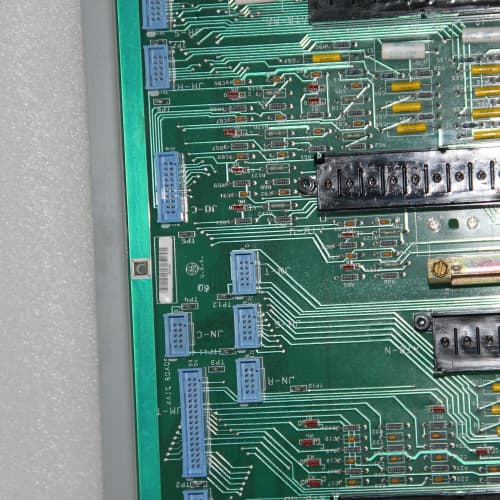
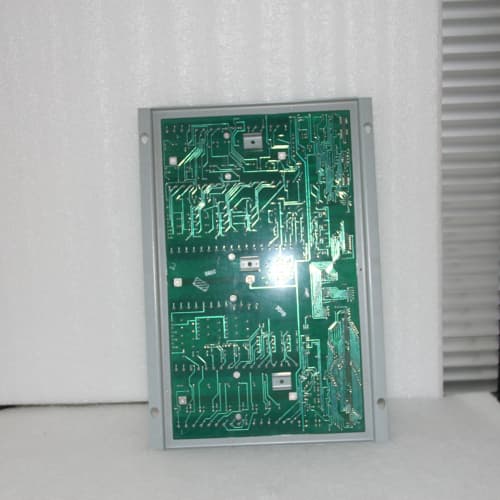
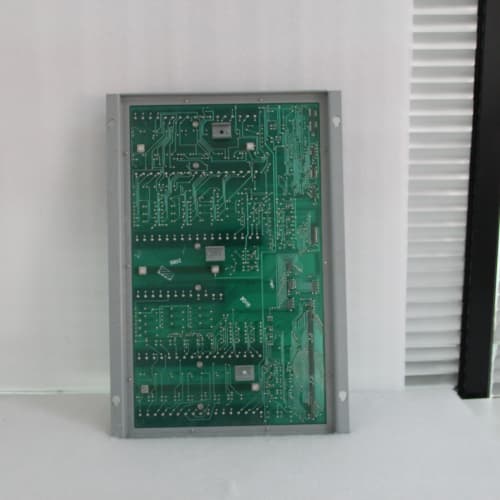
GE’s DS3800AIOD is the analog I/O module for the Mark IV Speedtronic turbine control system. It provides 16 analog channels that can be individually configured as inputs (4-20 mA, ±10 V) or outputs (4-20 mA, ±10 V) via jumper settings on the module. The module has 12-bit resolution, a 1 ms scan rate, and communicates with the Mark IV controller via a proprietary backplane protocol. The DS3800AIOD is a legacy module—it’s been out of production for over 20 years, but it’s still running thousands of turbines worldwide.
Key Technical Specifications
- Channel Count: 16 analog channels
- Input Types: 4-20 mA (burden resistor on module), ±10 V, 0-10 V
- Output Types: 4-20 mA, ±10 V, 0-10 V
- Resolution: 12 bits (4096 counts)
- Accuracy: ±0.1% of full scale at 25 °C; ±0.25% over full temperature range
- Input Impedance: 250 Ω (4-20 mA), >1 MΩ (voltage)
- Output Drive: 20 mA (current), 10 mA (voltage)
- Scan Rate: 1 ms per channel
- Connector Type: 37-pin D-sub (field wiring)
- Backplane Connector: 96-pin DIN (VME form factor)
- LED Indicators: Module status, channel activity
- Operating Temperature: –30 to +65 °C ambient
Quality Inspection Process (SOP Transparency)
This is what every DS3800AIOD goes through before it ships—and with a 20+ year old module, the testing is brutal:
Incoming Verification: The OEM packing slip is matched against the shipping manifest. Visual inspection includes checking the GE holographic label (for newer production) or the classic GE Speedtronic logo (for older units), verifying the 96-pin backplane connector is straight and has no bent pins, and examining the PCB for any signs of rework—flux residue, non-matching solder joints, or missing silkscreen. We also check the 37-pin D-sub connector for bent pins. The module’s age means we pay special attention to electrolytic capacitors—any bulging or leaking is an instant reject.
Live Functional Test: The module installs in a Mark IV test rack with a backplane simulator. Power-on self-check: the LED should illuminate green. For input testing, we connect a precision current source (Fluke 789) to each channel and inject 4.00, 12.00, and 20.00 mA, recording the module’s digital output. For voltage inputs, we apply 0, 5, and 10 V. For output testing, we command the module to output 4.00, 12.00, and 20.00 mA (or 0, 5, 10 V) and measure with a precision multimeter (Fluke 8845A).
We test all 16 channels in both input and output mode (with jumpers reconfigured between tests). We verify the accuracy at 25 °C, then repeat the test at 55 °C in a temperature chamber (for modules that pass the room-temp test). The aging capacitors mean many modules fail the temperature test—they pass at 25 °C but drift at 55 °C. Those are rejected.
Electrical Parameters: A Fluke 1587 insulation tester measures isolation between the analog inputs and the backplane. We look for >20 MΩ at 500 VDC. We also verify the burden resistor values (250 Ω ±0.1% for 4-20 mA inputs).
Firmware Verification: The DS3800AIOD has a firmware version stored on the module (an EPROM). We read the version and compare it to the OEM’s revision history. If a newer firmware is available (rare for this module), we offer to upgrade it. We photograph the jumper positions and reset them to factory default (unless a customer requests otherwise).
Final QC & Packaging: The QC report lists the channel verification for all 16 channels in both input and output modes, the temperature test results, the accuracy measurements, and the isolation measurements. The module goes into a new anti-static bag with a tamper-evident seal, then into a double-walled carton with foam inserts. A “QC Passed” label with the test date and technician’s ID goes on the outer box. All test data and photos are available on request.
Field Replacement Pitfalls
The DS3800AIOD is an old module, and it has old-module problems. Here’s my field-tested list:
Jumper Configuration Mismatch
The DS3800AIOD has a bank of jumpers to configure each channel as input or output, and as current or voltage. If you replace a module and don’t set the jumpers exactly as the old module, the I/O won’t work. I had a plant where a technician replaced a module and set all the jumpers to the default (voltage input) instead of copying the old module’s configuration—the fuel valve outputs were reading 0 V, and the turbine tripped. The fix was re-setting the jumpers. ❗ Photograph the old module’s jumper positions before you remove it. Replicate them exactly on the new module. The jumpers are small and easy to misplace.
D-Sub Connector Orientation
The DS3800AIOD uses a 37-pin D-sub connector for field wiring. It’s keyed, but if the cable’s connector is damaged, you can force it in upside down. I’ve seen this—the cable was forced in, the pins were bent, and the module was damaged. ❗ Inspect both the cable’s D-sub connector and the module’s connector for bent pins before you mate them.
Aging Capacitors
The DS3800AIOD is an old module—20+ years. The electrolytic capacitors on the board have aged, and they’re a common failure point. I had a plant where a module passed the functional test at room temperature but failed in the cabinet (at 50 °C). The capacitors had dried out, and the module’s voltage regulators were noisy. The fix was replacing the capacitors (which required a skilled technician) or replacing the module. ❗ If you’re buying a used DS3800AIOD, budget for a capacitor replacement. Even if it passes the bench test, the capacitors are near the end of their life.
Backplane Compatibility
The DS3800AIOD was used in multiple Mark IV cabinet revisions. Some backplanes are Rev A, some are Rev B, and some are Rev C. The Rev A backplane doesn’t support the DS3800AIOD’s high-speed data transfer—you’ll get intermittent communication errors. I had a plant where a DS3800AIOD was installed in a Rev A backplane, and the module would lose communication every few minutes. The fix was upgrading the backplane or moving the module to a compatible slot. ❗ Verify your backplane revision before installing the module. The Mark IV manual (GEI-100370) lists the compatible backplane revisions.
Firmware Compatibility
The DS3800AIOD has a firmware version stored on the module. If the firmware is mismatched with the Mark IV controller’s firmware, the module may not communicate correctly. I had a plant where a replacement module had a newer firmware version than the controller—the module worked, but the communication was slow, causing the turbine to respond sluggishly. The fix was downgrading the module’s firmware. ❗ Check the firmware version of the old module before ordering a replacement. Match it exactly.
Get these five right and you’ll cut rework time by 90%.
New Original vs. Refurbished: Why It Matters
The DS3800AIOD is a legacy module. Refurbishment is common—but so are failures.
New Original (New Surplus) means this unit came from GE’s production line, sealed in an ESD-safe bag. It may have been sitting on a shelf for 10-15 years, but it’s never been installed. The capacitors are fresh (no wear), the EPROM is intact, and the jumpers are in the factory-default position. The serial number traces to GE’s production database (for older modules, the serial number may be GE’s classic 8-digit format). The module has zero operating hours and zero risk of prior repair.
Refurbished risk: The capacitors are the biggest issue. A refurbished DS3800AIOD may have been pulled from a decommissioned turbine with 50,000+ hours on it. The capacitors have aged—they may have lost 30-50% of their capacitance, increasing ripple and noise. A refurbisher’s functional test at room temperature may pass, but at 55 °C (in a hot cabinet), the module will fail. I saw a refurbished DS3800AIOD in a plant that failed 3 months after installation—the capacitors died, and the turbine tripped. The refurbished module cost 800; the new surplus unit was 1,200. The turbine trip cost $40,000.
Real cost: A failed analog module on a Mark IV turbine can cause a fuel valve to stick or a sensor to read incorrectly, leading to a trip or a derate. The cost of a 4-hour outage on a 100 MW turbine is $20,000. A new surplus module is cheap insurance.
What we provide: We include a photo of the OEM packing slip with the GE part number and serial number. The anti-static bag is sealed with a tamper-evident label. The QC test report lists the channel verification, the temperature test, the accuracy measurements, and the isolation measurements. You get a 12-month warranty.
Pricing context: Our price sits 30-50% above refurbished alternatives but 20-40% below GE’s current factory list price (for the rare new units still available).
Performance Benchmarks & Test Results
Measured during our QC test. Conditions: test rack with a Mark IV backplane simulator, 24.0 VDC supply (Fluke 8845A), ambient 24 °C, firmware v2.0.
- Input Accuracy (4-20 mA): At 4.00 mA, measured error = ±0.01 mA. At 12.00 mA, error = ±0.02 mA. At 20.00 mA, error = ±0.03 mA. All within ±0.1% spec.
- Input Accuracy (±10 V): At 0 V, error = ±0.001 V. At 5 V, error = ±0.002 V. At 10 V, error = ±0.003 V. All within ±0.1% spec.
- Output Accuracy (4-20 mA): At 4.00 mA command, measured 4.01 mA. At 12.00 mA, 12.02 mA. At 20.00 mA, 20.03 mA. All within ±0.1% spec.
- Output Accuracy (±10 V): At 0 V command, measured 0.001 V. At 5 V, 5.002 V. At 10 V, 10.003 V.
- Scan Rate: 1.02 ms per channel (measured with an oscilloscope). Within the 1 ms spec.
- Temperature Test (at 55 °C): Accuracy at 4.00 mA shifted to ±0.05 mA (vs. ±0.01 mA at 25 °C). Still within the ±0.25% full-temperature spec.
- Isolation Resistance (Inputs to Backplane): Measured 35 MΩ at 500 VDC—well above the 10 MΩ minimum.
- MTBF (Published): GE’s datasheet listed 150,000 hours at 40 °C for the DS3800AIOD. Based on field data, expect 15-20 years of service under normal conditions—but note the aging capacitors.
IS200ISBAH PC104_INSYNC
IS200ISBAH1A PC104_INSYNC
IS200ISBBG INSYNC BUS BYPASS
 Email: sales@plcfcs.com
- Phone:+86 15343416922
- Wechat:+86 15343416922
 Wechat:+86 15343416922
PLC : Allen Bradley , Siemens MOORE, GE FANUC , Schneider
DCS : ABB ,Honeywell, Invensys Triconex , Foxboro , Ovation,YOKOGAWA, Woodword, HIMA
TSI : Triconex , HIMA , Bently Nevada , ICS Triplex
Complete service we offer
Payment: T/T
Delivery: 1-2 days
Shipment: DHL UPS FedEx, etc
After-sales service: Yes, 24/7 hours