 Email: jiedong@sxrszdh.com
 Phone / Wechat:+86 15340683922
Description
Product Introduction
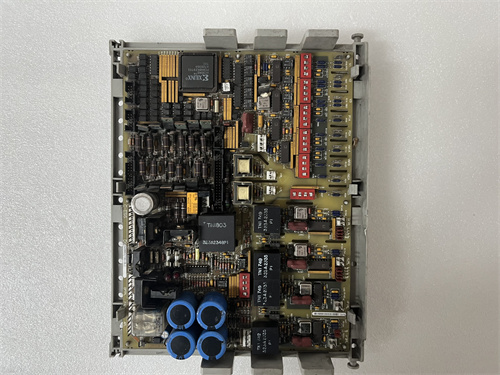
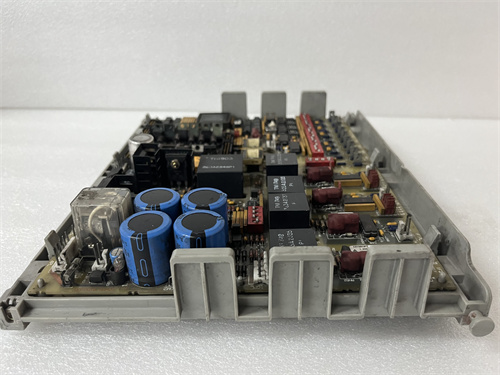
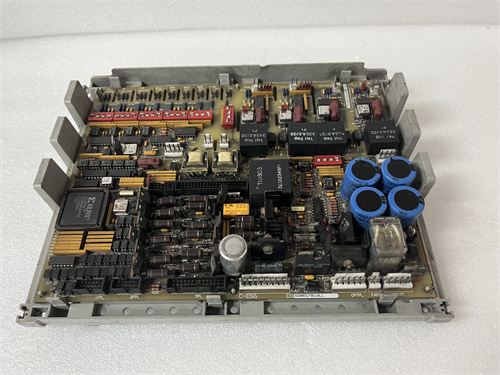
The GE DS215TMIAP1AZZ01A functions as the Turbine Monitoring Interface Adapter (TMIA) module within the Mark VIe control platform, providing comprehensive turbine monitoring, vibration analysis, and predictive maintenance with SIL 2 certification. This module interfaces with the Mark VIe controller via ISBus communication and offers 8 analog inputs (including accelerometer inputs), 4 analog outputs, 16 digital inputs, and 16 digital outputs for complete condition monitoring of steam, gas, and hydro turbines.
The model number breaks down as: TMIA (Turbine Monitoring Interface Adapter), P1 (Performance Monitoring Level 1), A (Enhanced Configuration), ZZ01A (Custom configuration). The primary differentiator is the integrated vibration monitoring and predictive analytics—the TMIA provides continuous monitoring of bearing vibration, temperature, pressure, and other turbine parameters with advanced analytics for early fault detection and predictive maintenance.
Key Technical Specifications
| Parameter | Value |
|---|---|
| Model Number | DS215TMIAP1AZZ01A |
| Manufacturer | GE Energy (now GE Vernova) |
| Series | Mark VIe |
| Function | Turbine Monitoring Interface Adapter – Condition Monitoring and Predictive Analytics |
| Input Voltage | 24 V DC ±10% (via UPL or external supply) |
| Typical Current Draw | 400 mA at 24 V |
| Analog Inputs | 8 channels, individually configurable |
| Analog Input Types | 0-20 mA, 4-20 mA, 0-10 V, ±10 V, RTD (Pt100, Ni100), Thermocouple (J, K, T, S, R), Accelerometer (IEPE) |
| Analog Input Resolution | 18-bit (0.00038% of full scale) |
| Analog Input Accuracy | ±0.1% of full scale at 25°C, ±0.4% over full temperature range |
| Analog Input Sampling | 10 kHz for vibration channels, 1 kHz for other channels |
| Vibration Monitoring | Up to 4 accelerometer channels, velocity, displacement, FFT analysis |
| Vibration Alarm/Trip | Configurable vibration limits, rate-of-change monitoring, envelope detection |
| Predictive Analytics | Trending analysis, bearing fault detection, imbalance detection, misalignment detection |
| Condition Monitoring Functions | Bearing temperature monitoring, oil pressure monitoring, casing expansion monitoring |
| Analog Outputs | 4 channels, individually configurable |
| Analog Output Types | 0-20 mA, 4-20 mA, 0-10 V, ±10 V |
| Analog Output Resolution | 16-bit (0.0015% of full scale) |
| Analog Output Accuracy | ±0.15% of full scale at 25°C, ±0.5% over full temperature range |
| Digital Inputs | 16 channels, 24 V DC sinking/sourcing |
| Digital Input Range | ON: 10-30 V DC, OFF: 0-5 V DC |
| Digital Outputs | 16 channels, 24 V DC, 0.5 A per channel max |
| Digital Output Protection | Short-circuit and overcurrent protection (auto-reset) |
| Safety Integrity | SIL 2 certified (IEC 61508) for vibration and over-temperature monitoring |
| Diagnostic Reporting | Vibration amplitude, frequency, temperature, pressure, predictive alerts (via ISBus) |
| Communication | ISBus (500 kbps) |
| Operating Temperature | -25 to +60°C (ambient, forced air recommended above 50°C) |
| Storage Temperature | -40 to +85°C |
| Mounting | DIN-rail mount (standard 35 mm) |
| Terminals | Spring-clamp (push-in), accepts 0.5-2.5 mm² (24-12 AWG) |
| LED Status | Power, ISBus Active, Fault, Vibration Active, Alarm, Trip, Predictive Alert, Diagnostic Alert |
Key Selling Points & Differentiators
- Integrated Vibration Monitoring: Up to 4 accelerometer channels with 10 kHz sampling, FFT analysis, and envelope detection—provides comprehensive turbine bearing and shaft health monitoring.
- Predictive Analytics: Trending analysis, bearing fault detection, imbalance detection, and misalignment detection—enables early warning of developing faults.
- SIL 2 Certification: Certified for vibration and over-temperature monitoring—suitable for safety-critical turbine monitoring applications.
- Comprehensive Condition Monitoring: Bearing temperature, oil pressure, casing expansion, and vibration—complete turbine health monitoring in a single module.
- Flexible Analog Inputs: Supports IEPE accelerometers, thermocouples, RTDs, and 4-20 mA sensors—compatible with most turbine monitoring sensors.
- Diagnostic Reporting: Vibration amplitude, frequency, temperature, pressure, and predictive alerts via ISBus—enables remote monitoring and predictive maintenance.
- Full Live Test Certification: Each unit undergoes a 72-hour burn-in with full vibration simulation, predictive analytics validation, SIL 2 testing, and ISBus communication verification. We log the MAC ID, calibration data, and diagnostic baselines for traceability.
- Direct Drop-In Replacement: Form-fit-function compatible with DS215TMIAP1 and earlier TMIA revisions. Existing wiring and terminal assignments remain unchanged.
- 90-Day Warranty: Includes technical support and cross-ship replacement within 24 hours if the module fails to provide vibration monitoring, predictive analytics fail, SIL 2 functions fail, or diagnostics report false faults.
Frequently Asked Questions (FAQ)
Q1: What’s the difference between the DS215TMIAP1AZZ01A and the DS215TCDAG1BZZ01A?
The TMIA is specifically designed for turbine condition monitoring with vibration analysis and predictive maintenance, while the TCDA is a general-purpose data acquisition module. The TMIA has 10 kHz sampling for vibration channels (vs. 5 kHz on TCDA), accelerometer input support, FFT analysis, and predictive analytics algorithms. The TCDA is for general-purpose data acquisition and communication. Choose TMIA for comprehensive turbine condition monitoring and predictive maintenance. Choose TCDA for general-purpose data acquisition.
Q2: What types of vibration sensors are compatible with the TMIA?
The TMIA supports: (1) IEPE accelerometers (with built-in charge amplifier)—most common for industrial vibration monitoring, (2) Velocity sensors (with 4-20 mA output), (3) Displacement probes (with 4-20 mA output), (4) Eddy-current proximity probes (with 4-20 mA output). The module provides 4 mA constant current excitation for IEPE accelerometers. The analog inputs can be configured for IEPE, 4-20 mA, or voltage signals. The TMIA also provides FFT analysis for frequency-domain vibration analysis.
Q3: The TMIA shows a predictive alert on bearing 2—what should I do?
A predictive alert indicates that the TMIA’s analytics have detected a developing fault on bearing 2. The module analyzes vibration amplitude, frequency content, and temperature trends to predict potential failures. Possible causes: (1) Bearing wear—detected by increasing vibration amplitude and high-frequency components, (2) Imbalance—detected by increasing 1x RPM vibration, (3) Misalignment—detected by increasing 2x RPM vibration, (4) Oil film instability—detected by sub-synchronous vibration. Access the diagnostic data in ToolboxST to identify the specific condition and recommended action. The predictive alert is typically a warning—the turbine can continue to operate, but you should schedule maintenance. The alert provides 1-3 months of advance warning.
Q4: The TMIA shows a vibration trip—what should I do?
A vibration trip indicates that the vibration amplitude exceeded the SIL 2 certified trip setpoint. The TMIA tripped to protect the turbine from catastrophic failure. The module logs the vibration amplitude, frequency, and time of the trip. Check: (1) the turbine speed—vibration at certain speeds may indicate resonance, (2) the bearing condition—check for signs of damage, (3) the process conditions—check for load changes, steam/gas conditions, (4) the vibration sensor—check for sensor health. Do not restart the turbine until the cause is identified and resolved. The TMIA’s trip history and vibration data provide detailed diagnostic information for post-event analysis.
Q5: The TMIA shows a sensor health warning on a vibration channel—what does that mean?
A sensor health warning indicates that the vibration sensor is not operating correctly. The TMIA monitors sensor bias voltage, signal amplitude, and cable continuity. Possible causes: (1) The sensor cable is damaged or disconnected, (2) The sensor is not receiving the 4 mA excitation current (check the TMIA’s excitation output), (3) The sensor has failed (indicated by no signal or erratic signal), (4) The sensor connector is loose. The module will continue to monitor the channel, but the data may be invalid. We recommend investigating the sensor and cable immediately. A failed vibration sensor means the turbine is not being monitored for vibration, which is a safety risk.
Q6: Can I use the TMIA for redundant vibration monitoring (two sensors per bearing)?
Yes. The TMIA has 8 analog inputs, allowing you to connect two vibration sensors per bearing for up to 4 bearings (or 4 sensors for 2 bearings). The module supports dual-channel vibration monitoring with configurable voting logic (1oo1, 1oo2, 2oo2). The TMIA’s predictive analytics also compare the two sensor readings—a deviation between sensors may indicate a sensor fault. For critical bearings, we recommend dual-channel vibration monitoring.
Q7: What’s the typical lead time for the TMIAP1AZZ01A, and do you recommend stocking spares?
The TMIAP1AZZ01A is a specialized, moderate-volume module—we maintain 3-5 units in inventory. Standard lead time for orders of 1-3 units is 4-6 weeks due to the specialized vibration calibration, predictive analytics training, SIL 2 testing, and custom configuration programming. For critical turbines with condition monitoring requirements, we strongly recommend stocking one spare module per site. If you have a fleet of 5+ turbines, a 20% spare ratio is standard practice. If you need immediate delivery and the TMIA is out of stock, consider the TCDAG1B as a substitute—it provides basic data acquisition without the vibration analysis and predictive analytics. Call our support line for expedited options.
 Email: sales@plcfcs.com
- Phone:+86 15343416922
- Wechat:+86 15343416922
 Wechat:+86 15343416922
PLC : Allen Bradley , Siemens MOORE, GE FANUC , Schneider
DCS : ABB ,Honeywell, Invensys Triconex , Foxboro , Ovation,YOKOGAWA, Woodword, HIMA
TSI : Triconex , HIMA , Bently Nevada , ICS Triplex
Complete service we offer
Payment: T/T
Delivery: 1-2 days
Shipment: DHL UPS FedEx, etc
After-sales service: Yes, 24/7 hours