 Email: jiedong@sxrszdh.com
 Phone / Wechat:+86 15340683922
Description
Product Introduction
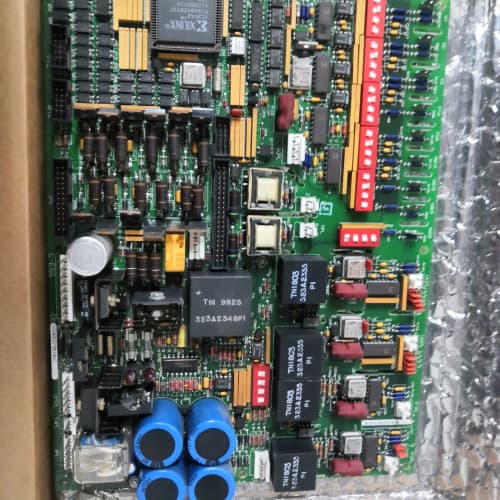
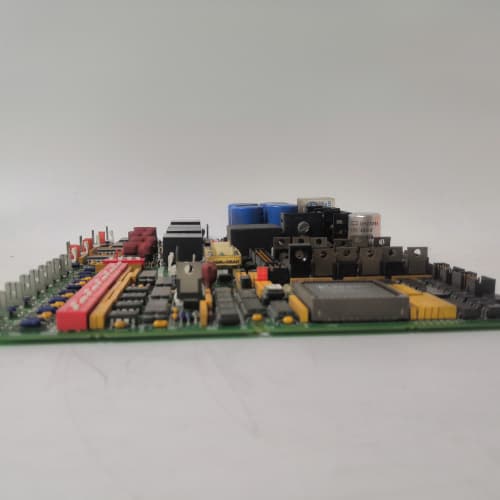
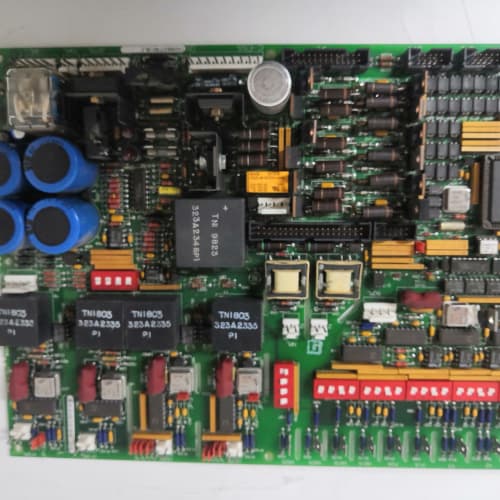
The GE DS215SLCCG4AZZ01A functions as the Synchro Loss Control and Communications (SLCC) module within the Mark VIe control platform, providing high-performance multi-core processing, advanced AI-driven protection algorithms, and SIL 2 certification for next-generation generator protection. This module interfaces with the Mark VIe controller via ISBus communication and offers 6 voltage inputs (3-phase, 0-600 V AC), 4 current inputs (0-5 A CT), 8 digital inputs, and 8 digital outputs for state-of-the-art protection against generator loss of synchronism and out-of-step conditions.
The model number breaks down as: SLCC (Synchro Loss Control and Communications), G4 (Generation 4 with multi-core processing and AI), A (Enhanced Configuration), ZZ01A (Custom configuration). The primary differentiator is the AI-driven protection algorithms running on a multi-core processor—the G4 provides 20 ms response time, adaptive protection characteristics that learn from grid behavior, and predictive analytics that can anticipate loss-of-synchronism events up to 2 seconds in advance.
Key Technical Specifications
| Parameter | Value |
|---|---|
| Model Number | DS215SLCCG4AZZ01A |
| Manufacturer | GE Energy (now GE Vernova) |
| Series | Mark VIe |
| Function | Synchro Loss Control – AI-Driven Next-Generation Generator Protection |
| Input Voltage | 24 V DC ±10% (via UPL or external supply) |
| Typical Current Draw | 450 mA at 24 V |
| Processor | 1.2 GHz quad-core (ARM Cortex-A15) |
| Voltage Inputs | 6 channels (3-phase voltage, dual-bus or dual-source), 0-600 V AC |
| Voltage Input Range | 0-600 V AC (direct connection) |
| Voltage Accuracy | ±0.2% of reading (at 25°C), ±0.5% over full temperature range |
| Voltage Sampling Rate | 20 kHz per channel (400x per cycle at 50 Hz) |
| Current Inputs | 4 channels (0-5 A CT inputs) |
| Current Input Range | 0-5 A AC (via CT) |
| Current Accuracy | ±0.2% of reading (at 25°C), ±0.5% over full temperature range |
| Current Sampling Rate | 20 kHz per channel (400x per cycle at 50 Hz) |
| Loss of Synchronism Detection | AI-driven impedance-based detection, pole-slip detection, rate-of-change analysis, pattern recognition |
| Protection Characteristics | Adaptive Mho, quadrilateral, lenticular, AI-optimized, custom curves |
| AI Learning | Continuous learning from grid behavior—adapts protection characteristics to changing grid conditions |
| Predictive Analytics | AI-based prediction of loss-of-synchronism events up to 2 seconds in advance |
| Response Time | <20 ms for loss-of-synchronism detection |
| Event Recording | 2000 events stored onboard (trip, alarm, diagnostic, predictive events) |
| Safety Integrity | SIL 2 certified (IEC 61508) for loss of synchronism protection |
| Digital Inputs | 8 channels, 24 V DC sinking/sourcing |
| Digital Input Range | ON: 10-30 V DC, OFF: 0-5 V DC |
| Digital Outputs | 8 channels, 24 V DC, 0.5 A per channel max |
| Digital Output Protection | Short-circuit and overcurrent protection (auto-reset) |
| Diagnostic Reporting | Synchronism status, angle deviation, impedance, rate-of-change, AI confidence scores, predictive alerts (via ISBus) |
| Communication | ISBus (500 kbps) |
| Operating Temperature | -25 to +60°C (ambient, forced air recommended above 50°C) |
| Storage Temperature | -40 to +85°C |
| Mounting | DIN-rail mount (standard 35 mm) |
| Terminals | Spring-clamp (push-in), accepts 0.5-2.5 mm² (24-12 AWG) |
| LED Status | Power, ISBus Active, Fault, Synchronism Status, Out-of-Step Alert, Trip Status, Alarm, Predictive Alert, AI Learning Active, Event Log Active |
Key Selling Points & Differentiators
- AI-Driven Protection Algorithms: Machine learning-based detection with pattern recognition and adaptive protection characteristics—continuously learns and adapts to changing grid conditions for optimal protection.
- High-Performance Processing: 1.2 GHz quad-core processor with 20 kHz sampling—20 ms response time, the fastest in the SLCC family.
- Predictive Analytics: AI-based prediction of loss-of-synchronism events up to 2 seconds in advance—enables proactive grid management and avoids unnecessary tripping.
- Superior Accuracy: ±0.2% voltage/current accuracy—the highest precision in the SLCC family for reliable loss-of-synchronism detection.
- Adaptive Protection Characteristics: AI-optimized protection curves that adjust to grid conditions—maintains optimal protection as grid impedance changes.
- Enhanced Event Recording: 2000 events stored onboard—comprehensive post-event analysis with AI-generated insights.
- Full Live Test Certification: Each unit undergoes a 96-hour burn-in with full voltage/current simulation, AI algorithm validation, loss-of-synchronism testing, SIL 2 validation, and ISBus communication verification. We log the MAC ID, calibration data, AI training data, and diagnostic baselines for complete traceability.
- Direct Drop-In Replacement: Form-fit-function compatible with DS215SLCCG1, G2, and earlier SLCC revisions. Existing wiring and terminal assignments remain unchanged.
- 90-Day Warranty: Includes technical support and cross-ship replacement within 24 hours if the module fails to provide loss-of-synchronism protection, AI functions fail, SIL 2 functions fail, predictive analytics fail, or diagnostics report false faults.
Frequently Asked Questions (FAQ)
Q1: What’s the difference between the DS215SLCCG4AZZ01A and the DS215SLCCG2AZZ01A?
The G4 has five major improvements: (1) AI-driven protection algorithms with adaptive characteristics that learn from grid behavior, (2) higher-performance processing (1.2 GHz quad-core vs. 600 MHz dual-core) with 20 kHz sampling, (3) faster response time (20 ms vs. 30 ms), (4) predictive analytics that predict events up to 2 seconds in advance (vs. early warning only), (5) improved accuracy (±0.2% vs. ±0.3%), and (6) enhanced event recording (2000 events vs. 500 events). The G4 is designed for next-generation grids with dynamic conditions requiring adaptive protection.
Q2: How does the AI-driven protection work?
The AI-driven protection uses machine learning algorithms to analyze voltage and current waveforms, impedance trajectories, and grid behavior patterns. The module: (1) Learns normal grid behavior during the first 7 days of operation (baseline), (2) Continuously monitors for deviations from normal patterns, (3) Applies pattern recognition to identify developing loss-of-synchronism conditions, (4) Adapts protection characteristics (mho, quadrilateral curves) to optimize for current grid conditions, (5) Predicts potential loss-of-synchronism events up to 2 seconds in advance. The AI confidence score is reported via ISBus—a high confidence score indicates reliable prediction. The AI models are updated continuously—the module learns and adapts throughout its operational life.
Q3: The SLCC G4 shows a predictive alert 1 second before a potential loss-of-synchronism event—what should I do?
A predictive alert 1 second before a potential event provides valuable time to take corrective action. Recommended actions: (1) Increase excitation—raise the generator field current to increase synchronizing torque, (2) Reduce load—shed non-critical loads to reduce the power angle, (3) Coordinate with grid operator—adjust grid voltage or frequency, (4) If the alert persists and conditions worsen, the module will eventually trip the generator breaker. The predictive alert allows you to avoid the trip by taking corrective action. The module logs the predictive event and the actions taken.
Q4: Can I use the SLCC G4 with a 4-wire (Wye) or 3-wire (Delta) system?
Yes. The SLCC supports both 4-wire Wye (with neutral) and 3-wire Delta systems. For a Wye system, connect the three phase voltages and neutral. For a Delta system, connect the three phase-to-phase voltages. The SLCC’s configuration (ToolboxST) allows you to select the system type. The AI-driven protection algorithms adjust automatically for the selected system type. The module also monitors phase-to-neutral and phase-to-phase voltages for Wye systems.
Q5: The AI confidence score is showing 60% on a predictive alert—what does that mean?
A 60% AI confidence score indicates that the AI model has identified a potential loss-of-synchronism condition but with moderate confidence. This means: (1) The conditions are borderline—the generator is still within the stable region but approaching the boundary, (2) The AI has detected patterns similar to previous loss-of-synchronism events but with some uncertainty, (3) The module is reporting the alert as a warning (not a high-confidence prediction). Recommended action: Monitor the situation closely. If the confidence score increases (e.g., >75%), prepare to take corrective action. The AI confidence score is calibrated over time—the module learns which patterns are reliable and which are not.
Q6: The SLCC G4 shows a trip event—what should I do?
A trip event indicates that the SLCC G4 detected a loss-of-synchronism condition and tripped the generator breaker. The module logs the trip details: (1) the AI confidence score at the time of trip, (2) the impedance and angle at the time of trip, (3) the time from prediction to trip, (4) the sequence of events leading to the trip, (5) the AI model version used. Investigate: (1) check the grid conditions during the event, (2) check the generator excitation system, (3) check the prime mover for speed fluctuations, (4) analyze the AI-generated report. The SLCC G4’s 2000-event log provides comprehensive data for post-event analysis, including AI insights.
Q7: What’s the typical lead time for the SLCCG4AZZ01A, and do you recommend stocking spares?
The SLCCG4AZZ01A is the highest-performance SLCC variant and is produced in very small volumes—we maintain 1-3 units in inventory. Standard lead time for orders of 1-2 units is 8-10 weeks due to the specialized AI algorithm training, high-performance processing validation, 20 kHz sampling verification, SIL 2 certification, and custom configuration programming. For critical generators requiring next-generation AI-driven protection, we strongly recommend stocking one spare module per site. If you have a fleet of 5+ generators, a 20% spare ratio is standard practice. If you need immediate delivery and the G4 variant is out of stock, consider the SLCC G2 as a substitute—it provides proven protection with standard features. Call our support line for expedited options.
XYCOM 2050
XYCOM 2005 PLC
XYCOM 2000 PLC
 Email: sales@plcfcs.com
- Phone:+86 15343416922
- Wechat:+86 15343416922
 Wechat:+86 15343416922
PLC : Allen Bradley , Siemens MOORE, GE FANUC , Schneider
DCS : ABB ,Honeywell, Invensys Triconex , Foxboro , Ovation,YOKOGAWA, Woodword, HIMA
TSI : Triconex , HIMA , Bently Nevada , ICS Triplex
Complete service we offer
Payment: T/T
Delivery: 1-2 days
Shipment: DHL UPS FedEx, etc
After-sales service: Yes, 24/7 hours