 Email: jiedong@sxrszdh.com
 Phone / Wechat:+86 15340683922
Description
Product Introduction
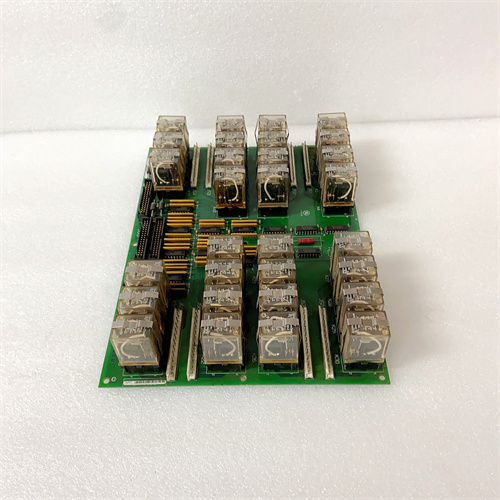
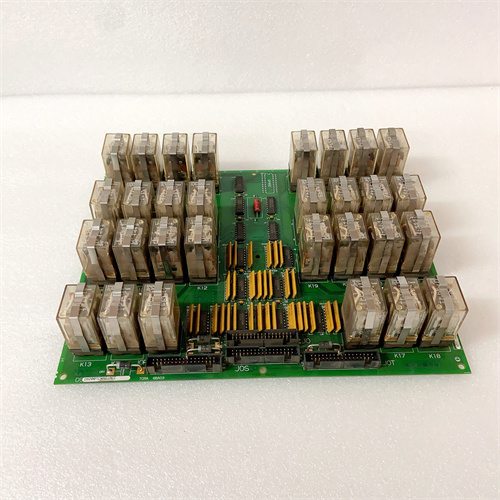
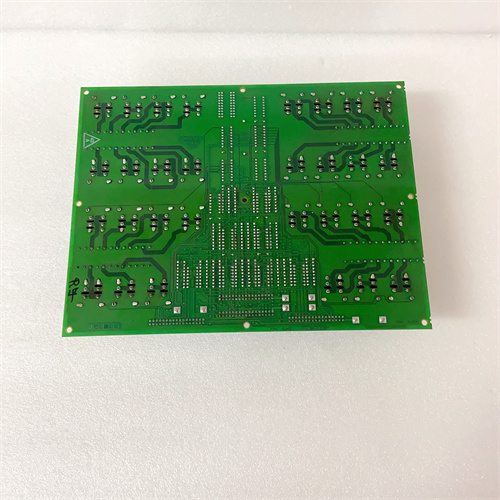
The GE DS215SDCCG1AZZ01A functions as the Synchronous Digital Control and Communications (SDCC) module within the Mark VIe control platform, providing comprehensive control and protection for synchronous machines including generators, motors, and synchronous condensers with SIL 2 certification. This module interfaces with the Mark VIe controller via ISBus communication and offers 8 analog inputs, 4 analog outputs, 16 digital inputs, and 16 digital outputs for complete control of synchronous machines in turbine applications.
The model number breaks down as: SDCC (Synchronous Digital Control and Communications), G1 (Generation 1), A (Enhanced Configuration), ZZ01A (Custom configuration). The primary differentiator is the combination of comprehensive synchronous machine control and SIL 2 certification—the SDCC provides automatic voltage regulation (AVR), reactive power control, power factor control, and protection functions specifically designed for synchronous machines with safety certification for critical protection functions.
Key Technical Specifications
| Parameter | Value |
|---|---|
| Model Number | DS215SDCCG1AZZ01A |
| Manufacturer | GE Energy (now GE Vernova) |
| Series | Mark VIe |
| Function | Synchronous Digital Control and Communications – Comprehensive Synchronous Machine Control |
| Input Voltage | 24 V DC ±10% (via UPL or external supply) |
| Typical Current Draw | 350 mA at 24 V |
| Analog Inputs | 8 channels, individually configurable |
| Analog Input Types | 0-20 mA, 4-20 mA, 0-10 V, ±10 V, RTD (Pt100, Ni100), Thermocouple (J, K, T) |
| Analog Input Resolution | 18-bit (0.00038% of full scale) |
| Analog Input Accuracy | ±0.1% of full scale at 25°C, ±0.3% over full temperature range |
| Analog Outputs | 4 channels, individually configurable |
| Analog Output Types | 0-20 mA, 4-20 mA, 0-10 V |
| Analog Output Resolution | 16-bit (0.0015% of full scale) |
| Analog Output Accuracy | ±0.2% of full scale at 25°C, ±0.5% over full temperature range |
| Digital Inputs | 16 channels, 24 V DC sinking/sourcing |
| Digital Input Range | ON: 10-30 V DC, OFF: 0-5 V DC |
| Digital Outputs | 16 channels, 24 V DC, 0.5 A per channel max |
| Digital Output Protection | Short-circuit and overcurrent protection (auto-reset) |
| Synchronous Machine Control | AVR, reactive power control, power factor control, excitation control, governor control (optional) |
| Protection Functions | Over/under excitation, loss of excitation, over/under voltage, over/under frequency, over/under speed |
| Safety Integrity | SIL 2 certified (IEC 61508) for overspeed and over-temperature protection |
| Diagnostic Reporting | Machine voltage, field current, reactive power, power factor, speed, temperature, fault status (via ISBus) |
| Communication | ISBus (500 kbps) |
| Operating Temperature | -25 to +60°C (ambient, forced air recommended above 50°C) |
| Storage Temperature | -40 to +85°C |
| Mounting | DIN-rail mount (standard 35 mm) |
| Terminals | Spring-clamp (push-in), accepts 0.5-2.5 mm² (24-12 AWG) |
| LED Status | Power, ISBus Active, Fault, Running, Voltage Regulator Active, Protection Active, Alarm, Safety Status |
Key Selling Points & Differentiators
- Comprehensive Synchronous Machine Control: AVR, reactive power control, power factor control, and protection—complete control for generators, motors, and synchronous condensers.
- SIL 2 Certification: Certified for overspeed and over-temperature protection—suitable for safety-critical synchronous machine applications.
- Flexible Control Modes: Voltage regulation, reactive power control, power factor control, and optional governor control—adapts to different machine applications.
- Comprehensive Protection: Over/under excitation, loss of excitation, over/under voltage, over/under frequency, over/under speed—ensures safe operation of synchronous machines.
- Diagnostic Reporting: Monitors voltage, field current, reactive power, power factor, speed, and temperature—enables remote monitoring and predictive maintenance.
- High-Resolution Analog I/O: 18-bit analog inputs and 16-bit analog outputs—ensures precise control of synchronous machines.
- Full Live Test Certification: Each unit undergoes a 48-hour burn-in with full synchronous machine simulation, AVR testing, protection function validation, safety function testing, and ISBus communication verification. We log the MAC ID, calibration data, and diagnostic baselines for traceability.
- Direct Drop-In Replacement: Form-fit-function compatible with DS215SDCCG1A and earlier SDCC revisions. Existing wiring and terminal assignments remain unchanged.
- 90-Day Warranty: Includes technical support and cross-ship replacement within 24 hours if the module fails to provide synchronous machine control, protection functions fail, SIL 2 functions fail, or diagnostics report false faults.
Frequently Asked Questions (FAQ)
Q1: What’s the difference between the DS215SDCCG1AZZ01A and the DS215SCMAG1AA?
The SDCC is a more comprehensive synchronous machine control module with SIL 2 certification, higher analog resolution (18-bit vs. 16-bit), and optional governor control. The SCMA is specifically designed for synchronous condenser applications without governor control. The SDCC can control generators (with governor), motors, and synchronous condensers. The SCMA is limited to synchronous condenser applications. Choose SDCC for applications requiring SIL 2 certification and governor control. Choose SCMA for synchronous condenser-only applications.
Q2: What types of synchronous machines can the SDCC control?
The SDCC can control: (1) Synchronous generators (steam turbine, gas turbine, hydro), (2) Synchronous motors (for compressors, pumps, fans), (3) Synchronous condensers (for reactive power support), (4) Synchronous machines with ratings from a few MVA to over 1000 MVA. The module provides AVR, reactive power control, power factor control, and (optional) governor control. The control mode is selected in ToolboxST.
Q3: What’s the difference between AVR, reactive power control, and power factor control?
These are the three control modes for synchronous machines: (1) AVR (Automatic Voltage Regulation)—maintains constant terminal voltage by adjusting field current. This is the most common mode for generators. (2) Reactive Power Control—maintains constant reactive power output (Mvar) by adjusting field current. Used when the grid needs a fixed reactive power contribution. (3) Power Factor Control—maintains constant power factor by adjusting field current. Used when the grid operator specifies a power factor setpoint. The SDCC allows you to select the mode and provides bumpless transfer between modes.
Q4: The SDCC shows an over-excitation trip—what could be the cause?
Over-excitation occurs when the field current exceeds the maximum allowable limit. Causes: (1) the grid voltage is too low (the generator must supply more reactive power), (2) a grid fault has occurred (causing a voltage dip), (3) the excitation system is faulty (delivering too much field current), (4) the over-excitation protection setpoint is set too low. The SDCC monitors field current and compares it to the limit. If the current exceeds the limit for the configured time, the SDCC trips the generator breaker to prevent damage to the field winding. Check the grid voltage and the excitation system. The SDCC logs the field current value at the time of the trip.
Q5: The SDCC has SIL 2 certification—what protection functions are included?
The SDCC’s SIL 2 certification covers: (1) Overspeed protection—trips the generator if speed exceeds a threshold, (2) Over-temperature protection—trips if bearing or winding temperature exceeds limits. These functions are monitored by a dedicated safety processor that operates independently of the main controller. The safety processor is certified to IEC 61508 for SIL 2. The response time for overspeed protection is <10 ms. The safety functions can be used to trigger a turbine trip or generator breaker trip without relying on the main controller.
Q6: Can I use the SDCC without a Mark VIe controller?
The SDCC requires ISBus communication for configuration and monitoring. Without a Mark VIe controller, the module will default to a fail-safe state (outputs de-energized). You can configure the module via ToolboxST and then use it in standalone mode with a static configuration—the module retains the configuration in non-volatile memory. However, you’ll lose the ability to monitor diagnostics and change settings. For standalone operation, we recommend using the SDCC with a Mark VIe controller or using a dedicated synchronous machine controller.
Q7: What’s the typical lead time for the SDCCG1AZZ01A, and do you recommend stocking spares?
The SDCCG1AZZ01A is a moderately stocked module—we maintain 3-5 units in inventory. Standard lead time for orders of 1-3 units is 2-4 weeks due to the specialized SIL 2 testing, AVR calibration, and custom configuration programming. For critical synchronous machine applications, we strongly recommend stocking one spare SDCC per site. If you have a fleet of 5+ machines, a 20% spare ratio is standard practice. If you need immediate delivery and the custom variant is out of stock, the standard DS215SDCCG1A can be re-configured in the field using ToolboxST. Call our support line for expedited options.
XYCOM 9960 PLC
XYCOM 9487 PLC
XYCOM 9485 PLC
 Email: sales@plcfcs.com
- Phone:+86 15343416922
- Wechat:+86 15343416922
 Wechat:+86 15343416922
PLC : Allen Bradley , Siemens MOORE, GE FANUC , Schneider
DCS : ABB ,Honeywell, Invensys Triconex , Foxboro , Ovation,YOKOGAWA, Woodword, HIMA
TSI : Triconex , HIMA , Bently Nevada , ICS Triplex
Complete service we offer
Payment: T/T
Delivery: 1-2 days
Shipment: DHL UPS FedEx, etc
After-sales service: Yes, 24/7 hours