 Email: jiedong@sxrszdh.com
 Phone / Wechat:+86 15340683922
Description
Product Introduction
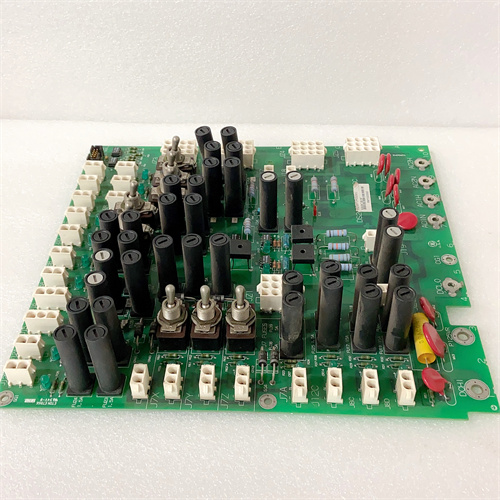
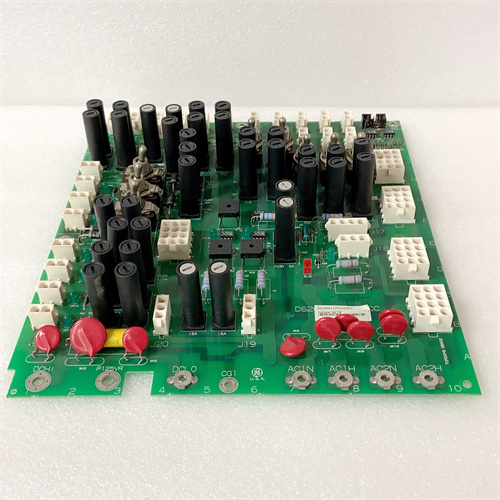
The GE DS215SCMAG1AA functions as the Synchronous Condenser Adapter (SCMA) module within the Mark VIe control platform, providing comprehensive control and protection for synchronous condenser applications in power systems. This module interfaces with the Mark VIe controller via ISBus communication and offers 8 analog inputs, 4 analog outputs, 16 digital inputs, and 16 digital outputs for complete control of synchronous condensers used for voltage support and reactive power compensation.
The model number breaks down as: SCMA (Synchronous Condenser Adapter), G1 (Generation 1), AA (Standard configuration). The primary differentiator is the integrated synchronous condenser control algorithms—the SCMA provides automatic voltage regulation (AVR), reactive power control, power factor control, and protection functions specifically designed for synchronous condenser applications, making it the ideal choice for grid stability and voltage support applications.
Key Technical Specifications
| Parameter | Value |
|---|---|
| Model Number | DS215SCMAG1AA |
| Manufacturer | GE Energy (now GE Vernova) |
| Series | Mark VIe |
| Function | Synchronous Condenser Adapter – Control and Protection for Synchronous Condensers |
| Input Voltage | 24 V DC ±10% (via UPL or external supply) |
| Typical Current Draw | 300 mA at 24 V |
| Analog Inputs | 8 channels, individually configurable |
| Analog Input Types | 0-20 mA, 4-20 mA, 0-10 V, ±10 V, RTD (Pt100, Ni100), Thermocouple (J, K, T) |
| Analog Input Resolution | 16-bit (0.0015% of full scale) |
| Analog Input Accuracy | ±0.15% of full scale at 25°C, ±0.4% over full temperature range |
| Analog Outputs | 4 channels, individually configurable |
| Analog Output Types | 0-20 mA, 4-20 mA, 0-10 V |
| Analog Output Resolution | 14-bit (0.006% of full scale) |
| Analog Output Accuracy | ±0.2% of full scale at 25°C, ±0.5% over full temperature range |
| Digital Inputs | 16 channels, 24 V DC sinking/sourcing |
| Digital Input Range | ON: 10-30 V DC, OFF: 0-5 V DC |
| Digital Outputs | 16 channels, 24 V DC, 0.5 A per channel max |
| Digital Output Protection | Short-circuit and overcurrent protection (auto-reset) |
| Synchronous Condenser Control | Automatic voltage regulation (AVR), reactive power control, power factor control |
| Protection Functions | Over/under excitation, loss of excitation, over/under voltage, over/under frequency |
| Operating Modes | Voltage regulation mode, reactive power control mode, power factor control mode |
| Diagnostic Reporting | Generator voltage, field current, reactive power, power factor, fault status (via ISBus) |
| Communication | ISBus (500 kbps) |
| Operating Temperature | -25 to +60°C (ambient, forced air recommended above 50°C) |
| Storage Temperature | -40 to +85°C |
| Mounting | DIN-rail mount (standard 35 mm) |
| Terminals | Spring-clamp (push-in), accepts 0.5-2.5 mm² (24-12 AWG) |
| LED Status | Power, ISBus Active, Fault, Synchronous Condenser Running, Voltage Regulator Active, Protection Active, Alarm |
Key Selling Points & Differentiators
- Integrated Synchronous Condenser Control: AVR, reactive power control, and power factor control algorithms specifically designed for synchronous condenser applications—eliminates the need for separate custom control systems.
- Comprehensive Protection: Over/under excitation, loss of excitation, over/under voltage, and over/under frequency protection—ensures safe operation of synchronous condensers.
- Flexible Control Modes: Voltage regulation mode, reactive power control mode, and power factor control mode—adapts to different grid requirements.
- Grid Support Functions: Fast response to grid voltage changes, transient stability support, and reactive power compensation—improves grid stability and voltage quality.
- Diagnostic Reporting: Monitors generator voltage, field current, reactive power, and power factor—enables remote monitoring and predictive maintenance.
- Integrated I/O: 8 analog inputs, 4 analog outputs, 16 digital inputs, and 16 digital outputs—complete interface to synchronous condenser sensors and actuators.
- Full Live Test Certification: Each unit undergoes a 36-hour burn-in with full synchronous condenser simulation, AVR testing, protection function validation, and ISBus communication verification. We log the MAC ID, calibration data, and diagnostic baselines for traceability.
- Direct Drop-In Replacement: Form-fit-function compatible with DS215SCMAG1 and earlier SCMA revisions. Existing wiring and terminal assignments remain unchanged.
- 90-Day Warranty: Includes technical support and cross-ship replacement within 24 hours if the module fails to provide synchronous condenser control, protection functions fail, or diagnostics report false faults.
Frequently Asked Questions (FAQ)
Q1: What’s the difference between the DS215SCMAG1AA and a standard generator control module?
The SCMA is specifically designed for synchronous condenser applications, which are generators that operate without a prime mover to provide reactive power support. Unlike a standard generator control module, the SCMA includes: (1) no governor control (the synchronous condenser doesn’t need speed control), (2) enhanced reactive power control algorithms optimized for rapid response to grid voltage changes, (3) specific protection functions for synchronous condenser operation (e.g., loss of excitation detection without turbine loss), and (4) modes specifically for grid support applications.
Q2: What is a synchronous condenser, and when would I use one?
A synchronous condenser is a synchronous motor-generator that operates without a prime mover (turbine or engine) to provide reactive power support to the power grid. It is used to: (1) support grid voltage during faults or disturbances, (2) provide reactive power compensation for long transmission lines, (3) improve power factor, (4) provide short-circuit power for grid stability, (5) support renewable energy integration (wind and solar). The SCMA controls the field current of the synchronous condenser to regulate the reactive power output.
Q3: The SCMA shows a loss of excitation trip—what could be the cause?
Loss of excitation protection detects when the synchronous condenser loses field current. This can be caused by: (1) the field breaker opened (check the field breaker status input), (2) the excitation system failed (check the excitation system power supply), (3) the field winding is open-circuited (check field winding resistance), (4) a wiring fault between the excitation system and the field winding. The SCMA monitors field current and voltage to detect loss of excitation. If the field current drops below a threshold, the SCMA trips the generator breaker to prevent damage to the synchronous condenser. The trip time is typically 100-200 ms.
Q4: Can I use the SCMA for both synchronous condenser and generator applications?
The SCMA is specifically designed for synchronous condenser applications (generator without prime mover). For generator applications (with prime mover), you should use the ERCA (Excitation Regulation and Control) module, which includes both AVR and governor control. The SCMA lacks governor control (speed/load control) because synchronous condensers don’t need it. While the SCMA can technically provide excitation control for a generator, you would still need a separate speed control system. We recommend using the ERCA for generator applications.
Q5: The SCMA shows a reactive power limit alarm—what does that mean?
A reactive power limit alarm indicates that the synchronous condenser is operating near its reactive power capability limit (over-excited or under-excited). The SCMA has configurable reactive power limits based on the synchronous condenser’s capability curve (provided by the manufacturer). If the reactive power output approaches the limit, the SCMA generates an alarm. If it exceeds the limit, the SCMA will trip to prevent damage. Check: (1) the grid voltage—if the grid voltage is low, the synchronous condenser will need to supply more reactive power, (2) the reactive power setpoint—it may be set too high, (3) the synchronous condenser’s condition—it may be operating at reduced capacity.
Q6: The SCMA has 16 digital inputs—can I use them for status monitoring from the grid?
Yes. The digital inputs are general-purpose 24 V DC inputs that can monitor: (1) generator breaker status, (2) field breaker status, (3) protection relay status (overcurrent, overvoltage, etc.), (4) control mode selection, (5) remote/local control selection, (6) grid status signals. The SCMA’s digital inputs are isolated and can be connected to various field devices and protection relays. All inputs are reported via ISBus for remote monitoring.
Q7: What’s the typical lead time for the SCMAG1AA, and do you recommend stocking spares?
The SCMAG1AA is a moderately stocked module—we maintain 5-8 units in inventory. Standard lead time for orders of 1-5 units is 1-2 business days for shipping after QC verification. For critical synchronous condenser applications, we recommend stocking one spare SCMA per site. If you have a fleet of 10+ installations, a 10% spare ratio is standard practice. For volume orders, contact our support line for expedited delivery and pricing options.
 YCOM 90630204 PLC
XYCOM 301993 PLC
XYCOM 278229 PLC/
 Email: sales@plcfcs.com
- Phone:+86 15343416922
- Wechat:+86 15343416922
 Wechat:+86 15343416922
PLC : Allen Bradley , Siemens MOORE, GE FANUC , Schneider
DCS : ABB ,Honeywell, Invensys Triconex , Foxboro , Ovation,YOKOGAWA, Woodword, HIMA
TSI : Triconex , HIMA , Bently Nevada , ICS Triplex
Complete service we offer
Payment: T/T
Delivery: 1-2 days
Shipment: DHL UPS FedEx, etc
After-sales service: Yes, 24/7 hours