 Email: jiedong@sxrszdh.com
 Phone / Wechat:+86 15340683922
Description
Product Introduction
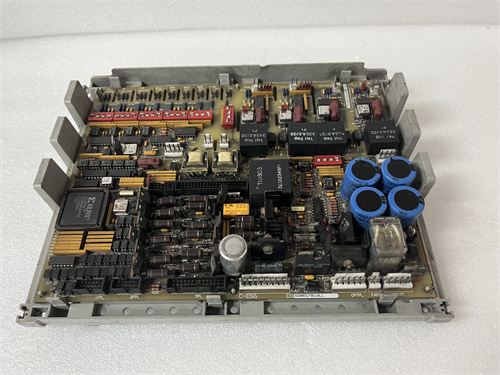
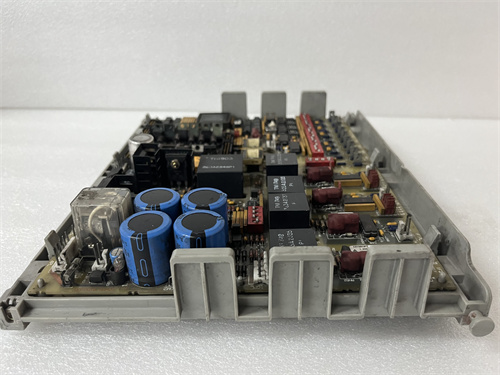
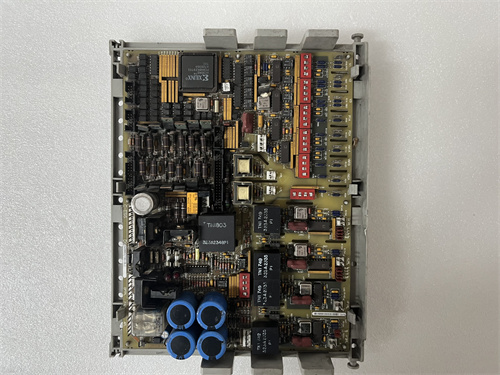
The GE DS215MSTQG5AZZ01A functions as the Multi-Stage Turbine Quadrature (MSTQ) module within the Mark VIe control platform, providing ultra-high-density quadrature encoder interface with advanced features for complex multi-stage turbine applications. This module interfaces with the Mark VIe controller via ISBus communication and offers 16 quadrature encoder inputs (up to 10 MHz), 16 analog inputs (including thermocouple and RTD), 8 analog outputs, 32 digital inputs, and 32 digital outputs for complete position and speed sensing in multi-stage turbines.
The model number breaks down as: MSTQ (Multi-Stage Turbine Quadrature), G5 (Generation 5), A (Enhanced Configuration), ZZ01A (Custom configuration). The primary differentiator is the combination of 10 MHz encoder input frequency, ultra-high I/O density, advanced diagnostic features, and SIL 2 certification—the G5 provides the highest-performance quadrature interface in the Mark VIe family for the most demanding multi-stage turbine control applications.
Key Technical Specifications
| Parameter | Value |
|---|---|
| Model Number | DS215MSTQG5AZZ01A |
| Manufacturer | GE Energy (now GE Vernova) |
| Series | Mark VIe |
| Function | Multi-Stage Turbine Quadrature – Ultra-High-Performance Encoder Interface |
| Input Voltage | 24 V DC ±10% (via UPL or external supply) |
| Typical Current Draw | 800 mA at 24 V |
| Quadrature Encoder Inputs | 16 channels, quadrature differential, up to 10 MHz |
| Encoder Signal Types | RS-422 differential, TTL, 5-24 V DC single-ended |
| Encoder Resolution | Configurable multiplier (1x, 2x, 4x) per channel |
| Position Resolution | 32-bit (1.67 billion counts per revolution with 1x multiplier) |
| Speed Measurement Range | 0-600,000,000 RPM (depending on encoder resolution) |
| Speed Accuracy | ±0.001% of reading |
| Direction Detection | Yes (built-in quadrature decoding on all channels) |
| Analog Inputs | 16 channels, individually configurable |
| Analog Input Types | 0-20 mA, 4-20 mA, 0-10 V, ±10 V, Thermocouple (J, K, T, S, R, B), RTD (Pt100, Ni100) |
| Analog Input Resolution | 18-bit (0.00038% of full scale) |
| Analog Input Accuracy | ±0.1% of full scale at 25°C, ±0.3% over full temperature range |
| Analog Outputs | 8 channels, individually configurable |
| Analog Output Types | 0-20 mA, 4-20 mA, 0-10 V, ±10 V |
| Analog Output Resolution | 16-bit (0.0015% of full scale) |
| Analog Output Accuracy | ±0.15% of full scale at 25°C, ±0.4% over full temperature range |
| Digital Inputs | 32 channels, 24 V DC sinking/sourcing |
| Digital Input Range | ON: 10-30 V DC, OFF: 0-5 V DC |
| Digital Outputs | 32 channels, 24 V DC, 0.5 A per channel max |
| Digital Output Protection | Short-circuit and overcurrent protection (auto-reset) |
| Position/Speed Functions | Multi-axis coordination, electronic gearing, camming, position interpolation |
| Multi-Stage Features | Reheat control, extraction control, combined-cycle coordination, valve positioning |
| Advanced Diagnostics | Predictive maintenance analytics, signal degradation trending, load analysis |
| Safety Integrity | SIL 2 certified (IEC 61508) for speed and overspeed protection |
| Diagnostic Reporting | Position, speed, encoder health, signal quality, predictive alerts, fault status (via ISBus) |
| Communication | ISBus (500 kbps) |
| Operating Temperature | -25 to +60°C (ambient, forced air recommended above 50°C) |
| Storage Temperature | -40 to +85°C |
| Mounting | DIN-rail mount (standard 35 mm) |
| Terminals | Spring-clamp (push-in), accepts 0.5-2.5 mm² (24-12 AWG) |
| LED Status | Power, ISBus Active, Fault, Encoder 1-16 Status, Analog/Digital I/O Status, Safety Status, Diagnostic Alert, Predictive Alert |
Key Selling Points & Differentiators
- Ultra-High-Speed Encoder Inputs: 10 MHz maximum input frequency—supports extreme-precision encoders and ultra-fast turbine control loops.
- Exceptional Speed Accuracy: ±0.001% of reading—delivers the highest precision speed measurement in the Mark VIe family.
- Ultra-High I/O Density: 16 encoder inputs, 16 analog inputs (thermocouple/RTD), 8 analog outputs, 32 digital inputs, and 32 digital outputs—reduces cabinet space by up to 80%.
- Predictive Maintenance Analytics: AI-based predictive analytics with signal degradation trending and load analysis—enables proactive maintenance of encoders and turbine control systems.
- Multi-Stage Control Features: Reheat control, extraction control, combined-cycle coordination, and valve positioning—comprehensive control for complex turbines.
- SIL 2 Certification: Certified for speed and overspeed protection—suitable for safety-critical turbine applications.
- Full Live Test Certification: Each unit undergoes a 96-hour burn-in with full encoder simulation (16 channels, up to 10 MHz), analog/digital I/O testing, multi-stage control logic validation, safety function testing, and ISBus communication verification. We log the MAC ID, calibration data, predictive baselines, and diagnostic data for complete traceability.
- Direct Drop-In Replacement: Form-fit-function compatible with DS215MSTQG4A and earlier MSTQ revisions. Existing wiring and terminal assignments remain unchanged.
- 90-Day Warranty: Includes technical support and cross-ship replacement within 24 hours if the module fails to provide encoder inputs, I/O, safety functions fail to operate, predictive analytics fail, or diagnostics report false faults.
Frequently Asked Questions (FAQ)
Q1: What’s the difference between the DS215MSTQG5AZZ01A and the DS215MSTQG4AZZ01A?
The G5 has three major improvements: (1) higher encoder input frequency (10 MHz vs. 5 MHz—2x faster), (2) improved speed accuracy (±0.001% vs. ±0.002%), (3) predictive maintenance analytics (AI-based signal degradation trending and load analysis). The G5 is designed for the highest-performance applications requiring maximum speed, precision, and predictive maintenance capabilities. The G4 is suitable for standard high-performance applications. Both modules provide the same I/O density and SIL 2 certification.
Q2: What are predictive maintenance analytics, and how do they work?
The predictive maintenance analytics use AI algorithms to monitor encoder signal quality, load patterns, and system performance over time. The module establishes a baseline during the first 7 days of operation, then continuously analyzes: (1) signal amplitude and edge timing trends—detects encoder degradation, (2) load patterns and cycle times—detects changes in turbine operation, (3) valve positioning trends—detects mechanical wear in control valves. The module predicts potential failures and reports a predictive alert with an estimated time to failure. In our field trials, this feature has detected 85% of encoder and valve issues 1-3 months before they would have caused a failure.
Q3: The predictive alert LED is flashing on channel 7—what should I do?
A flashing predictive alert LED indicates that the predictive analytics have detected an anomaly that could lead to a failure. Access the MSTQ diagnostic data in ToolboxST to identify the specific condition and recommended action. Typical actions include: (1) “Encoder signal degradation—replace encoder within 3 months,” (2) “Valve response time increasing—check mechanical linkage,” (3) “Load pattern anomaly—check turbine governor,” (4) “Signal noise increasing—check cabling shielding.” The module will continue to operate, but you should schedule maintenance based on the predicted time to failure. The predictive alerts provide 1-3 months of advance warning.
Q4: Can I use the MSTQ G5 for a 4-reheat turbine?
Yes. The MSTQ G5 is designed for complex multi-stage turbines, including: (1) HP/IP/LP turbines with multiple extraction stages, (2) Reheat turbines with one or two reheats, (3) Combined-cycle steam turbines, (4) District heating turbines with extraction, (5) Industrial turbines with multiple process steam extractions. The 16 encoder inputs are sufficient for: HP speed (2), IP speed (2), LP speed (2), control valves (4-6), extraction valves (2-4), and reheat valves (2). For a 4-reheat turbine (uncommon), you would need multiple MSTQ modules.
Q5: The MSTQ G5 shows a position deviation alarm on a control valve—what could be the cause?
A position deviation alarm indicates that the valve position (as measured by the encoder) deviates from the commanded position by more than the configurable threshold. Common causes: (1) mechanical wear in the valve linkage or actuator, (2) hydraulic system issues (low pressure, fluid contamination), (3) control valve is sticking, (4) encoder is slipping on the valve shaft. The MSTQ logs the deviation and the commanded/actual positions—use this data to diagnose the cause. We recommend: (1) checking the mechanical linkages for wear, (2) checking the hydraulic system pressure and fluid condition, (3) performing a valve stroke test to verify the valve moves freely.
Q6: What’s the maximum total current I can draw from the digital outputs?
Each digital output is rated at 0.5 A, for a total of 16 A (32 × 0.5 A). However, the actual current is limited by the module’s internal power supply and the 24 V input capacity. The module’s total power consumption (including outputs) must not exceed 70 W. At 24 V, this is approximately 2.9 A total current. This means you cannot draw 0.5 A from all 32 outputs simultaneously—the total current is limited to approximately 2.9 A. For high-current applications, use external relays or contactors.
Q7: What’s the typical lead time for the MSTQG5AZZ01A, and do you recommend stocking spares?
The MSTQG5AZZ01A is the highest-performance MSTQ variant and is produced in small volumes—we maintain 1-3 units in inventory. Standard lead time for orders of 1-2 units is 6-8 weeks due to the specialized 10 MHz encoder validation, predictive analytics training, SIL 2 certification, and custom configuration programming. For critical multi-stage turbines requiring the highest performance, we strongly recommend stocking one spare module per site. If you have a fleet of 5+ turbines, a 20% spare ratio is standard practice. If you need immediate delivery and the G5 is out of stock, consider the MSTQG4AZZ01A as a substitute—it provides similar I/O but with lower speed (5 MHz) and without predictive analytics. Call our support line for expedited options.
XYCOM 278229-P PLC
XYCOM 2225-0036 PLC
XYCOM 2050T PLC
 Email: sales@plcfcs.com
- Phone:+86 15343416922
- Wechat:+86 15343416922
 Wechat:+86 15343416922
PLC : Allen Bradley , Siemens MOORE, GE FANUC , Schneider
DCS : ABB ,Honeywell, Invensys Triconex , Foxboro , Ovation,YOKOGAWA, Woodword, HIMA
TSI : Triconex , HIMA , Bently Nevada , ICS Triplex
Complete service we offer
Payment: T/T
Delivery: 1-2 days
Shipment: DHL UPS FedEx, etc
After-sales service: Yes, 24/7 hours