 Email: jiedong@sxrszdh.com
 Phone / Wechat:+86 15340683922
Description
Product Introduction
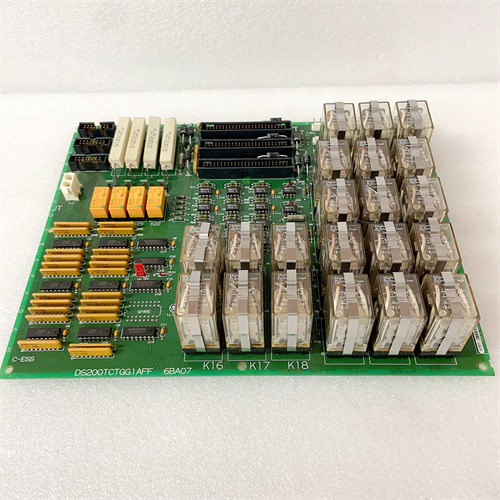
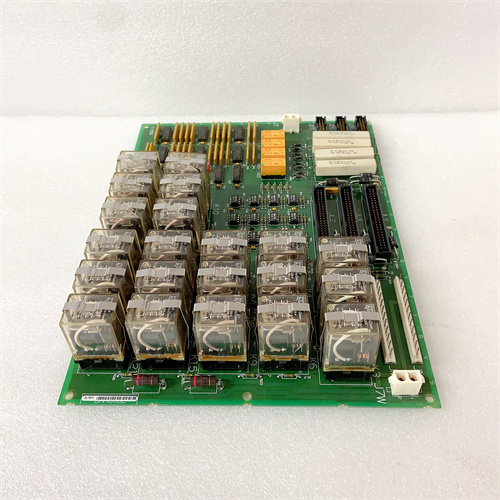
The GE DS2020LPPB312A functions as the Low Pressure Power Adapter B (LPPB) module within the Mark VIe control platform, providing high-reliability, dual-input redundant power conversion with enhanced monitoring and diagnostics for critical Mark VIe systems. This module accepts two independent AC (85-264 V AC) or DC (100-150 V DC) inputs and delivers 24 V DC at 12.9 A continuous (310 W), with four isolated output channels for distributing power to I/O modules, controllers, and field devices. The dual-input design with automatic failover ensures continuous operation even if one input source fails.
The model number breaks down as: LPPB (Low Pressure Power Adapter B – Redundant Input), 312 (310 W output rating with enhanced monitoring), A (Revision A). The primary differentiator is the combination of dual-input redundancy and enhanced monitoring—the LPPB312A includes input power quality analysis per source, load step response tracking, and predictive fault detection for both input channels, providing comprehensive visibility into power system health and redundancy status.
Key Technical Specifications
| Parameter | Value |
|---|---|
| Model Number | DS2020LPPB312A |
| Manufacturer | GE Energy (now GE Vernova) |
| Series | Mark VIe |
| Function | Low Pressure Power Adapter B – Dual-Input Redundant Power with Enhanced Monitoring |
| Primary AC Input | 85-264 V AC (47-63 Hz) |
| Secondary AC Input | 85-264 V AC (47-63 Hz) |
| Primary DC Input | 100-150 V DC |
| Secondary DC Input | 100-150 V DC |
| Transfer Time | 8 ms typical (maximum 12 ms) |
| Output Voltage | 24 V DC ±5% |
| Total Output Capacity | 12.9 A continuous (310 W) |
| Individual Output Channels | 4 channels, each rated 6.5 A max |
| Output Isolation | 500 V AC (channel-to-channel, channel-to-input) |
| Output Protection | Short-circuit (auto-reset), overcurrent (foldback), overvoltage (30 V clamp) |
| Efficiency | 88% typical at full load |
| Hold-up Time | 30 ms at full load (primary input) |
| Inrush Current | 15 A peak (AC input), 20 A peak (DC input) |
| Ripple & Noise | <40 mV peak-to-peak at full load |
| Input Monitoring | Per-source voltage, THD, frequency, power quality, availability status |
| Enhanced Diagnostics | Load step response analysis, predictive fault detection, input quality trending, transfer event analysis |
| Status Monitoring | Source selection status, input voltage per source, input quality metrics, output current per channel, internal temperature, health status (via ISBus) |
| Onboard Memory | 32 MB flash memory for diagnostic trend logging (7-day trend storage) |
| Communication | ISBus (500 kbps) for status and diagnostics |
| Operating Temperature | -25 to +60°C (ambient, derate 2% per °C above 50°C) |
| Storage Temperature | -40 to +85°C |
| Mounting | DIN-rail mount (standard 35 mm) |
| Terminals | Screw terminals (accepts 0.5-6 mm² / 24-10 AWG) |
| LED Status | Primary Input Active, Secondary Input Active, Output Channel 1-4 Status, Fault, ISBus Active, Thermal Warning, Transfer Event, Diagnostic Alert |
Key Selling Points & Differentiators
- Dual-Input Redundancy with Enhanced Monitoring: Automatic failover in <12 ms with per-source input power quality monitoring—provides both redundancy and full visibility into both power sources.
- Input Power Quality Analysis: Monitors voltage, THD, frequency, and availability per input source—enables early warning of degrading input power quality before it causes a transfer event.
- Predictive Fault Detection: Analyzes input quality trends and load patterns to predict potential failures—reduces unplanned outages by identifying developing issues early.
- Seamless Transfer: 8 ms transfer time with 30 ms hold-up ensures outputs remain within regulation during source transitions.
- Flexible Input Configuration: Supports any combination of AC (85-264 V) and DC (100-150 V) inputs—connect to mains AC and backup battery system, two independent AC feeds, or dual DC sources.
- High Power Capacity: 12.9 A continuous (310 W)—powers full Mark VIe racks with redundant input protection.
- Full Live Test Certification: Each unit undergoes a 48-hour burn-in with full load testing, input transfer testing (20 cycles), diagnostic verification, and protection circuit validation. We log the MAC ID, output calibration data, transfer time, and diagnostic baselines for traceability.
- Direct Drop-In Replacement: Form-fit-function compatible with DS2020LPPB310A and earlier LPPB revisions. Existing wiring and terminal assignments remain unchanged.
- 90-Day Warranty: Includes technical support and cross-ship replacement within 24 hours if the module fails to provide regulated output, automatic transfer fails, diagnostics report incorrect data, or protection circuits fail to operate.
Frequently Asked Questions (FAQ)
Q1: What’s the difference between the DS2020LPPB312A and the DS2020LPPB310A?
The LPPB312A adds enhanced monitoring and diagnostic capabilities: (1) per-source input power quality analysis (voltage, THD, frequency), (2) load step response analysis, (3) predictive fault detection, and (4) input quality trending. The 312 also has improved hold-up time (30 ms vs. 25 ms), lower ripple (<40 mV vs. 50 mV), and onboard trend logging (7-day storage). Both modules provide 310 W with dual-input redundancy. Choose the LPPB312A for critical applications requiring comprehensive power monitoring and predictive maintenance.
Q2: How do I access the input power quality data for both sources?
The input power quality data is accessible via ToolboxST version 6.2 or newer using the LPPB diagnostic block. The block exposes: (1) voltage, THD, and frequency for both primary and secondary inputs, (2) input availability status, (3) transfer event history, (4) input quality trending data, and (5) predictive fault alerts. The module stores 7 days of diagnostic data in onboard memory. You can also export the data to CSV for offline analysis.
Q3: The diagnostic alert LED is flashing—what does that mean?
A flashing diagnostic alert LED indicates that one of the monitored parameters has exceeded a warning threshold. The module reports the specific condition via ISBus. Common causes include: (1) input voltage THD on primary or secondary source exceeding 10%, (2) input voltage sag or swell events detected, (3) transfer events occurring more frequently than expected, (4) output ripple exceeding 100 mV, or (5) load quality issue on a specific channel. Access the diagnostic data in ToolboxST to identify the specific condition. Most diagnostic alerts are warnings—the module continues to operate normally.
Q4: Can I connect one AC source and one DC source to the LPPB312A?
Yes. The LPPB312A accepts any combination of AC (85-264 V AC) and DC (100-150 V DC) inputs. Each input has its own selector jumper (AC/DC). For example, you could connect input 1 to AC mains and input 2 to a 125 V DC battery system. The module automatically selects the primary input (jumper-selectable) and switches to the secondary if the primary fails. If both sources are available, the module uses the primary source.
Q5: What does the “input quality trending” feature do?
Input quality trending monitors the power quality of both input sources over time. The module tracks: (1) voltage stability (sags, swells, and variations), (2) harmonic distortion (THD), (3) frequency stability, and (4) availability (downtime events). The module establishes a baseline during the first 7 days of operation and then compares current performance against that baseline. If the module detects a trend that could lead to a future transfer event or input failure, it generates a diagnostic alert. This allows you to address input power quality issues before they cause a transfer or power loss.
Q6: Does the LPPB312A support redundant modules (two LPPB312A modules in parallel)?
Yes. The LPPB312A supports load sharing via droop control and external diodes for paralleling. You can connect up to three LPPB modules in parallel for increased capacity or N+1 redundancy. The enhanced diagnostics help verify that the redundant modules are sharing the load properly. If one module fails or degrades, the monitoring system can detect the imbalance and alert operators. For critical systems, we recommend using three LPPB312A modules in a 2+1 redundant configuration.
Q7: What’s the typical lead time for the LPPB312A, and do you recommend stocking spares?
The LPPB312A is a specialized, moderate-volume module—we maintain 3-5 units in inventory. Standard lead time for orders of 1-3 units is 2-4 weeks due to the specialized dual-input monitoring validation and 48-hour burn-in. For critical turbines requiring redundant power with comprehensive monitoring, we strongly recommend stocking one spare module per site. If you have a fleet of 10+ turbines, a 10% spare ratio is standard practice. If you need immediate delivery and the LPPB312A is out of stock, consider the LPPB310A as a substitute—it provides the same power capacity and redundancy but lacks the enhanced monitoring. Call our support line for expedited options.
XYCOM ME2100 NE150C PLC
ABB PM861AED1 PLC
ABB 3BSE018161R1 PLC
ABB PM864AKD1 PLC
 Email: sales@plcfcs.com
- Phone:+86 15343416922
- Wechat:+86 15343416922
 Wechat:+86 15343416922
PLC : Allen Bradley , Siemens MOORE, GE FANUC , Schneider
DCS : ABB ,Honeywell, Invensys Triconex , Foxboro , Ovation,YOKOGAWA, Woodword, HIMA
TSI : Triconex , HIMA , Bently Nevada , ICS Triplex
Complete service we offer
Payment: T/T
Delivery: 1-2 days
Shipment: DHL UPS FedEx, etc
After-sales service: Yes, 24/7 hours