 Email: jiedong@sxrszdh.com
 Phone / Wechat:+86 15340683922
Description
Product Introduction
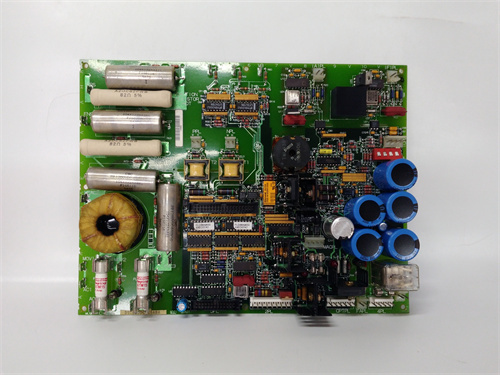
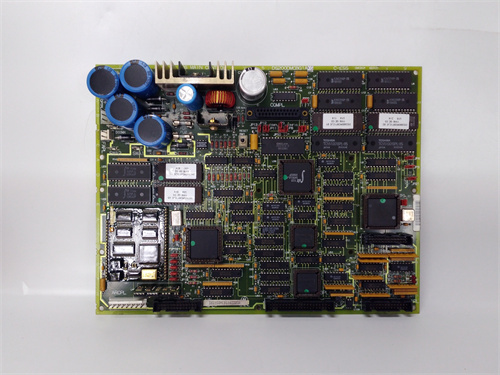
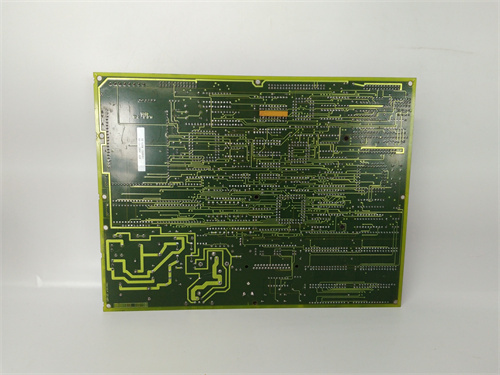
The GE DS2020EXPSG3 is the third-generation Expansion Power Supply (EXPS) module within the Mark VIe control platform, delivering isolated, regulated 24 V DC power to expansion I/O racks with enhanced diagnostics and active load sharing capability. This module accepts a wide-range AC input (85-264 V AC) or DC input (100-150 V DC) and provides 10 A continuous at 24 V DC, with four isolated output channels for distributing power to multiple I/O modules or sub-racks.
The primary differentiator is the active load sharing capability and enhanced diagnostics—the G3 supports active current sharing between multiple EXPS modules for redundancy or increased capacity, with module-to-module communication for balanced loading. It also includes advanced diagnostics (output voltage ripple monitoring, capacitor aging prediction, and load step response tracking) and improved efficiency (90% at full load). The G3 is designed for large, critical expansion racks requiring high availability and predictive maintenance.
Key Technical Specifications
| Parameter | Value |
|---|---|
| Model Number | DS2020EXPSG3 |
| Manufacturer | GE Energy (now GE Vernova) |
| Series | Mark VIe |
| Function | Expansion Power Supply – Enhanced Diagnostics and Active Load Sharing |
| AC Input Voltage | 85-264 V AC (47-63 Hz) |
| DC Input Voltage | 100-150 V DC |
| Output Voltage | 24 V DC ±5% |
| Total Output Capacity | 10 A continuous (240 W) |
| Individual Output Channels | 4 channels, each rated 5 A max |
| Output Isolation | 500 V AC (channel-to-channel, channel-to-input) |
| Output Protection | Short-circuit (auto-reset), overcurrent (foldback), overvoltage (30 V clamp) |
| Active Load Sharing | Parallel up to 3 modules for capacity or redundancy, active balancing via dedicated load-sharing bus |
| Efficiency | 90% typical at full load |
| Hold-up Time | 30 ms at full load (AC input) |
| Inrush Current | 12 A peak (AC input), 18 A peak (DC input) |
| Ripple & Noise | <30 mV peak-to-peak at full load |
| Advanced Diagnostics | Output voltage ripple monitoring, capacitor aging prediction, load step response tracking, input power quality monitoring |
| Diagnostic Reporting | Output current per channel, input voltage, internal temperature, ripple RMS, capacitor health, health status (via ISBus) |
| Onboard Memory | 32 MB flash memory for diagnostic trend logging (7-day trend storage) |
| Communication | ISBus (500 kbps) for status and diagnostics; dedicated load-sharing bus for parallel operation |
| Operating Temperature | -25 to +60°C (ambient, derate 2% per °C above 50°C) |
| Storage Temperature | -40 to +85°C |
| Mounting | DIN-rail mount (standard 35 mm) |
| Terminals | Spring-clamp (push-in), accepts 0.5-4 mm² (24-12 AWG) |
| LED Status | Power Input, Output Channel 1-4 Status, Fault, ISBus Active, Thermal Warning, Load Sharing Active, Capacitor Health |
Key Selling Points & Differentiators
- Active Load Sharing: Parallel up to 3 EXPS modules with active current balancing—enables N+1 redundancy or increased capacity without external diodes. Dedicated load-sharing bus ensures balanced loading (±5%).
- Enhanced Diagnostics: Output voltage ripple monitoring, capacitor aging prediction, and load step response tracking—enables predictive maintenance and early warning of power supply degradation.
- Improved Efficiency: 90% efficient at full load (vs. 88% on G1)—reduces heat dissipation by approximately 20%, improving reliability and reducing cooling requirements.
- Extended Hold-up Time: 30 ms hold-up at full load (vs. 25 ms)—provides additional margin for short power interruptions and reduces the risk of I/O module resets.
- Advanced Protection: Overcurrent foldback, short-circuit auto-reset, overvoltage clamping, and thermal protection—comprehensive protection for both the power supply and downstream I/O modules.
- Onboard Trend Logging: 7-day trend storage for diagnostics—enables historical analysis of power quality and predictive maintenance without external data logging.
- ISBus Monitoring: Reports output current per channel, input voltage, internal temperature, ripple RMS, capacitor health, and active load sharing status to the Mark VIe controller.
- Full Live Test Certification: Each unit undergoes a 48-hour burn-in with full load testing, active load sharing validation, diagnostic verification, and protection circuit testing. We log the MAC ID, output calibration data, and diagnostic baselines for traceability.
- Direct Drop-In Replacement: Form-fit-function compatible with DS2020EXPSG1 and earlier EXPS revisions. Existing wiring and terminal assignments remain unchanged.
- 90-Day Warranty: Includes technical support and cross-ship replacement within 24 hours if the module fails to provide regulated output, load sharing fails to balance, protection circuits fail to operate, diagnostics report incorrect data, or efficiency drops below 86%.
Frequently Asked Questions (FAQ)
Q1: What’s the difference between the DS2020EXPSG3 and the DS2020EXPSG1?
The G3 has five major improvements: (1) active load sharing for parallel operation (up to 3 modules), (2) enhanced diagnostics (ripple monitoring, capacitor aging prediction, load step response tracking), (3) improved efficiency (90% vs. 88%), (4) extended hold-up time (30 ms vs. 25 ms), and (5) onboard trend logging (7-day storage). The G3 is designed for critical expansion racks requiring redundancy, high efficiency, and predictive maintenance.
Q2: How does the active load sharing work, and do I need any additional hardware?
The active load sharing uses a dedicated sharing bus (two wires) that connects the EXPS modules in parallel. One module acts as the master, monitoring the total load and adjusting the reference voltage of the slave modules to balance the current. The balancing accuracy is ±5% of the rated current. You don’t need external diodes—the G3 has built-in OR-ing FETs (with lower losses than diodes) for redundancy. You need: (1) a separate circuit breaker or fuse for each module’s input, (2) the sharing bus wiring, and (3) the output bus wiring (common output). The load sharing is configured in ToolboxST—you set which module is the master and the priority of each module.
Q3: The capacitor aging prediction shows “degraded” after 3 years of service. Is that normal?
Yes. Electrolytic capacitors age due to temperature and ripple current, and 3-5 years is typical for a power supply with 24/7 operation. A “degraded” status means the capacitance has dropped below 80% of the original value—the power supply is still functioning, but the hold-up time and ripple rejection may be reduced. The G3 will continue operating, but we recommend replacing the EXPS module within the next 6-12 months. The “end-of-life” status (capacitance below 60%) indicates the module should be replaced immediately. The aging prediction helps you plan replacements during outages rather than after a failure.
Q4: The ripple monitoring shows 45 mV peak-to-peak—is that normal?
Yes. The G3 has a ripple specification of <30 mV peak-to-peak at full load. 45 mV is slightly above specification. This could indicate: (1) the module is overloaded (check the output current per channel), (2) the input voltage is low (below 85 V AC or 100 V DC), (3) the output filter capacitors are aging (check the capacitor health status), or (4) there’s a high-frequency load on the output (e.g., a switching load causing current pulses). We recommend checking the load and reducing it if possible. If the ripple exceeds 100 mV, the module may be approaching end-of-life—consider replacement.
Q5: Can I use the G3 in a -40°C environment?
The G3 is rated for -25 to +60°C. Below -25°C, the electrolytic capacitors have reduced capacitance and the module may not start reliably. If your expansion rack is in an unheated cabinet in a cold climate, consider: (1) adding a cabinet heater to maintain temperature above -25°C, or (2) using the EXPSG3H (extended-temperature variant, -40 to +70°C, with conformal coating). We don’t recommend operating the standard G3 below -25°C—the performance and reliability will be compromised.
Q6: The G3 shows a fault on the load-sharing bus, but only one module is installed. What does this mean?
If only one module is installed, the load-sharing fault indicates a configuration error—the module is expecting to detect other modules on the sharing bus but doesn’t. In ToolboxST, disable the load-sharing feature (set the module to standalone mode). The module will then operate without the load-sharing bus. If you later add additional modules, re-enable the load-sharing feature. The fault will clear when the module is correctly configured.
Q7: What’s the typical lead time for the EXPSG3, and do you recommend stocking spares?
The EXPSG3 is a moderately stocked module—we maintain 5-8 units in inventory. Standard lead time for orders of 1-5 units is 1-2 weeks due to the specialized testing for the load-sharing and diagnostic features. The EXPSG1 is more heavily stocked (10-15 units) with same-day shipping availability. For critical expansion racks requiring redundancy or advanced diagnostics, we recommend stocking one spare G3 per site. If you have a fleet of 10+ turbines, a 10% spare ratio is standard practice. If you need immediate delivery and the G3 is out of stock, consider the G1 as a substitute—it’s drop-in compatible but lacks active load sharing and advanced diagnostics. Call our support line for expedited options.
PM851K01 PLC
XYCOM CPU-XVME-675 PLC
XYCOM PCS83594A PLC
 Email: sales@plcfcs.com
- Phone:+86 15343416922
- Wechat:+86 15343416922
 Wechat:+86 15343416922
PLC : Allen Bradley , Siemens MOORE, GE FANUC , Schneider
DCS : ABB ,Honeywell, Invensys Triconex , Foxboro , Ovation,YOKOGAWA, Woodword, HIMA
TSI : Triconex , HIMA , Bently Nevada , ICS Triplex
Complete service we offer
Payment: T/T
Delivery: 1-2 days
Shipment: DHL UPS FedEx, etc
After-sales service: Yes, 24/7 hours