 Email: jiedong@sxrszdh.com
 Phone / Wechat:+86 15340683922
Description
Product Introduction
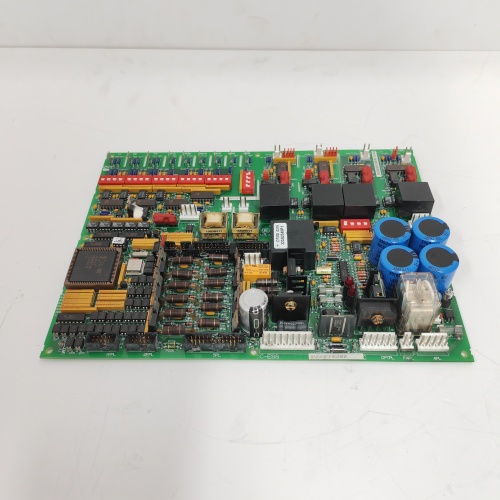
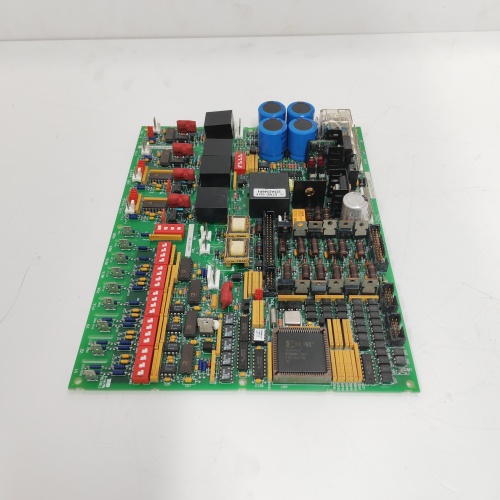
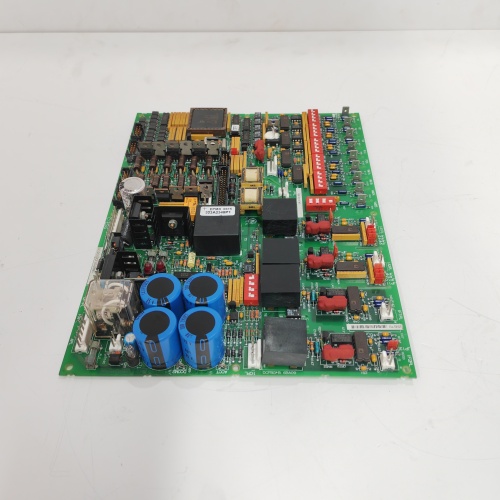
The GE DS2020ERCAG1 functions as the Excitation Regulation and Control (ERCA) module within the Mark VIe control platform, providing comprehensive voltage regulation, power system stabilizer (PSS) functions, and excitation limiters for generator excitation systems. This module interfaces directly with the Mark VIe controller via ISBus communication, delivering precise control of generator terminal voltage, reactive power, and power factor, while providing protection against over-excitation, under-excitation, and V/Hz over-fluxing.
The primary differentiator is the integrated excitation control algorithms—the ERCA incorporates a high-performance automatic voltage regulator (AVR) with dual-channel measurement (redundant voltage and current inputs), IEEE standard 421.5 excitation limiters (UEL, OEL, V/Hz), and a power system stabilizer (PSS) with multiple gain schedules for improved grid stability. The G1 revision includes enhanced diagnostics for excitation system health monitoring, including field current trending, brush wear estimation, and exciter stability assessment. It also supports both AC and DC static excitation systems.
Key Technical Specifications
| Parameter | Value |
|---|---|
| Model Number | DS2020ERCAG1 |
| Manufacturer | GE Energy (now GE Vernova) |
| Series | Mark VIe |
| Function | Excitation Regulation and Control – AVR, PSS, and Excitation Limiters for Generator Excitation |
| Input Voltage | 24 V DC ±10% (via UPL or external supply) |
| Typical Current Draw | 250 mA at 24 V |
| Analog Inputs | 4 channels (generator voltage, field current, reactive power, power factor) |
| Analog Input Types | 0-20 mA, 4-20 mA, 0-10 V, ±10 V |
| Analog Input Resolution | 16-bit (0.0015% of full scale) |
| Analog Input Accuracy | ±0.1% of full scale at 25°C, ±0.3% over full temperature range |
| Analog Outputs | 2 channels (field voltage reference, stabilizer output) |
| Analog Output Types | 0-20 mA, 4-20 mA, 0-10 V |
| Analog Output Resolution | 14-bit (0.006% of full scale) |
| Analog Output Accuracy | ±0.2% of full scale at 25°C, ±0.5% over full temperature range |
| Digital Inputs | 4 channels (breaker status, manual/auto, raise/lower, external trip) |
| Digital Outputs | 4 channels (field breaker, protection trips, alarms, status) |
| AVR Mode | Automatic Voltage Regulator with dual-channel feedback |
| Power System Stabilizer | IEEE 421.5 compliant, multiple gain schedules, with software phase compensation |
| Excitation Limiters | Under-excitation limiter (UEL), over-excitation limiter (OEL), V/Hz limiter, field current limiter |
| Excitation System Support | AC static (brushless), DC static (brush-type), and rotating rectifier systems |
| Diagnostic Reporting | Field current trending, brush wear estimation, exciter stability assessment, limiter activity, fault status (via ISBus) |
| Communication | ISBus (500 kbps) |
| Operating Temperature | -25 to +60°C (ambient, forced air recommended above 50°C) |
| Storage Temperature | -40 to +85°C |
| Mounting | DIN-rail mount (standard 35 mm) |
| Terminals | Spring-clamp (push-in), accepts 0.5-2.5 mm² (24-12 AWG) |
| LED Status | Power, ISBus Active, Fault, AVR Active, PSS Active, Limiter Active, Breaker Closed |
Key Selling Points & Differentiators
- Integrated Excitation Control: Combines AVR, PSS, and all excitation limiters in a single module—reduces cabinet space and simplifies wiring compared to separate voltage regulator and protection relay panels.
- Dual-Channel AVR Feedback: Supports redundant generator voltage and current inputs for enhanced reliability—automatic switchover on input failure maintains excitation control.
- IEEE 421.5 Compliant Limiters: Under-excitation, over-excitation, V/Hz, and field current limiters with anti-windup and coordination logic—ensures generator protection and compliance with industry standards.
- Adaptive Power System Stabilizer: PSS with multiple gain schedules and software phase compensation—provides optimal damping for a wide range of grid conditions (weak grids, long transmission lines, FACTS devices).
- Comprehensive Diagnostics: Field current trending, brush wear estimation, and exciter stability assessment—enables predictive maintenance of the excitation system and early detection of issues.
- Excitation System Versatility: Supports both AC and DC static excitation systems, including brushless, brush-type, and rotating rectifier configurations—one module fits multiple generator types.
- Full Live Test Certification: Each unit undergoes a 36-hour burn-in with full AVR loop simulation, PSS tuning validation, limiter calibration (UEL, OEL, V/Hz), and ISBus communication verification. We log the MAC ID, calibration data, and diagnostic baselines for traceability.
- Direct Drop-In Replacement: Form-fit-function compatible with DS2020ERCAG and earlier ERCA revisions. Existing wiring and terminal assignments remain unchanged.
- 90-Day Warranty: Includes technical support and cross-ship replacement within 24 hours if the module fails to regulate voltage, AVR switchover fails, PSS output is unstable, limiters do not activate at setpoints, or diagnostics report false faults.
Frequently Asked Questions (FAQ)
Q1: What’s the difference between the DS2020ERCAG1 and a standard voltage regulator?
The ERCA is a complete excitation control subsystem with: (1) integrated AVR, PSS, and all limiters (UEL, OEL, V/Hz, field current), (2) ISBus communication with the Mark VIe controller for coordination and monitoring, (3) enhanced diagnostics (field current trending, brush wear estimation, exciter stability), (4) ability to be part of a redundant excitation control system (two ERCA modules can be used with a transfer switch). A standard voltage regulator typically provides only AVR functionality and doesn’t include the advanced features or integration with the control system.
Q2: What types of excitation systems does the ERCA support?
The ERCA supports: (1) AC static excitation systems (brushless)—the most common type for modern generators, with a rotating rectifier, (2) DC static excitation systems (brush-type)—older generators with slip rings and carbon brushes, and (3) rotating rectifier systems (PMG or shunt-fed). The excitation system type is configured in ToolboxST—the module adjusts its control algorithms and diagnostic routines accordingly. For brush-type systems, the brush wear estimation feature is particularly valuable.
Q3: The PSS gain schedule shows an alarm—what does that mean?
The power system stabilizer (PSS) in the ERCA includes multiple gain schedules optimized for different grid conditions (e.g., weak grid, strong grid, line charging, or islanded operation). A PSS gain schedule alarm indicates that the PSS has switched to a non-default gain schedule due to detection of grid conditions outside the normal range. This could be caused by: (1) a grid fault (temporary), (2) changes in the transmission system configuration (e.g., a line tripped), or (3) gradual changes in grid characteristics over time. Review the PSS data in ToolboxST to determine the cause. If the alarm persists, consider a PSS re-tuning (or use the adaptive PSS feature, if enabled).
Q4: The brush wear estimation shows 65% wear on the field brushes. How urgent is it?
For a brush-type excitation system, 65% brush wear means you have approximately 35% of the brush life remaining. In our experience, you should plan to replace the brushes when wear reaches 80% (approximately 20% remaining life). At 65%, schedule a brush replacement during the next planned outage (within 6-12 months, depending on the plant’s duty cycle). The ERCA’s brush wear estimation is based on field current, runtime, and a wear model—it’s not perfectly accurate (±10%), so we recommend performing a visual inspection to confirm. If the inspection shows uneven wear (one brush worn more than others), replace the set—uneven wear can cause arcing and exciter faults.
Q5: Can the ERCA operate in manual mode (field current control) in case of AVR failure?
Yes. The ERCA supports both automatic (AVR) and manual (field current) control modes. In manual mode, the operator sets the field current directly (via a raise/lower signal) to maintain terminal voltage. The transition between automatic and manual modes is bumpless (no voltage or current step) when properly tuned. The manual mode is used for: (1) commissioning, (2) testing, (3) operation in degraded conditions (e.g., failed voltage feedback), and (4) maintenance. The ERCA also supports a closed-loop field current control mode (with anti-windup), which can be used as a fallback.
Q6: The UEL (Under-Excitation Limiter) activated during a load change. Was that expected?
The UEL (under-excitation limiter) activates when the generator’s field current is reduced too far, which can cause loss of synchronism, leading to a generator pole-slip and potential turbine trip. The UEL is designed to prevent this. If the UEL activated during a normal load change, check the UEL setpoint in ToolboxST. The setpoint is typically adjusted based on the generator’s capability curve and the plant’s grid conditions. A UEL activation that occurred during a load change is often due to: (1) the load change being too large for the generator’s field current response (consider reducing the load change rate), (2) the UEL setpoint being too aggressive (adjust it), or (3) the grid voltage being lower than normal, requiring more reactive power (adjust the AVR setpoint or add reactive power support). Review the event logs to determine the root cause.
Q7: What’s the typical lead time for the ERCAG1, and do you recommend stocking spares?
The ERCAG1 is a moderately stocked module—we maintain 5-8 units in inventory. Standard lead time for orders of 1-5 units is 1-2 business days for shipping after QC verification. For critical generators, we strongly recommend stocking one spare ERCA per site. If you have a fleet of 5+ turbines, a 20% spare ratio is standard practice due to the criticality of the module—a failed ERCA will cause the generator to lose excitation, leading to a turbine trip. If you need immediate delivery, contact our support line for expedited options.
ED1625 ABB PLC
ED1780A PLC
ED1781A PLC
XZ401A-E PLC
 Email: sales@plcfcs.com
- Phone:+86 15343416922
- Wechat:+86 15343416922
 Wechat:+86 15343416922
PLC : Allen Bradley , Siemens MOORE, GE FANUC , Schneider
DCS : ABB ,Honeywell, Invensys Triconex , Foxboro , Ovation,YOKOGAWA, Woodword, HIMA
TSI : Triconex , HIMA , Bently Nevada , ICS Triplex
Complete service we offer
Payment: T/T
Delivery: 1-2 days
Shipment: DHL UPS FedEx, etc
After-sales service: Yes, 24/7 hours