 Email: jiedong@sxrszdh.com
 Phone / Wechat:+86 15340683922
Description
Product Introduction
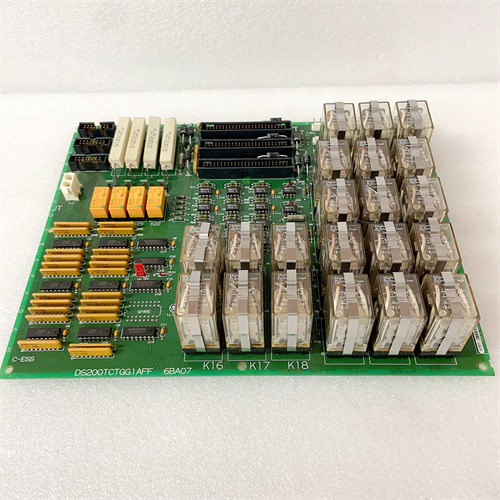
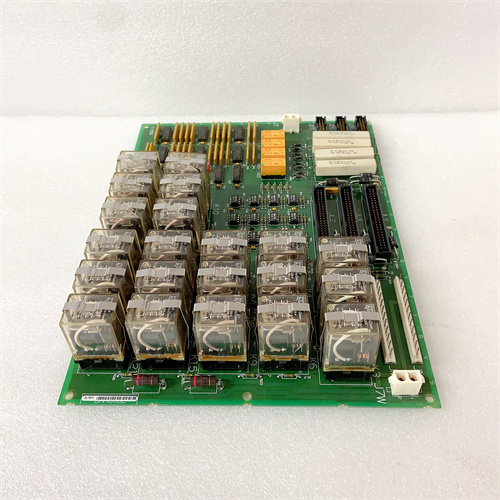
The GE DS2020AGSAG1 functions as the Analog Ground Sense and Acquisition (AGSA) module within the Mark VIe control platform, providing precision analog input channels with dedicated ground-sense connections for high-accuracy measurements in electrically noisy environments. This module interfaces directly with the Mark VIe controller via ISBus communication, offering 6 differential analog inputs and 2 analog outputs, all with dedicated ground-sense (remote sense) connections to compensate for ground potential differences and voltage drops in long signal cables.
The primary differentiator is the dedicated ground-sense input per channel—the AGSA measures the voltage drop between the sensor ground and the module ground and automatically compensates the measurement, eliminating ground loop errors that plague conventional single-ended analog inputs. This is particularly valuable in large turbine installations where sensors are distributed across long distances (100+ meters) and ground potential differences of several volts can exist. The AGSA delivers the accuracy of a 6-wire measurement while using standard 4-wire or 3-wire sensor connections.
Key Technical Specifications
| Parameter | Value |
|---|---|
| Model Number | DS2020AGSAG1 |
| Manufacturer | GE Energy (now GE Vernova) |
| Series | Mark VIe |
| Function | Analog Ground Sense and Acquisition – Precision Analog I/O with Dedicated Ground-Sense Inputs |
| Input Voltage | 24 V DC ±10% (via UPL or external supply) |
| Typical Current Draw | 180 mA at 24 V (plus loop power for analog inputs) |
| Analog Inputs | 6 channels, differential, with dedicated ground-sense |
| Analog Input Types | 0-20 mA, 4-20 mA, 0-10 V, ±10 V, RTD (Pt100, Ni100), Thermocouple (J, K, T) |
| Analog Input Resolution | 18-bit (0.00038% of full scale) |
| Analog Input Accuracy | ±0.05% of full scale at 25°C, ±0.2% over full temperature range |
| Ground-Sense Compensation | Automatic ground potential compensation up to ±5 V |
| Input Impedance | >1 MΩ (voltage mode), 250 Ω (current mode, internal shunt) |
| Common-Mode Rejection | >100 dB at 50/60 Hz |
| Analog Outputs | 2 channels, individually configurable |
| Analog Output Types | 0-20 mA, 4-20 mA, 0-10 V, ±10 V |
| Analog Output Resolution | 16-bit (0.0015% of full scale) |
| Analog Output Accuracy | ±0.15% of full scale at 25°C, ±0.4% over full temperature range |
| Loop Power Supply | +24 V DC, 100 mA total (for external sensors or transmitters) |
| Diagnostic Reporting | Per-channel loop status, open-circuit detection, out-of-range detection, ground potential drift (via ISBus) |
| Communication | ISBus (500 kbps) |
| Operating Temperature | -25 to +60°C (ambient, forced air recommended above 50°C) |
| Storage Temperature | -40 to +85°C |
| Mounting | DIN-rail mount (standard 35 mm) |
| Terminals | Spring-clamp (push-in), accepts 0.5-2.5 mm² (24-12 AWG) |
| LED Status | Power, ISBus Active, Fault, Analog Input 1-6 Status, Analog Output 1-2 Status |
Key Selling Points & Differentiators
- Dedicated Ground-Sense Inputs: Each analog input channel includes a separate ground-sense connection that compensates for ground potential differences between the sensor and the module—eliminates measurement errors caused by ground loops and voltage drops in long cables.
- Precision Measurement: 18-bit resolution, ±0.05% accuracy, and >100 dB common-mode rejection—delivers industry-leading precision for critical turbine measurements (e.g., bearing thermocouples, vibration displacement, pressure transducers).
- Ground Potential Monitoring: Reports ground potential drift per channel via ISBus—enables early warning of grounding system degradation or sensor cable issues.
- Long Cable Support: Ground-sense compensation allows accurate measurements over cable runs up to 300 meters—far beyond the 30-meter limit for conventional single-ended inputs.
- Versatile Sensor Compatibility: Supports 4-20 mA, 0-10 V, RTD, and thermocouple inputs with automatic compensation for cable resistance in RTD and thermocouple measurements.
- Reduced Wiring Complexity: The ground-sense feature allows using 3-wire sensors (signal, common, ground-sense) instead of 4-wire or 6-wire configurations—simplifies field wiring while maintaining high accuracy.
- Full Live Test Certification: Each unit undergoes a 24-hour burn-in with all 6 analog inputs and 2 analog outputs fully simulated, ground-sense compensation validation (tested with ±5 V ground offset), ISBus communication verification, and analog calibration confirmation. We log the MAC ID, analog calibration constants, and ground-sense calibration data for traceability.
- Direct Drop-In Replacement: Form-fit-function compatible with DS2020AGSAG and earlier AGSA revisions. Existing wiring and terminal assignments remain unchanged.
- 90-Day Warranty: Includes technical support and cross-ship replacement within 24 hours if the module fails to communicate, reports incorrect analog values, ground-sense compensation fails to correct ground potential errors, or analog outputs drift out of calibration.
Frequently Asked Questions (FAQ)
Q1: What’s the difference between the DS2020AGSAG1 and a standard analog input module like the ACHA?
The AGSA has dedicated ground-sense (remote sense) inputs that compensate for ground potential differences between the sensor and the module. The ACHA uses single-ended inputs that assume the sensor ground and module ground are at the same potential. In reality, ground potential differences of 0.1-5 V are common in large plants, causing measurement errors in single-ended systems. The AGSA corrects for these errors, delivering accuracy similar to a 6-wire measurement with only 3-4 wires. The AGSA is the right choice for sensors located more than 30 meters from the cabinet, critical loops requiring the highest accuracy, or installations with known ground potential differences.
Q2: How does the ground-sense compensation work, and do I need to wire the sensor differently?
The AGSA provides three terminals per input: Signal (+), Signal (-), and Ground-Sense (also called Remote Sense). The Signal (+) and Signal (-) terminals connect to the sensor’s output or bridge. The Ground-Sense terminal connects to the sensor’s ground reference. The module measures the voltage difference between Signal (-) and Ground-Sense (the ground potential error) and subtracts it from the measured signal. For 4-20 mA current loops, no ground-sense connection is required—the current is unaffected by ground potential differences. For voltage signals, RTDs, and thermocouples, the ground-sense connection is critical. The wiring is slightly more complex than 2-wire connections but much simpler than 4-wire or 6-wire Kelvin connections.
Q3: Can the AGSA compensate for cable resistance in RTD measurements?
Yes. The AGSA uses 3-wire RTD connections (Excitation+, Sense+, and Sense-/Ground). The module measures the resistance of the sense leads and compensates for the voltage drop in the excitation leads. This is standard for 3-wire RTD measurements but the AGSA’s ground-sense feature also compensates for ground potential differences, delivering accuracy comparable to a 4-wire RTD measurement. For full 4-wire RTD accuracy (eliminating all lead wire resistance errors), you can use 4-wire RTDs with the AGSA’s differential inputs.
Q4: The ground potential drift diagnostic shows a drift of 0.5 V on channel 3. Is that a problem?
A ground potential drift of 0.5 V is within the AGSA’s ±5 V compensation range, so the measurement will be accurate. However, ground potential drift can indicate other issues: (a) the cable between the sensor and the module may be damaged (intermittent open or high-resistance ground), (b) there may be a ground loop in the plant wiring, or (c) there may be a high-current device (e.g., motor starter) causing ground potential shifts. We recommend investigating the cause if the drift is increasing over time or exceeds 2 V. If the drift exceeds 5 V, the AGSA will report an out-of-range diagnostic and the measurement may be inaccurate. Check the sensor cable and the plant grounding system.
Q5: Can I use the AGSA with sensors located 200 meters from the control cabinet?
Yes. The AGSA’s ground-sense compensation is designed for long cable runs. The maximum recommended distance is 300 meters for voltage signals and 500 meters for current loops (with appropriate cable). For 200 meters, we recommend shielded, twisted-pair cable (e.g., Belden 8762) to minimize noise pickup. The ground-sense connection should be a separate wire (or twisted pair) to avoid ground potential errors. For 4-20 mA loops, the AGSA’s 250 Ω input impedance plus the loop resistance must be within the sensor’s compliance voltage—at 200 meters with 22 AWG cable, this is typically fine (approximately 40 Ω loop resistance).
Q6: The AGSA has 6 analog inputs and only 2 analog outputs. Why the asymmetry?
The AGSA is optimized for measurement and monitoring applications where sensor density is high and actuator density is lower. Typical turbine applications have 3-10 analog sensors per analog control output. The AGSA’s 6-input, 2-output ratio matches this common requirement, reducing cost and cabinet footprint compared to using separate input and output modules. If you need more outputs, you can combine the AGSA with a dedicated analog output module (e.g., ACHA for additional outputs, or ADOA module).
Q7: What’s the typical lead time for the AGSAG1, and do you recommend stocking spares?
The AGSAG1 is a specialized module—we maintain 3-5 units in inventory. Standard lead time for orders of 1-3 units is 1-2 weeks due to the specialized ground-sense calibration and validation. For critical turbines with long cable runs or precision measurement requirements, we recommend stocking one spare AGSA per site. If you have a fleet of 10+ turbines, a 10% spare ratio is standard practice. If you need immediate delivery and the AGSA is out of stock, consider using a standard ACHA module with careful cable routing and grounding—it won’t have ground-sense compensation but can work acceptably for shorter cable runs (<30 meters). Call our support line for expedited options.
GE FANUC IS220UCSAH1A
GE FANUC IS220YDIAS1A PLC
GE FANUC IS220YDIAS1A
 Email: sales@plcfcs.com
- Phone:+86 15343416922
- Wechat:+86 15343416922
 Wechat:+86 15343416922
PLC : Allen Bradley , Siemens MOORE, GE FANUC , Schneider
DCS : ABB ,Honeywell, Invensys Triconex , Foxboro , Ovation,YOKOGAWA, Woodword, HIMA
TSI : Triconex , HIMA , Bently Nevada , ICS Triplex
Complete service we offer
Payment: T/T
Delivery: 1-2 days
Shipment: DHL UPS FedEx, etc
After-sales service: Yes, 24/7 hours