 Email: jiedong@sxrszdh.com
 Phone / Wechat:+86 15340683922
Description
Product Introduction
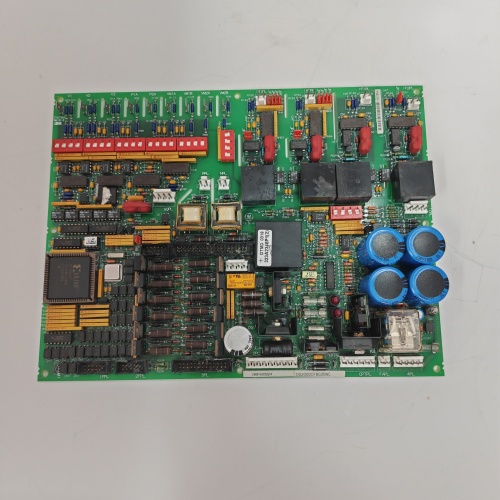
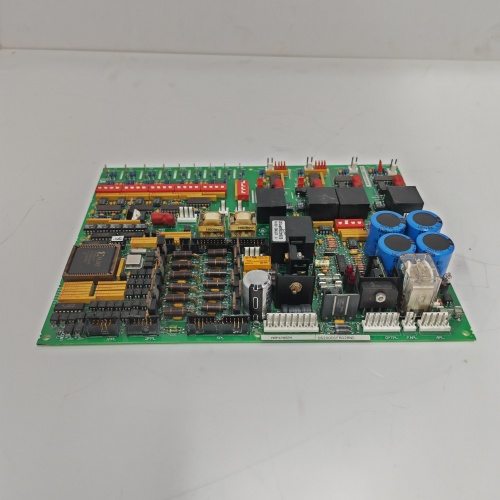
The GE DS200UPLAG1BDA is the cold-wet, spring-clamp terminal variant of the Universal Power Link (UPL) module for the Mark VIe control platform, combining extended-temperature components, conformal coating, 4 kV surge protection, and vibration-resistant spring-clamp wiring. This module distributes regulated power to up to eight I/O modules while passing ISBus communication signals, designed for harsh environments where cold temperatures, moisture, and vibration are concerns, but lightning exposure is moderate.
The primary differentiator is the combination of spring-clamp terminals with extended-temperature components and conformal coating—this variant delivers the same cold-wet protection as the ADA (extended-temp, coating, 4 kV surge) but adds the superior vibration resistance of spring-clamp wiring. For offshore platforms in northern climates, arctic installations with vibration, or any location where temperatures drop below freezing, humidity is high, and equipment is subject to constant vibration, this is the optimal choice.
Key Technical Specifications
| Parameter | Value |
|---|---|
| Model Number | DS200UPLAG1BDA |
| Manufacturer | GE Energy (now GE Vernova) |
| Series | Mark VIe |
| Function | Universal Power Link – Cold-Wet Hub with Spring-Clamp Terminals and 4 kV Surge Protection |
| Input Voltage | 24 V DC ±10% |
| Total Output Capacity | 5 A continuous (120 W) |
| Individual Output Channels | 8 channels, each rated 1.5 A max |
| Terminal Type | Spring-clamp (push-in), accepts 0.5 to 2.5 mm² (24-12 AWG), gold-plated contacts |
| Input Filtering | Pi-filter with >40 dB attenuation at 100 kHz-10 MHz |
| Surge Protection | 4 kV (input power, 1.2/50 µs waveform, IEC 61000-4-5) |
| Channel Protection | Short-circuit (auto-reset), overvoltage clamp (30 V), reverse polarity |
| Conformal Coating | Acrylic-based, MIL-I-46058C compliant |
| ISBus Pass-Through | Yes, supports 500 kbps nominal bus speed |
| Diagnostic Reporting | Per-channel current, total load, input voltage, filter health, surge events (4 kV counter) |
| Operating Temperature | -40 to +70°C (ambient, no derating required) |
| Storage Temperature | -55 to +85°C |
| Humidity Tolerance | 5 to 100% condensing (conformal coated) |
| Vibration Tolerance | 5g, 10-500 Hz (terminal contact resistance stable) |
| Mounting | DIN-rail mount (standard 35 mm) |
| LED Status | Power Input, Output Channel 1-8 Status, ISBus Active, Fault, Filter Health, Surge Event (4 kV), Thermal Warning |
Key Selling Points & Differentiators
- Spring-Clamp Terminals with Cold-Wet Protection: Combines vibration-resistant spring-clamp wiring with extended-temperature (-40 to +70°C), conformal coating, EMI filtering, and 4 kV surge protection—ideal for cold, humid, high-vibration environments with moderate lightning risk.
- Vibration-Resistant Connections: Gas-tight spring pressure maintains contact force under constant vibration—eliminates the need for periodic screw terminal re-torquing and ensures reliable field connections in turbine skids and offshore platforms.
- Military-Grade Extended-Temperature Components: Uses capacitors rated -55 to +125°C, low-ESR electrolytes, and gold-plated terminals—validated for cold-start at -40°C and continuous operation at 70°C.
- Conformal Coating: Acrylic-based coating (MIL-I-46058C) protects against moisture, salt fog, and corrosive atmospheres—essential for offshore platforms, coastal installations, and high-humidity environments.
- Enhanced Input EMI Filtering: Pi-filter design attenuates conducted noise by >40 dB at 100 kHz to 10 MHz—critical in plants with VFDs, large contactors, or switch-mode supplies that generate harmonics.
- Per-Channel Monitoring and Protection: Each of the eight channels includes independent short-circuit, overvoltage, reverse polarity protection with auto-reset, and current monitoring—eliminates external fuses and enables predictive maintenance.
- Full Live Test Certification: Each unit undergoes a 72-hour burn-in with temperature cycling (-40 to +70°C, five cycles), full load testing (5 A total), EMI injection, surge testing (4 kV, 10 pulses), ISBus communication verification, and terminal pull-test (5 N per connection). We log the MAC ID, thermal calibration data, input capacitance measurement, surge event baselines, and terminal pull-test results for complete traceability.
- Direct Drop-In Replacement: Form-fit-function compatible with all DS200UPLAG1 variants (G1, G1B, G1A, G1AAA, G1ABA, G1ACB, G1ADA, G1ADC, G1BBA). Existing wiring must be adjusted for spring-clamp termination if upgrading from screw-terminal variants.
- 90-Day Warranty: Includes technical support and cross-ship replacement within 24 hours if the module fails to distribute power, reports incorrect diagnostic data, protection circuits fail, filter attenuation drops below specified thresholds, temperature/surge ratings are not met, or terminal connections lose holding force.
Frequently Asked Questions (FAQ)
Q1: What does the “BDA” suffix mean, and how does this compare to the “BBA” and “ADA” variants?
The suffix breakdown: First “B” = spring-clamp terminals. Second “D” = extended-temperature range (-40 to +70°C) with conformal coating. Third “A” = 4 kV surge protection.
- BDA = Spring-clamp + Extended-temp + Coating + 4 kV surge (cold-wet-vibration, moderate lightning)
- BBA = Spring-clamp + Extended-temp + Coating + 6 kV surge (cold-wet-vibration, high lightning)
- ADA = Screw-terminal + Extended-temp + Coating + 4 kV surge (cold-wet, moderate lightning, no spring-clamp)
The BDA is the spring-clamp version of the ADA. Choose BDA if you need cold-wet protection and have high vibration, but lightning risk is moderate. Choose BBA if you also need the higher 6 kV surge rating. Choose ADA if you don’t need vibration resistance and want the lower cost of screw terminals.
Q2: I’m replacing a screw-terminal UPL with the BDA. Do I need to change my wiring?
Yes. The BDA uses spring-clamp (push-in) terminals, which accept bare wire (0.5-2.5 mm², 10-12 mm strip length) with or without ferrules. If your existing wiring has ring terminals or spade lugs, you must remove them and strip the wire to bare conductor. Ferrules are acceptable. The terminal pitch (5.08 mm) and numbering are identical to screw-terminal variants—only the termination method changes.
Q3: The BDA has 4 kV surge protection. Can I upgrade to 6 kV later by replacing the protection components?
No. The 4 kV and 6 kV variants use different gas discharge tubes and TVS diodes with different physical footprints and circuit board layouts. The surge protection is integral to the module’s design. If you need 6 kV, you must purchase the BBA variant. The BDA and BBA are physically different boards—there’s no field upgrade.
Q4: Does the BDA’s conformal coating protect against salt fog in offshore environments?
Yes. The acrylic-based conformal coating is rated per MIL-I-46058C, which includes salt fog testing (5% NaCl, 48 hours). The BDA also uses gold-plated terminals for additional corrosion resistance. However, the coating only protects the PCB—the terminals are still exposed. For offshore installations, we recommend using tinned copper wire and applying dielectric grease to the terminal connections for extra protection. In our experience, the BDA provides 5-8 years of reliable service in moderate offshore environments with proper terminal maintenance.
Q5: Can the BDA be used in a -40°C environment if the module is powered off and then started cold?
Yes. The extended-temperature components are rated for cold-start at -40°C. We validate cold-start during the 72-hour test cycle—the module is soaked at -40°C for 4 hours, then powered on. The module starts within 2 seconds, and all output channels reach regulation within 50 ms. However, the electrolytic capacitors in the pi-filter have reduced capacitance at -40°C (approximately 20% lower), which slightly reduces the filter’s attenuation. The module is still within specification.
Q6: I have a high-vibration application with continuous 5g at 100 Hz. Will the spring-clamp terminals hold?
Yes. The spring-clamp terminals are rated for 5g, 10-500 Hz vibration, and we validate this during testing. However, for continuous high-vibration applications, we also recommend using the locking DIN rail clips (GE part number 236A1400P2) to secure the module to the DIN rail. Standard spring clips may allow the module to work loose over time. The terminal connections themselves will remain gas-tight—the spring maintains constant pressure—but the module’s physical mounting needs additional security.
Q7: What’s the typical lead time for the BDA compared to the ADA?
The BDA and ADA have similar lead times—approximately 3-4 weeks for orders of 1-5 units. The BDA requires the same 72-hour test cycle as the ADA, plus the terminal pull-test for the spring-clamp terminals. We typically maintain 3-5 BDA units in stock for cold, high-vibration environments. The ADA is a higher-volume variant with 5-8 units typically in stock. If you need immediate delivery for a critical turbine, call our support line for expedited options—we may be able to accelerate testing for units already in the QC queue.
MOTOROLA MYME166-13A
MOTOROLA MYME177-004
MOTOROLA MVME187-035B
 Email: sales@plcfcs.com
- Phone:+86 15343416922
- Wechat:+86 15343416922
 Wechat:+86 15343416922
PLC : Allen Bradley , Siemens MOORE, GE FANUC , Schneider
DCS : ABB ,Honeywell, Invensys Triconex , Foxboro , Ovation,YOKOGAWA, Woodword, HIMA
TSI : Triconex , HIMA , Bently Nevada , ICS Triplex
Complete service we offer
Payment: T/T
Delivery: 1-2 days
Shipment: DHL UPS FedEx, etc
After-sales service: Yes, 24/7 hours