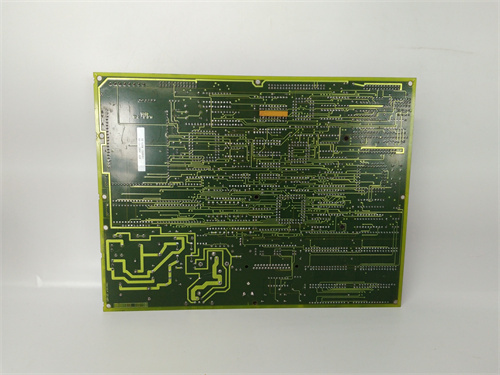
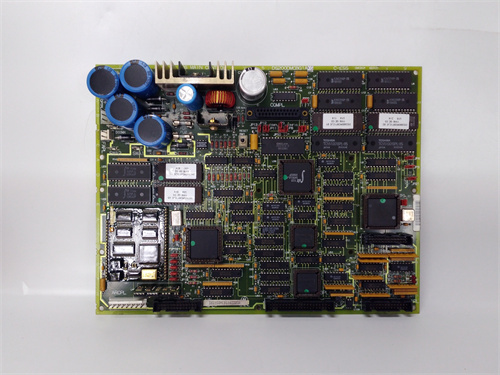
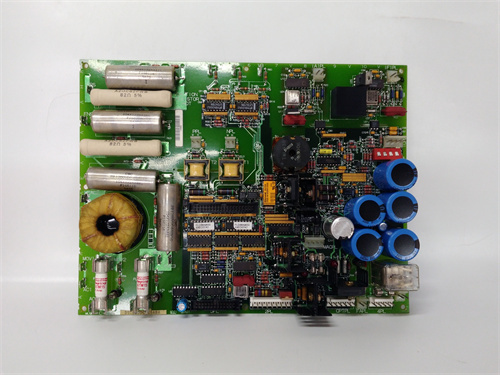
 Email: jiedong@sxrszdh.com
 Phone / Wechat:+86 15340683922
Description
Product Introduction (Anti-Template)
The DS200UCIAG2ACC is the most advanced high-performance CPU controller board GE produced for the Mark VI system—the board that combines 32-bit processing, 2ms control loop, reinforced isolation (1800Vrms), extended temperature operation (-20°C to +70°C), enhanced EMC protection (10V/m radiated immunity), comprehensive diagnostics, and advanced health monitoring for the most demanding turbine control applications. This board is the ultimate central processing unit for critical turbine control systems.
The ‘UCIA’ in the part number indicates this is a CPU controller board. The ‘2’ indicates the high-performance variant. The ‘ACC’ suffix tells you this is the ultimate version: reinforced isolation (1800Vrms), extended temperature range (-20°C to +70°C), enhanced EMC protection, 32-bit processing, 2ms control loop, enhanced memory, comprehensive diagnostics, and advanced health monitoring. Compared to the UCIAG2A (standard isolation, 0-55°C), the ‘ACC’ gives you reinforced isolation, extended temperature range, and comprehensive diagnostics. This is the board you spec when you need the absolute best performance and reliability from your CPU.
Key Technical Specifications
| Parameter | Value / Range |
|---|---|
| Manufacturer | General Electric (GE) |
| Part Number | DS200UCIAG2ACC |
| Board Type | CPU Controller Board |
| Processor | VME-based CPU (32-bit) |
| Control Loop | 2ms (minimum) |
| Communication Interfaces | Ethernet, Serial, VME backplane |
| Memory | Enhanced capacity |
| Diagnostic LEDs | Enhanced status LEDs (power, run, fault, communication, isolation active, diagnostic status) |
| Advanced Diagnostics | Memory health monitoring, communication health monitoring, CPU load monitoring, temperature monitoring, power supply monitoring, watchdog monitoring |
| Isolation | 1800Vrms (reinforced) |
| EMC Protection | Enhanced (IEC 61000-4-3: 10V/m radiated immunity; IEC 61000-4-2: 8kV ESD; IEC 61000-4-5: 2kV surge) |
| Input Power | 24 or 48 VDC (via backplane) |
| Mounting | VME rack (fits standard Mark VI backplane) |
| Operating Temp | -20°C to +70°C (extended range) |
| Firmware | Version 4.0 or later required |
| Connectors | 1 x 96-pin DIN backplane connector; front panel communication ports |
Compatible Replacement Models
Replacement options depend on your need for reinforced isolation, extended temperature, and comprehensive diagnostics.
✅ Drop-in Replacement: The DS200UCIAG2A (no ‘CC’) is a direct electrical drop-in—same pinout, same form factor, same processor, same memory, same control loop. The differences: the ‘A’ has standard isolation (1500Vrms), standard temperature range (0-55°C), standard EMC, and standard diagnostics. If your environment is benign and your requirements are standard, the ‘A’ is a cheaper option (typically 25-35% less). The ‘ACC’ is for harsh environments requiring reinforced isolation and comprehensive diagnostics.
⚠️ Software Compatible: The DS200UCIAG2 (no diagnostics) is a significant downgrade—only use if you’re in a pinch.
⚠️ Software Compatible: The DS200UCIAG1A (16-bit, 5ms loop) is a lower-performance variant. Only use if you don’t need the higher performance.
❌ Hardware Incompatible: Any I/O board (TCCAG1, TCDAG1, TCQAF1, etc.) uses different backplane pins and is not suitable as a CPU replacement.
Frequently Asked Questions (FAQ)
What does the ‘ACC’ suffix mean on this high-performance CPU board?
GE’s suffix coding for the UCIAG2ACC: the ‘A’ is the base platform (CPU controller, 32-bit, 2ms loop). The ‘C’ indicates reinforced isolation (1800Vrms), extended temperature range (-20°C to +70°C), and enhanced EMC protection. The final ‘C’ is the production revision with comprehensive diagnostics and advanced health monitoring. So ‘ACC’ is the most robust, diagnostic-rich version of the UCIAG2 platform.
What’s the difference between standard and reinforced isolation on a CPU board?
The UCIAG2A has standard isolation: 1500Vrms between the CPU and the backplane. The ‘ACC’ has reinforced isolation: 1800Vrms, providing double the safety margin and meeting IEC 61010-1 reinforced insulation requirements. This is important for applications in high-voltage environments or with long cable runs.
What advanced diagnostics does the ‘ACC’ revision provide?
The ‘ACC’ provides comprehensive diagnostics:
- Memory health monitoring: Detects memory errors and degradation.
- Communication health monitoring: Monitors Ethernet and serial communication integrity.
- CPU load monitoring: Tracks CPU utilization to detect performance issues.
- Temperature monitoring: Monitors board temperature for thermal management.
- Power supply monitoring: Monitors power supply voltages for stability.
- Watchdog monitoring: Monitors the watchdog timer for system hangs.
Can I use this board with a Mark VIe controller?
No—the UCIAG2ACC uses the older Mark VI backplane pinout and architecture. Mark VIe uses a different system architecture. If you’re migrating to Mark VIe, you’ll need the Mark VIe-specific CPU boards.
How do I test this board before installation?
Testing the UCIAG2ACC requires verifying the CPU functionality, reinforced isolation, and advanced diagnostics:
- Visual inspection: Check for burnt or discolored components. Look for diagnostic LEDs, larger isolation components, and EMC filtering components.
- Power-up test: Apply power. The board’s status LEDs should illuminate in the correct sequence.
- Firmware check: Read the firmware version via the system interface—should be 4.0 or later.
- Communication test: Verify communication via Ethernet and serial ports.
- Control loop test: Verify the control loop executes at 2ms intervals.
- Performance test: Verify the CPU can handle the processing load.
- Diagnostic test: Verify the diagnostic system reports health status correctly for all monitored parameters.
- Isolation test: Apply 1800Vrms between the board and ground for 1 minute.
- EMC test (if equipment available): Apply a 10V/m radiated RF field—verify the board remains stable.
- Temperature test: Cycle from -20°C to +70°C—verify operation.
What’s the most common failure on this board?
Two issues specific to the CPU design:
- Memory failure. The memory modules can fail over time—symptom: system crashes or boot errors. The advanced diagnostics will detect memory errors.
- Communication interface failure. The Ethernet or serial ports can fail—symptom: loss of communication with other system components.
If I’m using this board in a SIL-rated safety application, what’s the recommended maintenance interval?
The CPU board with reinforced isolation and comprehensive diagnostics is suitable for SIL-2 and SIL-3 applications (when used with appropriate redundancy). We recommend:
- Visual inspection: Every 6 months (check diagnostic LEDs)
- Power-up test: Every 12 months
- Communication test: Every 12 months
- Diagnostic check: Every 6 months (verify health status)
- Memory health check: Every 12 months
- Temperature check: Every 12 months
- Isolation check: Every 2 years
- Full system test: Every 5 years
What’s the lead time for a replacement UCIAG2ACC?
These are the rarest and most advanced high-performance CPU boards:
- New surplus: 4-8 weeks. The ‘ACC’ commands a premium—expect 35-45% above the UCIAG2A.
- Refurbished: 2-4 weeks. Ensure the refurbisher has verified the CPU functionality, reinforced isolation, and advanced diagnostics.
- Used/as-is: Extremely high risk—used boards are almost never in spec.
Is there a direct Mark VIe equivalent?
Yes—the IS200UCIAG2ACC (Mark VIe version). The architecture is different.
What’s the control loop update rate for this board?
The UCIAG2ACC can execute control loops at 2ms intervals—500Hz update rate. This is suitable for the most demanding turbine control applications.
What communication interfaces does this board have?
The UCIAG2ACC has Ethernet for network communication, serial ports for configuration and debugging, and the VME backplane for communication with I/O boards. The reinforced isolation extends to the communication interfaces.
Can I use this board in a redundant configuration?
Yes—the UCIAG2ACC can be used in a redundant configuration with two CPU boards (primary and secondary). This provides failover capability for critical applications. The comprehensive diagnostics on the ‘ACC’ version improve fault detection and failover response.
What’s the memory capacity of this board?
The UCIAG2ACC has enhanced memory capacity, suitable for complex control algorithms and large data logging requirements. For specific memory capacity, consult the GE specifications.
What’s the difference between the UCIAG2ACC and the UCIAG2A in terms of diagnostics?
The UCIAG2A has diagnostic LEDs and basic health monitoring. The UCIAG2ACC has comprehensive diagnostics including memory health monitoring, communication health monitoring, CPU load monitoring, temperature monitoring, power supply monitoring, and watchdog monitoring—a complete health management system for the CPU.
PMF1216D63 PLC DCS
AS-B883-200
140CRA21210
140NOE77101
 Email: sales@plcfcs.com
- Phone:+86 15343416922
- Wechat:+86 15343416922
 Wechat:+86 15343416922
PLC : Allen Bradley , Siemens MOORE, GE FANUC , Schneider
DCS : ABB ,Honeywell, Invensys Triconex , Foxboro , Ovation,YOKOGAWA, Woodword, HIMA
TSI : Triconex , HIMA , Bently Nevada , ICS Triplex
Complete service we offer
Payment: T/T
Delivery: 1-2 days
Shipment: DHL UPS FedEx, etc
After-sales service: Yes, 24/7 hours