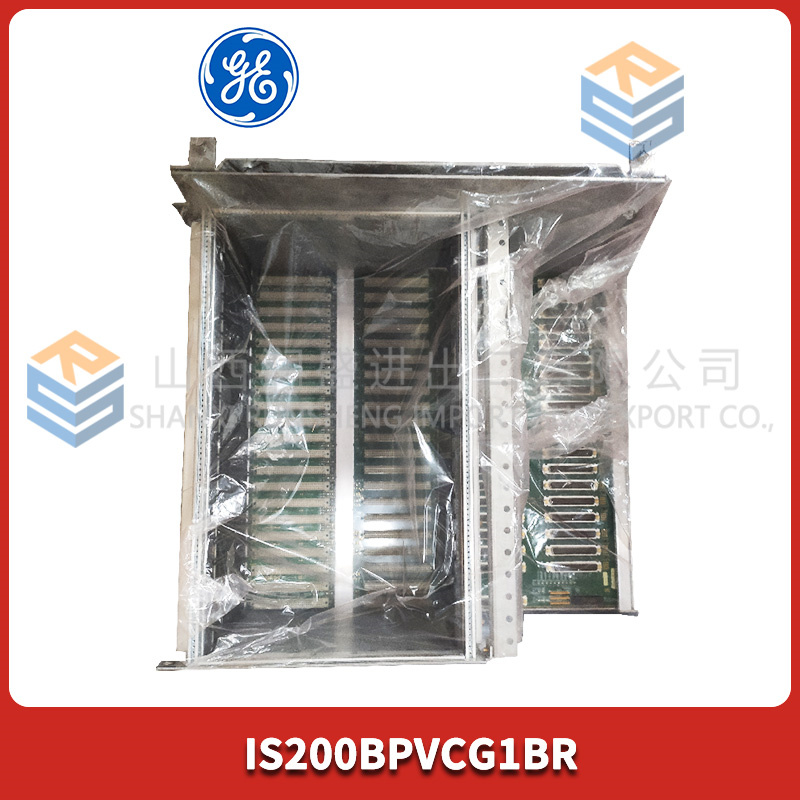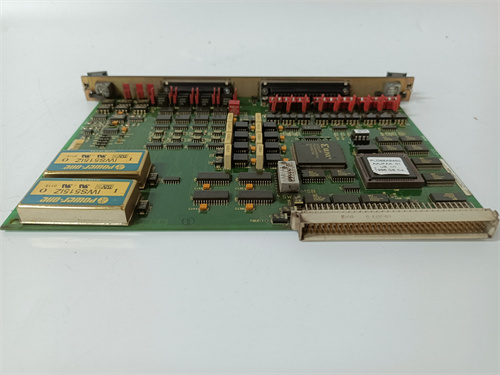
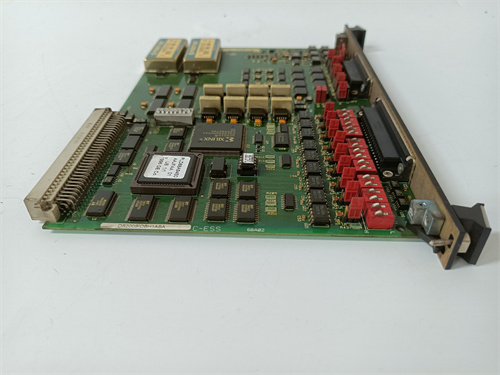
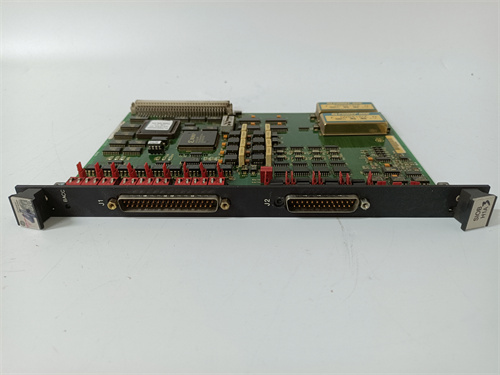
 Email: jiedong@sxrszdh.com
 Phone / Wechat:+86 15340683922
Description
Product Introduction (Anti-Template)
The DS200TCQCG1BJF is the absolute best relay output board GE produced for the Mark VI system—the board that leaves nothing to chance. This board gives you 8 relay outputs in one VME slot with reinforced isolation (1800Vrms), galvanic isolation, extended temperature operation (-20°C to +70°C), enhanced EMC protection (10V/m radiated immunity), advanced time-stamping (±100µs accuracy), ultra-precision relay health monitoring (±0.01Ω contact resistance, bounce detection, actuation time measurement), and advanced diagnostics including predictive failure analysis and remaining life estimation for each relay contact. If you need to drive high-current loads in a harsh environment with multiple grounding points, and you need the absolute best predictive maintenance and diagnostics, this board is the ultimate solution.
The ‘TCQC’ in the part number indicates this is a discrete output board with relay outputs. The ‘BJF’ suffix tells you this is the ultimate version: reinforced isolation (1800Vrms), galvanic isolation, extended temperature range (-20°C to +70°C), enhanced EMC protection, 5ms update rate, diagnostic LEDs per channel, advanced time-stamping with ±100µs accuracy, ultra-precision relay health monitoring with ±0.01Ω contact resistance accuracy, and advanced diagnostics including predictive failure analysis and remaining life estimation. Compared to the TCQCG1BHF (ultra-precision diagnostics), the ‘BJF’ gives you advanced diagnostics with remaining life estimation and predictive failure analysis. This is the board you spec when you need the absolute best performance and predictive maintenance from your relay outputs.
Key Technical Specifications
| Parameter | Value / Range |
|---|---|
| Manufacturer | General Electric (GE) |
| Part Number | DS200TCQCG1BJF |
| Board Type | Relay Output Board |
| Number of Channels | 8 (relay outputs) |
| Output Type | Relay (Form C, normally open/normally closed) |
| Contact Rating | 5A at 250VAC or 5A at 30VDC |
| Output Voltage | 24, 48, or 125 VDC (configurable per output) |
| Update Rate | 5ms (all channels updated simultaneously) |
| Time-Stamping | Advanced output command time-stamping (±100µs accuracy) |
| Galvanic Isolation | Separate isolated power supply and signal path for each output channel |
| Ultra-Precision Diagnostics | Precision contact resistance measurement (±0.01Ω accuracy), contact bounce detection, relay actuation time measurement, contact wear prediction algorithm |
| Advanced Diagnostics | Predictive failure analysis, remaining life estimation per relay contact, contact wear trend analysis, automatic maintenance scheduling alerts |
| Diagnostic LEDs | Per-channel: green (ON), amber (OFF), red (fault), white (time-stamping active), blue (galvanic isolation active), flashing combinations for diagnostic codes |
| Isolation | Channel-to-channel: 1800Vrms (reinforced); channel-to-backplane: 1800Vrms (reinforced); galvanic isolation (output-to-backplane) |
| EMC Protection | Enhanced (IEC 61000-4-3: 10V/m radiated immunity; IEC 61000-4-2: 8kV ESD; IEC 61000-4-5: 2kV surge) |
| Input Power | 24 or 48 VDC (via backplane) |
| Mounting | VME rack (fits standard Mark VI backplane) |
| Operating Temp | -20°C to +70°C (extended range) |
| Firmware | Version 6.5 or later required |
| Connectors | 1 x 96-pin DIN backplane connector |
Compatible Replacement Models
Replacement options depend on your need for advanced diagnostics and predictive maintenance.
✅ Drop-in Replacement: The DS200TCQCG1BHF (ultra-precision diagnostics) is a direct electrical drop-in—same pinout, same 8 relay outputs, same contact rating, same update rate, same isolation, same time-stamping. The differences: the ‘BHF’ has ultra-precision diagnostics (±0.01Ω) but no predictive failure analysis or remaining life estimation. If you don’t need predictive maintenance features, the ‘BHF’ is a cheaper option (typically 10-15% less). The ‘BJF’ is for applications requiring the most advanced diagnostics and predictive maintenance.
✅ Drop-in Replacement: The DS200TCQCG1BBA (standard diagnostics) is a significant downgrade—only use if you’re in a pinch.
⚠️ Software Compatible: The DS200TCQBF1B (16 solid-state outputs) provides more channels but with lower current rating (2A vs. 5A).
⚠️ Software Compatible: The DS200TCQBG1B (8 inputs, 8 relay outputs) provides both inputs and outputs—only use if you need both functions.
❌ Hardware Incompatible: Any analog I/O board (TCCAG1 series) or discrete input board (TCQAF1 series) uses different backplane pins and is not suitable for outputs.
Frequently Asked Questions (FAQ)
What does the ‘BJF’ suffix mean on this relay output board?
GE’s suffix coding for the TCQCG1BJF: the ‘B’ is the base platform (relay output, 8 channels, 5ms update, reinforced isolation, galvanic isolation, enhanced EMC). The ‘J’ indicates advanced diagnostics (predictive failure analysis, remaining life estimation, wear trend analysis), ultra-precision relay health monitoring, extended temperature range, advanced time-stamping, and enhanced diagnostics. The ‘F’ is the production revision with the most comprehensive diagnostic suite. So ‘BJF’ is the most advanced, predictive-maintenance-enabled version of the TCQCG1 platform—the absolute best relay output board GE ever made.
What’s the difference between ultra-precision diagnostics and advanced diagnostics?
- Ultra-precision diagnostics (BHF): Precision contact resistance measurement (±0.01Ω accuracy), contact bounce detection, relay actuation time measurement, contact wear prediction algorithm.
- Advanced diagnostics (BJF): All of the above, plus predictive failure analysis (detects patterns indicating imminent failure), remaining life estimation per relay contact (predicted number of remaining operations), contact wear trend analysis (historical tracking of contact degradation), automatic maintenance scheduling alerts (generates maintenance alerts when relay approaches end-of-life).
The advanced diagnostics allow you to implement true predictive maintenance, replacing relays only when necessary based on actual health data rather than on a fixed schedule.
How does remaining life estimation work on the ‘BJF’?
The ‘BJF’ uses a machine learning algorithm that analyzes historical contact resistance, bounce time, and actuation time data. It compares the current readings to the typical degradation patterns for the specific relay type, taking into account the load current, switching frequency, and ambient temperature. The algorithm then estimates the remaining number of operations before the relay reaches its end-of-life threshold. This estimate is updated after each operation and is available in ToolboxST. It allows you to schedule maintenance before failure occurs, eliminating unnecessary preventive replacements and reducing downtime.
Can I use this board with a Mark VIe controller?
No—the TCQCG1BJF uses the older Mark VI backplane pinout. Mark VIe uses a different assignment and typically uses the IS200TCQCG1BJF for relay outputs. Use the Mark VIe-specific board for new installations.
How do I test this board before installation?
Testing the TCQCG1BJF requires checking all 8 outputs, verifying galvanic isolation, reinforced isolation, EMC protection, ultra-precision diagnostics, advanced diagnostics, and timestamp accuracy:
- Visual inspection: Check for burnt components. Look for diagnostic LEDs, relay wear, galvanic isolation components, larger isolation transformers, and the time-stamping circuit.
- Power-up test: Apply power. All diagnostic LEDs should cycle through their patterns during POST.
- Firmware check: Read firmware via ToolboxST—should be 6.5 or later.
- Output test: Command output 1 ON—verify relay closes and LED illuminates green. Measure continuity—should be <0.1Ω. Command OFF—verify relay opens and LED turns amber. Repeat for outputs 1-8.
- Precision contact resistance test: In ToolboxST, read the reported contact resistance—should be <0.1Ω with ±0.01Ω resolution.
- Contact bounce measurement test: Operate the relay and verify the board reports bounce time (2-5ms for new relays).
- Actuation time measurement test: Operate the relay and verify the board reports the actuation time.
- Predictive failure analysis test: In ToolboxST, verify the board reports a health status for each relay (e.g., “Good,” “Degrading,” or “Replace Soon”).
- Remaining life estimation test: Verify the board reports a remaining life estimate (e.g., “100,000 operations remaining”).
- Output current measurement test: Connect a load and verify the reported current matches the actual measured current.
- Cable open detection test: Disconnect a cable—verify the board detects the open cable.
- Galvanic isolation test: Measure resistance between output channels—should be >20MΩ.
- Time-stamping test: Command an output change and record the timestamp. Verify accuracy within ±100µs.
- EMC test (if equipment available): Apply a 10V/m radiated RF field—verify outputs remain stable.
- Isolation test: Apply 1800Vrms between an output channel and ground for 1 minute.
- Temperature test: Cycle from -20°C to +70°C—verify operation.
What’s the most common failure on the ‘BJF’ revision?
- Relay contact wear. The advanced diagnostics will detect contact degradation and predict remaining life.
- Galvanic isolation component failure. The galvanic isolation components can fail, causing ground loop issues.
- Advanced diagnostic circuit failure. The predictive maintenance circuits can fail, causing inaccurate health status reports.
- Time-stamping circuit failure. Timestamp data becomes inaccurate or unavailable.
If I’m using this board in a SIL-rated safety application, what’s the recommended maintenance interval?
The galvanic isolation, relay outputs, reinforced isolation, ultra-precision diagnostics, advanced diagnostics, enhanced EMC, and time-stamping make this board suitable for SIL-2 and SIL-3 applications. We recommend:
- Visual inspection: Every 3 months (check diagnostic LEDs)
- Power-up test: Every 6 months
- Output test: Every 6 months (verify relay operation and contact resistance)
- Advanced diagnostics check: Every 6 months (verify health status, remaining life estimates, and wear trends)
- Predictive failure analysis check: Every 6 months (review any alerts or warnings)
- Galvanic isolation check: Every 12 months
- Time-stamping test: Every 12 months (±100µs spec)
- EMC test (if equipment available): Every 5 years
- Isolation check: Every 2 years
- Full calibration: Every 5 years
What’s the lead time for a replacement TCQCG1BJF?
These are the rarest and most advanced relay output boards:
- New surplus: 4-8 weeks. The ‘BJF’ commands the highest premium—expect 50-60% above the TCQCG1BBA.
- Refurbished: 2-4 weeks. Requires specialized calibration equipment, timestamp verification, galvanic isolation testing, ultra-precision diagnostic testing, and advanced diagnostic validation.
- Used/as-is: Extremely high risk—used boards are almost never in spec.
Is there a direct Mark VIe equivalent?
Yes—the IS200TCQCG1BJF (Mark VIe version). The backplane pinout is different.
What termination board should I use with the TCQCG1BJF?
The TCQCG1BJF is designed to interface with a termination board that supports relay outputs. The DS200TBQAG1A (high-current discrete termination) or DS200TBPXG1A (mixed-signal termination) can be used. For best results with galvanic isolation, advanced diagnostics, time-stamping, and EMC protection, use shielded wiring and follow the grounding instructions in the GE manual.
What’s the update rate for this board?
The TCQCG1BJF updates all 8 channels simultaneously at 5ms intervals—200Hz update rate. The timestamp is captured at the exact moment of the output command.
What’s the maximum load for the relay outputs?
The relay outputs are rated for 5A at 250VAC or 5A at 30VDC. For inductive loads (solenoids, contactors), derate to 2A or use an external snubber circuit. The advanced diagnostics will monitor contact resistance, bounce time, and actuation time, providing predictive maintenance alerts. The remaining life estimation algorithm takes into account the load current and switching frequency to provide an accurate prediction of when each relay should be replaced.
FOXBORO P0916PW
FOXBORO FBMSSW
FOXBORO P0916CC
FOXBORO P0916CA
 Email: sales@plcfcs.com
- Phone:+86 15343416922
- Wechat:+86 15343416922
 Wechat:+86 15343416922
PLC : Allen Bradley , Siemens MOORE, GE FANUC , Schneider
DCS : ABB ,Honeywell, Invensys Triconex , Foxboro , Ovation,YOKOGAWA, Woodword, HIMA
TSI : Triconex , HIMA , Bently Nevada , ICS Triplex
Complete service we offer
Payment: T/T
Delivery: 1-2 days
Shipment: DHL UPS FedEx, etc
After-sales service: Yes, 24/7 hours