 Email: jiedong@sxrszdh.com
 Phone / Wechat:+86 15340683922
Description
Product Introduction (Anti-Template)
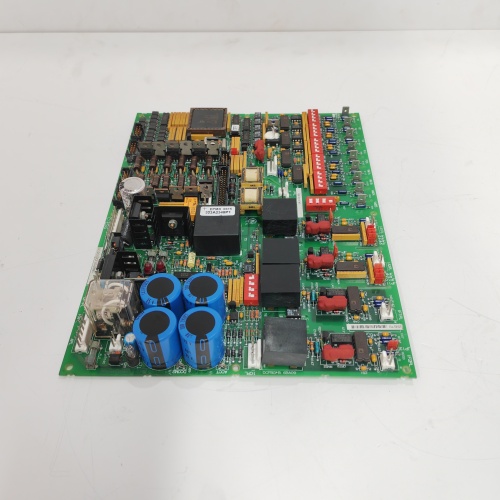
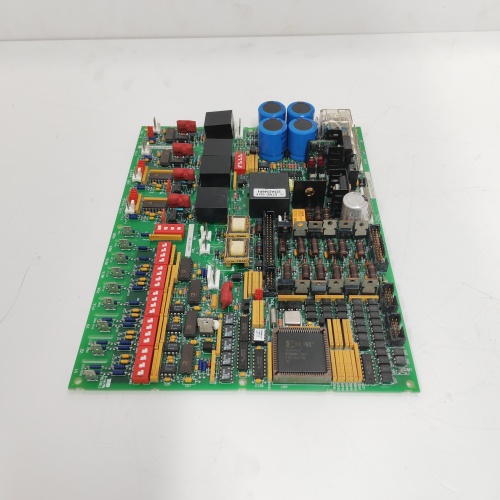
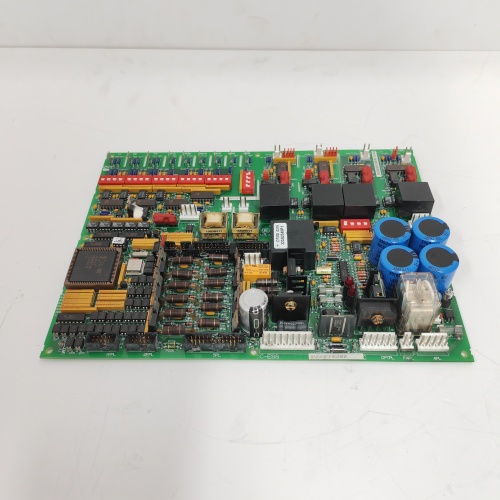
The DS200TCQCG1A is a dedicated relay output board—the board that takes the controller’s ON/OFF signals and drives solenoids, contactors, pilot relays, and other discrete loads with mechanical relay contacts. This board gives you 8 relay outputs in one VME slot, with diagnostic LEDs per channel that tell you the status of each output at a glance.
The ‘TCQC’ in the part number indicates this is a discrete output board with relay outputs (as opposed to solid-state outputs on the ‘TCQB’ series). The ‘A’ revision adds diagnostic LEDs per channel, improves the update rate from 10ms to 5ms, and adds better noise filtering. The board is designed for applications where you need to drive a small number of loads with high-current contacts—like solenoids, contactors, and pilot relays. Compared to the solid-state output boards (TCQBF1B), the TCQCG1A gives you higher current capacity (5A vs. 2A) but with mechanical contacts that wear out over time.
Key Technical Specifications
| Parameter | Value / Range |
|---|---|
| Manufacturer | General Electric (GE) |
| Part Number | DS200TCQCG1A |
| Board Type | Relay Output Board |
| Number of Channels | 8 (relay outputs) |
| Output Type | Relay (Form C, normally open/normally closed) |
| Contact Rating | 5A at 250VAC or 5A at 30VDC |
| Output Voltage | 24, 48, or 125 VDC (configurable per output) |
| Update Rate | 5ms (all channels updated simultaneously) |
| Diagnostic LEDs | Per-channel: green (ON), amber (OFF), red (fault) |
| Isolation | Channel-to-channel: 1500Vrms; channel-to-backplane: 1500Vrms |
| Input Power | 24 or 48 VDC (via backplane) |
| Mounting | VME rack (fits standard Mark VI backplane) |
| Operating Temp | 0°C to +60°C |
| Firmware | Version 3.0 or later required |
| Connectors | 1 x 96-pin DIN backplane connector |
Compatible Replacement Models
Replacement options depend on your need for relay outputs vs. solid-state outputs.
✅ Drop-in Replacement: The DS200TCQCG1 (no ‘A’) is a direct electrical drop-in—same pinout, same 8 relay outputs, same contact rating. The differences: the base model has no diagnostic LEDs, 10ms update rate, and less noise filtering. If you don’t need diagnostics and your speed requirements are moderate, the base model is a cheaper option (typically 15-20% less). The ‘A’ is the enhanced version.
⚠️ Software Compatible: The DS200TCQBF1B (16 solid-state outputs) provides more channels but with lower current rating (2A vs. 5A). If you need high current and don’t mind mechanical wear, use the TCQCG1A. If you need high reliability and don’t need high current, use the TCQBF1B.
⚠️ Software Compatible: The DS200TCQBG1A (8 inputs, 8 relay outputs) provides both inputs and outputs—only use if you need both functions in one slot.
❌ Hardware Incompatible: Any analog I/O board (TCCAG1 series) or discrete input board (TCQAF1 series) uses different backplane pins and is not suitable for outputs.
Frequently Asked Questions (FAQ)
What’s the difference between relay outputs and solid-state outputs?
Relay outputs (TCQCG1A) use mechanical contacts that physically open and close. They can handle higher current (5A) and are isolated from the control logic, but the contacts wear out over time (especially with inductive loads). Solid-state outputs (TCQBF1B) use MOSFETs with no moving parts—they never wear out but have lower current capacity (2A) and higher cost. Choose relay outputs for high-current loads that switch infrequently; choose solid-state for frequent switching or high reliability.
What type of relays does this board use?
The TCQCG1A uses Form C relays—each output has a normally open (NO) and normally closed (NC) contact. This allows you to use the output to either close a circuit (NO) or open a circuit (NC). The relays are field-replaceable (plug-in type), which is convenient for maintenance.
Can I use this board with a Mark VIe controller?
No—the TCQCG1A uses the older Mark VI backplane pinout. Mark VIe uses a different assignment and typically uses the IS200TCQCG1A for relay outputs. Use the Mark VIe-specific board for new installations.
How do I test this board before installation?
Testing the TCQCG1A requires checking all 8 outputs:
- Visual inspection: Check for burnt components. Look for diagnostic LEDs and relay wear.
- Power-up test: Apply power. All diagnostic LEDs should briefly flash during POST.
- Firmware check: Read firmware via ToolboxST—should be 3.0 or later.
- Output test: Command output 1 ON—verify relay closes and LED illuminates green. Measure continuity across the NO contacts—should be <0.1Ω. Command OFF—verify relay opens and LED turns amber. Repeat for outputs 1-8.
- Contact resistance test: Measure contact resistance of each relay—should be <0.1Ω for new relays.
- Update rate test: Verify the board updates at 5ms intervals.
- Isolation test: Measure resistance between output channels—should be >10MΩ.
What’s the most common failure on this board?
Two issues specific to the relay output design:
- Relay contact wear. The relay contacts can wear out over time, especially if switching inductive loads (solenoids, contactors). Symptom: output doesn’t close or exhibits high contact resistance. The diagnostic LED may not indicate this—you need to measure contact resistance periodically.
- Diagnostic LED failure. The LEDs can fail after 10+ years—a failed LED doesn’t affect the output, but you lose visual indication.
If I’m using this board in a SIL-rated safety application, what’s the recommended maintenance interval?
The relay outputs make this board suitable for SIL-1 and SIL-2 applications (not SIL-3). We recommend:
- Visual inspection: Every 6 months (check diagnostic LEDs and relay contacts)
- Power-up test: Every 12 months
- Output test: Every 12 months (verify relay operation and contact resistance)
- Isolation check: Every 2 years
- Full calibration: Every 5 years
What’s the lead time for a replacement TCQCG1A?
These boards are moderately available:
- New surplus: 2-4 weeks.
- Refurbished: 1-2 weeks. Ensure the refurbisher tests all 8 relays.
- Used/as-is: Available, but the relays are wear items—inspect contact resistance.
Is there a direct Mark VIe equivalent?
Yes—the IS200TCQCG1A (Mark VIe version). The backplane pinout is different.
What termination board should I use with the TCQCG1A?
The TCQCG1A is designed to interface with a termination board that supports relay outputs. The DS200TBQAG1A (high-current discrete termination) or DS200TBPXG1A (mixed-signal termination) can be used. The termination board provides the terminal connections for the field wiring. The relay contacts on the TCQCG1A are connected to the termination board via the backplane.
What’s the update rate for this board?
The TCQCG1A updates all 8 channels simultaneously at 5ms intervals—200Hz update rate. This matches the solid-state output boards.
What’s the maximum load for the relay outputs?
The relay outputs are rated for 5A at 250VAC or 5A at 30VDC. For inductive loads (solenoids, contactors), derate to 2A or use an external snubber circuit to protect the relay contacts. The relays are field-replaceable—keep spare relays in your maintenance kit.
Can I replace the relays in the field?
Yes—the relays are plug-in type (socketed). You can replace a failed relay without soldering. However, the board must be powered down before replacing relays. Keep spare relays (the correct type and rating) in your maintenance kit. The relay part number is typically printed on the relay body—order the same type.
FOXBORO P0922QS
FOXBORO FBM228
FOXBORO P0800DS
 Email: sales@plcfcs.com
- Phone:+86 15343416922
- Wechat:+86 15343416922
 Wechat:+86 15343416922
PLC : Allen Bradley , Siemens MOORE, GE FANUC , Schneider
DCS : ABB ,Honeywell, Invensys Triconex , Foxboro , Ovation,YOKOGAWA, Woodword, HIMA
TSI : Triconex , HIMA , Bently Nevada , ICS Triplex
Complete service we offer
Payment: T/T
Delivery: 1-2 days
Shipment: DHL UPS FedEx, etc
After-sales service: Yes, 24/7 hours