 Email: jiedong@sxrszdh.com
 Phone / Wechat:+86 15340683922
Description
Product Introduction (Anti-Template)
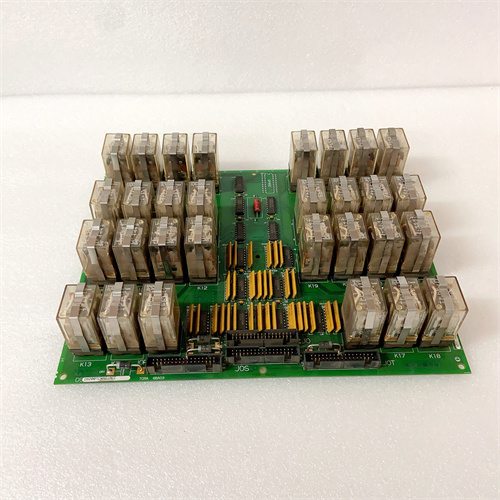
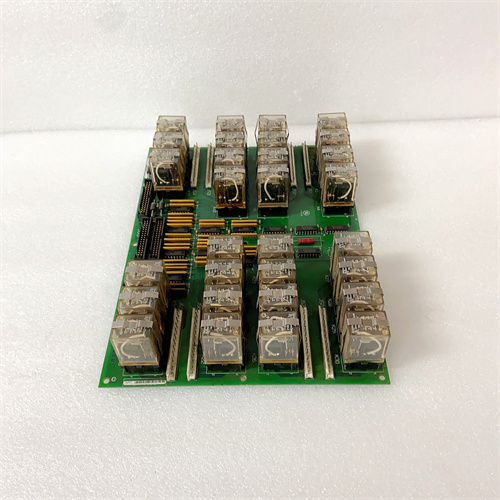
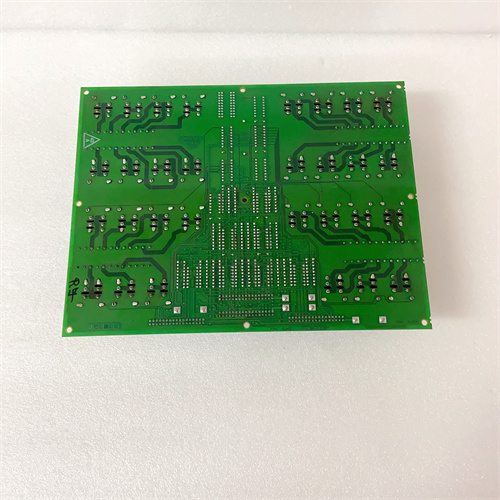
The DS200TCEAG1B is the most advanced combined analog I/O board in the Mark VI line—the one that finally gives you the channel count savings of the TCEAG1A but with performance that rivals dedicated boards. This revision improves resolution from 14-bit to 15-bit effective, accuracy from 0.15%/0.20% to 0.1%/0.15%, and adds per-channel diagnostic LEDs that tell you the status of every input and output at a glance.
The ‘B’ suffix tells you this is the enhanced version: improved accuracy, better resolution, enhanced HART diagnostics, and faster update rate (8ms vs. 10ms). Compared to the TCEAG1A, the ‘B’ gives you a board that’s significantly more capable—you get nearly the precision of the dedicated TCCAG1A (inputs) and TCDAG1B (outputs) in a single slot. If you’re using combined I/O for a critical control loop (like a valve with position feedback), the ‘B’ version gives you the accuracy you need without the rack space of two separate boards.
Key Technical Specifications
| Parameter | Value / Range |
|---|---|
| Manufacturer | General Electric (GE) |
| Part Number | DS200TCEAG1B |
| Board Type | Analog I/O Board (Inputs + Outputs) |
| Number of Inputs | 4 (isolated analog inputs) |
| Number of Outputs | 4 (isolated analog outputs) |
| Input Range | 0-10V, ±10V, 4-20mA (configurable per input) |
| Output Range | 0-10V, ±10V, 4-20mA (configurable per output) |
| Resolution | 15-bit effective (inputs and outputs, oversampled 14-bit) |
| Accuracy (Inputs) | ±0.10% of full scale |
| Accuracy (Outputs) | ±0.15% of full scale |
| Temperature Drift | ±30ppm/°C (I/O) |
| Diagnostic LEDs | Per-channel: green (normal), red (fault), amber (warning) |
| HART Support | Integrated HART modem per channel (inputs and outputs) with enhanced diagnostics |
| Input Impedance | >2MΩ (voltage), 250Ω (current) |
| Output Impedance | <0.3Ω (voltage), >500kΩ (current) |
| Isolation | Channel-to-channel: 1500Vrms; channel-to-backplane: 1500Vrms |
| Update Rate | 8ms (all channels updated simultaneously) |
| Input Power | 24 or 48 VDC (via backplane) |
| Mounting | VME rack (fits standard Mark VI backplane) |
| Operating Temp | 0°C to +60°C |
| Firmware | Version 4.0 or later required |
| Connectors | 1 x 96-pin DIN backplane connector |
Compatible Replacement Models
Replacement options depend on your need for diagnostics and improved performance.
✅ Drop-in Replacement: The DS200TCEAG1A (no ‘B’) is a direct electrical drop-in—same pinout, same 4 inputs, same 4 outputs, same HART. The differences: the ‘A’ has 14-bit resolution, ±0.15% input accuracy, ±0.20% output accuracy, 10ms update, and no diagnostic LEDs. If your accuracy requirements are moderate, the ‘A’ is a cheaper option (typically 15-20% less). The ‘B’ is for applications needing better accuracy and diagnostics.
⚠️ Software Compatible: The DS200TCCAG1A (8 inputs, 16-bit, HART) provides inputs only—no outputs. Only use if you don’t need analog outputs.
⚠️ Software Compatible: The DS200TCDAG1B (8 outputs, 16-bit, HART) provides outputs only—no inputs.
❌ Hardware Incompatible: Any thermocouple input board (TCCBG1 series) or discrete I/O board (TCDX series) uses different backplane pins and is not suitable for combined I/O.
Frequently Asked Questions (FAQ)
What’s the difference between the TCEAG1B and the TCEAG1A?
The ‘B’ revision adds three improvements:
- Better resolution: 15-bit effective vs. 14-bit.
- Better accuracy: Inputs 0.10% vs. 0.15%; outputs 0.15% vs. 0.20%.
- Diagnostic LEDs: Per-channel LEDs showing normal, fault, or warning status.
- Faster update: 8ms vs. 10ms.
The diagnostic LEDs are the key feature—you can see the status of each input and output at a glance without opening ToolboxST.
How do the diagnostic LEDs work on the ‘B’ revision?
Each of the 8 channels (4 inputs, 4 outputs) has a bi-color LED:
- Green (solid): Normal operation—signal within range.
- Amber (flashing): Warning—signal near range limit or HART communication error.
- Red (flashing): Fault—over-range, under-range, or channel failure.
The LEDs are visible from the front of the board without removing it from the rack. This feature saves significant troubleshooting time—you can identify a faulty input or output at a glance.
Can I use this board with a Mark VIe controller?
No—the TCEAG1B uses the older Mark VI backplane pinout. Mark VIe uses a different assignment and typically uses the IS200TCEAG1B for combined analog I/O. Use the Mark VIe-specific board for new installations.
How do I test this board before installation?
Testing the TCEAG1B requires checking both inputs and outputs:
- Visual inspection: Check for burnt components. Look for HART modem ICs and diagnostic LEDs.
- Power-up test: Apply power. The board’s status LED (green) should illuminate within 2 seconds. All 8 diagnostic LEDs should briefly flash during POST.
- Firmware check: Read firmware via ToolboxST—should be 4.0 or later.
- Input test – voltage: Apply 5.00V to input 1—read 5.000V ± 0.005V (0.10%). Test at 0V, 5V, 10V. Repeat for inputs 1-4.
- Input test – current: Apply 12.00mA—read 12.00mA ± 0.012mA.
- Output test – voltage: Command 5.00V on output 1—measure 5.00V ± 0.0075V (0.15%). Test at 0V, 5V, 10V. Repeat for outputs 1-4.
- Output test – current: Command 12.00mA, connect 250Ω resistor—measure 3.000V ± 0.0045V (12.00mA ± 0.018mA).
- HART test: Connect a HART device to input 1 and output 1. Verify communication.
- Diagnostic LED test: Disconnect input 1—LED should flash amber (warning). Apply signal—LED returns to green. Short output 1—LED should flash red (fault).
- Isolation test: Measure resistance between channels—should be >10MΩ.
What’s the most common failure on the ‘B’ revision?
Two issues specific to the enhanced combined I/O board:
- Diagnostic LED failure. The LEDs can fail after 10+ years—a failed LED doesn’t affect the measurement, but you lose visual indication.
- HART modem failure. With 8 HART modems, failure rate is higher than single-function boards. Symptom: HART communication fails on one channel.
If I’m using this board in a SIL-rated safety application, what’s the recommended maintenance interval?
The combined I/O design makes this board suitable for SIL-1 and SIL-2 applications (not SIL-3). We recommend:
- Visual inspection: Every 6 months (check diagnostic LEDs)
- Power-up test: Every 12 months
- Input accuracy check: Every 12 months (0.10% spec)
- Output accuracy check: Every 12 months (0.15% spec)
- HART test: Every 12 months
- Diagnostic LED test: Every 12 months
- Isolation check: Every 2 years
- Full calibration: Every 5 years
What’s the lead time for a replacement TCEAG1B?
These boards are less common than the TCEAG1A:
- New surplus: 3-6 weeks. Moderate premium over the ‘A’ version.
- Refurbished: 2-3 weeks. Ensure the refurbisher tests the diagnostic LEDs—some shops only test I/O accuracy.
- Used/as-is: High risk. The combined design has more components that can fail.
Is there a direct Mark VIe equivalent?
Yes—the IS200TCEAG1B (Mark VIe version). The backplane pinout is different.
What termination board should I use with the TCEAG1B?
The TCEAG1B interfaces with the DS200TBCAG1A (general-purpose analog termination) or the DS200TBPAG1A (mixed-signal termination). The termination board must support both inputs and outputs.
What’s the update rate for inputs and outputs?
The TCEAG1B updates all 8 channels simultaneously at 8ms intervals—125Hz update rate. This is faster than the ‘A’ version (10ms) and nearly as fast as the dedicated boards (5ms).
What’s the difference between the TCEAG1B and the TCEAG1A in terms of HART performance?
HART communication is functionally identical on both boards. The ‘B’ revision has better HART diagnostics—the amber LED flashes when there’s a HART communication error, making it easier to troubleshoot HART issues without opening ToolboxST. The HART communication speed and protocol support are the same (Bell 202 FSK, HART 5.0/6.0).
What’s the correct input impedance for current mode?
In current mode (4-20mA), the TCEAG1B uses a 250Ω resistor—same as the ‘A’ version. The input impedance in current mode is the resistor value (250Ω). In voltage mode, the input impedance is >2MΩ—higher than the ‘A’ version (>1MΩ), reducing signal loading.
EPRO PR6423/010-040 PLC DCS
EPRO PR6423/010-010-CN
EPRO PR643/010-010 PLC DCS
 Email: sales@plcfcs.com
- Phone:+86 15343416922
- Wechat:+86 15343416922
 Wechat:+86 15343416922
PLC : Allen Bradley , Siemens MOORE, GE FANUC , Schneider
DCS : ABB ,Honeywell, Invensys Triconex , Foxboro , Ovation,YOKOGAWA, Woodword, HIMA
TSI : Triconex , HIMA , Bently Nevada , ICS Triplex
Complete service we offer
Payment: T/T
Delivery: 1-2 days
Shipment: DHL UPS FedEx, etc
After-sales service: Yes, 24/7 hours