 Email: jiedong@sxrszdh.com
 Phone / Wechat:+86 15340683922
Description
Product Introduction (Anti-Template)
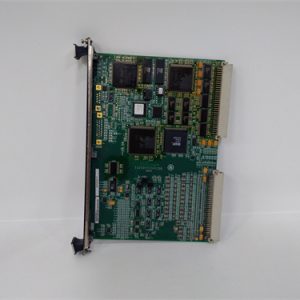
The DS200TCCBG3BED represents the absolute limit of thermocouple measurement in the VME form factor—a board that pushes 16 channels to ±0.25°C accuracy while maintaining reinforced isolation, extended temperature operation, and advanced EMC protection. It’s the board you spec when you’re measuring turbine exhaust temperature for emissions compliance or heat rate calculations, and you need every channel to be accurate to a quarter of a degree.
The ‘BED’ suffix tells you this is the ultimate evolution: the ‘B’ is the base platform (digital filtering, 40ms update), the ‘E’ indicates reinforced isolation (1800Vrms), extended temperature range (-20°C to +70°C), and enhanced EMC protection, and the ‘D’ is the production revision with ultra-precision components that push accuracy to ±0.25°C and add enhanced diagnostics. Compared to the TCCBG3BDC (0.3°C accuracy), the ‘BED’ pushes precision to 0.25°C—a 17% improvement—and adds enhanced EMC filtering that rejects radiated noise from nearby VFDs and switchgear. If you need the absolute best 16-channel thermocouple measurement GE ever made, this is it.
Key Technical Specifications
| Parameter | Value / Range |
|---|---|
| Manufacturer | General Electric (GE) |
| Part Number | DS200TCCBG3BED |
| Board Type | High-Density Thermocouple Input Board |
| Number of Channels | 16 (isolated thermocouple inputs) |
| Input Range | ±100mV (typical thermocouple range) |
| Thermocouple Types | J, K, T, E, N, R, S, B (configurable per channel) |
| Resolution | 16-bit effective (oversampled 14-bit ADC) |
| Accuracy | ±0.25°C total (including CJC, linearization, over full temperature range) |
| Temperature Drift | ±8ppm/°C |
| CJC Method | Per-channel CJC with ultra-precision sensors (±0.04°C sensors) |
| Digital Filtering | Programmable (50Hz, 60Hz, 250Hz, 500Hz cutoff) |
| EMC Filtering | Enhanced radiated noise rejection (IEC 61000-4-3 compliant) |
| Input Impedance | >5MΩ |
| Common Mode Rejection | 100dB (no filter), 118dB (with 60Hz filter) |
| Isolation | Channel-to-backplane: 1800Vrms (reinforced) |
| Diagnostic LEDs | Per-channel: green (normal), red (fault), amber (CJC warning) |
| Update Rate | 40ms (all channels sampled sequentially) |
| Input Power | 24 or 48 VDC (via backplane) |
| Mounting | VME rack (fits standard Mark VI backplane) |
| Operating Temp | -20°C to +70°C (extended range) |
| Firmware | Version 4.3 or later required |
| Connectors | 1 x 96-pin DIN backplane connector |
Compatible Replacement Models
Replacement options depend on your accuracy, EMC environment, and diagnostic requirements.
✅ Drop-in Replacement: The DS200TCCBG3BDC (no ‘E’) is a direct electrical drop-in—same pinout, same 16 channels, same per-channel CJC, same isolation. The differences: the ‘BDC’ has ±0.3°C accuracy and standard EMC filtering. If you don’t need the absolute best accuracy and your EMC environment is moderate, the ‘BDC’ is a cheaper option (typically 15-20% less). The ‘BED’ is for critical applications where every fraction of a degree matters.
✅ Drop-in Replacement: The DS200TCCBG3BCB (0.35°C accuracy) is also electrically identical—but less accurate. Only use if you’re in a pinch and can tolerate the reduced accuracy.
⚠️ Software Compatible: The DS200TCCBG2A (16 channels, shared CJC) fits the rack but lacks per-channel CJC—a significant downgrade.
❌ Hardware Incompatible: Any general-purpose analog board (TCCAG1 series) or discrete I/O board (TCCX series) uses different backplane pins—not suitable for thermocouple inputs.
Frequently Asked Questions (FAQ)
What does the ‘BED’ suffix mean on this thermocouple board?
GE’s suffix coding for the TCCBG3 series: the ‘B’ is the base platform (digital filtering, 40ms update). The ‘E’ indicates reinforced isolation (1800Vrms), extended temperature components (-20°C to +70°C), and enhanced EMC protection. The ‘D’ is the production revision—ultra-precision components that improve accuracy to ±0.25°C and add enhanced diagnostics. So ‘BED’ is the most accurate, most noise-resistant version of the TCCBG3 platform—the absolute best 16-channel thermocouple board GE ever made.
What’s the difference between the ‘BED’ and the ‘BDC’ in terms of accuracy?
- ‘BDC’ version: ±0.3°C total accuracy over -20°C to +70°C.
- ‘BED’ version: ±0.25°C total accuracy over -20°C to +70°C.
The ‘BED’ achieves this with better CJC sensors (±0.04°C vs. ±0.05°C), a more stable voltage reference (±8ppm/°C vs. ±10ppm/°C), and a lower-noise analog front end. The enhanced EMC protection also reduces noise pickup, contributing to the improved accuracy.
What’s the difference between standard and enhanced EMC protection?
The ‘BDC’ and earlier versions have standard EMC filtering that meets basic IEC 61000-4-2 (ESD) and IEC 61000-4-4 (fast transients) requirements. The ‘BED’ adds enhanced EMC protection that meets IEC 61000-4-3 (radiated RF) at higher field strengths (10V/m instead of 3V/m). This is important in turbine halls where VFDs, switchgear, and radio transmitters create strong electromagnetic fields. The enhanced protection reduces measurement errors caused by radiated noise from nearby equipment.
Can I use this board with a Mark VIe controller?
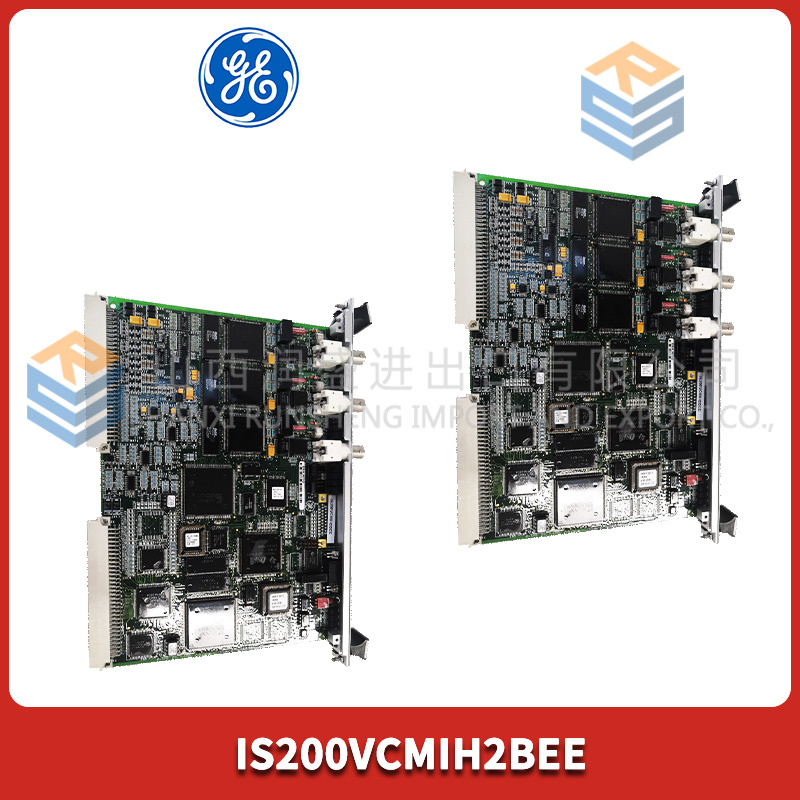
No—the TCCBG3BED uses the older Mark VI backplane pinout. Mark VIe uses a different assignment and typically uses the IS200TCCBG3BED for high-density thermocouple inputs. Use the Mark VIe-specific board for new installations.
How do I test this board before installation?
Testing the ‘BED’ revision requires checking the reinforced isolation, enhanced EMC protection, diagnostic LEDs, and accuracy:
- Visual inspection: Check for burnt or discolored components. Look for the larger isolation transformer (T1), the custom ASIC, the filter chip, and additional EMC filtering components. Inspect the LEDs.
- Power-up test: Install the board in a test rack and apply 24 VDC. All 16 diagnostic LEDs should briefly flash during POST, then settle to green (or red for open circuit if no thermocouples connected).
- Firmware check: Read the firmware version via ToolboxST—should be 4.3 or later.
- CJC test: With no thermocouples connected, read the CJC temperature for each channel. They should all match ambient within ±0.04°C—the tightest CJC spec of any Mark VI board.
- Input test – accuracy: Apply a precision 10.00mV DC to channel 1. The read value should match the expected temperature ±0.25°C. Repeat for channels 1-16.
- Diagnostic LED test: Disconnect the thermocouple from channel 1—the LED should turn red (flashing). Short the inputs—the LED should turn red (solid). Reconnect—the LED should return to green.
- EMC test (if equipment available): Apply a 10V/m radiated RF field at 80MHz to the board (with thermocouples connected). The readings should remain within ±0.3°C of the true value.
- Filter test: Inject a 60Hz AC signal (0.5mV amplitude) on top of a 5mV DC signal. Enable the 60Hz filter. The noise should be reduced to less than 0.02mV.
- Isolation test: Apply 1800Vrms between an input terminal and the board’s ground for 1 minute. (Specialized equipment required.)
- Temperature test: If you have a temperature chamber, cycle the board from -20°C to +70°C and verify accuracy stays within ±0.25°C across the range.
What’s the most common failure on the ‘BED’ revision?
The ‘BED’ revision is built with the highest-grade components, but failures can occur:
- LED failure. The diagnostic LEDs can fail after 10+ years—the symptom is a channel LED that’s off or stuck in one color.
- ASIC failure. The custom ASIC that handles CJC multiplexing can fail—erratic CJC readings on specific channels.
- EMC filter component failure. The additional EMC filtering components (common-mode chokes, ferrite beads) can fail, reducing the board’s noise immunity.
If I’m using this board in a SIL-rated safety application, what’s the recommended maintenance interval?
For SIL-2 and SIL-3 applications (IEC 61508), we recommend:
- Visual inspection: Every 3 months (check diagnostic LEDs for any red or amber indications)
- CJC test: Every 6 months (verify all 16 CJC sensors match ambient within ±0.04°C)
- Input accuracy check: Every 6 months (0.25°C spec)
- Diagnostic LED test: Every 12 months
- Filter test: Every 12 months
- EMC test (if equipment available): Every 5 years
- Isolation check: Every 2 years
- Full calibration: Every 5 years
What’s the lead time for a replacement TCCBG3BED?
These are the rarest and most advanced thermocouple boards:
- New surplus: 8-16 weeks. The ‘BED’ commands a premium—expect 60-70% above the TCCBG3B.
- Refurbished: 4-8 weeks. Ensure the refurbisher has the precision equipment to verify 0.25°C accuracy and tests the EMC protection.
- Used/as-is: Extremely high risk. The ASIC, filter chip, LEDs, isolation transformer, and EMC components are wear items—used boards are rarely in spec.
Is there a direct Mark VIe equivalent?
Yes—the IS200TCCBG3BED (Mark VIe version). The backplane pinout is different. If you’re migrating to Mark VIe, plan to replace all thermocouple boards as part of the rack conversion.
Which termination board should I use with the TCCBG3BED?
The TCCBG3BED is designed to interface with the DS200TBCBG3A (or DS200TBCBG3) thermocouple termination board. For the full 0.25°C accuracy and diagnostic functionality, use the ‘3A’ termination board with per-channel CJC sensors (±0.04°C sensors). The enhanced EMC protection on the TCCBG3BED works best when the termination board is properly grounded—follow the grounding instructions in the GE manual.
What’s the update rate for all 16 channels?
The TCCBG3BED scans channels sequentially with a 40ms total update time. Channel 1 updates at t=0ms, channel 2 at t=2.5ms, etc. The digital filter adds a delay (1-6ms depending on the setting).
What’s the difference between the ‘BED’ and the ‘ANE’ in terms of channel count and accuracy?
- ‘ANE’ (TCCBG1ANE): 8 channels, ±0.2°C accuracy, per-channel CJC, reinforced isolation, extended temperature range, filtering.
- ‘BED’ (TCCBG3BED): 16 channels, ±0.25°C accuracy, per-channel CJC, reinforced isolation, extended temperature range, enhanced EMC filtering, diagnostics.
The ‘ANE’ gives you slightly better accuracy (0.2°C vs. 0.25°C) but only 8 channels. The ‘BED’ gives you twice the channels with nearly the same accuracy, plus enhanced EMC protection and diagnostics. Choose the ‘ANE’ if absolute best accuracy on a few channels is the priority; choose the ‘BED’ if you need 16 channels with excellent accuracy and the best noise immunity.
What’s the correct thermocouple wire type for this board?
The TCCBG3BED supports J, K, T, E, N, R, S, and B thermocouples. For the best accuracy, use premium-grade (special limits of error) thermocouple wire—the board’s 0.25°C accuracy is wasted on standard-grade wire with ±1.1°C tolerance. The enhanced EMC protection helps reduce noise pickup on long cable runs, but shielded thermocouple extension wire is still recommended for runs over 100 feet.
EPRO PR6423/10R-030-CN
EPRO PR6423/010-000
EPRO PR6423/010-000-CN
 Email: sales@plcfcs.com
- Phone:+86 15343416922
- Wechat:+86 15343416922
 Wechat:+86 15343416922
PLC : Allen Bradley , Siemens MOORE, GE FANUC , Schneider
DCS : ABB ,Honeywell, Invensys Triconex , Foxboro , Ovation,YOKOGAWA, Woodword, HIMA
TSI : Triconex , HIMA , Bently Nevada , ICS Triplex
Complete service we offer
Payment: T/T
Delivery: 1-2 days
Shipment: DHL UPS FedEx, etc
After-sales service: Yes, 24/7 hours