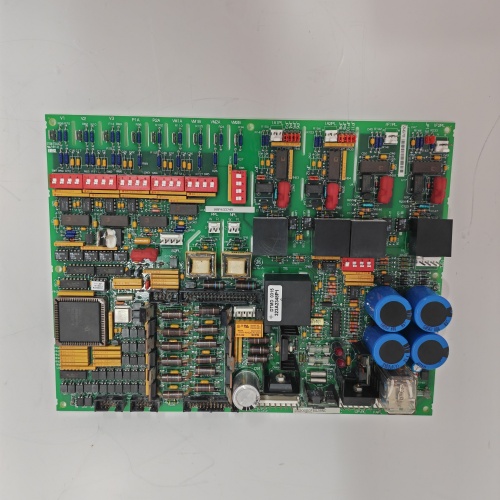
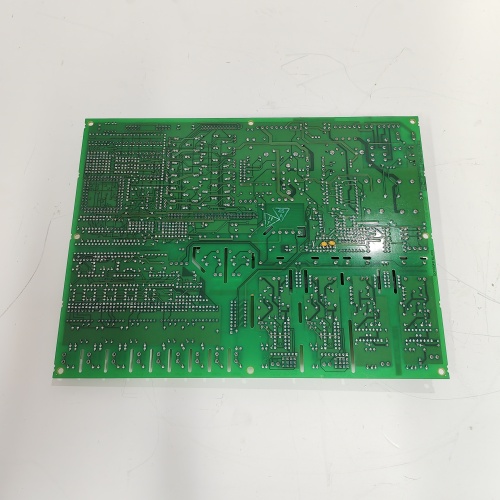
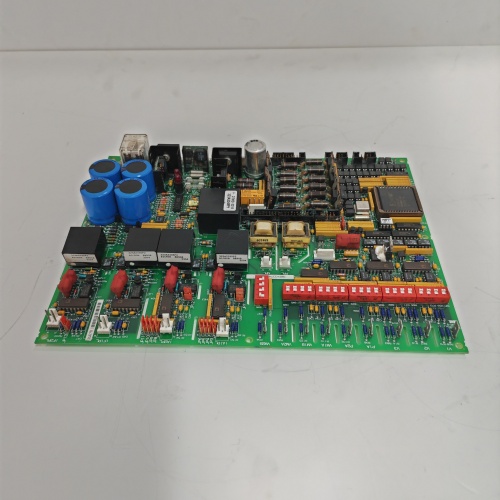
 Email: jiedong@sxrszdh.com
 Phone / Wechat:+86 15340683922
Description
Product Introduction (Anti-Template)
The DS200TCCAG1BAA is the most robust analog input board GE produced for the Mark VI system—and it shows. This revision takes the ‘B’ board’s digital filtering and adds reinforced isolation (1800Vrms vs. 1500Vrms) and extended temperature components that keep the board operational from -20°C to +70°C, compared to 0-60°C on the ‘B’ version.
The ‘BAA’ suffix indicates this is the reinforced isolation variant: the ‘B’ is the base platform (digital filtering, 5ms update), the first ‘A’ indicates extended temperature components and reinforced isolation, and the second ‘A’ is the production revision with improved component sourcing. Compared to the TCCAG1B, the ‘BAA’ is about 15-20% more expensive but gives you a wider operating range, better isolation for high-common-mode environments, and slightly better accuracy (0.04% vs. 0.05%). If your control room has a wide temperature swing (uninsulated turbine decks, outdoor enclosures) or you’re in a high-EMI environment (near large VFDs or high-voltage equipment), the ‘BAA’ is worth the premium.
Key Technical Specifications
| Parameter | Value / Range |
|---|---|
| Manufacturer | General Electric (GE) |
| Part Number | DS200TCCAG1BAA |
| Board Type | Analog Input Board |
| Number of Channels | 8 (isolated inputs) |
| Input Range | 0-10V, ±10V, 4-20mA (configurable per channel) |
| Resolution | 16-bit (65535 counts) |
| Accuracy | ±0.04% of full scale (at 25°C) |
| Temperature Drift | ±20ppm/°C |
| Input Impedance | >2MΩ (voltage mode), 250Ω (current mode) |
| Common Mode Rejection | 90dB (DC to 60Hz, with filtering enabled) |
| Isolation | Channel-to-backplane: 1800Vrms (reinforced) |
| Digital Filtering | Programmable (50Hz, 60Hz, 250Hz cutoff) |
| Update Rate | 5ms (all channels sampled simultaneously) |
| Input Power | 24 or 48 VDC (via backplane) |
| Mounting | VME rack (fits standard Mark VI backplane) |
| Operating Temp | -20°C to +70°C (extended range) |
| Firmware | Version 3.0 or later required |
| Connectors | 1 x 96-pin DIN backplane connector |
Compatible Replacement Models
Replacement options depend on your temperature range and isolation requirements.
✅ Drop-in Replacement: The DS200TCCAG1B (no ‘AA’) is a direct electrical drop-in—same pinout, same 8 channels, same filtering, same update rate. The differences: the ‘B’ has standard isolation (1500Vrms), standard temperature range (0-60°C), and 0.05% accuracy vs. 0.04%. If your environment is benign and standard isolation is sufficient, the ‘B’ is a cheaper option (typically 15-20% less).
✅ Drop-in Replacement: The DS200TCCAG1A (no ‘B’) is also electrically identical—digital filtering not available, 10ms update rate, ±0.1% accuracy, 0-60°C range, 1500Vrms isolation. Only use if you’re in a pinch and don’t need the filtering or extended temperature range.
⚠️ Software Compatible: The DS200TCCAG1BAB (if available—verify with supplier) may be a different production run with minor changes. Always verify firmware compatibility before ordering.
❌ Hardware Incompatible: The DS200TCCBG1A (thermocouple board) uses a different pinout—not suitable for 0-10V or 4-20mA.
❌ Hardware Incompatible: Any discrete I/O board (TCCX series) uses different backplane pins and is not suitable for analog inputs.
Frequently Asked Questions (FAQ)
What does the ‘BAA’ suffix mean on this analog board?
GE’s suffix coding for the TCCAG1 series: the ‘B’ is the base platform (digital filtering, 5ms update). The first ‘A’ indicates reinforced isolation (1800Vrms instead of 1500Vrms) and extended temperature components (-20°C to +70°C instead of 0-60°C). The second ‘A’ is the production revision—in this case, improved component sourcing and slightly better accuracy (0.04% vs. 0.05%). So ‘BAA’ is the most environmentally robust version of the TCCAG1 family.
What’s the difference between standard and reinforced isolation?
The TCCAG1B has standard isolation: 1500Vrms between the input channels and the backplane. This is sufficient for most industrial applications—it meets IEC 61010-1 basic insulation requirements for 250V circuits. The ‘BAA’ has reinforced isolation: 1800Vrms, which provides double the safety margin and meets IEC 61010-1 reinforced insulation requirements for 300V circuits. The reinforced isolation uses a different isolation transformer with larger creepage distances and more robust construction. In practice, the reinforced isolation is more resistant to high common-mode voltages and reduces noise pickup in high-EMI environments.
Can I use this board with a Mark VIe controller?
No—the TCCAG1BAA uses the older Mark VI backplane pinout. Mark VIe uses a different assignment and typically uses the IS200TCCAG1BAA for analog inputs. Use the Mark VIe-specific board for new installations.
How do I test this board before installation?
Testing the ‘BAA’ revision requires checking the reinforced isolation and extended temperature performance:
- Visual inspection: Check for burnt or discolored components. The ‘BAA’ has a larger isolation transformer than the ‘B’ version—look for the transformer labeled T1 (it’s noticeably bigger). Look for cracked solder joints on the backplane connector.
- Power-up test: Install the board in a test rack and apply 24 VDC. The board’s status LED (green) should illuminate within 2 seconds. If the LED is red or flashing, check firmware compatibility.
- Firmware check: Read the firmware version via ToolboxST. It should be 3.0 or later.
- Input test – accuracy: Apply a precision 5.00V DC to channel 1. The read value should be 5.000V ± 0.002V (0.04% of full scale). Repeat for channels 1-8.
- Input test – current: Apply 12.00mA to a channel configured for 4-20mA. The read value should be 12.000mA ± 0.005mA.
- Filter test: Inject a 60Hz AC signal (1V amplitude) on top of a 5V DC signal. Enable the 60Hz digital filter. The read value should be 5.00V ± 0.01V.
- Isolation test: Apply 1500Vrms (or 1800Vrms) between an input terminal and the board’s ground for 1 minute. The leakage current should be less than 5mA (or per GE spec). The board should survive with no damage. (This test requires specialized equipment and should only be done by qualified personnel.)
- Temperature test: If you have a temperature chamber, cycle the board from -20°C to +70°C and verify accuracy stays within ±0.04% of full scale across the range.
What’s the most common failure on the ‘BAA’ revision?
The ‘BAA’ revision addressed the main failure points of earlier boards, but two issues remain:
- Isolation transformer failure. While the reinforced isolation transformer is more robust than the standard one, it can still fail if subjected to high transient voltages (e.g., lightning strikes, switching surges). The symptom is high noise on the affected channel or a complete loss of signal.
- A/D converter drift. Same as earlier revisions—the 16-bit ADC can drift over time. The ‘BAA’ revision’s better reference (±20ppm/°C vs. ±25ppm/°C) reduces drift, but it’s still possible after 10+ years.
If I’m using this board in a SIL-rated safety application, what’s the recommended maintenance interval?
For SIL-2 and SIL-3 applications (IEC 61508), we recommend:
- Visual inspection: Every 6 months
- Power-up test: Every 6 months
- Input accuracy check: Every 6 months (0.04% spec—tighter than the ‘B’)
- Filter test: Every 12 months
- Isolation check: Every 2 years (measure isolation resistance—should be >20MΩ)
- Full calibration: Every 5 years
What’s the lead time for a replacement TCCAG1BAA?
These are specialized boards with longer lead times:
- New surplus: 4-8 weeks. The ‘BAA’ commands a premium—expect 20-30% above the TCCAG1B.
- Refurbished: 2-4 weeks. Ensure the refurbisher tests the reinforced isolation—most shops don’t have the equipment to test 1800Vrms isolation.
- Used/as-is: High risk. The reinforced isolation transformer is a wear item—used boards may have compromised isolation.
Is there a direct Mark VIe equivalent?
Yes—the IS200TCCAG1BAA (Mark VIe version). The backplane pinout is different, and the Mark VIe board may have different isolation ratings. If you’re migrating to Mark VIe, plan to replace all analog boards as part of the rack conversion.
Can I mix TCCAG1BAA boards with TCCAG1B boards in the same system?
Yes—electrically, they’re compatible. The same pinout and backplane signals. The reinforced isolation of the ‘BAA’ doesn’t affect the backplane signals—it only affects how the board handles common-mode noise and transient voltages. Your control software sees the same data format, and the filtering works the same. The only difference is the accuracy spec (0.04% vs. 0.05%)—if you’re mixing boards, just be aware that the ‘BAA’ channels will be slightly more accurate.
What’s the correct input impedance for current mode?
In current mode (4-20mA), the TCCAG1BAA uses a 250Ω precision resistor (0.01% tolerance)—same as the ‘B’ version. The reinforced isolation doesn’t change the input impedance.
Does the extended temperature range affect the board’s accuracy?
The ‘BAA’ revision holds ±0.04% accuracy across its extended temperature range (-20°C to +70°C). The ‘B’ version holds ±0.05% from 0-60°C. The ‘BAA’ uses higher-grade components (e.g., precision resistors with 5ppm/°C drift instead of 10ppm/°C) to maintain accuracy over the wider range. If your control room temperature swings more than 20°C, the ‘BAA’ will give you more stable readings.
What’s the update rate with digital filtering enabled?
The TCCAG1BAA samples all 8 channels at 5ms intervals—same as the ‘B’ revision. The digital filter adds a delay (2ms at 250Hz, 5ms at 60Hz, 6ms at 50Hz), but the underlying sampling rate remains 5ms. The delay is consistent and predictable, so you can account for it in your control loops. The reinforced isolation doesn’t affect the update rate—it’s a signal-path feature, not a timing feature.
What’s the difference between the ‘BAA’ and the ‘BAB’ (if it exists)?
If you encounter a ‘BAB’ variant, the third character (‘B’) would indicate a production revision after the ‘A’—typically a minor component change (e.g., a different capacitor brand or a revised PCB layout). The electrical specifications and isolation rating would be the same as the ‘BAA’. The ‘BAB’ would be a direct replacement for the ‘BAA’—just a later production run. Always verify the specific specifications with your supplier.
CC-TDOB01 PLC DCS
CC-TAON11 PLC DCS
CC-TAID01 PLC DCS
CC-TAIX51 PLC DCS
 Email: sales@plcfcs.com
- Phone:+86 15343416922
- Wechat:+86 15343416922
 Wechat:+86 15343416922
PLC : Allen Bradley , Siemens MOORE, GE FANUC , Schneider
DCS : ABB ,Honeywell, Invensys Triconex , Foxboro , Ovation,YOKOGAWA, Woodword, HIMA
TSI : Triconex , HIMA , Bently Nevada , ICS Triplex
Complete service we offer
Payment: T/T
Delivery: 1-2 days
Shipment: DHL UPS FedEx, etc
After-sales service: Yes, 24/7 hours