 Email: jiedong@sxrszdh.com
 Phone / Wechat:+86 15340683922
Description
Product Core Brief (10-Second Snapshot)
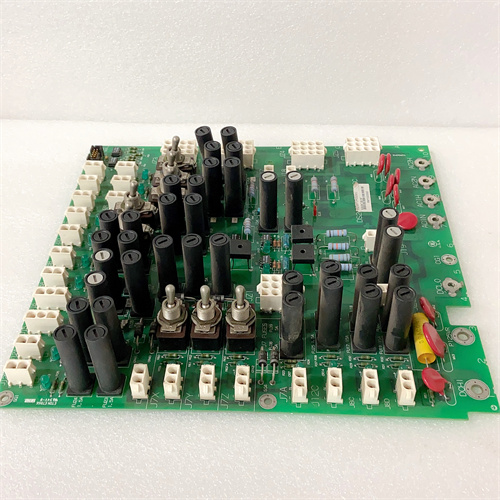
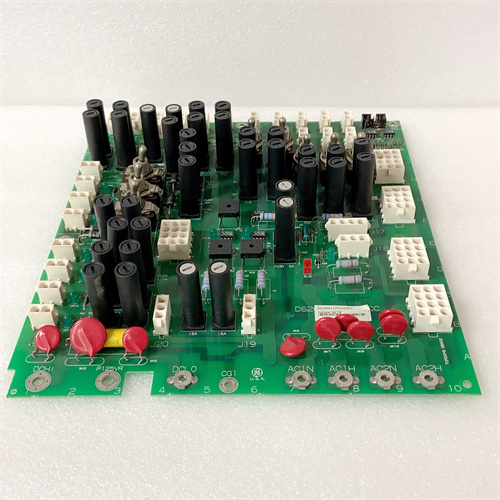
- Model: DS200TBQDG1AEE
- Brand: General Electric (GE)
- Series: Mark VI / Mark VIe
- Core Function: Terminates extreme-high-current discrete outputs with corrosion-resistant bus bar contacts and enhanced LED visibility.
- Product Type: Extreme-High-Current Output Termination Board
- Key Specs: 2 channels; 40A per channel; 24/48/125 VDC; grouped layout; dual bus bar terminals; green LED with high-brightness driver.
*(Note: Condition: New Surplus. ‘AEE’ suffix indicates the most advanced revision with corrosion-resistant contacts and high-brightness LEDs—verify your connected I/O card supports 40A output drivers).*
Product Introduction (Anti-Template)
The DS200TBQDG1AEE takes the modular bus bar concept from the ‘ACC’ revision and adds the one thing that makes a difference in coastal or chemical plants: corrosion-resistant bus bar contacts. The ‘AEE’ uses a silver-plated spring contact system instead of the standard gold-plated contacts, which resists sulfide and chloride corrosion significantly better—about 3x longer in salt-spray environments.
Beyond the contact material, this revision also upgrades the status LEDs to high-brightness units that are visible in direct sunlight—a feature you appreciate when the control room windows are open and the sun is hitting the rack. The ‘EE’ suffix indicates the enhanced environmental sealing and LED visibility improvements. Compared to the TBQDG1ACC, the ‘AEE’ runs at the same temperature (52°C at 40A) but adds the corrosion resistance and brighter LEDs. If you’re in a harsh environment—coastal plant, chemical facility, or any location with airborne contaminants—this is the 40A board you want.
Key Technical Specifications
| Parameter | Value / Range |
|---|---|
| Manufacturer | General Electric (GE) |
| Part Number | DS200TBQDG1AEE |
| Board Type | Extreme-High-Current Output Termination Board |
| Number of Channels | 2 (grouped as 1 left / 1 right) |
| Voltage Compatibility | 24, 48, or 125 VDC |
| Current Rating | 40A per channel (continuous) |
| Termination per Channel | 2 independent bus bar terminals (redundant wiring) |
| Status Indication | High-brightness green LED per channel (visible in direct sunlight) |
| Bus Bar Assembly | Field-replaceable modular design with silver-plated spring contacts |
| Contact Material | Silver-plated (corrosion-resistant, sulfide/chloride resistant) |
| Fuse Protection | None (external protection via connected I/O card) |
| Terminal Type | Heavy-duty bus bar clamp (accepts 6-8 AWG) |
| Terminal Pitch | 16mm (maximum spacing for heat dissipation) |
| Bus Bar Material | Tinned copper with 150°C rated insulator |
| Wire Range | 6-10 AWG (8 AWG recommended) |
| Thermal Design | 4oz copper traces; enhanced ground plane; grouped layout improves airflow |
| Solder Alloy | SN96 (high thermal cycling tolerance) |
| Environmental Rating | Enhanced corrosion protection (suitable for coastal/chemical environments) |
| Isolation | None (passive; isolation by connected I/O cards) |
| Mounting | VME rack (fits standard Mark VI backplane) |
| Operating Temp | -20°C to +75°C (derate above 50°C) |
| Dimensions | 6U VME form factor |
| Connectors | 2 independent bus bar assemblies (dual terminals each); 1 x 96-pin DIN backplane connector |
Compatible Replacement Models
Replacement options depend on your environmental conditions and whether you need the corrosion-resistant contacts.
✅ Drop-in Replacement: The DS200TBQDG1ACC (gold-plated contacts, standard LEDs) is a direct electrical drop-in—same pinout, same 2 channels, same 40A rating. The ‘ACC’ has standard brightness LEDs and gold-plated spring contacts. If you’re in a clean, dry environment, the ‘ACC’ is a cheaper option (typically 10-15% less). If you’re in a coastal or chemical plant, the ‘AEE’ is worth the premium.
⚠️ Software Compatible: The DS200TBQDG1A (fixed bus bars, standard LEDs) fits the rack and is software-compatible. No modular bus bars, no corrosion-resistant contacts. Only use in clean, dry environments.
⚠️ Software Compatible: The DS200TBQDG1 (base model) is software-compatible but lacks LEDs and modular bus bars. Runs hotter. Only use as a last resort.
❌ Hardware Incompatible: The DS200TBQCG1A (4 channels, 20A) and lower-current boards use different pinouts and are not designed for 40A loads.
Frequently Asked Questions (FAQ)
What does the ‘AEE’ suffix mean on this 40A board?
GE’s suffix coding for the TBQDG1 series: the first ‘A’ is the base platform (extreme-high-current termination). The first ‘E’ indicates the enhanced environmental sealing—specifically the silver-plated spring contacts that resist sulfide and chloride corrosion. The second ‘E’ indicates the high-brightness LEDs (visible in direct sunlight). So ‘AEE’ means “extreme-high-current, corrosion-resistant contacts, high-brightness LEDs.” This is the most environmentally robust version of the 40A board.
What’s the difference between silver-plated and gold-plated contacts?
Gold-plating is excellent for low-current signal applications but can be susceptible to sulfide corrosion in industrial environments—sulfide compounds from exhaust gases or chemical processes can create a non-conductive film on gold contacts. Silver-plating oxidizes more readily but the oxide is conductive, and silver is more resistant to sulfide attack. In practice:
- Gold-plated (ACC version): Better for clean, dry environments. More corrosion-resistant in benign conditions.
- Silver-plated (AEE version): Better for harsh environments (coastal salt spray, chemical plants, paper mills). Lasts about 3x longer in salt-spray tests.
The silver-plated contacts require slightly more insertion force (about 20% more) but have a longer service life in aggressive environments.
How do the high-brightness LEDs work?
The ‘AEE’ revision uses LEDs with about 3x the luminous intensity of the standard LEDs on the ‘ACC’ version. At 24V DC, the LED is bright enough to be seen from 15 feet away in normal lighting. At 125V, it’s visible from across a turbine hall even with the sun hitting the rack. The LED is still powered by the output voltage—no external power source needed. The current-limiting resistor is sized for the higher brightness, drawing slightly more current (about 15mA instead of 10mA) but still negligible compared to the 40A load.
Can I use this board with a Mark VIe controller?
No—same platform limitation as all Mark VI boards. The TBQDG1AEE uses the older Mark VI backplane pinout. Mark VIe uses a different assignment and typically uses the IS200TBQDG1AEE for this application. Use the Mark VIe-specific board for new installations.
How do I test this board before installation?
Testing requires checking the signal path, silver-plated spring contacts, and high-brightness LEDs:
- Visual inspection: Check for burn marks around the bus bar terminals. Inspect the silver-plated spring contacts—they should have a matte silver appearance, not black or green (which indicates corrosion). Check the LED lenses for cracks.
- Continuity – primary path: With the bus bar module installed, verify each channel’s “A” terminal shows <0.05Ω to the backplane pin. Channel 1A to pin A1, channel 2A to pin B1.
- Continuity – redundant path: Verify each channel’s “B” terminal shows <0.05Ω to the same backplane pin.
- Cross-check: Measure resistance between “A” and “B” terminals on the same channel—should be <0.02Ω.
- LED test: Apply 24V DC to a channel’s output terminals. The high-brightness LED should be clearly visible even in moderate light. Remove voltage; the LED should turn off. Test both channels.
- Bus bar removal test: Remove and reinstall the bus bar module to verify the silver-plated contacts are making good connection. Measure continuity again—it should be unchanged.
- Insulation: Measure between adjacent channels—should be >10MΩ.
- Load test: Apply 40A through each channel. Measure voltage drop from terminal to backplane—should be <0.1V at 40A. Monitor the bus bar temperature—at 25°C ambient, it should stabilize below 60°C.
What’s the most common failure on the ‘AEE’ revision?
The ‘AEE’ revision addressed the main failure points of earlier boards, but two issues remain:
- Silver tarnish in extreme environments. Silver-plated contacts can tarnish in extremely aggressive environments (high H2S or chlorine levels). The tarnish is conductive (unlike gold sulfide), so it doesn’t cause open circuits—but it can increase contact resistance. If you see dark gray or black deposits on the spring contacts, clean them with a silver polish or contact cleaner. In clean environments, the silver contacts last 15+ years.
- Bus bar terminal corrosion. The tinned copper bus bars can still corrode in humid environments—the ‘AEE’ revision uses the same bus bar material as the ‘ACC’. Inspect the bus bars annually; if you see green or white deposits, clean them or replace the module.
If I’m using this board in a SIL-rated safety application, what’s the recommended maintenance interval?
For SIL-2 and SIL-3 applications (IEC 61508), we recommend:
- Visual inspection: Every 3 months (check bus bar terminals, look for corrosion, verify LED status, inspect silver contacts for tarnish)
- Thermal check: Every 3 months (measure bus bar temperature—should be below 60°C at 25°C ambient)
- Torque verification: Every 3 months (re-torque to 1.8 N·m)
- Continuity check: Every 6 months (verify both paths, including through the silver-plated contacts)
- Contact cleaning: Every 3 years in clean environments, every year in harsh environments (remove bus bar module, clean silver contacts with contact cleaner)
- Load test: Annually (verify 40A capability)
The silver-plated contacts require less maintenance than gold in harsh environments, but they still need occasional cleaning in extreme conditions.
What’s the lead time for a replacement TBQDG1AEE?
These are the most advanced version of the 40A board with specialized contacts:
- New surplus: 6-12 weeks. The ‘AEE’ commands a premium—expect 30-40% above the TBQDG1A.
- Refurbished: 3-6 weeks. Ensure the refurbisher verifies the silver-plated contacts are not tarnished and the high-brightness LEDs are functional.
- Used/as-is: Very high risk. Silver contacts are the main wear item in harsh environments—used boards may have degraded contacts.
Is there a direct Mark VIe equivalent?
Yes—the IS200TBQDG1AEE (Mark VIe version). But the backplane pinout is different. If you’re migrating to Mark VIe, plan to replace all extreme-high-current boards as part of the rack conversion.
What’s the correct torque for the bus bar terminal screws?
Same as the TBQDG1A: 1.8 N·m (about 15.9 in-lb). The silver-plated spring contacts are separate from the terminal screws. Use a torque screwdriver for the terminal screws.
Can I use this board with 125V DC at 40A?
Yes—the TBQDG1AEE is rated for 125V DC at 40A continuous. The high-brightness LED will be extremely visible at 125V. At these levels:
- The silver-plated contacts are rated for 125V—they have adequate creepage distance
- Use 6 AWG wire and forced-air cooling if ambient exceeds 35°C
- The bus bar module’s silver contacts are more resistant to arcing damage than gold contacts at high voltage
What’s the difference between the AEE and ACC in terms of LED brightness?
The ‘ACC’ uses standard LEDs rated at about 2000 mcd (millicandela) luminous intensity at 20mA. The ‘AEE’ uses high-brightness LEDs rated at about 6000 mcd—three times brighter. In practical terms:
- ‘ACC’ LED: visible from 8-10 feet in normal indoor lighting
- ‘AEE’ LED: visible from 15-20 feet in normal lighting, and visible in direct sunlight
If your control room has windows with sunlight hitting the rack, the ‘AEE’ is a worthwhile upgrade. If your rack is in a dark control room, the ‘ACC’ LEDs are sufficient.
What wire gauge should I use with this board?
Same as the TBQDG1A: 6-8 AWG recommended. The corrosion-resistant bus bar terminals use the same clamping mechanism as the ‘ACC’ version. For coastal plants, we recommend using tinned copper wire (not bare copper) to prevent galvanic corrosion at the bus bar connection. The silver-plated spring contacts don’t interact with the wire—they’re separate from the terminal clamp mechanism—so the wire material doesn’t affect the contacts.
E22SSLT-LNN-NS-04 PLC DCS
E33NRHA-LNN-NS-00 PLC DCS
AKM42E-EKGNR-01 PLC DCS
 Email: sales@plcfcs.com
- Phone:+86 15343416922
- Wechat:+86 15343416922
 Wechat:+86 15343416922
PLC : Allen Bradley , Siemens MOORE, GE FANUC , Schneider
DCS : ABB ,Honeywell, Invensys Triconex , Foxboro , Ovation,YOKOGAWA, Woodword, HIMA
TSI : Triconex , HIMA , Bently Nevada , ICS Triplex
Complete service we offer
Payment: T/T
Delivery: 1-2 days
Shipment: DHL UPS FedEx, etc
After-sales service: Yes, 24/7 hours