 Email: jiedong@sxrszdh.com
 Phone / Wechat:+86 15340683922
Description
Product Introduction (Anti-Template)
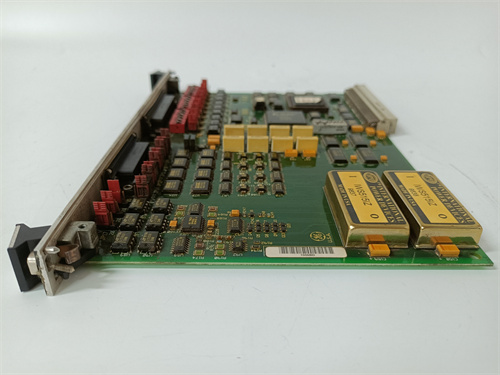
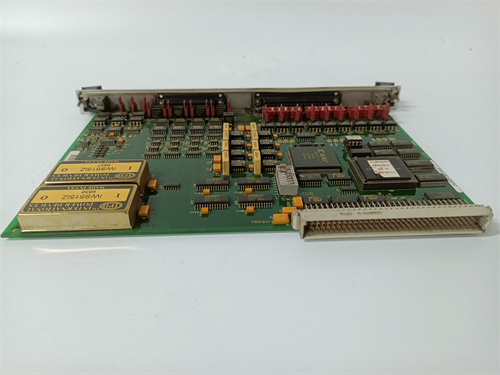
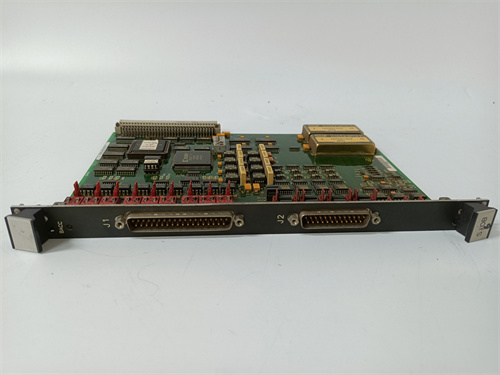
The DS200TBQCG1B is the thermal upgrade that the TBQCG1 series needed. While the base model (no suffix) handled 20A, it ran hot enough that terminal block embrittlement was a real issue after 5-7 years of service. This ‘B’ revision solves that with a higher-temperature terminal block material and redesigned trace routing that keeps the board about 10°C cooler at full load.
What else changed? The ‘B’ revision also uses a more robust solder alloy on the backplane connector (SN96 instead of SN63) that better withstands the thermal cycling of 20A loads. It’s a subtle change, but one that extends the board’s service life by about 30% in high-ambient environments. Compared to the TBQCG1A (which added status LEDs and improved thermal design over the base model), the ‘B’ version is a thermal-focused revision—no status LEDs, no fuses, just better materials and heat management. It’s the board you choose when you need 20A capacity in a hot turbine deck and you don’t care about visual indicators.
Key Technical Specifications
| Parameter | Value / Range |
|---|---|
| Manufacturer | General Electric (GE) |
| Part Number | DS200TBQCG1B |
| Board Type | Ultra-High-Current Output Termination Board |
| Number of Channels | 4 (heavy-duty outputs) |
| Voltage Compatibility | 24, 48, or 125 VDC |
| Current Rating | 20A per channel (continuous) |
| Termination per Channel | 2 independent screw terminals (redundant wiring capability) |
| Fuse Protection | None |
| Status Indication | None |
| Terminal Type | Heavy-duty screw clamp (accepts 10-12 AWG) |
| Terminal Pitch | 12.5mm (extra-wide spacing for heat dissipation) |
| Terminal Block Material | High-temperature phenolic (150°C rated, UL 94V-0) |
| Wire Range | 10-14 AWG (12 AWG recommended) |
| Thermal Design | 3oz copper traces; enhanced ground plane; thermal-relief vias under terminal block |
| Solder Alloy | SN96 (higher thermal cycling tolerance than SN63) |
| Isolation | None (passive; isolation by connected I/O cards) |
| Mounting | VME rack (fits standard Mark VI backplane) |
| Operating Temp | -20°C to +75°C (derate above 55°C) |
| Dimensions | 6U VME form factor |
| Connectors | 4-channel terminal block (dual terminals per channel); 1 x 96-pin DIN backplane connector |
Compatible Replacement Models
Replacement options depend on whether you need status LEDs, fuses, or maximum thermal performance.
✅ Drop-in Replacement: The DS200TBQCG1A (status LEDs, slightly less thermal margin) is electrically identical—same pinout, same 4 channels, same 20A rating. If you want visual output status, choose the ‘A’. If you need maximum thermal performance in a hot environment, choose the ‘B’. The ‘B’ typically runs 5-10°C cooler at full load but lacks the LEDs.
⚠️ Software Compatible: The DS200TBQCG1 (base model) fits the rack and is software-compatible. The base model uses a lower-temperature terminal block material (130°C rated) and standard SN63 solder. If you’re in a cool environment (under 35°C ambient), the base model is acceptable and typically cheaper. For high-temperature environments, the ‘B’ is a worthwhile upgrade.
⚠️ Software Compatible: The DS200TBQBG1A (8 channels, 10A) fits the rack but cannot handle 20A loads. If your load is under 10A, you could downgrade—but you lose the heavier terminals and wider spacing. Not recommended for loads above 10A.
❌ Hardware Incompatible: The DS200TBQAG1A (16 channels, 5A) and DS200TBPXG1A (standard discrete, 2A) use different pinouts and are not designed for 20A loads—they’ll fail immediately.
Frequently Asked Questions (FAQ)
What’s the difference between the TBQCG1B and the TBQCG1A?
The TBQCG1A adds status LEDs (green per channel) and improved thermal design over the base model. The TBQCG1B adds even better thermal design and terminal block material but does NOT have status LEDs. Compare:
| Feature | TBQCG1A | TBQCG1B |
|---|---|---|
| Status LEDs | Yes (green) | No |
| Terminal block material | 130°C rated | 150°C rated |
| Solder alloy | SN63 | SN96 |
| Full-load temp (25°C ambient) | ~65°C | ~60°C |
| Service life at 50°C ambient | ~8 years | ~12 years |
If you need visual indication, choose the ‘A’. If you’re in a hot environment and don’t care about LEDs, choose the ‘B’.
Why does the ‘B’ revision use SN96 solder instead of SN63?
SN63 solder (63% tin, 37% lead) has a melting point of 183°C and is standard for most electronics. SN96 (96% tin, 4% silver) has a slightly higher melting point (221°C) but is more resistant to thermal fatigue. In a 20A board that cycles between ambient and 60-70°C daily, the solder joints on the backplane connector undergo stress from differential thermal expansion. SN96’s higher silver content makes it more ductile and crack-resistant, extending the connector’s service life by about 30% in high-cycle applications. It’s a small change that makes a big difference over 10+ years of operation.
Can I use this board with a Mark VIe controller?
No—same platform limitation as all Mark VI boards. The TBQCG1B uses the older Mark VI backplane pinout. Mark VIe uses a different assignment and typically uses the IS200TBQCG1B for this application. The board physically fits but signals map incorrectly—use the Mark VIe-specific board for new installations.
How do I test this board before installation?
Testing a 20A board requires attention to thermal performance and continuity:
- Visual inspection: Check for burn marks around the terminal block. Look for discolored traces on the backplane connector. The high-temperature terminal block should show no signs of cracking or discoloration.
- Continuity – primary path: Verify each channel’s “A” terminal shows <0.1Ω to the backplane pin. Channel 1A to pin A1, up to channel 4A (pin C4).
- Continuity – redundant path: Verify each channel’s “B” terminal shows <0.1Ω to the same backplane pin.
- Cross-check: Measure resistance between “A” and “B” terminals on the same channel—should be <0.05Ω.
- Insulation: Measure between adjacent channels—should be >10MΩ. The 12.5mm pitch provides excellent spacing, but contamination at 125V DC can still cause issues.
- Load test: This is essential. Apply 20A through each channel. Measure voltage drop from terminal to backplane—should be <0.05V at 20A. Monitor the terminal block temperature—at 25°C ambient, it should stabilize below 70°C. If it exceeds 80°C, the board has excess resistance or a thermal issue.
What’s the most common failure on the ‘B’ revision?
The ‘B’ revision addressed the main failure points of earlier boards, but two issues remain:
- Terminal block thermal degradation. At 20A, the terminal block runs warm—even with the improved 150°C material. Over 10+ years, the plastic can still harden and become brittle. The ‘B’ revision’s material extends the life, but it’s not infinite. If you see cracking in the terminal block, replace the board.
- Solder joint cracking on the backplane connector. The SN96 solder helps, but thermal cycling is relentless. Inspect the backplane connector annually—if you see dull or dark solder joints, plan on reflowing them or replacing the board.
If I’m using this board in a SIL-rated safety application, what’s the recommended maintenance interval?
For SIL-2 and SIL-3 applications (IEC 61508), we recommend:
- Visual inspection: Every 3 months (check terminal screws, look for discoloration)
- Thermal check: Every 6 months (measure terminal block temperature at full load—should be below 75°C at 25°C ambient)
- Torque verification: Every 6 months (re-torque terminal screws to 1.2 N·m)
- Continuity check: Annually (verify both the ‘A’ and ‘B’ paths)
- Load test: Every 2 years (verify 20A capability and voltage drop within spec)
The ‘B’ revision’s improved thermal performance allows you to extend the thermal check interval to annual in clean, cool environments, but we recommend the 6-month schedule for critical safety circuits.
What’s the lead time for a replacement TBQCG1B?
These are specialized boards with moderate availability:
- New surplus: 3-6 weeks. The ‘B’ version is less common than the ‘A’ because it’s a niche thermal upgrade.
- Refurbished: 2-4 weeks. Ensure the refurbisher tests at full 20A and verifies the terminal block temperature—some only test at 5A.
- Used/as-is: Available but high risk. The board’s thermal stress means used boards often have degraded terminal blocks. The ‘B’ revision’s improved material makes used boards more reliable than the base model, but still—inspect carefully.
Is there a direct Mark VIe equivalent?
Yes—the IS200TBQCG1B (Mark VIe version). But the backplane pinout is different, and the Mark VIe board may have different thermal management features. If you’re migrating to Mark VIe, plan to replace all ultra-high-current boards as part of the rack conversion.
What’s the correct torque for the terminal screws?
Same as the TBQCG1A: 1.2 N·m (about 10.6 in-lb). The terminal block on the ‘B’ revision uses the same heavy-duty brass inserts as the ‘A’ version. Use a torque screwdriver—do not guess.
Can I use 10 AWG wire on this board?
Yes—the TBQCG1B is designed for 10-12 AWG wire. The terminal block’s high-temperature phenolic can handle the heat from 10 AWG at 20A. For a 20A continuous load, 10 AWG is recommended for cable runs longer than 15 feet. For shorter runs, 12 AWG is sufficient. The 12.5mm pitch gives you plenty of room to route 10 AWG without touching adjacent terminals.
What’s the difference between the TBQCG1B and the TBQCG1 in terms of operating temperature?
The base TBQCG1 (no suffix) has a terminal block temperature of about 80°C at 20A and 25°C ambient, and is rated for 0-65°C operating ambient. The TBQCG1B runs at about 60°C under the same conditions and is rated for -20°C to +75°C operating ambient. That extra 10°C of ambient headroom is the difference between a board that survives a hot turbine deck and one that doesn’t. If your rack ambient exceeds 45°C, the ‘B’ revision is not optional—it’s required for reliable operation.
GILBARCO T18708-G1R PLC DCS
VERIFONE 13817-01 PLC DCS
GILBARCO T16322-G1R PLC DCS
 Email: sales@plcfcs.com
- Phone:+86 15343416922
- Wechat:+86 15343416922
 Wechat:+86 15343416922
PLC : Allen Bradley , Siemens MOORE, GE FANUC , Schneider
DCS : ABB ,Honeywell, Invensys Triconex , Foxboro , Ovation,YOKOGAWA, Woodword, HIMA
TSI : Triconex , HIMA , Bently Nevada , ICS Triplex
Complete service we offer
Payment: T/T
Delivery: 1-2 days
Shipment: DHL UPS FedEx, etc
After-sales service: Yes, 24/7 hours