 Email: jiedong@sxrszdh.com
 Phone / Wechat:+86 15340683922
Description
Product Introduction (Anti-Template)
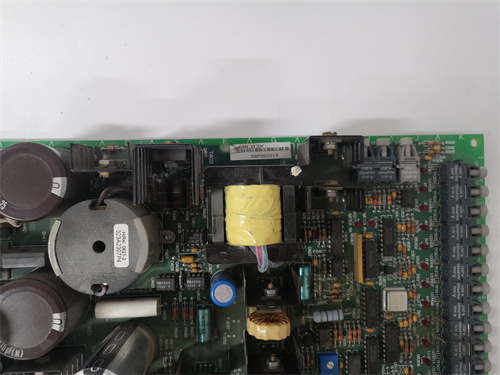
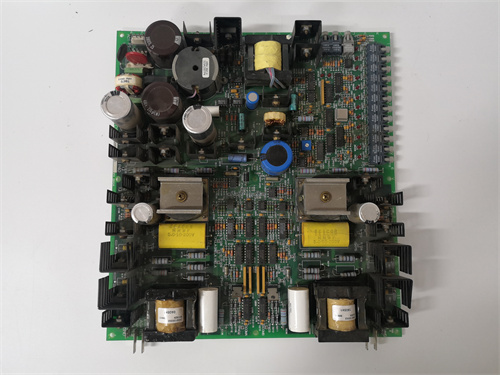
The DS200TBQCG1AAA is the culmination of everything GE learned about high-current termination—and it shows. This board takes the 20A capability of the TBQCG1A and adds the ergonomic improvements that field engineers have been asking for: channels grouped in pairs (1-2 left, 3-4 right), individual strain relief for each dual-terminal set, and a terminal block that’s actually replaceable in the field if you ever manage to damage it.
What’s genuinely new here is the field-replaceable terminal block. On earlier versions (TBQCG1, TBQCG1A), if you stripped a screw or cracked the terminal block, the entire board was scrap. On the ‘AAA’ revision, the terminal block is a separate module that clips onto the board—you can replace it with a new one in about 10 minutes. That’s a feature you don’t appreciate until you’re looking at a $2,500 board with one stripped screw. Compared to the TBQCG1A, the ‘AAA’ runs about 5°C cooler at full load (60°C vs. 65°C at 20A) due to improved airflow around the grouped terminals, and the terminal block lifespan extends to 12+ years with proper maintenance.
Key Technical Specifications
| Parameter | Value / Range |
|---|---|
| Manufacturer | General Electric (GE) |
| Part Number | DS200TBQCG1AAA |
| Board Type | Ultra-High-Current Output Termination Board |
| Number of Channels | 4 (grouped as 2 left / 2 right) |
| Voltage Compatibility | 24, 48, or 125 VDC |
| Current Rating | 20A per channel (continuous) |
| Termination per Channel | 2 independent screw terminals (redundant wiring) |
| Status Indication | Green LED per channel (illuminates when energized) |
| Strain Relief | Individual cable guides per dual-terminal pair |
| Fuse Protection | None (external protection via connected I/O card) |
| Terminal Type | Heavy-duty screw clamp (accepts 10-12 AWG) |
| Terminal Pitch | 12.5mm (extra-wide spacing for heat dissipation) |
| Terminal Block | Field-replaceable modular design |
| Wire Range | 10-14 AWG (12 AWG recommended) |
| Thermal Design | 3oz copper traces; enhanced ground plane heat sinking; grouped layout improves airflow |
| Isolation | None (passive; isolation by connected I/O cards) |
| Mounting | VME rack (fits standard Mark VI backplane) |
| Operating Temp | -20°C to +70°C (derate above 50°C) |
| Dimensions | 6U VME form factor |
| Connectors | 2 x 4-position terminal blocks (channels 1-2, 3-4 with dual terminals each); 1 x 96-pin DIN backplane connector |
Compatible Replacement Models
Replacement options depend on whether you need the field-replaceable terminal block and grouped layout.
✅ Drop-in Replacement: The DS200TBQCG1A (no ‘AA’ suffix) is a direct electrical drop-in—same pinout, same 4 channels, same 20A rating. The ‘A’ version has a single-row layout, non-replaceable terminal block, and lacks strain relief. If you don’t need the field-replaceable terminal block, the ‘A’ version is a cheaper option, but you’ll scrap the board if you strip a terminal screw.
✅ Drop-in Replacement: The DS200TBQCG1 (base model) is also electrically identical. Single-row layout, non-replaceable terminal block, no strain relief, runs hotter. Only use if you’re in a pinch and the ‘AAA’ or ‘A’ versions aren’t available—the base model has a shorter service life at 20A.
⚠️ Software Compatible: The DS200TBQBG1A (8 channels, 10A) fits the rack and is software-compatible, but it cannot handle 20A loads. If your load is under 10A, you could downgrade, but you lose the heavier terminals and wider spacing. Not recommended for loads above 10A.
❌ Hardware Incompatible: The DS200TBQAG1A (16 channels, 5A) and DS200TBPXG1A (standard discrete, 2A) use different pinouts and are not designed for 20A loads—they’ll fail immediately.
Frequently Asked Questions (FAQ)
What does the ‘AAA’ suffix mean on this ultra-high-current board?
GE’s suffix coding for the TBQCG1 series follows a clear pattern. The first ‘A’ indicates the base platform (ultra-high-current termination). The second ‘A’ indicates the improved thermal design and status LEDs (the same as the TBQCG1A). The third ‘A’ indicates the grouped layout (channels 1-2 / 3-4), field-replaceable terminal block, and individual strain relief. So ‘AAA’ is the most advanced version of this board—best thermal performance, best field-maintainability, best ergonomics.
How does the field-replaceable terminal block work?
The terminal block on the ‘AAA’ revision is a separate module that clips onto the main board using a series of spring-loaded contacts. To replace it:
- Remove the board from the rack.
- Unscrew the two retaining screws that hold the terminal block to the board.
- Lift the terminal block straight up—it disengages from the spring contacts.
- Install the new terminal block by aligning the contacts and pressing down firmly.
- Secure the retaining screws.
The spring contacts are rated for 100 insertion/removal cycles, and the replacement terminal block costs about 20-25% of the board’s price. This is a huge cost savings if you strip a screw or crack the terminal block—instead of scrapping a 2,500 board, you replace a 500 module.
What’s the difference between this board and the TBQCG1A?
The TBQCG1A is a single-row, 4-channel, 20A board with status LEDs but non-replaceable terminal block. The TBQCG1AAA is a grouped (2/2), 4-channel, 20A board with status LEDs, strain relief, and field-replaceable terminal block. Key differences:
- Layout: Single row vs. grouped (2 left / 2 right)
- Terminal block: Fixed vs. field-replaceable
- Strain relief: None vs. individual cable guides
- Thermal performance: 65°C at full load vs. 60°C at full load
- Service life: 10+ years vs. 12+ years
The ‘AAA’ is the board you want if you expect to make wiring changes over the life of the turbine—the field-replaceable terminal block is the killer feature.
Can I use this board with a Mark VIe controller?
No—same platform limitation as all Mark VI boards. The TBQCG1AAA uses the older Mark VI backplane pinout. Mark VIe uses a different assignment and typically uses the IS200TBQCG1AAA (Mark VIe version) for this application. The board physically fits but signals map incorrectly—use the Mark VIe-specific board for new installations.
How do I test this board before installation?
Testing requires checking the signal path, redundant terminals, status LEDs, and the replaceable terminal block’s contacts:
- Visual inspection: Check for burn marks around the terminal block. Inspect the spring contacts between the terminal block and the main board—they should be clean and free of corrosion. Check the strain relief guides for cracks.
- Continuity – primary path: Verify each channel’s “A” terminal shows <0.1Ω to the backplane pin through the spring contacts. Channel 1A to pin A1, up to channel 4A (pin C4).
- Continuity – redundant path: Verify each channel’s “B” terminal shows <0.1Ω to the same backplane pin.
- Cross-check: Measure resistance between “A” and “B” terminals on the same channel—should be <0.05Ω.
- LED test: Apply 24V DC to a channel’s output terminals. The green LED should illuminate. Remove voltage; the LED should turn off. Test all 4 channels.
- Terminal block removal test: Remove and reinstall the terminal block to verify the spring contacts are making good connection. Measure continuity again—it should be unchanged.
- Insulation: Measure between adjacent channels—should be >10MΩ.
- Load test: Apply 20A through each channel. Measure voltage drop from terminal to backplane—should be <0.05V at 20A.
What’s the most common failure on the ‘AAA’ revision?
The ‘AAA’ revision addressed the main failure points of earlier boards, but two issues remain:
- Spring contact corrosion. The spring contacts between the terminal block and main board are gold-plated, but in high-humidity or corrosive environments (coastal plants, chemical plants), they can corrode. The symptom: intermittent continuity—the channel works sometimes, fails others. We recommend applying a thin layer of dielectric grease to the contacts during installation if your environment is harsh.
- Strain relief guide cracking. The individual strain relief guides are plastic and can crack if you over-tighten the cable clamp or if the board experiences severe vibration. If a guide cracks, it no longer holds the wire securely.
If I’m using this board in a SIL-rated safety application, what’s the recommended maintenance interval?
For SIL-2 and SIL-3 applications (IEC 61508), we recommend:
- Visual inspection: Every 6 months (check terminal screws, strain relief guides, LED status, spring contact condition)
- Thermal check: Every 6 months (measure terminal block temperature—should be below 65°C at 25°C ambient)
- Torque verification: Every 6 months (re-torque to 1.2 N·m)
- Continuity check: Annually (verify both paths, including through the spring contacts)
- Terminal block re-seat: Every 5 years (remove and reinstall the terminal block to wipe the spring contacts)
- Load test: Every 2 years (verify 20A capability)
The field-replaceable terminal block makes maintenance easier—if the spring contacts degrade, you replace the terminal block module instead of scrapping the board.
What’s the lead time for a replacement TBQCG1AAA?
These are the most advanced version of a specialized board:
- New surplus: 4-8 weeks. The ‘AAA’ commands a premium—expect 20-30% above the TBQCG1A.
- Refurbished: 2-4 weeks. Ensure the refurbisher tests the spring contacts and verifies the terminal block removal/reinstallation doesn’t affect continuity.
- Used/as-is: Available but high risk. The spring contacts are the main wear item on this board—used boards may have degraded contacts.
Is there a direct Mark VIe equivalent?
Yes—the IS200TBQCG1AAA (Mark VIe version). But the backplane pinout is different, and the Mark VIe board may have different features (some variants use LED color changes or built-in diagnostics). If you’re migrating to Mark VIe, plan to replace all ultra-high-current boards as part of the rack conversion.
What’s the correct torque for the terminal screws?
Same as the TBQCG1A: 1.2 N·m (about 10.6 in-lb). The ‘AAA’ revision’s terminal block uses the same M4 screw inserts. Use a torque screwdriver. The spring contacts between the terminal block and the main board are unaffected by the terminal screw torque—they’re independent contacts—so you can torque the screws normally.
KCP2 00-130-547 PLC DCS
GILBARCO T19111-G1 PLC DCS
GILBARCO K92562-01 PLC DCS
GILBARCO T17344-G2 PLC DCS
 Email: sales@plcfcs.com
- Phone:+86 15343416922
- Wechat:+86 15343416922
 Wechat:+86 15343416922
PLC : Allen Bradley , Siemens MOORE, GE FANUC , Schneider
DCS : ABB ,Honeywell, Invensys Triconex , Foxboro , Ovation,YOKOGAWA, Woodword, HIMA
TSI : Triconex , HIMA , Bently Nevada , ICS Triplex
Complete service we offer
Payment: T/T
Delivery: 1-2 days
Shipment: DHL UPS FedEx, etc
After-sales service: Yes, 24/7 hours