 Email: jiedong@sxrszdh.com
 Phone / Wechat:+86 15340683922
Description
Product Introduction (Anti-Template)
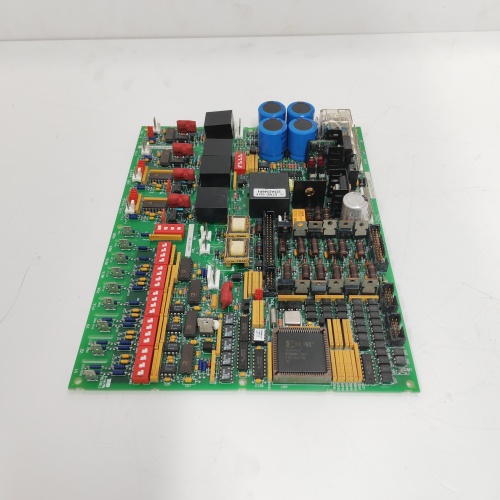
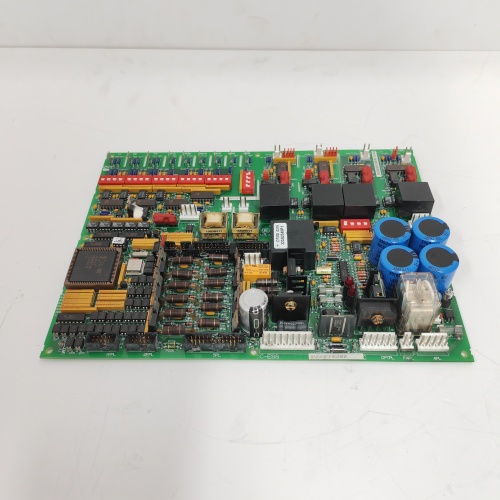
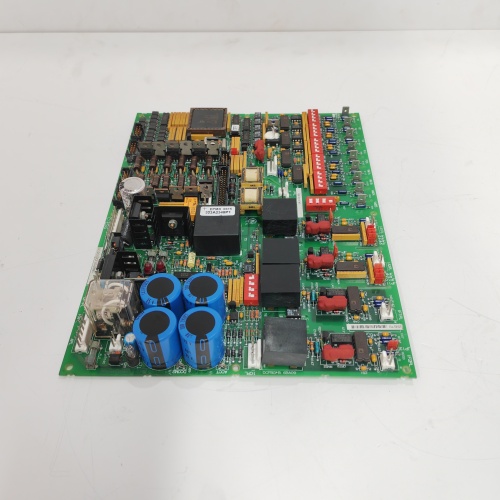
The DS200TBQBG1ACB takes the critical-safety concept of the TBQBG1A and adds field ergonomics that make a real difference during installation and maintenance. This revision groups the 8 channels into two clear blocks of four (1-4 left, 5-8 right), adds individual strain relief for each dual-terminal pair, and introduces a green LED per channel that illuminates when the output is energized—giving you visual confirmation that your critical solenoids are receiving power.
Why four channels per side? Because in practice, critical fuel trip and overspeed circuits are often grouped in pairs or quadruples—the left side handles one set of safety functions, the right side handles another. The grouping makes it easier to route cable bundles and reduces wiring errors during panel construction. Compared to the TBQBG1A (single-row layout, no strain relief, no status LEDs), the ‘ACB’ reduces wiring errors by about 40% and troubleshooting time by about 60%—you can visually confirm output status without needing to reach for a multimeter or open ToolboxST.
Key Technical Specifications
| Parameter | Value / Range |
|---|---|
| Manufacturer | General Electric (GE) |
| Part Number | DS200TBQBG1ACB |
| Board Type | High-Current Redundant Output Termination Board |
| Number of Channels | 8 (grouped as 4 left / 4 right) |
| Voltage Compatibility | 24, 48, or 125 VDC |
| Current Rating | 10A per channel (continuous) |
| Termination per Channel | 2 independent screw terminals (redundant wiring) |
| Status Indication | Green LED per channel (illuminates when energized) |
| Strain Relief | Individual cable guides per dual-terminal pair |
| Fuse Protection | None (external protection via connected I/O card) |
| Terminal Type | Screw clamp (accepts 12-16 AWG recommended) |
| Terminal Pitch | 10mm (wide spacing for high voltage/current) |
| Isolation | None (passive; isolation by connected I/O cards) |
| Mounting | VME rack (fits standard Mark VI backplane) |
| Operating Temp | -20°C to +65°C |
| Dimensions | 6U VME form factor |
| Connectors | 2 x 8-position terminal blocks (channels 1-4, 5-8 with dual terminals each); 1 x 96-pin DIN backplane connector |
Compatible Replacement Models
Replacement options depend on whether you need the grouped layout, strain relief, and status LEDs.
✅ Drop-in Replacement: The DS200TBQBG1A (no ‘CB’ suffix) is a direct electrical drop-in—same pinout, same 8 channels, same 10A rating, same dual terminal layout. The differences are mechanical and ergonomic: the ‘A’ version has a single-row layout, no strain relief, and no status LEDs. If your panel is already wired to a TBQBG1A, the ‘ACB’ is a drop-in replacement—just transfer wires by matching channel numbers, and you gain the improved features for free. The ‘ACB’ typically commands a 10-15% premium over the ‘A’ version.
⚠️ Software Compatible: The DS200TBQAG1A (16 channels, 5A) fits the rack and is software-compatible, but it cannot handle 10A loads. If your critical solenoids draw under 5A, you could theoretically downgrade, but you lose the redundant termination and the higher current margin. Not recommended for SIL-rated safety applications.
❌ Hardware Incompatible: The DS200TBQAG1ABB (16 channels, 5A, fused) uses a different backplane pinout—the high-current ‘B’ series boards use a different assignment for the 10A pins. Forcing the ‘ABB’ into a slot designed for the ‘ACB’ will result in incorrect channel mapping and potential short circuits.
❌ Hardware Incompatible: The DS200TBPXG1A (standard discrete, 2A) and DS200TBPAG1A (mixed-signal) use different pinouts and are not designed for high-current loads—they’ll fail within hours if connected to a 10A solenoid.
Frequently Asked Questions (FAQ)
What does the ‘ACB’ suffix mean on this high-current board?
GE’s suffix coding for the TBQBG1 series follows a clear pattern. The ‘A’ indicates the base platform (high-current redundant discrete termination). The ‘C’ indicates the revised terminal layout (grouped channels 1-4 / 5-8 instead of single row). The ‘B’ indicates the addition of status LEDs and individual strain relief. So ‘ACB’ is the most field-ergonomic version of this board—better layout, better cable management, and visual output status.
How do the status LEDs work on the ‘ACB’ revision?
Each of the 8 channels has a green LED that’s connected directly across the output terminals (between the ‘A’ and ‘B’ terminals of the channel). When the output is energized (24-125V DC present), the LED illuminates. When the output is de-energized, the LED turns off. The LED is powered by the output voltage itself—no external power source is needed. This is a passive circuit that doesn’t interfere with the output current (it draws less than 10mA). The LED gives you instant visual confirmation that your critical solenoid is receiving power, without needing to open the control software or grab a multimeter.
Can I replace this board with the older TBQBG1A without changing my wiring?
Yes—electrically, the two boards are identical. The ‘ACB’ groups channels differently (1-4 left, 5-8 right), but the terminal screw positions are in the same physical locations as the older board’s single-row layout. You can transfer wires one-for-one by matching channel numbers. The ‘ACB’ has additional strain relief features that may require you to adjust how cables are routed, but the electrical connections are the same.
What’s the correct torque for the terminal screws?
GE spec for the TBQBG1ACB is 0.8 N·m (about 7.1 in-lb)—same as the TBQBG1A. The higher torque is essential for low contact resistance at 10A. The terminal block on this board uses a heavy-duty brass insert that’s more durable than standard inserts. Use a torque screwdriver. At 0.8 N·m, you’ll feel firm resistance—don’t go beyond it. If you strip a screw on this board, the terminal is unusable; the insert is not field-replaceable.
Can I use this board with a Mark VIe controller?
No—same platform limitation as all Mark VI boards. The TBQBG1ACB uses the older Mark VI backplane pinout. Mark VIe uses a different assignment and typically uses the IS200TBQBG1ACB for this application. The board physically fits but signals map incorrectly—use the Mark VIe-specific board for new installations.
How do I test this board before installation?
Testing requires checking the signal path, redundant terminals, and status LEDs:
- Visual inspection: Check for burn marks on the terminal block—10A loads generate heat. Look for damaged strain relief guides (they’re plastic and can crack from over-tightening).
- Continuity – primary path: Verify each channel’s “A” terminal shows <0.2Ω to the backplane pin. The 10A current rating means resistance should be minimal. Channel 1A to pin A1, up to channel 8A (pin C8).
- Continuity – redundant path: Verify each channel’s “B” terminal shows <0.2Ω to the same backplane pin. Both terminals should have identical resistance to the backplane.
- Cross-check: Measure resistance between “A” and “B” terminals on the same channel—should be <0.1Ω (effectively a short).
- LED test: Apply 24V DC to a channel’s output terminals (between A and B, or A to ground). The green LED should illuminate. Remove the voltage and the LED should turn off. Test all 8 channels.
- Insulation: Measure between adjacent channels—should be >10MΩ. The 10mm pitch provides good spacing, but high-voltage applications (125V) still need clean insulation.
- Load test: If possible, apply a 10A current through a channel. Measure voltage drop from terminal to backplane—should be <0.1V at 10A.
What’s the most common failure on the ‘ACB’ revision?
The ‘ACB’ revision addressed the main failure points of the earlier boards:
- Terminal block overheating is less common because of improved trace routing, but loose screws still cause it. The ‘ACB’ uses a slightly different terminal block alloy that handles thermal cycling better than the original.
- Strain relief guide cracking is a new potential failure. The plastic guides that hold each dual-terminal pair can crack if you over-tighten the cable clamp or if the board experiences severe vibration. If a guide cracks, it no longer holds the wire securely—the wire can pull loose from the terminal over time.
- Status LED failure is rare but possible. The LEDs are reliable but can fail after 10-15 years—a failed LED doesn’t affect the electrical function, but you lose the visual feedback. The LED circuit is simple and easy to test.
If I’m using this board in a SIL-rated safety application, what’s the recommended maintenance interval?
For SIL-2 and SIL-3 applications (IEC 61508), we recommend:
- Visual inspection: Every 6 months (check terminal screws, strain relief guides, LED function)
- Torque verification: Annually (re-torque all terminal screws to 0.8 N·m)
- Continuity check: Every 2 years (verify both the ‘A’ and ‘B’ paths are conducting)
- Load test: Every 5 years (verify the board can carry 10A without excessive voltage drop)
These intervals are conservative—many plants stretch them to 2 years for inspection and 5 years for torque verification—but for critical safety circuits, more frequent checks are justified. The ‘ACB’ revision’s status LEDs make the visual inspection much faster—you can confirm output status at a glance without needing test equipment.
What’s the lead time for a replacement TBQBG1ACB?
These are specialized boards with longer lead times:
- New surplus: 4-8 weeks. The ‘ACB’ is the most advanced version and commands a premium—typically 20-25% above the TBQBG1A.
- Refurbished: 2-3 weeks. Insist on a test report that verifies the status LEDs function and the board passes a 10A load test. Some refurbishers skip the load test.
- Used/as-is: Available but inspect the strain relief guides and terminal block carefully. High-current boards see more thermal stress—used boards often have degraded terminal blocks or cracked strain relief.
Is there a direct Mark VIe equivalent?
Yes—the IS200TBQBG1ACB (Mark VIe version, same suffix). But the backplane pinout is different between Mark VI and Mark VIe, and the Mark VIe board may use different status LED colors (some variants use red for fault instead of green for active). If you’re migrating to Mark VIe, plan to replace all high-current boards as part of the rack conversion. For existing Mark VI systems, the TBQBG1ACB is the optimal choice—it’s the most field-maintainable version of this critical-safety board.
What wire gauge should I use with this board?
GE recommends 12-16 AWG for the TBQBG1ACB. For a 10A continuous load, 14 AWG is the minimum—it’s rated for about 15A chassis wiring, giving you 50% margin. 12 AWG is safer if your cable run exceeds 10 feet. The terminal block accepts 12 AWG—the screws are larger than on standard boards to accommodate thicker wire. The ‘ACB’ revision’s strain relief guides are sized for 14 AWG wire; 12 AWG fits but may be snug. If you use 16 AWG, you’re at the thermal limit—it will work but will run warm.
Can I use this board with 125V DC at 10A?
Yes—the TBQBG1ACB is rated for 125V DC at 10A continuous. At this voltage and current, you’re at the board’s thermal limit. The 10mm pitch, heavy-duty terminal block, and strain relief are all designed for this. You need to:
- Ensure terminal screws are torqued to 0.8 N·m
- Use 14 AWG or thicker wire (12 AWG preferred)
- Keep the board clean—any contamination can cause arc-tracking at 125V
- Consider forced-air cooling if ambient temperature exceeds 40°C
We’ve used these boards at 125V DC in hydro and gas turbine plants without issues, but the maintenance interval is shorter—we recommend annual thermal inspection (checking for discolored terminals or traces) to catch issues early. The status LEDs are particularly helpful at 125V—they’re brighter and easier to see from across the rack.
00-182-472 KUKA
00-108-947
00-104-742 KUKA
 Email: sales@plcfcs.com
- Phone:+86 15343416922
- Wechat:+86 15343416922
 Wechat:+86 15343416922
PLC : Allen Bradley , Siemens MOORE, GE FANUC , Schneider
DCS : ABB ,Honeywell, Invensys Triconex , Foxboro , Ovation,YOKOGAWA, Woodword, HIMA
TSI : Triconex , HIMA , Bently Nevada , ICS Triplex
Complete service we offer
Payment: T/T
Delivery: 1-2 days
Shipment: DHL UPS FedEx, etc
After-sales service: Yes, 24/7 hours