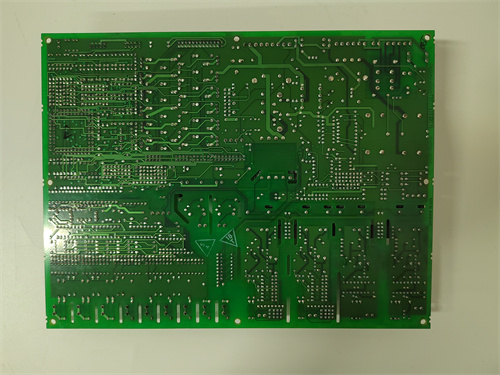
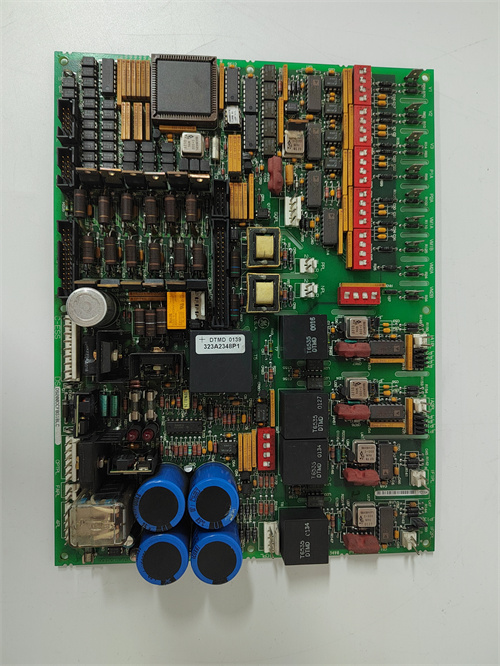
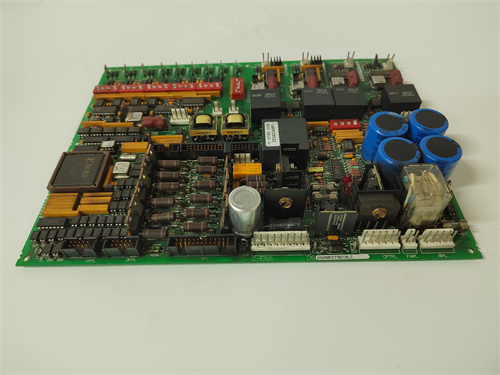
 Email: jiedong@sxrszdh.com
 Phone / Wechat:+86 15340683922
Description
Product Introduction (Anti-Template)
The DS200TBQCG1ABB is what you get when you take the 20A capacity of the TBQCG1 series and add the one thing field engineers have been begging for: per-channel fuse protection with a visual blown-fuse indicator. Because when you’re driving a 20A motor starter that’s shorting out, you don’t want to lose the entire output card—you want one channel to trip cleanly and tell you which one it is.
This board is unique in the TBQCG line—it’s the only 20A variant with onboard fuses. The ‘ABB’ suffix tells you this is the fused version: the first ‘A’ is the base platform (ultra-high-current), the first ‘B’ indicates the fused outputs and grouped layout, and the second ‘B’ is the production revision with improved fuse holders. Compared to the TBQCG1A (20A, no fuses, status LEDs only), the ‘ABB’ adds a 20A fast-acting fuse per channel, a red blown-fuse indicator LED, and a grouped 2/2 layout that improves cable routing. If you’re protecting critical motor starters or large solenoids, this board gives you short-circuit protection without sacrificing the other channels—a feature that can save you thousands in downtime when a single load faults.
Key Technical Specifications
| Parameter | Value / Range |
|---|---|
| Manufacturer | General Electric (GE) |
| Part Number | DS200TBQCG1ABB |
| Board Type | Ultra-High-Current Fused Output Termination Board |
| Number of Channels | 4 (grouped as 2 left / 2 right) |
| Voltage Compatibility | 24, 48, or 125 VDC |
| Current Rating | 20A per channel (continuous, fuse-protected) |
| Fuse Protection | 1 per channel (field-replaceable, tool-free access) |
| Fuse Type | 5x20mm fast-acting cartridge fuse (20A, 250V DC rated) |
| Fuse Status | Red LED per channel (illuminates when fuse is blown) |
| Termination per Channel | 2 independent screw terminals (redundant wiring) |
| Strain Relief | Individual cable guides per dual-terminal pair |
| Terminal Type | Heavy-duty screw clamp (accepts 10-12 AWG) |
| Terminal Pitch | 12.5mm (extra-wide spacing for heat dissipation) |
| Wire Range | 10-14 AWG (12 AWG recommended) |
| Thermal Design | 3oz copper traces; enhanced ground plane heat sinking |
| Isolation | None (passive; isolation by connected I/O cards) |
| Mounting | VME rack (fits standard Mark VI backplane) |
| Operating Temp | -20°C to +65°C (derate above 50°C) |
| Dimensions | 6U VME form factor |
| Connectors | 2 x 4-position terminal blocks (channels 1-2, 3-4 with dual terminals each); 4 edge-mounted fuse holders; 1 x 96-pin DIN backplane connector |
Compatible Replacement Models
Replacement options depend on whether you need fuse protection.
✅ Drop-in Replacement: The DS200TBQCG1A (no fuses, status LEDs only) is electrically identical in terms of pinout and current rating—if you don’t need the fuse protection. If you swap an ‘A’ into a slot wired for an ‘ABB’, you’ll lose fuse protection and the blown-fuse indication, but the board will pass 20A. The ‘A’ version is typically 10-15% cheaper if you’re protecting loads that have their own upstream protection.
⚠️ Software Compatible: The DS200TBQCG1AAA (no fuses, replaceable terminal block) fits the rack and is software-compatible but lacks fuse protection. If your downstream load doesn’t need fusing (or already has protection), this is a valid replacement—you just lose the 30-second fuse-change capability when a fault occurs.
❌ Hardware Incompatible: The DS200TBQAG1ABB (16 channels, 5A, fused) and DS200TBQBG1ACB (8 channels, 10A) use different backplane pinouts—the high-current ‘C’ series uses a different assignment for the 20A pins. Forcing a lower-current board into a 20A slot will result in trace damage.
Frequently Asked Questions (FAQ)
What does the ‘ABB’ suffix mean on this ultra-high-current board?
The suffix coding for the TBQCG1 series: the first ‘A’ is the base platform (ultra-high-current termination). The first ‘B’ indicates two things: fused outputs (instead of unprotected) and grouped terminal layout (2/2 instead of single row). The second ‘B’ is the production revision—in this case, improved fuse holders with better spring tension and a more visible blown-fuse LED. So ‘ABB’ means “ultra-high-current, fused, grouped layout, latest production.” This is the most protective version of the 20A board—the only one that gives you per-channel short-circuit protection.
How do the fuses work on this board?
Each of the 4 output channels has a 5x20mm fast-acting cartridge fuse in series with the output terminal. The fuse is rated for 20A at 250V DC. If the output current exceeds 20A (or if there’s a short circuit), the fuse blows and isolates the channel. A red LED in parallel with the fuse illuminates when the fuse is open, giving you visual indication of which channel failed. The fuse holder is edge-mounted with tool-free access—you can pop the fuse out with your fingers, replace it, and restore the channel in under 30 seconds. The fuse protection is essential for protecting the connected I/O card and backplane from short-circuit currents.
What fuse rating should I use for the ‘ABB’ version?
GE specifies 20A fast-acting fuses for the TBQCG1ABB. The fuse holders are rated for 250V DC and accept standard 5x20mm cartridge fuses. Some applications may use 15A fuses if the load is below 15A, but the board is designed for 20A—using a lower-rated fuse will cause nuisance trips if your load has a normal inrush current. For motor starters with high inrush (30-40A for 50ms), you might want a time-delay fuse, but that would change the fuse type across all channels. Consult your connected I/O card manual (typically the DS200TCQCG1 or similar 20A output card) for the recommended fuse rating. The ‘ABB’ board uses the same fuse holder as the TBQAG1ABB but with a larger fuse rating—5x20mm fuses are physically identical regardless of current rating, so you can swap fuse values as long as the voltage rating matches.
Can I use this board with a Mark VIe controller?
No—same platform limitation as all Mark VI boards. The TBQCG1ABB uses the older Mark VI backplane pinout. Mark VIe uses a different assignment and typically uses the IS200TBQCG1ABB for this application. The board physically fits but signals map incorrectly—use the Mark VIe-specific board for new installations.
How do I test this board before installation?
Testing requires checking the signal path, fuses, blown-fuse LEDs, and redundant terminals:
- Visual inspection: Check for burn marks around the fuse holders. Inspect the terminal block for discoloration—20A loads generate heat. Check the strain relief guides for cracks.
- Continuity – primary path: With fuses installed, verify each channel’s “A” terminal shows <0.1Ω to the backplane pin (through the fuse). Channel 1A to pin A1, up to channel 4A (pin C4).
- Continuity – redundant path: Verify each channel’s “B” terminal shows <0.1Ω to the same backplane pin.
- Cross-check: Measure resistance between “A” and “B” terminals on the same channel—should be <0.05Ω.
- Fuse test: Remove a fuse and verify the channel reads open circuit. Reinstall the fuse—continuity should return.
- Blown-fuse LED test: Apply 24V DC to the output side of a channel (simulate a blown fuse by disconnecting the load but keeping the voltage on the output terminal). The red LED should illuminate. Remove voltage; the LED should turn off. Test all 4 channels.
- Insulation: Measure between adjacent channels—should be >10MΩ.
- Load test: Apply 20A through each channel. Measure voltage drop from terminal to backplane—should be <0.1V at 20A (including the fuse’s resistance).
What’s the most common failure on the ‘ABB’ revision?
Three issues specific to the fused, high-current design:
- Fuse holder fatigue. At 20A, the fuse holder contacts run warm. Over years of thermal cycling, the spring tension can weaken, causing intermittent contact—the fuse tests OK but doesn’t make reliable connection. The ‘ABB’ revision improved the fuse holder material, but it’s still a wear item. We recommend replacing the fuse holders every 10 years or 100 fuse-change cycles.
- Blown-fuse LED failure. The red LEDs are reliable but can fail—a failed LED doesn’t affect the fuse function, but you lose visual fault indication. The LED circuit is simple; test it during bench checks.
- Terminal block overheating. At 20A, any loose connection generates heat. The ‘ABB’ uses the same heavy-duty terminal block as the TBQCG1A, but the added fuse holder and LED circuit require careful routing of traces. If the terminal screws aren’t torqued to 1.2 N·m, the contact resistance increases, and the terminal block can overheat. Use a torque screwdriver—the 12.5mm pitch helps with heat dissipation, but it’s not a cure for loose connections.
If I’m using this board in a SIL-rated safety application, what’s the recommended maintenance interval?
For SIL-2 and SIL-3 applications (IEC 61508), we recommend:
- Visual inspection: Every 3 months (check fuse holders, terminal screws, LED status, strain relief guides)
- Thermal check: Every 6 months (measure terminal block and fuse holder temperature—should be below 70°C at 25°C ambient)
- Torque verification: Every 6 months (re-torque terminal screws to 1.2 N·m)
- Fuse continuity check: Every 6 months (verify all fuses are intact and making good contact)
- Load test: Every 2 years (verify 20A capability and voltage drop within spec)
The onboard fuses add an extra point of failure—fuse holders can degrade—so the inspection interval is tighter than for unfused boards. However, the visual blown-fuse indicator makes troubleshooting faster when a channel does trip.
What’s the lead time for a replacement TBQCG1ABB?
These are specialized, fused, ultra-high-current boards:
- New surplus: 4-8 weeks. The ‘ABB’ commands a premium—expect 20-30% above the TBQCG1A.
- Refurbished: 2-4 weeks. Ensure the refurbisher tests the fuses and blown-fuse LEDs—some only check continuity and skip the LED verification.
- Used/as-is: Available but high risk. Fuse holders on used boards are often worn, and terminal blocks may have thermal degradation from years of 20A service.
Is there a direct Mark VIe equivalent?
Yes—the IS200TBQCG1ABB (Mark VIe version). But the backplane pinout is different, and the Mark VIe board may have different fuse schemes (some variants use resettable fuses or electronic current limiting). If you’re migrating to Mark VIe, plan to replace all ultra-high-current boards as part of the rack conversion.
What’s the correct torque for the terminal screws?
Same as the TBQCG1A: 1.2 N·m (about 10.6 in-lb). The fuse holder contacts are separate from the terminal screws—they’re spring-loaded and don’t require torque. Use a torque screwdriver for the terminal screws—the 12.5mm pitch gives you room to work, but over-torquing will still strip the insert.
Can I use this board with 125V DC at 20A?
Yes—the TBQCG1ABB is rated for 125V DC at 20A continuous. The fuses must be 250V DC rated (the holders are rated for 250V). At this voltage and current:
- The fuse holder contacts are near their thermal limit—consider forced-air cooling if ambient exceeds 40°C
- The red blown-fuse LED will be very bright at 125V—visible from across the rack
- Terminal block cleaning is essential—any contamination can cause arc-tracking at 125V, and the fuse holder’s proximity to the terminal block makes cleaning more critical
We’ve used these boards at 125V DC in gas turbine applications without issues, but the fuse holders need annual inspection—the 20A current at 125V generates more heat than at 24V. The ‘ABB’ revision’s improved fuse holder material handles this better than earlier versions, but it’s still a maintenance point.
What wire gauge should I use with this board?
Same as the TBQCG1A: 10-12 AWG recommended. The terminal block accepts 10-14 AWG, but at 20A, 12 AWG is the minimum—10 AWG is safer for longer cable runs. The fuse holder is on the board edge, so the wire routing doesn’t interfere with fuse access. The grouped layout (2/2) gives you better cable management than the single-row layout on the TBQCG1A.
Can I replace a fuse while the board is energized?
The fuse holder is tool-free and finger-safe (the contacts are recessed). You can pop the fuse out with your fingers without touching live parts. However, you should not replace a fuse while the output is energized unless the load is de-energized and the downstream circuit is safe. The board is passive, but the connected I/O card could be sourcing current. In an emergency, you can replace it live with insulated tools—but we recommend de-energizing the output card or the specific channel first. The blown-fuse LED will stay lit until the voltage is removed, so you’ll know when the circuit is de-energized.
GILBARCO N22914-G1 PLC DCS
GILBARCO K93349-01 PLC DCS
GILBARCO Q1198-01 PLC DCS
GILBARCO T17501-G1R PLC DCS
 Email: sales@plcfcs.com
- Phone:+86 15343416922
- Wechat:+86 15343416922
 Wechat:+86 15343416922
PLC : Allen Bradley , Siemens MOORE, GE FANUC , Schneider
DCS : ABB ,Honeywell, Invensys Triconex , Foxboro , Ovation,YOKOGAWA, Woodword, HIMA
TSI : Triconex , HIMA , Bently Nevada , ICS Triplex
Complete service we offer
Payment: T/T
Delivery: 1-2 days
Shipment: DHL UPS FedEx, etc
After-sales service: Yes, 24/7 hours