 Email: jiedong@sxrszdh.com
 Phone / Wechat:+86 15340683922
Description
Product Introduction (Anti-Template)
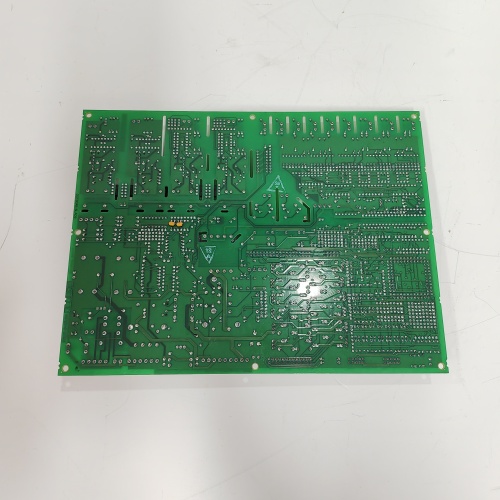
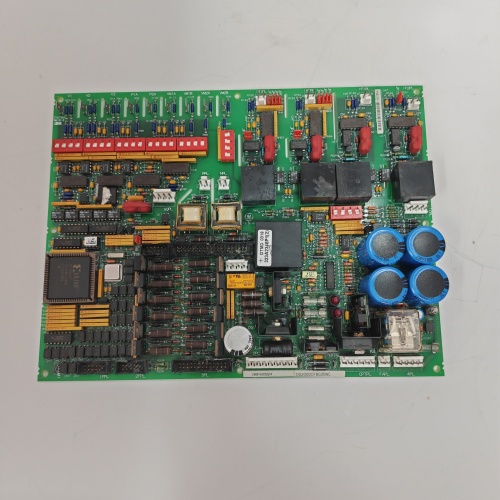
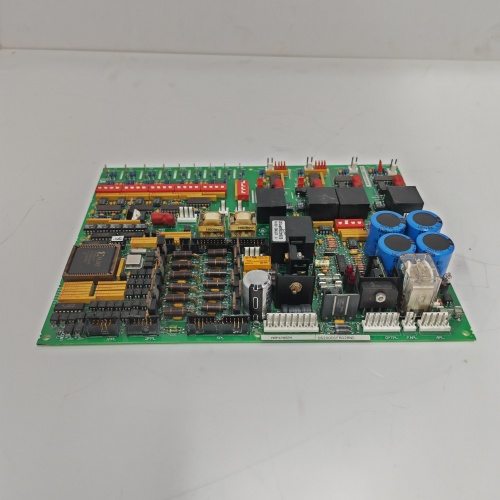
The DS200TBQAG1ABB takes the high-current termination concept and adds a dose of field-service practicality. While the original TBQAG1A had 16 channels in a single row with fuse holders tucked between terminals, this ‘ABB’ revision splits the board into two clear sections—channels 1-8 on the left, 9-16 on the right—and moves the fuse holders to the board edge where you can actually get your fingers on them without dislodging adjacent wiring.
That tool-free fuse access is a game-changer for maintenance. In the older design, replacing a blown fuse meant hunting for a fuse puller and risking a short against neighboring terminals. Now you pop the fuse out with your fingers—it takes 15 seconds instead of 3 minutes. The ‘ABB’ also adds a visual fuse blown indicator (a small red LED that illuminates when the fuse opens), so you can identify the faulty channel at a glance. Compared to the TBQAG1A, this revision reduces fuse replacement time by about 70% and eliminates the need for a dedicated fuse puller tool.
Key Technical Specifications
| Parameter | Value / Range |
|---|---|
| Manufacturer | General Electric (GE) |
| Part Number | DS200TBQAG1ABB |
| Board Type | High-Current Discrete Output Termination Board |
| Number of Channels | 16 (grouped as 8 left / 8 right) |
| Voltage Compatibility | 24, 48, or 125 VDC (configurable via connected I/O card) |
| Current Rating | 5A per channel (continuous) |
| Fuse Protection | 1 per channel (field-replaceable, tool-free access) |
| Fuse Type | 5x20mm fast-acting cartridge fuse (250V DC rated) |
| Fuse Status | Red LED per channel (illuminates when fuse is blown) |
| Terminal Type | Screw clamp (accepts 14-18 AWG recommended) |
| Terminal Pitch | 7.5mm (standard spacing) |
| Isolation | None (passive; isolation by connected discrete I/O cards) |
| Mounting | VME rack (fits standard Mark VI backplane) |
| Operating Temp | -20°C to +65°C |
| Dimensions | 6U VME form factor |
| Connectors | 2 x 8-position terminal blocks (channels 1-8, 9-16); 1 x 96-pin DIN backplane connector; 16 fuse holders (edge-mounted) |
Compatible Replacement Models
Replacement options depend on whether you value the tool-free fuse access and blown-fuse indicators.
✅ Drop-in Replacement: The DS200TBQAG1A (no ‘BB’ suffix) is a direct electrical drop-in—same pinout, same 16 channels, same 5A rating. The differences are mechanical: the ‘A’ version has single-row terminal layout, fuse holders between terminals, and no blown-fuse LEDs. If you’re replacing a board in a panel where maintenance access is limited, the ‘ABB’ is worth the extra cost. If you’re on a tight budget, the ‘A’ version works—just keep a fuse puller handy.
⚠️ Software Compatible: The DS200TBPXG1A (standard discrete, 24 channels, 2A) fits the rack and is software-compatible (same signal protocol), but it cannot handle the higher current. If your load is under 2A, you could downgrade to this board—but you lose the fused outputs. If your load exceeds 2A, the TBPXG1A traces will overheat and fail. This is not a recommended replacement for most TBQAG1ABB applications.
❌ Hardware Incompatible: The DS200TBPAG1A (mixed-signal) and DS200TBCAG1A (analog) use different pinouts and are not designed for high-current loads. Attempting to use them for solenoid or contactor control will damage the board and potentially the connected I/O card.
❌ Hardware Incompatible: The DS200TBQAG1 (no suffix) uses a different backplane connector keying—it won’t seat properly in a slot designed for the ‘ABB’ version. Verify your slot keying before ordering.
Frequently Asked Questions (FAQ)
What does the ‘ABB’ suffix mean on this high-current board?
GE’s suffix coding for the TBQAG1 series follows a clear pattern. The first ‘A’ indicates the base platform (high-current discrete termination). The first ‘B’ indicates the redesigned terminal layout (grouped channels and edge-mounted fuse holders). The second ‘B’ indicates the addition of the blown-fuse indicator LEDs and improved fuse holder material (heat-resistant polymer). So ‘ABB’ is the most field-friendly version of this board—better layout, easier fuse access, and visual fault indication.
How do the blown-fuse indicator LEDs work?
Each of the 16 channels has a red LED connected in parallel with the fuse. When the fuse is intact, the LED is shorted and stays off. When the fuse blows, the full output voltage appears across the LED (through a current-limiting resistor), and the LED illuminates. This is a passive circuit that doesn’t require external power—it uses the output voltage itself to power the indicator. The LED will illuminate at any voltage from 24V to 125V DC. If you see a red LED lit on the board, that channel’s fuse is blown—check the downstream load for shorts before replacing the fuse.
Can I replace a fuse without powering down the board?
Technically yes—the fuse holder is accessible from the board edge, and you can pop the fuse out with your fingers. But you should not replace a fuse while the output is energized unless the load is de-energized and the downstream circuit is safe. The board is passive, so replacing the fuse doesn’t risk shock (the fuse holder is finger-safe), but the output driver on the connected I/O card could be sourcing current. We recommend de-energizing the output card or the specific channel before replacing the fuse. In an emergency, you can replace it live with insulated tools—but it’s not standard practice.
What fuse rating should I use for the ‘ABB’ version?
GE recommends 5A fast-acting fuses for the TBQAG1ABB. The ‘ABB’ version’s fuse holders are rated for 250V DC and accept standard 5x20mm cartridge fuses. Some installations use 4A or 6.3A fuses depending on the load, but GE’s spec is 5A fast-acting. If you’re driving a solenoid with a high inrush current (10A+ for tens of milliseconds), a time-delay fuse might be more appropriate—but that would require changing the fuse specification across all channels. Consult your connected I/O card manual (typically the DS200TCQAG1 or similar high-current output card) for the correct fuse rating for your specific application.
How do I test this board before installation?
Testing requires checking the signal path, fuse holders, and LED indicators:
- Visual inspection: Check for burn marks around the fuse holders—the ‘ABB’ uses a heat-resistant polymer, but if the board was overloaded, you’ll see discoloration. Look for cracked fuse holders from over-torqued fuses.
- Continuity (fuse path): With fuses installed, verify each channel shows <0.5Ω from terminal to backplane pin. Without fuses, each channel should read open.
- Continuity (signal path): The output signal also passes through the LED circuit—verify the LED doesn’t conduct in the forward direction (it should be non-conductive below its forward voltage). This ensures the LED isn’t shorted.
- Fuse holder test: Insert a known good fuse and verify continuity. Then remove the fuse and verify open circuit. The fuse holder should grip the fuse firmly—if the fuse falls out, the holder is worn and the board needs repair.
- Insulation: Measure between adjacent terminals—should be >10MΩ. The edge-mounted fuse holders are close to the terminal block; any contamination can cause leakage.
- LED test: Apply 24V DC to the output side of a channel (simulate a blown fuse). The red LED should illuminate. Remove the voltage, and the LED should turn off.
What’s the most common failure on the ‘ABB’ version?
The ‘ABB’ revision addressed the two main failure points of the earlier boards:
- Fuse holder fatigue is still a wear item, but the ‘ABB’ uses a better material (heat-resistant polymer vs. standard nylon). The spring mechanism is also improved—it takes about 50-70 fuse changes before the holder wears out (compared to 20-30 on the earlier design).
- Terminal block overheating is less common because the ‘ABB’ has slightly larger traces and a redesigned ground plane that helps dissipate heat. But loose terminal screws can still cause overheating—use a torque screwdriver (0.6 N·m, about 5.3 in-lb) on this board.
- Blown-fuse LED failure is a new potential failure. The LEDs are reliable but can fail over time—typically after 10-15 years. If a channel’s fuse blows and the LED doesn’t illuminate, the LED or its current-limiting resistor has failed. The channel still works (just replace the fuse), but you lose the visual fault indication.
If I’m upgrading from a TBQAG1A to the ABB, do I need to re-terminate my wires?
No—the terminal screw positions are in the same locations, just grouped differently. The ‘ABB’ groups channels 1-8 on the left and 9-16 on the right, but the actual screw coordinates are the same as the older board’s single-row layout. You can transfer wires one-for-one by matching channel numbers. The fuse holders are now on the board edge, so you may need to adjust the cable routing slightly to keep them accessible, but the electrical connections are identical.
What’s the lead time for a replacement TBQAG1ABB?
These boards are less common than standard discrete boards due to the specialized high-current design:
- New surplus: 2-4 weeks. The ‘ABB’ commands a premium—typically 10-15% more than the ‘A’ version.
- Refurbished: 1-2 weeks. Insist on a test report that verifies the blown-fuse LEDs function—some refurbishers only test continuity and skip the LED check.
- Used/as-is: Available, but inspect the fuse holders carefully. Boards with high fuse-change counts will have worn holders—the fuse should snap into place firmly, not wobble.
Is there a direct Mark VIe equivalent?
Yes—the IS200TBQAG1ABB (Mark VIe version, similar suffix). But the backplane pinout is different between Mark VI and Mark VIe, and the Mark VIe board may use a different fuse scheme (resettable fuses on some variants). If you’re migrating to Mark VIe, plan to replace all high-current termination boards as part of the rack conversion. For existing Mark VI systems, the TBQAG1ABB is the optimal choice—it’s the most field-maintainable version of this board.
What’s the correct torque for the terminal screws?
GE spec for the TBQAG1ABB is 0.6 N·m (about 5.3 in-lb), higher than the 0.5 N·m on standard termination boards. The higher torque is necessary to ensure good contact at 5A continuous current. Use a torque screwdriver—we’ve seen too many loose connections on high-current boards from under-torquing. If you over-torque, you’ll strip the brass insert. At 0.6 N·m, you should feel firm resistance, then stop. The terminal block on the ‘ABB’ uses an improved insert material that’s more durable than earlier versions, but it’s not indestructible.
Can I use this board with 125V DC?
Yes—the TBQAG1ABB is rated for 125V DC operation and the improved fuse holders are rated for 250V DC. The higher voltage means:
- Your fuses must be 250V DC rated (standard 5x20mm fast-acting fuses are typically 250V—check the marking)
- The blown-fuse LED will be brighter at 125V (it’s brighter than at 24V, which is actually helpful)
- Terminal spacing is critical—the 7.5mm pitch is sufficient for 125V, but keep the terminals clean. Any contamination can cause arcing at 125V, which will carbon-track the terminal block. In high-voltage applications, we recommend annual terminal cleaning.
Do the blown-fuse LEDs work at all voltage levels?
Yes—the LED circuit uses a current-limiting resistor that’s selected for operation from 24V to 125V DC. The LED will be dimmer at 24V but still visible in normal control room lighting. At 125V, it’s bright—you’ll see it from across the rack. If the LED doesn’t illuminate at 24V but does at 125V, the resistor is mismatched (unlikely on a genuine GE board). We test the LEDs at 24V during bench testing—if they’re visible at 24V, they’ll work at any voltage.
How do I clean a contaminated TBQAG1ABB?
High-current boards are more sensitive to contamination than standard boards. Here’s our procedure:
- Remove the board from the rack. Remove all fuses (note their positions for reinstallation).
- Blow off loose dust with compressed air (60 PSI max). Pay attention to the fuse holders—dust accumulates there.
- Apply 99% isopropyl alcohol to a lint-free wipe. Clean the terminal block area thoroughly—the 7.5mm pitch means you have a bit more room than high-density boards, but still be careful.
- Use a small brush to clean around the fuse holders. These are hard-to-reach areas where dirt can accumulate.
- Apply a drop of contact cleaner to each fuse holder to remove oxide buildup—this improves contact reliability.
- Allow the board to dry completely (20-30 minutes) in a well-ventilated area. Reinstall the fuses.
- Re-test insulation resistance—should be >10MΩ between adjacent terminals. If not, repeat the cleaning.
00-128-358 MFC3 DSE-IBS C33-1.40
00-145-742 MFC3 DSE-IBS C33 PLC DCS
00-117-336 MFC3+DSE PLC DCS
 Email: sales@plcfcs.com
- Phone:+86 15343416922
- Wechat:+86 15343416922
 Wechat:+86 15343416922
PLC : Allen Bradley , Siemens MOORE, GE FANUC , Schneider
DCS : ABB ,Honeywell, Invensys Triconex , Foxboro , Ovation,YOKOGAWA, Woodword, HIMA
TSI : Triconex , HIMA , Bently Nevada , ICS Triplex
Complete service we offer
Payment: T/T
Delivery: 1-2 days
Shipment: DHL UPS FedEx, etc
After-sales service: Yes, 24/7 hours