 Email: jiedong@sxrszdh.com
 Phone / Wechat:+86 15340683922
Description
Product Core Brief (10-Second Snapshot)
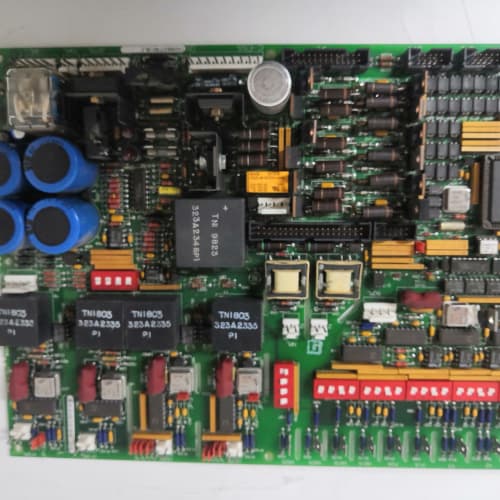
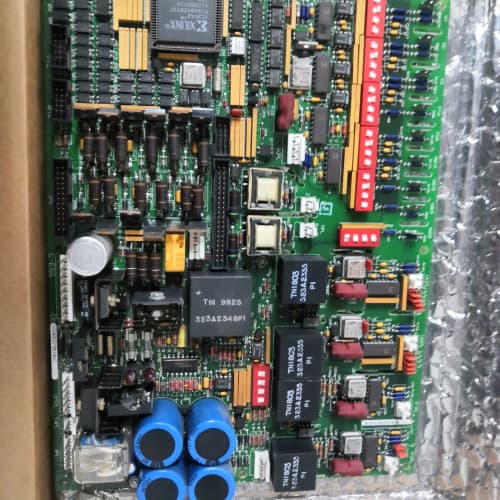
- Model: DS200TBQAG1A
- Brand: General Electric (GE)
- Series: Mark VI / Mark VIe
- Core Function: Terminates high-current discrete outputs with onboard fuse protection per channel.
- Product Type: High-Current Discrete Output Termination Board
- Key Specs: 16 channels; 5A per channel; 24/48/125 VDC; 24-position terminal block.
(Note: Condition: New Surplus. High-current variant—verify your connected I/O card supports these output drivers before ordering).
Product Introduction (Anti-Template)
The DS200TBQAG1A takes the discrete termination concept and scales it up—way up. While the TBPXG1A handles standard discrete signals at 2A per channel, this board is built for 5A continuous current. That’s the difference between controlling a small indicator light versus driving a hydraulic solenoid valve that pulls 3.5A during actuation.
Why 16 channels instead of 24? The higher current capability requires wider traces and larger terminal blocks—which consumes board real estate. The trade-off is worth it when you’re powering fuel trip solenoids, governor hydraulic actuators, or other high-current loads. Compared to the TBPXG1A (24 channels at 2A), the TBQAG1A gives you fewer channels but each one can handle more than twice the current. The onboard fuses are a welcome addition—one blown fuse takes out a single channel instead of taking down the entire output card.
Key Technical Specifications
| Parameter | Value / Range |
|---|---|
| Manufacturer | General Electric (GE) |
| Part Number | DS200TBQAG1A |
| Board Type | High-Current Discrete Output Termination Board |
| Number of Channels | 16 (high-current outputs) |
| Voltage Compatibility | 24, 48, or 125 VDC (configurable via connected I/O card) |
| Current Rating | 5A per channel (continuous) |
| Fuse Protection | 1 per channel (field-replaceable) |
| Fuse Type | 5x20mm fast-acting cartridge fuse |
| Terminal Type | Screw clamp (accepts 14-18 AWG recommended) |
| Current Rating | 5A per terminal (maximum) |
| Isolation | None (passive; isolation by connected discrete I/O cards) |
| Mounting | VME rack (fits standard Mark VI backplane) |
| Operating Temp | -20°C to +65°C |
| Dimensions | 6U VME form factor |
| Connectors | 16-channel terminal block + 8 auxiliary terminals for common returns; 1 x 96-pin DIN backplane connector |
| Backplane Pinout | High-current discrete output-specific assignment |
Compatible Replacement Models
Replacement options depend on your current requirements and fuse type.
✅ Drop-in Replacement: The DS200TBQAG1 (no ‘A’ suffix) is a direct drop-in—same pinout, same 16 channels, same 5A rating. The ‘A’ revision upgraded the fuse holders to a more reliable design (fewer intermittent contacts). If you find the non-‘A’ version cheaper, it works—just be prepared for slightly more frequent fuse holder issues.
⚠️ Software Compatible: The DS200TBPXG1A (standard discrete, 24 channels, 2A) fits the rack but cannot handle the higher current. If your load exceeds 2A (which it likely does—that’s why you’re looking at the TBQAG1A), the TBPXG1A traces will overheat and fail. This is not a viable replacement for high-current applications.
❌ Hardware Incompatible: The DS200TBPAG1A (mixed-signal) and DS200TBCAG1A (analog) use different pinouts and are not designed for high-current loads. Attempting to use them for solenoid control will damage the board.
❌ Hardware Incompatible: The DS200TBQAG1B (if it exists) would have a different pinout. Always verify the suffix—the ‘A’ version is the correct one for this board family.
Frequently Asked Questions (FAQ)
What’s the difference between the TBQAG1A and the TBPXG1A?
The TBPXG1A is a standard 24-channel discrete board rated at 2A per channel. The TBQAG1A is a high-current 16-channel board rated at 5A per channel. Key differences:
- Channel count: 24 vs. 16
- Current rating: 2A vs. 5A
- Fuses: TBPXG1A has no fuses; TBQAG1A has one per channel
- Terminal spacing: TBQAG1A has wider spacing to accommodate thicker wire (14-18 AWG vs. 14-24 AWG on the TBPXG1A)
If you’re driving solenoids, contactors, or any inductive load with a high inrush current, the TBQAG1A is your board. If you’re controlling small relays or status indicators, the TBPXG1A is sufficient.
How do the onboard fuses work?
Each of the 16 output channels has a 5x20mm fast-acting cartridge fuse in series with the output terminal. The fuse is mounted in a small holder on the board—you can see the fuse’s glass tube through the holder. If the output current exceeds the fuse rating (typically 5A for the fast-acting version, but check your specific board—some variants use 3A or 4A fuses), the fuse blows and protects the downstream I/O card. The fuse is field-replaceable—just pop out the old one and insert a new one. We recommend carrying spare fuses in your maintenance kit for this board.
What fuse rating should I use?
The DS200TBQAG1A typically uses 5A fast-acting fuses, but verify your specific application. If you’re driving a solenoid with a 3A steady-state current but a 10A inrush, a slow-blow fuse might be more appropriate—but GE designed the board for fast-acting fuses to protect the I/O card. Consult your connected I/O card manual for the recommended fuse rating. We’ve seen installations with 3A fuses where the load was under 2A (over-fused) and installations with 6.3A fuses where 5A was the max (under-fused). GE’s spec is 5A fast-acting for most applications.
Can I use this board with a Mark VIe controller?
No—same platform limitation as other Mark VI boards. The TBQAG1A uses the older Mark VI backplane pinout and the high-current output card (typically DS200TCQAG1 or similar) pinout. Mark VIe uses a different assignment and typically uses the IS200TBQAG1A (or similar high-current termination board) for this application. The board physically fits but signals map incorrectly—use the Mark VIe-specific board for new installations.
How do I test this board before installation?
Testing a high-current board requires more attention than standard discrete boards:
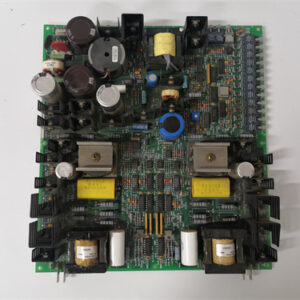
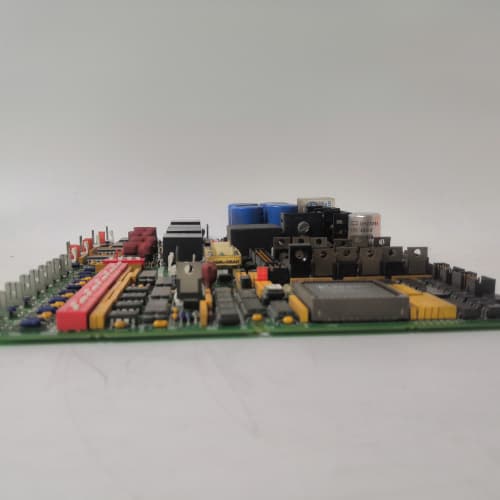
- Visual inspection: Check for signs of overheating—burn marks around the terminal block or fuse holders. Look for cracked solder joints on the backplane connector (high current means more thermal cycling, which can stress solder joints).
- Continuity: Verify each of the 16 output channels shows <0.5Ω from terminal to backplane pin (through the fuse). Channel 1 to pin A1, channel 2 to A2, up to channel 16 (pin C4). The fuse must be intact for continuity—if the fuse is blown, the channel will read open.
- Fuse test: Remove each fuse and test it with a multimeter (continuity). Replace any blown fuses before installation. (If multiple fuses are blown, check for a downstream short or overcurrent condition in your field wiring.)
- Insulation: Measure between adjacent terminals—should be >10MΩ. High-voltage DC (125V) can cause arcing if insulation is compromised.
- Load test: If you have a bench test setup, connect a 3-5A load to one output channel and energize it via the backplane. Verify the channel carries the current without excessive voltage drop (should be <0.5V drop). Check that the terminal block doesn’t heat up—if it gets warm, the terminal screw is loose or the contact is degraded.
What’s the most common failure on this board?
Three issues specific to high-current boards:
- Fuse holder fatigue. The 5x20mm fuse holders are spring-loaded, and after multiple fuse changes, the spring tension weakens. This causes intermittent contact—the fuse tests OK but doesn’t make reliable contact. The ‘A’ revision (your board) improved the fuse holder design, but it’s still a wear item.
- Terminal block overheating. High current through the terminal screws generates heat. If the screw isn’t torqued correctly (0.6 N·m for this board—slightly higher than the standard 0.5 N·m), the contact resistance increases, generating more heat. We’ve seen melted terminal blocks from loose screws carrying 5A continuously. Use a torque screwdriver.
- Solder joint cracks on the backplane connector. The high-current pins (typically the ones near the center of the connector) experience more thermal cycling than signal pins. The solder joints can develop ring cracks over time. Inspect the backplane connector—if you see dull or dark solder joints, plan on reflowing them or replacing the board.
If I’m upgrading from a TBQAG1 to the A version, do I need to re-terminate my wires?
No—the terminal positions are identical. The ‘A’ revision simply has improved fuse holders and better labeling. Your wires transfer directly by matching channel numbers. The board’s footprint is the same.
What’s the lead time for a replacement TBQAG1A?
These boards are less common than standard discrete boards because they’re specialized:
- New surplus: 2-4 weeks. High-current boards command a premium—expect 20-30% above the TBPXG1A.
- Refurbished: 1-2 weeks. Ensure the refurbisher tests the board under load, not just continuity. Some only test at low current and miss high-current issues.
- Used/as-is: Available, but inspect the fuse holders and terminal block carefully. High-current boards see more thermal stress—used boards often have degraded fuse holders or discolored terminal blocks.
Is there a direct Mark VIe equivalent?
Yes—the IS200TBQAG1A (Mark VIe version). But as with all cross-platform moves, the backplane pinout is different, and the Mark VIe board may use a different fuse scheme (some use resettable fuses instead of cartridge fuses). If you’re migrating to Mark VIe, plan to replace all high-current termination boards as part of the rack conversion. For existing Mark VI systems, the TBQAG1A is your board.
What wire gauge should I use with this board?
GE recommends 14-18 AWG for the TBQAG1A. That’s larger than the 14-24 AWG spec on standard discrete boards because of the higher current. For a 5A continuous load, 18 AWG is marginal (it’s rated for about 7A chassis wiring, but you want margin). We recommend 16 AWG for most high-current applications—it fits the terminal block well and has enough headroom for 5A continuous plus inrush spikes. If you use 14 AWG, the terminal block will accept it, but the wire is stiff and may stress the terminal if routed tightly.
Can I use this board with 125V DC?
Yes—the TBQAG1A is rated for 125V DC operation. However, the higher voltage means:
- Your fuses need to be rated for 250V DC (most 5x20mm fuses are 250V-rated—verify)
- The terminal spacing should be clean—any contamination can cause arcing at 125V
- The torque spec is critical—loose connections at 125V will arc and carbon-track the terminal block
We’ve used these boards at 125V in hydro plants without issues, but regular inspections are essential—the 125V DC environment is more aggressive on termination boards than 24V.
00-111-230
00-108-766 PLC DCS
00-125-236 MFC2 DSE-IBS 3.02
 Email: sales@plcfcs.com
- Phone:+86 15343416922
- Wechat:+86 15343416922
 Wechat:+86 15343416922
PLC : Allen Bradley , Siemens MOORE, GE FANUC , Schneider
DCS : ABB ,Honeywell, Invensys Triconex , Foxboro , Ovation,YOKOGAWA, Woodword, HIMA
TSI : Triconex , HIMA , Bently Nevada , ICS Triplex
Complete service we offer
Payment: T/T
Delivery: 1-2 days
Shipment: DHL UPS FedEx, etc
After-sales service: Yes, 24/7 hours