 Email: jiedong@sxrszdh.com
 Phone / Wechat:+86 15340683922
Description
Product Core Brief
- Model: DS200SLCCG2A
- Brand: General Electric (GE)
- Series: Mark V DS200
- Core Function: Dual independent fieldbus gateway
- Product Type: Dual Fieldbus Link (2 ports, fully independent)
- Key Specs: 2 independent protocol engines | All major protocols | 1024 bytes I/O each | 2 ms scan
- Condition: New Original.
Product Introduction
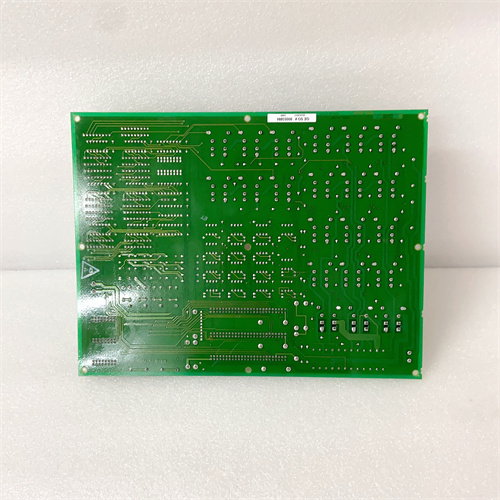
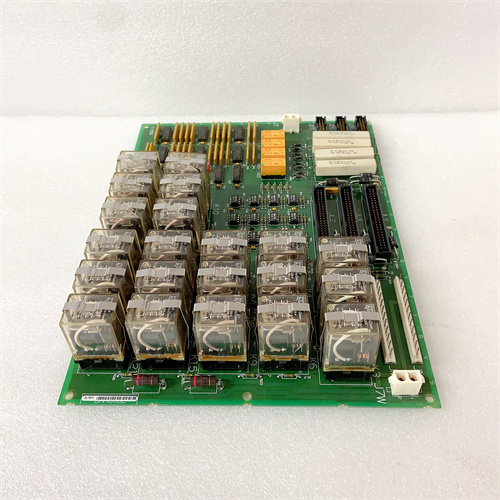
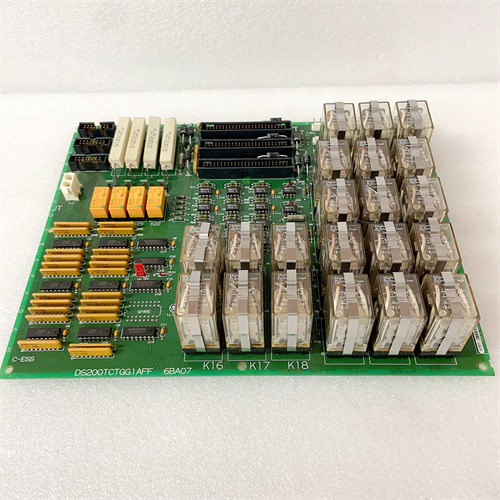
The DS200SLCCG2A is a dual independent fieldbus link controller for GE’s Mark V DS200 series, used in Speedtronic turbine control systems. It provides two completely separate fieldbus interfaces on a single board, each with its own protocol engine and I/O memory.
The “2A” designation indicates a dual independent gateway. Unlike the SLCCG1A (which shares one processor across both ports), the SLCCG2A has two independent processors—one per port. Each port can run a different protocol, at different baud rates, with different scan rates, without interfering with the other. Port 1 can communicate with a Siemens PLC via Profinet at 1 ms while Port 2 talks to a Rockwell PLC via EtherNet/IP at 5 ms. Use it for applications requiring isolation between fieldbus networks (e.g., plant network and safety network) or for maximum performance.
Key Technical Specifications
| Parameter | Port 1 | Port 2 |
|---|---|---|
| Processor | Independent 32-bit ARM | Independent 32-bit ARM |
| Ethernet | 2 x RJ45 (switch, 10/100/1000) | 2 x RJ45 (switch, 10/100/1000) |
| Serial | RS-232/422/485 (configurable) | RS-232/422/485 (configurable) |
| Ethernet protocols | Profinet IO (device), EtherNet/IP (adapter), Modbus TCP, OPC UA | Same (independent) |
| Serial protocols | DeviceNet, Profibus DP, Modbus RTU, CANopen, Genius I/O | Same (independent) |
| I/O data capacity | 1024 bytes input, 1024 bytes output | 1024 bytes input, 1024 bytes output |
| Scan rate (Ethernet) | 1 ms typical | 1 ms typical (independent) |
| Scan rate (serial) | 2 ms typical | 2 ms typical |
| Isolation (port to port) | 2500 VAC | |
| Isolation (port to backplane) | 2500 VAC | |
| Operating temperature | −40°C to +75°C | |
| Backplane current | 5 VDC @ 1.5 A typical, 2.2 A max | |
| Dimensions | 6U x 4HP x 160 mm (single slot) | |
| Accessories included | 2 x Ethernet crossover cables, 2 x USB programming cables, termination resistor kits (DeviceNet, Profibus, CANopen), gold-plated serial terminal blocks, configuration guide |
Key Selling Points & Differentiators
- Two completely independent fieldbus controllers – Separate processors, separate memory, separate I/O data spaces. Port 1 failure does not affect Port 2.
- Run different protocols simultaneously – Profinet on Port 1, EtherNet/IP on Port 2. Or DeviceNet on Port 1, Modbus TCP on Port 2. Any combination.
- Independent scan rates – Port 1 at 1 ms (high-speed control), Port 2 at 10 ms (monitoring only). No compromise.
- Total I/O capacity 2048 bytes – 1024 bytes each direction per port (2048 bytes total input, 2048 bytes total output).
- Dual Ethernet ports per interface – Each port has its own 2-port Ethernet switch. Daisy-chain devices or connect to separate networks.
- Redundancy ready – Use Port 1 as primary fieldbus, Port 2 as backup. Switchover logic in Mark V CPU.
- Full isolation between ports (2500 VAC) – Port 1 connected to plant network (grounded), Port 2 to safety network (floating). No ground loops.
- Independent configuration – Configure each port via its own USB port or web interface. No shared settings.
- QC includes independent stress test on both ports – 72 hours, different protocols, maximum I/O load, zero cross-port interference.
- 5-year warranty
Frequently Asked Questions (FAQ)
Q: What is the difference between SLCCG1A (single processor, shared) and SLCCG2A (dual independent)?
| Feature | SLCCG1A | SLCCG2A |
|---|---|---|
| Processors | 1 (shared) | 2 (independent) |
| I/O data per port | Shared (1024 total) | Dedicated (1024 per port) |
| Isolation port-to-port | None (shared ground) | 2500 VAC |
| Independent scan rates | No (same for both) | Yes (per port) |
| Port failure impact | Both ports fail | Other port unaffected |
| Backplane current | 1.2 A | 2.2 A |
| Use case | Cost-effective integration | High availability, isolated networks |
Q: Can the two ports communicate with each other?
A: No—they are completely independent. Data from Port 1 is written to the Mark V backplane. Data from Port 2 is written separately. The Mark V CPU can cross-connect data in logic (e.g., read Port 1 data, write to Port 2). The SLCCG2A itself does not route between ports.
Q: Can I use one port for Profinet and the other for EtherNet/IP simultaneously?
A: Yes—that is a primary use case. Port 1: Profinet to Siemens PLC for turbine control. Port 2: EtherNet/IP to Rockwell DCS for plant-wide monitoring. No interference.
Q: What is the total backplane current requirement?
A: 2.2 A maximum at 5 VDC. Two processors consume more power than SLCCG1A. Verify your Mark V power supply has sufficient capacity (typical 5–10 A). For heavily loaded racks, use external 5 V supply (we sell ACC-PS-5V-10A).
Q: Can I use both Ethernet ports on Port 1 for redundancy?
A: Yes—the two Ethernet ports on each interface are an integrated switch. Use one port for network connection, the other for daisy-chaining to another device. For media redundancy (MRP), both ports are used in a ring topology.
Q: How do I configure the SLCCG2A?
A: Each port has its own USB programming port. Connect PC to Port 1 USB, configure Port 1. Connect PC to Port 2 USB, configure Port 2. Or use web interface over Ethernet (each port has its own IP address). Configuration includes protocol selection, I/O mapping, scan rate.
Q: What happens if one port loses power or fails?
A: The other port continues operating normally. The Mark V CPU will see loss of data from the failed port (I/O data goes to zero or holds last value, configurable). The CPU can trigger an alarm and continue controlling the turbine using data from the healthy port.
Q: What QC tests are specific to the SLCCG2A?
A: Twelve tests (dual independent):
- Port 1 isolation: 3000 VAC to Port 2, to backplane
- Port 2 isolation: 3000 VAC to Port 1, to backplane
- Independent protocol test: Profinet on Port 1, EtherNet/IP on Port 2, 24 hours, zero errors
- Independent scan rate test: Port 1 at 1 ms, Port 2 at 10 ms, verify timing
- Port 1 full load: 1024 bytes I/O at 1 ms, 24 hours
- Port 2 full load: 1024 bytes I/O at 1 ms, 24 hours
- Simultaneous full load: both ports at 1024 bytes, 1 ms, 72 hours
- Cross-port interference: Port 1 transmitting at maximum, measure Port 2 error rate (zero)
- Power fail test: remove Port 1 power (simulated), Port 2 continues
- Temperature: −40°C to +75°C, both ports active
- Configuration retention: power cycle, verify both port configs retained
- Burn-in: 168 hours at +65°C, mixed protocols, maximum load
Q: What shipping protection for this dual-processor board?
A: Maximum protection. Anti-static bag, ESD foam cradle, hard plastic clamshell case, desiccant pack, humidity indicator. Double-wall box with “HIGH PERFORMANCE,” “HIGH VALUE,” “FRAGILE,” “DO NOT STACK” labels. Shock, tilt, temperature indicators. Calibration certificate and test report (25 pages) laminated. 2 x USB programming cables, 2 x Ethernet crossover cables, termination resistor kits in separate bag. Gold-plated serial terminal blocks included. Each board ships individually. Do not unpack without 4-hour temperature stabilization.
ASM 2850125-21 PLC DCS
VEGA VEGACAP CP64.XXFGCZKMX PLC DCS
KEB Oerlikon 14F5C3D-YG1A PLC DCS
 Email: sales@plcfcs.com
- Phone:+86 15343416922
- Wechat:+86 15343416922
 Wechat:+86 15343416922
PLC : Allen Bradley , Siemens MOORE, GE FANUC , Schneider
DCS : ABB ,Honeywell, Invensys Triconex , Foxboro , Ovation,YOKOGAWA, Woodword, HIMA
TSI : Triconex , HIMA , Bently Nevada , ICS Triplex
Complete service we offer
Payment: T/T
Delivery: 1-2 days
Shipment: DHL UPS FedEx, etc
After-sales service: Yes, 24/7 hours