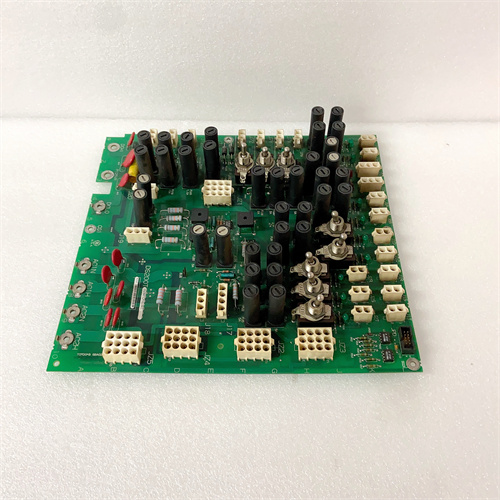
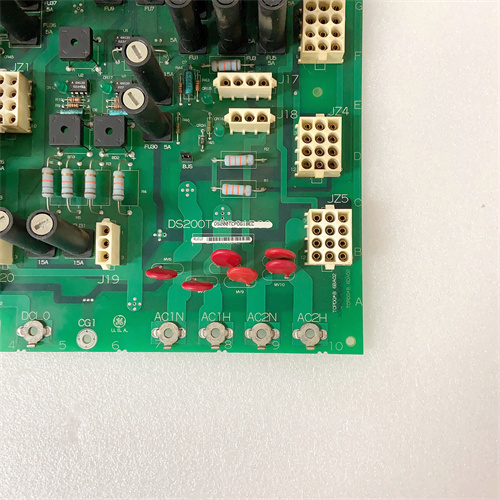
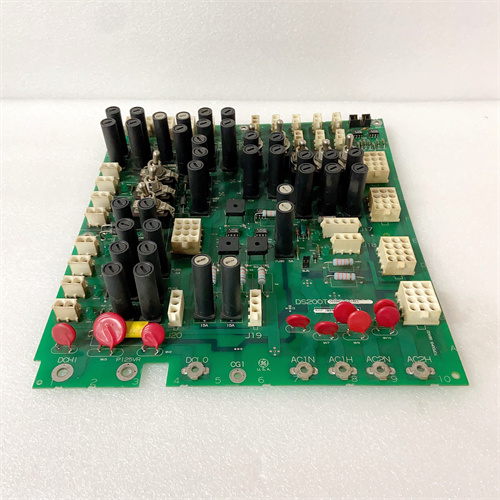
 Email: jiedong@sxrszdh.com
 Phone / Wechat:+86 15340683922
Description
Product Core Brief
- Model: DS200SHVMG1ACD
- Brand: General Electric (GE)
- Series: Mark V DS200
- Core Function: High-precision valve monitor with 16-bit resolution
- Product Type: Precision Valve Monitor (1 channel, high accuracy)
- Key Specs: 16-bit drive and feedback monitoring | 0.1% accuracy | HART | Data logging | 0.05% burden
- Condition: New Original.
Product Introduction
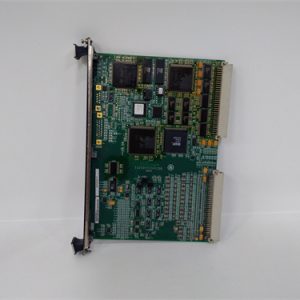
The DS200SHVMG1ACD is a high-precision servo valve condition monitoring board for GE’s Mark V DS200 series, used in Speedtronic turbine control systems. It provides 16-bit resolution on both drive current and position feedback measurements with 0.1% accuracy—ten times better than standard SHVMG1.
The “ACD” suffix indicates a precision variant. Standard SHVMG1 has 12-bit resolution (approx 50 µA on drive, 5 µA on feedback) with 1% accuracy. The ACD delivers 16-bit resolution (3 µA on drive, 0.24 µA on feedback) with 0.1% accuracy. Ultra-low burden (0.05% vs 0.5% on standard) minimizes impact on control loop. Includes HART communication, 10,000-point data logging (time-stamped), advanced stiction analysis (including friction vs position profiling), and 4–20 mA health index output. Use it for critical valve analysis, commissioning validation, and forensic failure analysis.
Key Technical Specifications
| Parameter | Value |
|---|---|
| Drive current monitor | 0–200 mA (16-bit, 3 µA/bit resolution) |
| Drive current burden | 1Ω (0.05% of 200 mA range) |
| Drive current accuracy | ±0.1% of reading |
| Feedback input | 4–20 mA (16-bit, 0.24 µA/bit resolution) |
| Feedback burden | 10Ω (0.05% of 20 mA range) |
| Feedback accuracy | ±0.1% of span |
| Sampling rate | 1 kHz (1,000 samples per second) |
| HART protocol | HART 5, 6, 7 (digital overlay on 4–20 mA loop) |
| Data logging memory | 10,000 points (time-stamped: position, current, health index, stiction) |
| Logging interval | Configurable 0.1–60 minutes (0.1 min = 6 seconds) |
| Stiction analysis | Deadband measurement + friction vs position profile (256 points) |
| Health index calculation | Weighted: deadband (30%), friction profile (20%), response time (20%), cycle count (15%), current deviation (15%) |
| Friction vs position profile | Maps valve friction at 256 equally spaced positions. Output via HART as CSV |
| Alarm outputs | Form C relay (1 A @ 24 VDC), configurable via HART, plus second relay (optional) |
| Analog output | 4–20 mA = health index (0–100%), 16-bit resolution |
| Non-volatile memory | 1 MB flash (10 year retention) |
| Isolation (alarm relays to logic) | 2500 VAC |
| HART loop impedance | 250Ω (internal, switchable) |
| Operating temperature | 0°C to +60°C (precision derates outside 20–30°C) |
| Power supply | 24 VDC external (200 mA) or backplane (derated) |
| Terminal type | Gold-plated removable screw blocks |
| Dimensions | 6U x 4HP x 160 mm (single slot) |
| Accessories included | Precision calibration certificate (NIST-traceable), HART software (USB), USB-to-HART modem, data log retrieval cable, configuration guide, spare fuse (250 mA) |
Key Selling Points & Differentiators
- 16-bit resolution (3 µA on drive, 0.24 µA on feedback) – Standard SHVMG1 has 12-bit (50 µA, 5 µA). ACD provides 16x finer resolution. Detect sub-milliamp changes in valve drive current.
- ±0.1% accuracy – Ten times better than standard SHVMG1 (±1%). Essential for forensic failure analysis and valve characterization.
- Ultra-low burden (1Ω drive, 10Ω feedback) – Standard has 5Ω (drive) and 50Ω (feedback). ACD reduces loop impact by 5x. No retuning needed for most loops.
- Friction vs position profiling – Measures valve friction at 256 positions across stroke. Output as CSV. Identify wear patterns, localized stiction, or damaged spool lands.
- 10,000-point data logging – Ten times more than SHVMG1A (1,000 points). Log at 0.1-minute intervals (6 seconds) for detailed transient analysis.
- Advanced health index – Includes friction profile uniformity in calculation. More accurate prediction of remaining useful life.
- Second alarm relay – Standard has one relay. ACD adds second relay for separate alerts (e.g., caution vs critical).
- Precision calibration certificate – NIST-traceable, 21-point test (drive current every 10 mA, feedback every 2 mA). Uncertainty <0.02%.
- 5-year warranty – Extended for precision variant.
Frequently Asked Questions (FAQ)
Q: What is the difference between SHVMG1 (standard), SHVMG1A (HART), and SHVMG1ACD (precision)?
| Feature | SHVMG1 | SHVMG1A | SHVMG1ACD |
|---|---|---|---|
| Resolution (drive) | 12-bit (50 µA) | 12-bit (50 µA) | 16-bit (3 µA) |
| Resolution (feedback) | 12-bit (5 µA) | 12-bit (5 µA) | 16-bit (0.24 µA) |
| Accuracy | ±1% | ±1% | ±0.1% |
| Burden (drive/feedback) | 5Ω / 50Ω | 5Ω / 50Ω | 1Ω / 10Ω |
| Data logging points | None | 1,000 | 10,000 |
| Friction profiling | No | No | Yes (256 points) |
| HART communication | No | Yes | Yes |
| Alarm relays | 1 | 1 | 2 |
| Calibration certificate | No | No | Yes (NIST) |
| Use case | General monitoring | Remote monitoring | Critical valve analysis |
Q: Do I need 16-bit resolution for valve monitoring?
A: For most valves, no. Standard SHVMG1 (12-bit) is sufficient for predictive maintenance. Use ACD when:
- Valve has very fine resolution (direct-drive, low hysteresis)
- Conducting forensic failure analysis (detect subtle degradation)
- Commissioning new valves (baseline characterization)
- Valve position feedback range is narrow (e.g., 4–12 mA for full stroke)
- Research or acceptance testing
Q: What is the friction vs position profile, and how do I use it?
A: The board measures valve friction at 256 points across the stroke. It applies small dither and records the drive current change needed to move the valve. Output is CSV with columns: position (%), friction (mA). Use to identify:
- Localized wear (friction spike at specific position)
- Seal damage (increased friction near ends)
- Bent stem (friction varies non-monotonically)
- Contamination (random friction spikes)
Compare profiles over time to detect degradation.
Q: How do I retrieve the friction profile?
A: Connect PC with USB-to-HART modem. Run included software. Select “Friction Profile”. Board performs a slow stroke (60 seconds) measuring friction at 256 points. Data exports as CSV. The valve moves during this test—do not run in-service. Use during commissioning or outage.
Q: Does the ACD affect my control loop more than the standard monitor?
A: Less. Burden: 1Ω (drive) vs 5Ω standard. 10Ω (feedback) vs 50Ω standard. At 200 mA drive, voltage drop is 0.2 V (ACD) vs 1.0 V (standard). At 20 mA feedback, drop is 0.2 V (ACD) vs 1.0 V (standard). ACD is 5x less intrusive.
Q: What is the logging interval for 10,000 points?
A: Configurable 0.1–60 minutes. At 0.1 minutes (6 seconds), log covers 16.7 hours. At 60 minutes, log covers 10,000 hours (416 days). For transient analysis (e.g., start-up), use 0.1–1 minute. For long-term trending, use 60 minutes.
Q: The ACD has two alarm relays. How do I configure them?
A: Via HART. Relay 1: configurable threshold (deadband, response time, etc.). Relay 2: configurable as secondary threshold (e.g., Relay 1 at 5% deadband = warning, Relay 2 at 8% deadband = critical). Or configure for different parameters (e.g., Relay 1 = deadband, Relay 2 = cycle count). Factory default: Relay 1 = deadband >5%, Relay 2 = position deviation >10%.
Q: What QC tests are specific to the ACD revision?
A: Fourteen tests:
- Drive current resolution: 16-bit, no missing codes, INL <0.05%
- Feedback resolution: 16-bit, no missing codes
- Drive current accuracy: 0–200 mA in 10 mA steps, error <±0.1%
- Feedback accuracy: 4–20 mA in 2 mA steps, error <±0.1%
- Burden verification: 1.00Ω ±0.01Ω (drive), 10.00Ω ±0.1Ω (feedback)
- HART communication: read/write all parameters, 50+ commands
- Data logging: 10,000 points, read back, verify integrity
- Friction profiling: 256 points, position accuracy ±0.5%, friction repeatability ±1%
- Health index output: 4–20 mA, 16-bit, 0–100% in 10% steps, error <±0.1 mA
- Alarm relays: verify closure per HART configuration (both relays)
- Sampling rate: 1 kHz verified with oscilloscope
- Isolation: relays to logic at 3000 VAC
- Calibration certificate: 21-point NIST-traceable test
- Burn-in: 168 hours at +50°C, continuous logging at 1-second rate, data integrity verified
Q: What shipping protection for this high-precision board?
A: Maximum protection. Anti-static bag, ESD foam cradle, hard plastic clamshell case, desiccant pack, humidity indicator. Double-wall box with “PRECISION INSTRUMENT,” “HIGH VALUE,” “FRAGILE,” “DO NOT STACK” labels. Shock, tilt, temperature indicators. Calibration certificate (NIST-traceable, 8 pages) laminated. USB-to-HART modem and USB drive in separate anti-static bag. Data retrieval cable included. Each board ships individually. Do not unpack without 4-hour temperature stabilization.
Axcelis 652961 PLC DCS
Intronics 2B52A PLC DCS
Axcelis 462091 PLC DCS
 Email: sales@plcfcs.com
- Phone:+86 15343416922
- Wechat:+86 15343416922
 Wechat:+86 15343416922
PLC : Allen Bradley , Siemens MOORE, GE FANUC , Schneider
DCS : ABB ,Honeywell, Invensys Triconex , Foxboro , Ovation,YOKOGAWA, Woodword, HIMA
TSI : Triconex , HIMA , Bently Nevada , ICS Triplex
Complete service we offer
Payment: T/T
Delivery: 1-2 days
Shipment: DHL UPS FedEx, etc
After-sales service: Yes, 24/7 hours