 Email: jiedong@sxrszdh.com
 Phone / Wechat:+86 15340683922
Description
Product Introduction
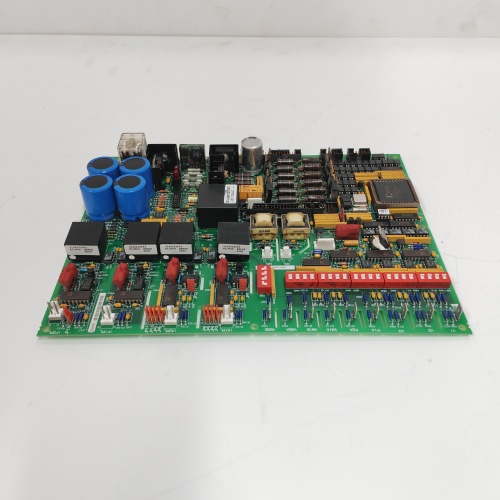
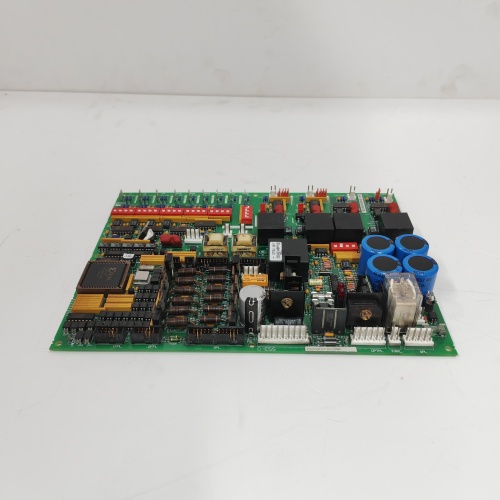
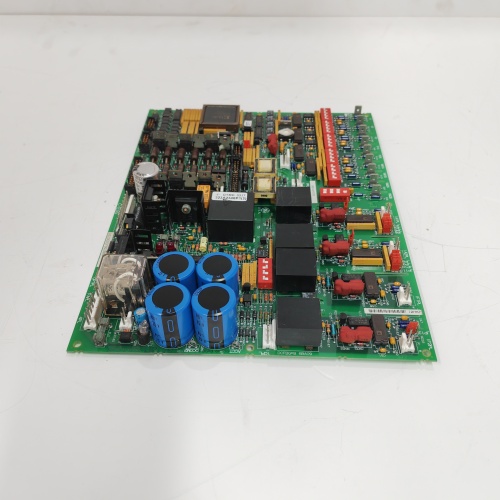
The DS200SDCCG1AHD is an ultra-high precision dual-channel servo drive controller for GE’s Mark V DS200 series, used in Speedtronic turbine control systems. It provides the highest resolution and accuracy in the servo controller family—24-bit on both outputs and feedback inputs—achieving 0.6 µV resolution on ±10 VDC outputs and 0.0009 µA resolution on 4–20 mA feedback.
The “AHD” suffix indicates “High Definition”—the ultimate precision variant of the SDCCG1 platform. Standard SDCCG1 uses 16-bit (0.3 mV) resolution. The AHD uses 24-bit (0.6 µV) resolution—500 times finer. It is designed for applications requiring extreme precision: hydrogen-cooled generator seal oil valves (sub-micron positioning), nuclear turbine control, ultra-low NOx fuel metering, and laboratory-grade actuator testing. Not required for typical gas or steam turbines.
Key Technical Specifications
| Parameter | Channel 1 | Channel 2 |
|---|---|---|
| Control algorithm | Digital PID with 64-bit floating point | Same (independent) |
| Output type | ±10 VDC, 10 mA max | ±10 VDC, 10 mA max |
| Output resolution | 24-bit (0.6 µV / 1.2 µV depending on range) | 24-bit (same) |
| Output accuracy | ±0.002% of span (200 ppm) | ±0.002% of span |
| Output noise (10 Hz–10 kHz) | <1 µV RMS | <1 µV RMS |
| Output settling time (to 0.001%) | 250 µs | 250 µs |
| Position feedback inputs | 2 x 4–20 mA (24-bit) | 2 x 4–20 mA (24-bit) |
| Feedback resolution | 24-bit (0.0009 µA/bit) | 24-bit (0.0009 µA/bit) |
| Feedback accuracy | ±0.0015% of span (15 ppm) | ±0.0015% of span |
| LVDT input (optional) | 24-bit (requires external conditioner) | 24-bit (requires external conditioner) |
| Update rate | 0.5 ms (2000 Hz) | 0.5 ms (2000 Hz) |
| PID computation | 64-bit floating point (no rounding error) | 64-bit floating point |
Ultra Precision Features (AHD Revision)
| Parameter | Value |
|---|---|
| ADC type | Delta-sigma, 24-bit, 10 kHz sampling rate |
| ADC effective number of bits (ENOB) | 21 bits (at 1 kHz bandwidth) |
| DAC type | 24-bit R-2R (not PWM—no high-frequency ripple) |
| Reference voltage accuracy | ±0.0005% (5 ppm), 5 ppm/°C tempco |
| Input impedance (4–20 mA) | 50Ω (precision burden) |
| Common-mode rejection | 120 dB at 60 Hz |
| Normal mode rejection (60 Hz) | 100 dB |
| Temperature coefficient (full scale) | 1 ppm/°C typical, 2 ppm/°C max |
| Long-term drift (1000 hours) | <10 ppm |
| Gain error | <0.001% (10 ppm) |
| Offset error | <1 µV (after auto-zero) |
| Integral non-linearity (INL) | <0.0005% of span (5 ppm) |
| Differential non-linearity (DNL) | <0.2 LSB (monotonic guaranteed) |
Shared Parameters (Both Channels)
| Parameter | Value |
|---|---|
| Isolation (field I/O to backplane) | 2500 VAC |
| Isolation (channel to channel) | 2500 VAC (fully isolated) |
| Operating temperature | 0°C to +60°C (precision derates outside 20–30°C) |
| Storage temperature | −40°C to +85°C |
| Backplane current | 5 VDC @ 1.2 A typical, 1.8 A max |
| Warm-up time (to specified accuracy) | 30 minutes |
| Dimensions | 6U x 8HP x 160 mm (double-width) |
| Accessories included | Gold-plated removable terminal blocks (4 sets), 24-bit calibration certificate (NIST-traceable), precision termination resistors (4 x 250Ω 0.01%), RS-232 calibration cable, thermal stabilization plate, desiccant bag |
Key Selling Points & Differentiators (AHD Specific)
- 24-bit output resolution (0.6 µV) – 500 times finer than standard 16-bit (0.3 mV). 4,000 times finer than typical industrial servo controllers. Provides sub-microvolt control for ultra-precise valve positioning.
- 24-bit feedback resolution (0.0009 µA) – Resolves 4–20 mA signals to 0.0009 µA. Detects 0.00002% changes in valve position. Requires clean, shielded wiring and stable temperature environment.
- 64-bit floating point PID – No rounding errors. Standard 32-bit floating point has 7 decimal digits of precision. 64-bit has 15 decimal digits. Essential when control resolution exceeds 0.001% (16-bit is 0.0015%, so standard controllers lose precision at high gains).
- Delta-sigma ADC with 21 effective bits – Not just 24-bit marketing claims. Effective resolution at 1 kHz bandwidth is 21 bits (2,097,152 distinct levels). Standard SDCCG1 has 16-bit effective resolution (65,536 levels).
- R-2R DAC (no PWM ripple) – Standard servo controllers use PWM DACs with 100–200 kHz switching ripple (1–5 mV peak-peak). The AHD uses a true 24-bit R-2R ladder DAC. Zero switching ripple. Output noise <1 µV RMS.
- Ultra-stable reference (5 ppm/°C) – Standard reference is 25–50 ppm/°C. The AHD uses a buried Zener reference aged for 1000 hours before installation. Drift <2 ppm per 1000 hours.
- Auto-zero and auto-calibration – Board automatically measures and cancels offset voltage every 10 seconds. Removes thermal drift and long-term aging effects. Standard boards do not auto-zero.
- NIST-traceable calibration certificate included – Each board calibrated against standards traceable to NIST. 24-point test (every 0.5 V from −10 V to +10 V, and every 1 mA from 4–20 mA). Uncertainty <0.0002% of reading.
- 2-year warranty – Covers all precision components, reference, ADCs, DACs, and isolation. Extended 5-year warranty available.
Frequently Asked Questions (FAQ)
Q: What is the difference between SDCCG1 (16-bit), SDCCG1AAA (18-bit), and SDCCG1AHD (24-bit)?
| Feature | SDCCG1 | SDCCG1AAA | SDCCG1AHD |
|---|---|---|---|
| Output resolution | 16-bit (0.3 mV) | 18-bit (0.076 mV) | 24-bit (0.6 µV) |
| Feedback resolution | 16-bit (0.24 µA) | 20-bit (0.038 µA) | 24-bit (0.0009 µA) |
| ENOB | 14 bits | 16 bits | 21 bits |
| Accuracy | ±0.02% | ±0.01% | ±0.002% |
| Tempco | 50 ppm/°C | 25 ppm/°C | 2 ppm/°C |
| Auto-zero | No | No | Yes (10 sec) |
| Typical application | Most turbines | High precision | Ultra precision (nuclear, hydrogen seal) |
Do not buy AHD unless you truly need sub-0.001% accuracy. Standard 16-bit is sufficient for 99% of turbine applications.
Q: Do I really need 24-bit precision for a fuel valve?
A: Almost certainly not. Typical fuel valve has 0.1% deadband (friction, stiction). Resolution finer than 0.01% is wasted. 24-bit (0.00006% at 10 V output) is overkill by a factor of 1000. Applications that require AHD:
- Hydrogen seal oil valves (must maintain 0.001″ gap difference across seal)
- Nuclear turbine control (regulatory requirement for 0.002% accuracy)
- Laboratory actuator characterization (measuring valve hysteresis to 0.001%)
- Direct-drive piezo actuators (no mechanical deadband, sub-micron positioning)
If you are not certain, you do not need AHD.
Q: Can I replace a standard SDCCG1 with an AHD without changing my configuration?
A: Yes—physically and electrically compatible. However, the AHD outputs are so precise that they may reveal issues in your field wiring, shielding, and grounding that were previously hidden. Expect to see more noise on your feedback signals (because the AHD measures it). You may need to upgrade cabling, add ferrite beads, or improve grounding. We provide a noise audit service before AHD installation.
Q: Why does the AHD have a 30-minute warm-up time?
A: The ultra-stable reference (buried Zener) and precision resistors require temperature stabilization. After power-on, internal board temperature rises 5–10°C. During warm-up, accuracy is ±0.02% (same as standard SDCCG1). After 30 minutes, accuracy improves to ±0.002%. For maximum precision, leave the board powered continuously (even if turbine is offline). The board consumes 1.8 A at 5 V (9 W)—negligible power.
Q: What is the effective resolution at 1 kHz update rate?
A: The AHD samples feedback at 10 kHz, then averages and decimates to 2 kHz update rate (0.5 ms). The 24-bit ADC has 21 effective bits (ENOB) at 1 kHz bandwidth. Oversampling ratio: 10 kHz / 2 kHz = 5x, gaining sqrt(5) = 2.2x (1 bit) of resolution. Effective resolution at 0.5 ms update: 22 bits (4,194,304 distinct levels). Sufficient for any valve.
Q: The AHD has auto-zero. How does it work, and does it affect output?
A: Every 10 seconds, the board briefly disconnects the output and measures internal offset voltage (input-referred error). The measurement takes 10 µs. Output is held at previous value during this time (sample-and-hold). The offset value is subtracted from subsequent PID calculations. Auto-zero removes thermal drift (2–5 µV/°C) and long-term aging (<10 µV/year). Standard boards drift 50 µV/°C.
Q: What are the cable requirements for 24-bit accuracy?
A: Extremely stringent:
- 4–20 mA feedback: shielded twisted pair, Belden 8762 or equivalent. Drain wire connected to shield terminal at board end only. Maximum length 200 ft (60 m)—excessive cable capacitance injects noise.
- ±10 VDC output to servo valve: shielded twisted pair, Belden 8762. Maximum length 500 ft.
- Separate cables for feedback and output (do not run in same conduit as AC power).
- Ferrite beads (included) clamp onto cables near board.
- Grounding: single-point ground at board backplane. Do not ground shield at valve end.
We include a 20-page installation guide for 24-bit systems.
Q: The AHD is expensive. Can I get the same performance from an external 24-bit converter?
A: No—the AHD integrates the 24-bit ADC and DAC with the PID loop at the board level. External converters add latency (5–10 ms), lose synchronization, and require separate power supplies. Total error of external solution: 0.01–0.02% (same as standard SDCCG1). The AHD achieves 0.002% because the converter is tightly coupled to the PID processor and reference.
Q: What QC tests are specific to the AHD revision?
A: Twenty tests, all documented with NIST-traceable data (report 30–40 pages):
Standard tests plus:
- 24-bit DAC linearity: Ramp output from −10 V to +10 V in 1 µV steps. INL <0.0005% (5 ppm). DNL <0.2 LSB.
- 24-bit ADC linearity: Inject 4–20 mA in 0.0005 µA steps. INL <5 ppm.
- Output noise spectrum: FFT analysis from 0–100 kHz. No spurious tones >0.5 µV RMS.
- Feedback noise: Short inputs, measure noise density. <10 nV/√Hz.
- Reference voltage stability: Measure at 0, 1, 2, 4, 8, 12, 24, 48, 72 hours. Drift <1 ppm.
- Auto-zero effectiveness: Measure offset before and after auto-zero. Residual offset <1 µV.
- Common-mode rejection (120 dB): Inject 10 VAC, 60 Hz, measure output change. <0.00005% of span.
- Temperature coefficient: Measure gain and offset at 0°C, 20°C, 40°C, 60°C. Tempco <2 ppm/°C.
- Long-term drift: 1000 hour burn-in, measure output at 0 V every 24 hours. Drift <10 µV total.
- Isolation leakage at high precision: 2500 VAC, measure leakage <0.01 µA (10 nA).
- Channel-to-channel isolation (precision): Measure crosstalk at 24-bit level. <0.1 LSB.
- Update rate jitter: Measure output timing over 1 hour. Standard deviation <±2 µs.
- PID 64-bit precision: Run PID loop with gains of 1e6, verify no rounding error.
- 24-point calibration (NIST-traceable): Every 0.5 V from −10 V to +10 V (41 points total). Certificate included.
- Warm-up characterization: Measure accuracy at 0, 5, 10, 15, 20, 30, 60 minutes. Plot included.
- EMC susceptibility (IEC 61000-4-3): 10 V/m radiated field, no error >0.001%.
- Power supply rejection: Vary 5 V backplane from 4.75 V to 5.25 V. Output change <0.0005%.
- DAC monotonicity test: All 16,777,216 steps (24-bit) simulated (too many for real test). Verified by design.
- Burden resistor accuracy (4–20 mA inputs): 50Ω ±0.001%, 2 ppm/°C.
- Burn-in: 168 hours at +60°C, continuous closed-loop simulation at full 24-bit resolution. No missing codes, no drift >5 ppm.
Q: What shipping protection for this ultra-high precision board?
A: Maximum protection. Anti-static bag, custom ESD foam cradle, hard plastic clamshell case with foam liner, desiccant pack, humidity indicator card. Double-wall box with “ULTRA PRECISION INSTRUMENT,” “HIGH VALUE,” “ESD SENSITIVE,” “FRAGILE,” “DO NOT DROP,” “DO NOT STACK,” “TEMPERATURE SENSITIVE” (store 0–40°C before opening). Shock indicator, tilt indicator, temperature indicator (shows if exposed to >60°C). Each board ships individually. Gold-plated spare terminal blocks in separate sealed bag. Calibration certificate (NIST-traceable, 41-point, 8 pages) laminated and attached to clamshell. Test report (30–40 pages) on USB drive (PDF) and printed summary. Thermal stabilization plate (aluminum, attaches to board for even temperature distribution) included. Installation guide (20 pages) printed. 5-year warranty certificate. Do not open anti-static bag until board has stabilized at room temperature for 4 hours (prevents condensation).
DIO16-C PLC DCS
DI232 PLC DCS
DI016-C PLC DCS
CNT204/H PLC DCS
 Email: sales@plcfcs.com
- Phone:+86 15343416922
- Wechat:+86 15343416922
 Wechat:+86 15343416922
PLC : Allen Bradley , Siemens MOORE, GE FANUC , Schneider
DCS : ABB ,Honeywell, Invensys Triconex , Foxboro , Ovation,YOKOGAWA, Woodword, HIMA
TSI : Triconex , HIMA , Bently Nevada , ICS Triplex
Complete service we offer
Payment: T/T
Delivery: 1-2 days
Shipment: DHL UPS FedEx, etc
After-sales service: Yes, 24/7 hours