 Email: jiedong@sxrszdh.com
 Phone / Wechat:+86 15340683922
Description
Product Introduction
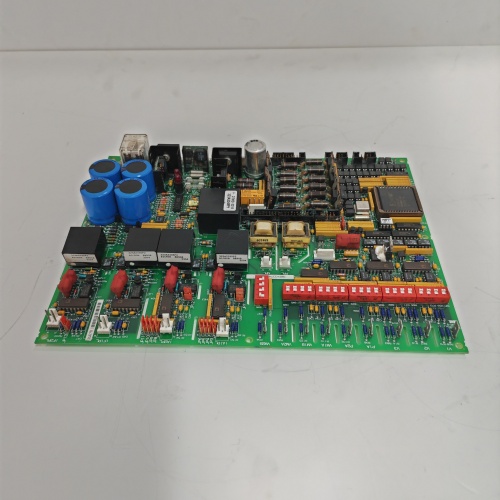
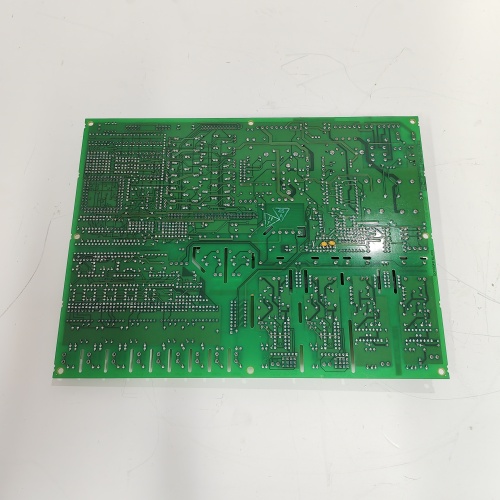
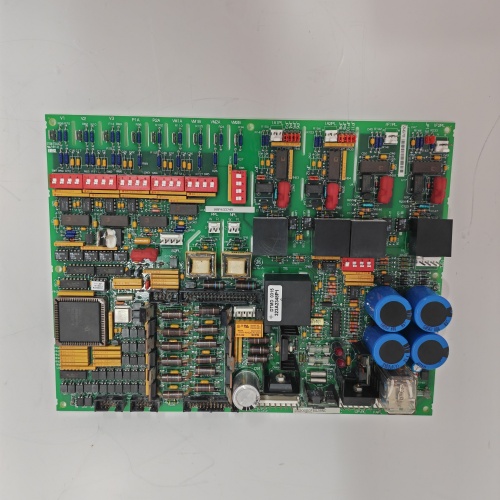
The DS200SDCCG1AFD is a dual-channel servo drive controller with 4–20 mA current outputs for GE’s Mark V DS200 series, used in Speedtronic turbine control systems. It provides two independent servo control loops where the output to the valve or actuator is a 4–20 mA current signal rather than the standard ±10 VDC voltage.
The “AFD” suffix indicates a 4–20 mA current output variant. Standard SDCCG1 boards output ±10 VDC, which is compatible with most electro-hydraulic servo valves. However, some valves, I/P converters, and positioners accept 4–20 mA directly. The AFD eliminates the need for an external voltage-to-current converter, saving panel space and reducing failure points. It is designed for applications with long cable runs (current loops are less susceptible to voltage drop) or where the field device is loop-powered.
Key Technical Specifications
| Parameter | Channel 1 | Channel 2 |
|---|---|---|
| Control algorithm | Digital PID with feedforward | Digital PID with feedforward (independent) |
| Output type | 4–20 mA (sourcing), loop-powered | 4–20 mA (sourcing), loop-powered |
| Output load capacity | 0–1000Ω (24 V loop power) | 0–1000Ω (24 V loop power) |
| Output resolution | 16-bit (0.24 µA/bit) | 16-bit (0.24 µA/bit) |
| Output accuracy | ±0.1% of span (4–20 mA) | ±0.1% of span (4–20 mA) |
| Output compliance voltage | 24 VDC ±10% (loop power supplied by board) | 24 VDC ±10% (loop power supplied by board) |
| Position feedback inputs | 2 x 4–20 mA (redundant) | 2 x 4–20 mA (redundant) |
| Feedback resolution | 16-bit | 16-bit |
| Update rate | 1 ms (1000 Hz) | 1 ms (1000 Hz) |
Current Output Features (AFD Revision)
| Parameter | Value |
|---|---|
| Output loop power | 24 VDC ±5%, 50 mA max per channel (supplied by board) |
| Open circuit protection | Output limits to 30 V (open loop detection) |
| Output short-circuit protection | Current limited to 30 mA, auto-recovery |
| Output compliance range | 4–20 mA into 0–1000Ω load (24 V supply gives 24 V / 20 mA = 1200Ω max, derated to 1000Ω) |
| Output settling time (to 0.1%) | <500 µs |
| Output ripple | <10 µA RMS at 20 mA into 500Ω |
Shared Parameters (Both Channels)
| Parameter | Value |
|---|---|
| Isolation (field I/O to backplane) | 1500 VAC |
| Isolation (channel to channel) | 1000 VAC (shared isolated ground) |
| Operating temperature | −30°C to +65°C |
| Storage temperature | −40°C to +85°C |
| Backplane current | 5 VDC @ 950 mA typical, 1.3 A max |
| Dimensions | 6U x 8HP x 160 mm (double-width) |
| Accessories included | Removable terminal blocks (4 sets), spare blocks (1 set), configuration cable (RS-232), termination resistors (4 x 250Ω for feedback), current loop test jig |
Key Selling Points & Differentiators (AFD Specific)
- Direct 4–20 mA output – No external voltage-to-current converter needed. Interfaces directly with I/P converters (4–20 mA to pneumatic), current-input valve positioners, and loop-powered actuators.
- Board-powered current loops (24 VDC) – Each output channel supplies 24 VDC loop power. No external power supply needed for the current loop. Saves panel space and wiring.
- Drives long cable runs (up to 2000 ft) – 4–20 mA current loops are immune to voltage drop. With 24 V loop power and 1000Ω load capacity, you can run 2000 ft of 18 AWG cable (total loop resistance including cable: approx 25Ω). ±10 VDC voltage signals would drop by 20% over same distance.
- 16-bit resolution on both input and output – 0.24 µA per bit. Precision current control for critical applications.
- Open loop detection – If 4–20 mA output circuit opens (broken wire), board detects current <1 mA, sets fault LED, and annunciates via backplane. Configurable failsafe response: go to 4 mA, 20 mA, or last value.
- Output short-circuit protection – Shorting 4–20 mA output to ground will not damage the board. Current limits to 30 mA, output folds back. Auto-recovery when short removed.
- QC includes 0–1000Ω load sweep – Output tested at 4 mA, 12 mA, 20 mA with loads of 0Ω, 250Ω, 500Ω, 750Ω, 1000Ω. Accuracy maintained within ±0.1% across all loads.
- 2-year warranty – Covers output current loop, loop power supply, feedback inputs, and all I/O.
Frequently Asked Questions (FAQ)
Q: What is the difference between SDCCG1 (voltage output), SDCCG1AEC (high current voltage output), and SDCCG1AFD (current output)?
| Feature | SDCCG1 | SDCCG1AEC | SDCCG1AFD |
|---|---|---|---|
| Output type | ±10 VDC | ±10 VDC (high current) | 4–20 mA |
| Output drive | 10 mA max | 100 mA max | 20 mA (into 1000Ω) |
| Loop power supplied | No | No | Yes (24 VDC) |
| Cable length limit (signal quality) | 500 ft | 500 ft | 2000 ft |
| Typical device driven | Servo valve (Moog, Vickers) | Direct-drive proportional valve | I/P converter, current positioner |
Choose AFD for I/P converters (4–20 mA to pneumatic), current-input positioners, long cable runs, or when you want loop power supplied by the board.
Q: Can I replace a standard SDCCG1 (±10 VDC output) with an AFD (4–20 mA output) without changing my configuration?
A: No—the output signal type is different. You cannot drive a ±10 VDC servo valve with 4–20 mA (valve may not open or may be fully open all the time). You must:
- Replace the valve/actuator with one that accepts 4–20 mA input, OR
- Add an external converter (current-to-voltage, 4–20 mA to ±10 VDC). We sell ACC-I2V converter ($95 per channel).
- Reprogram your Mark V logic to output 4–20 mA values (engineering units to mA, not voltage).
The feedback inputs (4–20 mA) are compatible—no change needed.
Q: Does the AFD support 2-wire loop-powered transmitters on the feedback inputs?
A: Yes. The feedback inputs (4–20 mA) supply 24 VDC loop power to 2-wire transmitters. Connect the transmitter directly to the input terminals (+ and -). No external power supply needed. For 4-wire transmitters (externally powered), configure via jumper to disable loop power.
Q: What is the maximum loop resistance (wire + load)?
A: The board supplies 24 VDC ±5% for the current loop. At 20 mA, the maximum total loop resistance is (24 V / 0.02 A) = 1200Ω. The AFD is specified for 1000Ω load to provide margin for power supply variation and temperature derating. Example: I/P converter with 250Ω input impedance + 18 AWG cable (0.02Ω per 1000 ft) up to 2000 ft (0.04Ω) = 250.04Ω total—easily within 1000Ω.
Q: Can I use the AFD with a 4–20 mA device that has its own power supply (4-wire device)?
A: Yes. Move the jumper on the output channel to “EXT” position. This disables the board’s internal 24 VDC loop power. Connect the device’s external 24 VDC supply to the output terminals (observe polarity). The board still controls the current (4–20 mA) using its internal current sink. Check device manual—some require sourcing, some sinking. The AFD is a sourcing output (provides current). Most 4-wire devices expect sinking. We provide wiring diagrams.
Q: What happens if I open the 4–20 mA output loop (broken wire)?
A: The board detects output current <1 mA for >100 ms. Fault LED lights, discrete output (fault relay) changes state, and output goes to failsafe mode (configurable: 4 mA, 20 mA, or hold last value). Default failsafe: 4 mA (minimum signal). The board does NOT automatically recover—fault must be cleared manually (repair wire, then reset via software or power cycle).
Q: What is the output accuracy over temperature?
A: ±0.1% of span (4–20 mA) at 25°C. Over temperature (−30°C to +65°C), accuracy degrades to ±0.2% of span. Temperature coefficient: 50 ppm/°C. The feedback inputs have similar accuracy. For high-precision applications requiring 0.05% accuracy over temperature, use external 4–20 mA isolators (we sell ACC-ISO-I, $150 per channel).
Q: Can I use the AFD for a valve that requires 0–20 mA instead of 4–20 mA?
A: Yes. The output can be configured for 0–20 mA via software (Control System Toolbox). Live zero (4 mA) is typical for valve positioners to detect broken wire (0 mA indicates fault). If your valve accepts 0–20 mA, you lose broken wire detection. Configure failsafe accordingly.
Q: The AFD has 4–20 mA outputs. Can I also use the ±10 VDC output for something else?
A: No. The AFD has no ±10 VDC outputs. The output terminals are dedicated to 4–20 mA current loops only. If you need both signal types on the same board, you need two separate boards (one AFD, one standard SDCCG1) or an external converter.
Q: What QC tests are specific to the AFD revision?
A: Thirteen tests, all documented:
Standard tests (feedback calibration, PID loop test, etc.) plus:
- Output calibration (4–20 mA): Inject 4.000 mA, 12.000 mA, 20.000 mA using precision current meter. Error <±4 µA (0.02% of span).
- Load sweep test: Output 20 mA at loads of 0Ω, 250Ω, 500Ω, 750Ω, 1000Ω. Verify output current remains 20 mA ±0.1%.
- Loop power supply voltage: Measure 24 VDC across output terminals (open circuit). 24 V ±5% at 25°C.
- Open loop detection: Disconnect output wire, verify fault within 100 ms, output goes to failsafe (4 mA default).
- Short-circuit protection: Short output to ground for 1 minute. Current limits to <30 mA. Remove short, output recovers within 100 ms.
- Output settling time: Step from 4 mA to 20 mA. Measure time to within 0.1% of final value. <500 µs.
- Output ripple: 20 mA into 500Ω load, measure AC ripple (10 Hz–10 kHz). <10 µA RMS.
- Output noise (spectral): FFT analysis from 0–1 kHz. No spurious tones >5 µA.
- Isolation (output to backplane): 1800 VAC for 5 seconds. Leakage <0.5 mA.
- Cross-channel interference: Channel 1 output at 20 mA square wave (1 Hz), measure Channel 2 output. Induced <2 µA peak-peak.
- Thermal stability: Output at 20 mA into 1000Ω load (20 V drop = 0.4 W dissipation per channel). 72 hours at +65°C. Output drift <0.05% of span.
- Combined input/output test: Feedback input at 12 mA, PID set to maintain output = feedback. Measure output error <0.1% of span.
- Burn-in: 72 hours at +65°C, both channels running closed-loop simulation. No output drift >0.1%, no faults.
Q: What shipping protection?
A: Anti-static bag, ESD foam cradle with cutouts for terminal blocks. Double-wall box with “FRAGILE,” “ESD SENSITIVE” labels. Shock indicator. Current loop test jig (250Ω precision resistor) included. Spare terminal blocks in separate bag. Each board ships individually. Configuration extraction service available—ship your old board for parameter transfer.
DIO32-C HIMA
DIO280 HIMA
DIO264 PLC DCS
 Email: sales@plcfcs.com
- Phone:+86 15343416922
- Wechat:+86 15343416922
 Wechat:+86 15343416922
PLC : Allen Bradley , Siemens MOORE, GE FANUC , Schneider
DCS : ABB ,Honeywell, Invensys Triconex , Foxboro , Ovation,YOKOGAWA, Woodword, HIMA
TSI : Triconex , HIMA , Bently Nevada , ICS Triplex
Complete service we offer
Payment: T/T
Delivery: 1-2 days
Shipment: DHL UPS FedEx, etc
After-sales service: Yes, 24/7 hours