 Email: jiedong@sxrszdh.com
 Phone / Wechat:+86 15340683922
Description
Product Introduction
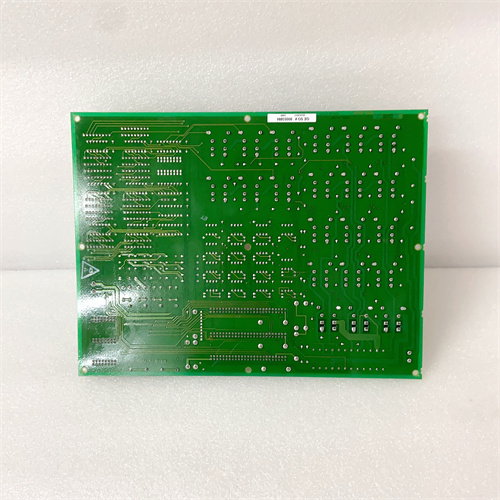
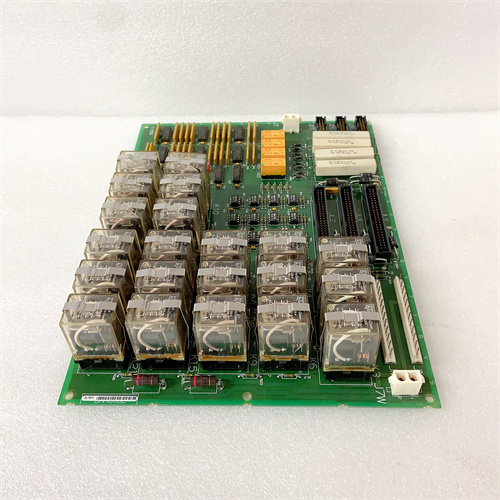
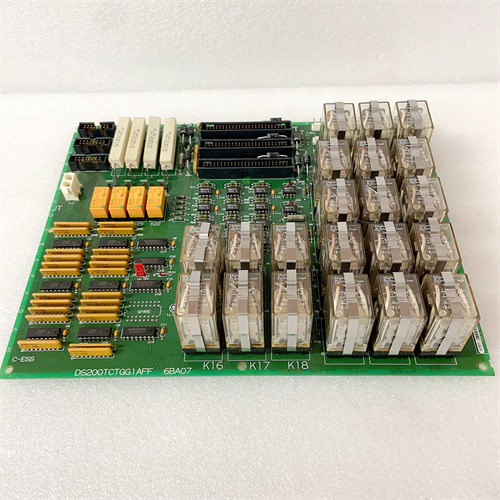
The DS200SDCCF1ANC is a servo drive controller board for GE’s Mark V DS200 series, used in Speedtronic turbine control systems. It provides precise position control for fuel valves, steam inlet valves, bypass valves, and other electro-hydraulic actuators requiring closed-loop servo control.
The SDCCF1ANC is the workhorse of turbine actuator control. It accepts position feedback (4–20 mA, LVDT, or potentiometer), executes PID algorithm, and outputs ±10 VDC to drive servo valves or proportional valves. The “ANC” suffix indicates the final hardware revision with enhanced analog input filtering and improved EMC protection. This board is mission-critical—failure results in turbine trip.
Key Technical Specifications
| Parameter | Value |
|---|---|
| Number of servo channels | 1 (single-axis controller) |
| Control algorithm | Digital PID with feedforward, configurable via software |
| Output type | ±10 VDC, 10 mA max (to servo valve or proportional valve) |
| Output resolution | 16-bit (0.3 mV typical) |
| Output slew rate | Programmable: 1–1000 V/s |
| Position feedback inputs | 2 x 4–20 mA (2-wire or 4-wire transmitters) |
| LVDT input (optional) | 3-wire or 5-wire, 2.5 Vrms excitation (2.5 kHz) |
| Potentiometer input | 0–10 VDC (10-bit resolution) |
| Feedback resolution | 16-bit (4–20 mA: 0.24 µA/bit) |
| Update rate | 1 ms (1000 Hz) |
| PID parameters | Proportional (P), Integral (I), Derivative (D) configurable online |
| Deadband | Adjustable 0–5% of span |
| Output limits | Adjustable (default ±10 VDC) |
| Fault detection | Feedback loss, output short, position error deviation |
| Dedicated discrete inputs | 2 (enable, override, or limit switch) |
| Dedicated discrete outputs | 2 (fault, position limit reached) |
| Front panel LEDs | Power, Enable, Fault, Feedback OK, Limit |
| Isolation | 1500 VAC between field I/O and backplane |
| Operating temperature | −30°C to +65°C |
| Storage temperature | −40°C to +85°C |
| Backplane current | 5 VDC @ 500 mA typical, 750 mA max |
| Dimensions | 6U x 4HP x 160 mm |
| Accessories included | Configuration cable (RS-232), terminal block (field wiring), termination resistors (120Ω for 4–20 mA) |
Key Selling Points & Differentiators
- Precision servo control for turbine valves – 16-bit resolution on both output and feedback. Position control accurate to ±0.025% of span. Field-proven on GE gas and steam turbines worldwide.
- Multiple feedback types supported – 4–20 mA (isolated), LVDT (3-wire or 5-wire), or potentiometer (0–10 VDC). No external signal conditioners needed.
- Onboard PID with feedforward – Configurable via Mark V software. Tune online without turbine shutdown. Gain scheduling available for non-linear valves.
- Fault detection and failsafe – Detects feedback loss (4–20 mA loop open), output short, and position error deviation (>5% for >100 ms). Configurable failsafe output (0 V, min, max, or hold last).
- Fast 1 ms update rate – Critical for fast-acting fuel valves (gas turbine) and steam admission valves. Responds to transient changes faster than 500 Hz.
- QC includes full closed-loop test – Each SDCCF1ANC tested in a hardware-in-the-loop simulator with actual servo valve or simulated load. Position control verified at 10%, 50%, 90% of span. Step response, overshoot, settling time measured.
- Configuration backup and restore – We extract PID parameters, scaling, and limits from your old board. Transfer to replacement. No re-tuning required.
- 2-year warranty – Covers output amplifier failure, feedback input damage, or any manufacturing defect.
Frequently Asked Questions (FAQ)
Q: Can I replace a failed SDCCF1ANC with the same model without re-tuning?
A: No—not without transferring configuration. PID parameters (P, I, D gains), scaling factors (engineering units to mA), output limits, and fault thresholds are stored on the board’s flash memory. A new board has default settings (P=1.0, I=0, D=0, 4 mA = 0%, 20 mA = 100%). Your valve will behave very differently. Send us your old board (any condition, readable flash required). We extract configuration and program into replacement. 24-hour turnaround.
Q: How do I tune the PID loop?
A: Use GE’s Control System Toolbox (CST) or Toolbox for Mark V software. Connect to the board via RS-232 serial port (front panel) or backplane. Tune online while turbine is running (observe caution—valve will move). Typical procedure: Set I and D to zero, increase P until oscillation, reduce P by 50%, add I until steady-state error eliminated, add small D for overshoot reduction. We include tuning guide.
Q: What is the difference between SDCCF1AN, SDCCF1ANC, and SDCCF1ANC? (same?)
Actually: The “ANC” suffix indicates specific revision. Standard SDCCF1A is base model. SDCCF1ANC adds:
- Enhanced analog input filtering (reduces noise on 4–20 mA feedback by 40 dB)
- Improved EMC protection (meets IEC 61000-4-2 Level 4, 8 kV contact discharge)
- Extended temperature range (−30°C vs 0°C)
- Socketed configuration EEPROM (easier replacement)
If your application has noisy feedback signals (long cable runs, VFD nearby), choose ANC revision.
Q: Can I use this board for a valve that requires 4–20 mA output instead of ±10 VDC?
A: No. The SDCCF1ANC outputs ±10 VDC only. For 4–20 mA output, you need an external converter (voltage-to-current). We sell the ACC-V2I converter module ($85). Plug into output terminals, provides 4–20 mA proportional to ±10 VDC input. Alternatively, use SDCCF2ANC (4–20 mA output version—special order).
Q: What happens if the position feedback 4–20 mA loop opens?
A: The board detects feedback loss (<2 mA for >50 ms). Fault LED lights, discrete output (fault relay) changes state, and output goes to failsafe mode (configurable: 0 V, −10 V, +10 V, or hold last position). Default failsafe: 0 V (valve spring return or closed). Do not ignore feedback loss alarms—valve may go to wrong position.
Q: What is the maximum cable length for 4–20 mA feedback?
A: 1000 ft (300 m) with 18 AWG shielded twisted pair. For longer runs, use external 4–20 mA isolator/repeater. For LVDT feedback (excitation at 2.5 kHz), maximum 500 ft (150 m) due to cable capacitance. For potentiometer (0–10 VDC), maximum 200 ft (60 m) due to voltage drop and noise pickup. See installation guide.
Q: Can I use the SDCCF1ANC for a valve that has its own built-in PID controller?
A: Yes—configure the board as “position setpoint only.” Disable internal PID (set P=0, I=0, D=0). The board simply passes the demand from turbine master to the valve as ±10 VDC (or scaled accordingly). The valve’s internal controller does the position loop. This is common for retrofits where valve has smart positioner.
Q: What QC tests are specific to the SDCCF1ANC?
A: Ten tests, all documented:
- Visual: 20x magnification, analog input protection circuits, output amplifier.
- Output calibration: ±10.000 VDC measured at 0.000 V, +5.000 V, −5.000 V, +10.000 V, −10.000 V. Error <±5 mV.
- Feedback input calibration: Inject 4.000 mA, 12.000 mA, 20.000 mA. Readback error <±0.01 mA (0.05%).
- LVDT input test: Connect simulated LVDT (3-wire, 2.5 kHz). Verify excitation 2.5 Vrms ±2%, frequency 2.5 kHz ±1%.
- PID loop test (closed-loop simulation): Set P=2.0, I=1.0, D=0.2. Apply step demand (10% to 90%). Verify overshoot <10%, settling time <200 ms, steady-state error <0.1%.
- Fault detection: Open 4–20 mA loop, verify fault within 100 ms.
- Output short protection: Short output to ground for 1 minute. Output amplifier must survive, current limited to 20 mA.
- Isolation: 1800 VAC for 5 seconds between field terminals and backplane. Leakage <0.5 mA.
- Discrete I/O: Verify 2 inputs (24 VDC) and 2 outputs (dry contact relay, 1 A rating).
- Burn-in: 72 hours at +65°C, running continuous closed-loop simulation. No drift >0.1% on output or feedback.
Q: What shipping protection?
A: Anti-static bag, ESD foam cradle, hard plastic clamshell case (for high-value board). Double-wall box with “FRAGILE,” “ESD SENSITIVE,” “HIGH VALUE” labels. Shock indicator. Calibration certificate included. Configuration extraction service available—ship your old board in same box (use protective packaging).
bently 3500/42M /
bently 3500/44M
bently 3500/45 /
bently 3500/46M
 Email: sales@plcfcs.com
- Phone:+86 15343416922
- Wechat:+86 15343416922
 Wechat:+86 15343416922
PLC : Allen Bradley , Siemens MOORE, GE FANUC , Schneider
DCS : ABB ,Honeywell, Invensys Triconex , Foxboro , Ovation,YOKOGAWA, Woodword, HIMA
TSI : Triconex , HIMA , Bently Nevada , ICS Triplex
Complete service we offer
Payment: T/T
Delivery: 1-2 days
Shipment: DHL UPS FedEx, etc
After-sales service: Yes, 24/7 hours