 Email: jiedong@sxrszdh.com
 Phone / Wechat:+86 15340683922
Description
Product Core Brief
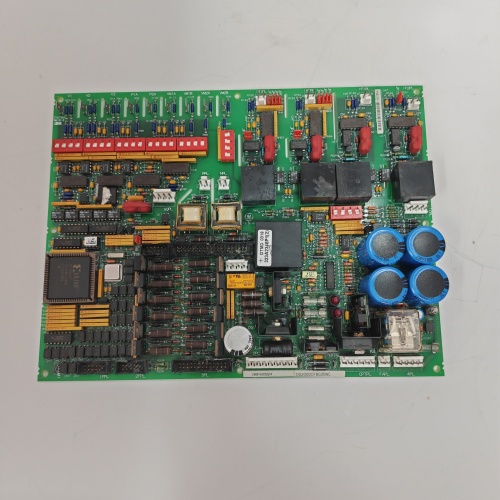
- Model: DS200RTBAG3ADB
- Brand: General Electric (GE)
- Series: Mark V DS200
- Core Function: DC-optimized triple-bank relay board with arc blowout magnets
- Product Type: DC Optimized Relay Board (48 channels, 3 banks)
- Key Specs: 48 Form C relays | 5 A DC / 10 A AC | Arc blowout magnets | Extended DC life
- Condition: New Original.
Product Introduction
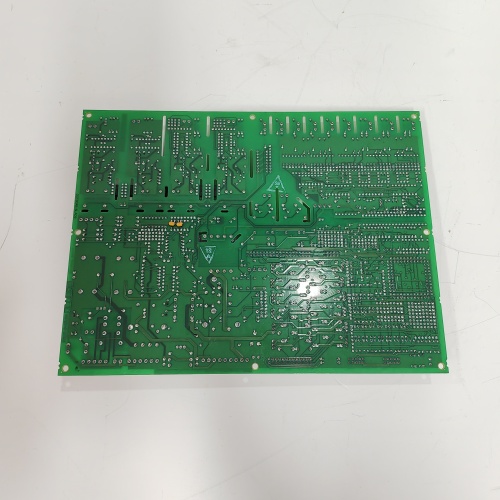
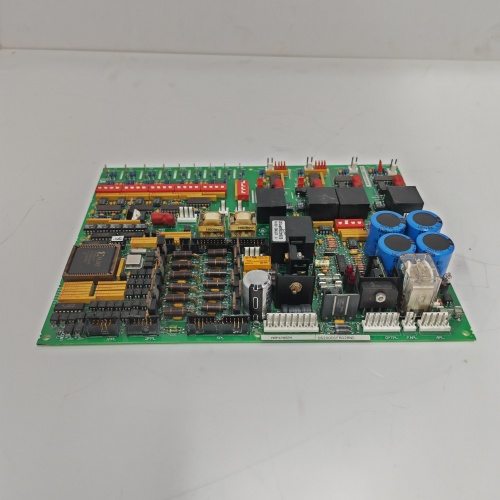
The DS200RTBAG3ADB is a DC-optimized relay output termination board for GE’s Mark V DS200 series, used in Speedtronic turbine control systems. It provides 48 independent Form C relay outputs arranged as three isolated banks of 16 relays each, with permanent magnet arc blowout for extended DC switching life.
The “ADB” suffix indicates a DC-optimized variant with arc suppression magnets. Standard relays struggle with DC loads because the arc does not self-extinguish at zero current (unlike AC). The ADB uses permanent magnets near the contacts to stretch and extinguish the DC arc, increasing DC electrical life by 5x to 10x. This board is designed for applications with numerous DC loads: DC solenoid valves, DC motor starters, DC contactors, battery-backed control circuits, and DC indicator panels.
Key Technical Specifications
| Parameter | Value |
|---|---|
| Number of relay outputs | 48 (3 banks of 16) |
| Bank A relays | Relays 1–16 |
| Bank B relays | Relays 17–32 |
| Bank C relays | Relays 33–48 |
| Relay type | Electromechanical, Form C (SPDT), with permanent magnet arc blowout |
| Arc blowout | Neodymium magnets (2 per relay) oriented to stretch DC arc |
| Contact arrangement | Common (C), Normally Open (NO), Normally Closed (NC) per relay |
| Contact rating (DC resistive) | 5 A @ 30 VDC (10 A @ 24 VDC with derating) |
| Contact rating (DC inductive) | 2 A @ 30 VDC (L/R = 40 ms) |
| Contact rating (AC resistive) | 10 A @ 250 VAC (higher than standard 5 A) |
| Contact rating (AC inductive) | 5 A @ 250 VAC (cosφ = 0.4) |
| Maximum switching voltage (DC) | 125 VDC (derate current: 0.5 A @ 125 VDC) |
| Maximum switching voltage (AC) | 250 VAC |
| DC electrical life (rated load) | 100,000 operations at 5 A @ 30 VDC (standard: 20,000) |
| DC electrical life (inductive) | 50,000 operations at 2 A @ 30 VDC (standard: 10,000) |
| AC electrical life | 200,000 operations at 10 A resistive |
| Coil voltage | 24 VDC nominal (from backplane) |
| Coil current per relay | 15 mA typical at 24 VDC |
| Total backplane current (all relays) | 720 mA (48 x 15 mA) |
| Coil suppression | Flyback diode (1N4007) + 100 nF capacitor + 47Ω series (RCD snubber) |
| Per-channel indication | Red LED (coil energized) + Green LED (contact closed, field power sense) |
| Contact material | Silver-tin oxide (AgSnO2) with copper backing for arc resistance |
| Terminal type | Removable screw terminal blocks, rising cage, 12–24 AWG |
| Terminal torque | 0.5–0.6 Nm (4.4–5.3 lb-in) |
| Isolation (bank-to-bank) | 1500 VAC for 1 minute |
| Isolation (coil to contacts) | 2500 VAC for 1 minute |
| Operating temperature | −30°C to +65°C |
| Storage temperature | −40°C to +85°C |
| Dimensions | 420 mm x 220 mm x 55 mm |
| Weight | 2.4 kg (5.3 lbs) |
| Accessories included | Removable terminal blocks (48 sets, pre-installed), spare terminal blocks (3 sets), labeling strips (1–48), torque card, DC life expectancy chart, DIN rail end clips (4) |
Key Selling Points & Differentiators
- Permanent magnet arc blowout for DC loads – Standard relays fail prematurely on DC due to sustained arcing (no zero crossing). The ADB’s neodymium magnets stretch the arc until it extinguishes. DC life at 5 A @ 30 VDC: 100,000 cycles versus 20,000 on standard relays. 5x longer life.
- Higher AC contact rating (10 A) – Because the arc blowout magnets are neutral to AC (the field alternates, net zero effect), the ADB relays are actually rated higher for AC: 10 A resistive versus 5 A on standard RTBA relays. Use the same board for both DC and AC loads.
- Green LED for contact verification – Red LED indicates coil energized. Green LED (requires field power sense on Common terminal) indicates contact actually closed and field voltage present. Essential for DC load troubleshooting.
- Triple bank isolation at 1500 VAC – Bank A, Bank B, and Bank C are isolated. Connect Bank A to 24 VDC solenoids, Bank B to 125 VDC battery backup circuits, Bank C to 120 VAC indicators on the same board.
- RCD snubber across every coil – Standard flyback diode plus 100 nF capacitor and 47Ω resistor. Reduces EMI from coil switching. Critical for DC applications where inductive kickback can interfere with nearby analog signals.
- DC voltage derating chart included – Laminated chart shows maximum current at 12 V, 24 V, 48 V, 60 V, 90 V, 125 VDC. No guessing. We include one with each board.
- QC includes DC load test at 5 A, 30 VDC, 50,000 cycles on sample relays – We test 8 relays per board at full DC rating. Contact resistance measured before and after. Verification that arc blowout magnets are correctly oriented.
- 2-year warranty – Covers contact welding, coil failure, arc blowout magnet degradation, or any manufacturing defect.
Frequently Asked Questions (FAQ)
Q: What’s the difference between standard RTBAG3A and RTBAG3ADB (DC optimized)?
| Feature | RTBAG3A (Standard) | RTBAG3ADB (DC Optimized) |
|---|---|---|
| DC life (5 A @ 30 VDC) | 20,000 cycles | 100,000 cycles |
| AC contact rating | 5 A | 10 A |
| Arc blowout magnets | No | Yes (neodymium) |
| Green LED (contact sense) | No | Yes |
| RCD snubber | Diode only | Diode + cap + resistor |
| Typical application | Mixed/AC loads | DC loads, battery circuits |
Choose the ADB for any application with significant DC switching (more than 5,000 cycles per year, or loads above 2 A DC). The 5x longer DC life pays for the board premium within 2 years.
Q: How do the arc blowout magnets work?
A: When a DC relay opens, a plasma arc forms between the contacts. AC arcs extinguish at zero current (120 times per second at 60 Hz). DC arcs continue until the contacts separate far enough. The ADB places permanent magnets near the contacts. The magnetic field stretches the arc sideways (Lorentz force), lengthening it until it cannot sustain and extinguishes. This happens in under 1 ms. The magnets never wear out (neodymium, 50-year life). We test magnet orientation during QC—incorrect orientation makes arcing worse.
Q: Can I use the ADB for AC loads?
A: Yes—and it handles higher AC current (10 A) than the standard RTBA board (5 A). The arc blowout magnets are neutral to AC (the field alternates, so the arc is alternately stretched in opposite directions). The relay is rated 10 A resistive at 250 VAC. For AC inductive loads (motors), derate to 5 A. The ADB is a true hybrid board—excellent for both DC and AC.
Q: What is the DC voltage derating curve?
A: At 12 VDC: 10 A maximum. At 24 VDC: 8 A maximum. At 30 VDC: 5 A (rated load). At 48 VDC: 2 A. At 60 VDC: 1 A. At 90 VDC: 0.7 A. At 125 VDC: 0.5 A. The arc blowout magnets are less effective at higher voltages (arc sustains longer). We include a laminated derating chart with every board. Do not exceed 125 VDC—internal clearances are not rated for higher DC.
Q: The ADB has a green LED per channel. How do I use it?
A: The green LED illuminates when: (1) the relay coil is energized (relay closed), AND (2) field voltage is present on the Common (C) terminal, AND (3) the NO contact is closed. The LED requires a sense voltage of 5–125 VDC or 12–250 VAC (auto-ranging). Connect your field power supply to the C terminal. The LED draws <2 mA and does not affect load current. If you do not want the green LED, leave the C terminal unconnected—the relay still switches, but the LED stays off.
Q: Can I replace a standard RTBAG3A with the ADB without changing my Mark V configuration?
A: Yes, with one caveat. The pinout and ribbon cables are identical. However, the ADB uses Form C relays (same as standard), so all NC and NO connections work. The coil current is the same (15 mA). The only difference: the ADB has higher AC current rating (10 A vs 5 A). If your AC loads exceed 5 A, the ADB is actually better. If your DC loads exceed 5 A at 24 VDC (e.g., 8 A), the ADB can handle it (derated). Check the derating chart.
Q: The arc blowout magnets are permanent magnets. Will they attract ferrous debris?
A: Yes—a potential concern. The magnets are inside the sealed relay enclosure (argon-filled), so external debris cannot reach them. However, the magnetic field extends outside the relay. Ferrous tools (screwdrivers) placed near the relays will be attracted. Do not store steel screws or tools on top of the board. We have seen customers drop steel washers onto ADB boards—the washers stick to the relays and can cause short circuits. Keep the area clean.
Q: What is the DC inductive load rating?
A: 2 A at 30 VDC with L/R = 40 ms (typical for small DC solenoids and relay coils). For larger inductive loads (L/R > 40 ms, e.g., large contactors), derate to 1 A or use an external flyback diode at the load. The ADB’s internal arc blowout helps with inductive arcs, but a diode across the load is still recommended. We sell diode packs (part ACC-DC-SNUB) for this purpose.
Q: What QC tests are specific to the ADB revision?
A: Twelve tests, with emphasis on DC performance:
- Visual: 20x magnification, verify magnet orientation (polarity markings on relay body).
- Coil resistance (sample): 1.6 kΩ ±3%.
- Coil current: 15 mA ±1 mA at 24 VDC.
- Contact resistance (NO/NC): <50 mΩ at 100 mA.
- Bank-to-bank isolation: 1800 VAC between A-B, B-C, A-C. Leakage <0.5 mA.
- Operate test: Cycle each relay 100 times. Operate time <10 ms.
- DC load test (sample of 8 relays): 5 A resistive at 30 VDC, 50,000 cycles. Contact resistance after test <100 mΩ. No contact welding.
- DC inductive test (sample of 4 relays): 2 A at 30 VDC, L/R = 40 ms, 25,000 cycles. No contact welding.
- AC load test (sample of 4 relays): 10 A resistive at 250 VAC, 25,000 cycles. Contact resistance after test <100 mΩ.
- High voltage DC (sample of 2 relays): 125 VDC at 0.5 A, 10,000 cycles. No arc sustain >5 ms (measured with oscilloscope).
- Green LED sense test: Apply 24 VDC, 48 VDC, 125 VDC, and 120 VAC to C terminal. Verify LED illuminates when relay energized.
- Thermal imaging: 5 A DC on all 48 relays for 1 hour. Hot spots <85°C.
Q: What shipping protection?
A: The ADB weighs 2.4 kg (5.3 lbs). Anti-static bag, custom foam cradle with cutouts for all 48 terminal blocks and relays (magnets require no special handling—they are inside sealed relays). Double-wall box with “FRAGILE,” “ESD SENSITIVE,” “HEAVY,” “MAGNETIC FIELD” (due to 96 neodymium magnets inside the 48 relays). The magnetic field is weak outside the board but detectable. Keep sensitive magnetic media (old hard drives, credit cards) away. Each board ships individually. DC life expectancy chart and derating card laminated and included.
TV 3000HT PUMF PLC DCS
VT-VSPA1-1-11 PLC DCS
MSK030C-0900-NN-M1-UP1-NSNN PLC DCS
 Email: sales@plcfcs.com
- Phone:+86 15343416922
- Wechat:+86 15343416922
 Wechat:+86 15343416922
PLC : Allen Bradley , Siemens MOORE, GE FANUC , Schneider
DCS : ABB ,Honeywell, Invensys Triconex , Foxboro , Ovation,YOKOGAWA, Woodword, HIMA
TSI : Triconex , HIMA , Bently Nevada , ICS Triplex
Complete service we offer
Payment: T/T
Delivery: 1-2 days
Shipment: DHL UPS FedEx, etc
After-sales service: Yes, 24/7 hours