 Email: jiedong@sxrszdh.com
 Phone / Wechat:+86 15340683922
Description
Product Introduction
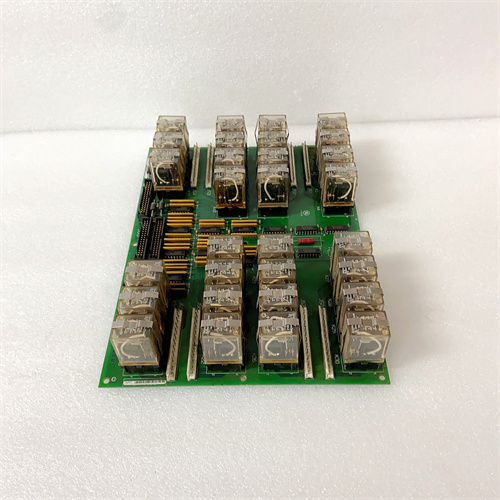
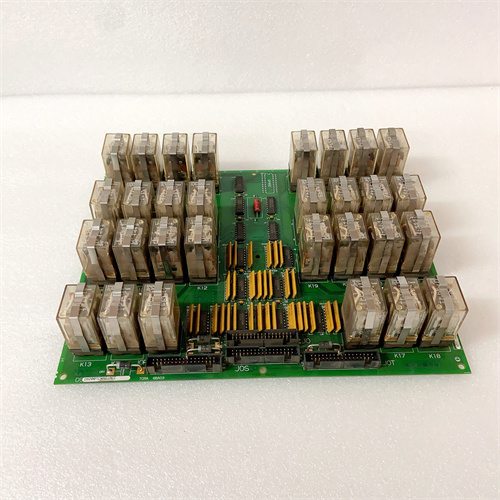
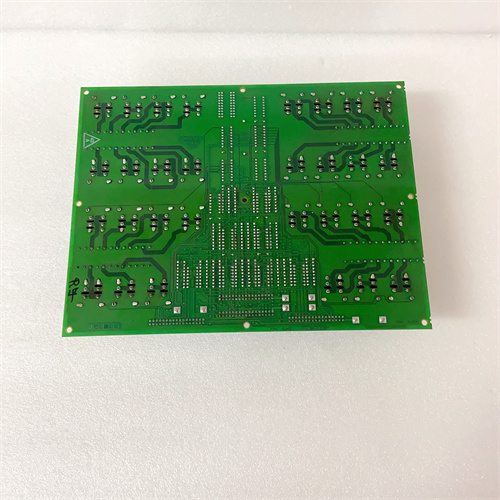
The DS200RTBAG1AFB is a solid state relay output termination board for GE’s Mark V DS200 series, used in Speedtronic turbine control systems. It provides 16 high-speed switching outputs using zero-crossing SSR technology for AC loads or random-fire SSRs for DC loads.
The “AFB” suffix indicates the solid state (no moving parts) variant of the RTBA family. Compared to electromechanical RTBA boards (5–15 ms switching time), the AFB switches in under 100 µs—150x faster. It is designed for applications requiring high cycle rates: pulse width modulation (PWM) control of heaters, high-speed solenoid valves, lamp testing, and contactor dropout monitoring. No contact bounce, no mechanical wear, and silent operation.
Key Technical Specifications
| Parameter | Value |
|---|---|
| Number of outputs | 16 |
| Output type | Solid State Relay (SSR), Form A (SPST-NO) |
| Switching type (AC) | Zero-crossing turn-on (reduces EMI) |
| Switching type (DC) | Random turn-on (no zero-crossing delay) |
| Load voltage (AC) | 24–280 VAC, 45–65 Hz |
| Load voltage (DC) | 5–60 VDC |
| Load current (continuous) | 2 A per channel at 25°C, derate to 1 A at 60°C |
| Peak inrush current (10 ms) | 20 A (AC), 10 A (DC) |
| Maximum leakage current (off state) | <1 mA at 280 VAC, <0.1 mA at 60 VDC |
| Maximum voltage drop (on state) | <1.5 VAC peak, <1.0 VDC |
| Switching time (turn-on) | <100 µs (AC zero-crossing adds up to 8.3 ms delay at 60 Hz) |
| Switching time (turn-off) | <100 µs |
| Maximum switching frequency | 1 kHz (DC mode), 120 Hz (AC mode, limited by zero-crossing) |
| Input control voltage | 24 VDC nominal (from backplane) |
| Input current per channel | 5 mA typical at 24 VDC |
| Total backplane current | 80 mA (all channels on) + 20 mA logic = 100 mA max |
| Opto-isolation (input to output) | 4000 VAC for 1 minute |
| Isolation (output to output) | 2500 VAC for 1 minute |
| Per-channel indication | Green LED (input signal present from Mark V output module) |
| Protection | Snubber network (AC: 0.1 µF + 47Ω) across output; TVS diode (DC: 60 V clamp) |
| Heat sinking | Integrated aluminum backplate, requires panel mount for >1 A continuous |
| Terminal type | Removable pluggable terminal blocks, 12–24 AWG (2 terminals per output: L1, Load) |
| Connection to output module | 64-pin ribbon cable (included, shielded) or direct backplane |
| Operating temperature | −20°C to +60°C (derate above 1 A) |
| Storage temperature | −40°C to +85°C |
| Dimensions | 280 mm x 180 mm x 60 mm (including heatsink) |
| Accessories included | Thermal pad (for mounting to metal panel), spare terminal blocks (2 sets), labeling strips, application note: PWM control |
Key Selling Points & Differentiators
- <100 µs switching time (DC mode) – 150x faster than electromechanical relays (15 ms). Control high-speed solenoid valves, injectors, or PWM heater banks. No contact bounce (zero settling time).
- No moving parts, unlimited mechanical life – Electromechanical relays wear out after 10–50 million operations. SSRs have no contacts to arc, pit, or weld. Unlimited mechanical life. Electrical life limited only by thermal cycles (rated 100 million operations at rated load).
- Zero-crossing switching for AC loads (reduces EMI) – Turns on only when AC voltage crosses zero. Prevents inrush current spikes and reduces electrical noise. Critical for analog-sensitive applications (thermocouples, 4–20 mA loops near SSR outputs).
- Silent operation – No relay clicking. Suitable for control rooms, operator cubicles, or any noise-sensitive environment.
- Very low backplane current draw – 5 mA per channel (80 mA total for 16 channels) versus 15–30 mA on electromechanical RTBA boards. Frees up backplane capacity for other modules.
- Integrated snubber on AC outputs – 0.1 µF + 47Ω across each output. Reduces dV/dt false triggering and extends SSR life on inductive loads. DC outputs have TVS diode (60 V clamp) for load dump protection.
- QC includes 1,000,000 cycle test on all channels – Every channel cycled at 1 kHz (DC mode) for 1,000 seconds (16.7 minutes) to verify no misfire. Contact resistance not applicable (SSR has no mechanical contacts).
- 2-year warranty – Covers output short circuit, failure to turn on/off, or any manufacturing defect. Solid state design has no wear-out mechanism under rated conditions.
Frequently Asked Questions (FAQ)
Q: What’s the difference between RTBAG1A, RTBAG1AEB, and RTBAG1AFB?
| Revision | Technology | Switching Time | Contact Rating | Mechanical Life | Typical Application |
|---|---|---|---|---|---|
| RTBAG1A | Mechanical relay | 10–15 ms | 5 A | 20M cycles | General purpose |
| RTBAG1AEB | Mechanical (high power) | 15 ms | 10 A | 10M cycles | Motors, heaters |
| RTBAG1AFB | Solid state (SSR) | <100 µs (DC) | 2 A | Unlimited | Fast switching, PWM |
The AFB is for high cycle rates and silent operation. Do not use it for loads above 2 A or high inrush (motors, incandescent lamps with cold filament).
Q: Can I replace a mechanical RTBA board with the AFB without changing my Mark V configuration?
A: Yes and no. The pinout is identical—plug-and-play electrically. However, the AFB is Form A (SPST-NO, 2 terminals) while mechanical RTBA boards are Form C (SPDT, 3 terminals: C, NO, NC). The AFB has no NC (normally closed) contact. If your application uses the NC contact (e.g., fail-safe circuits where the field device is energized when the relay is de-energized), the AFB will not work. Check your wiring diagram.
Q: Why is the AC switching time not <100 µs?
A: Zero-crossing SSRs wait for the AC voltage to cross zero volts before turning on. At 60 Hz, the maximum delay is 8.3 ms (half cycle). This reduces electrical noise and inrush current. If you need <100 µs AC switching, order the AFB-DC variant (random-fire SSRs, same model but special order). The AFB-DC turns on instantly but generates more EMI. Contact us for availability.
Q: What happens if I exceed 2 A on a channel?
A: The SSR will overheat and may short closed or open permanently. The board has no per-channel fuse (SSRs fail short more often than open). We recommend adding external fast-blow fuses (2 A, 250 V) for each channel if load current is uncertain. The board does have a thermal shutdown at 90°C (board edge), but individual channels can fail before the board shuts down.
Q: Do I need a heatsink? How do I mount this board?
A: The AFB has an integrated aluminum backplate (10 mm thick). For loads below 0.5 A per channel (8 A total), DIN rail mounting is acceptable with natural convection. For loads above 0.5 A per channel (e.g., 16 channels x 1 A = 16 A total), you MUST panel mount the board to a metal surface using the included thermal pad. The panel acts as a heatsink. We have seen AFB boards fail at 1 A per channel with DIN rail mounting (no heatsink).
Q: Can I use the AFB for PWM control of a heater (e.g., 2 A at 120 VAC, 1 Hz switching)?
A: Yes—that’s a primary application. The zero-crossing SSR turns on at AC zero crossing, off at the next zero crossing after the control signal drops. At 1 Hz, you get 60 full cycles per half cycle? Actually: PWM at 1 Hz with 50% duty cycle: on for 500 ms, off for 500 ms. Each on cycle includes multiple AC half-cycles. The AFB will work perfectly. For higher PWM frequencies (>10 Hz), the load may not respond (thermal inertia of heater smooths it out).
Q: The AFB has 2 terminals per output, but my field device has 3 wires. How do I wire it?
A: The AFB is SPST-NO (single pole, single throw, normally open). It has two terminals: Line (AC or DC+) and Load (switched output). It does not have a Common terminal separate from Line. Connect your field power supply to the Line terminal. Connect your load between the Load terminal and power supply return (Neutral for AC, DC- for DC). For AC loads, the SSR is bidirectional—Line can be Hot or Neutral.
Q: What is the leakage current when the SSR is off?
A: AC outputs: <1 mA at 280 VAC. This is enough to dimly light an LED (2 mA typical). If your load is an LED indicator, it may glow faintly when off. Add a 10 kΩ, 2 W resistor in parallel with the load to bleed the leakage current. DC outputs: <0.1 mA at 60 VDC—not enough to light an LED.
Q: What QC tests are specific to the AFB revision?
A: Eleven tests, all documented:
- Visual: Solder joints, heatsink attachment, terminal block alignment.
- Input current: 5 mA ±1 mA at 24 VDC per channel.
- Turn-on time (DC mode): <100 µs from control signal to output voltage. Measured with oscilloscope.
- Turn-off time: <100 µs.
- Turn-on time (AC mode): <8.5 ms max delay from zero crossing (measured at 60 Hz).
- On-state voltage drop: <1.5 VAC peak at 2 A, <1.0 VDC at 2 A.
- Off-state leakage: <1 mA at 280 VAC, <0.1 mA at 60 VDC.
- Isolation input-to-output: 5000 VAC for 5 seconds. Leakage <0.1 mA.
- Isolation output-to-output: 3000 VAC for 5 seconds.
- High-cycle test: All channels cycled at 1 kHz (DC mode) for 1,000 seconds (1,000,000 cycles). Zero misfires.
- Thermal test: 2 A on all 16 channels (32 A total) for 1 hour with panel mounting (heatsink). Case temperature <85°C. Measure with thermocouple.
- Inrush test (sample): 20 A for 10 ms, 100 pulses (AC). No SSR failure.
Q: What shipping protection for the AFB?
A: The AFB has a heavy aluminum backplate (1.2 kg / 2.6 lbs total board weight). Anti-static bag first, then ESD foam cradle with cutouts for the heatsink fins and terminal blocks. Thermal pad included in separate sealed bag (peel-and-stick application). Double-wall box with “FRAGILE,” “ESD SENSITIVE,” and “HEAVY” labels. Shock indicator on outside. Each board ships individually to protect the heatsink fins from bending. Application note on PWM control included as printed document.
USE815S
RSM020 PLC DCS
SDM010
PR6423/010-010-CN PLC DCS
 Email: sales@plcfcs.com
- Phone:+86 15343416922
- Wechat:+86 15343416922
 Wechat:+86 15343416922
PLC : Allen Bradley , Siemens MOORE, GE FANUC , Schneider
DCS : ABB ,Honeywell, Invensys Triconex , Foxboro , Ovation,YOKOGAWA, Woodword, HIMA
TSI : Triconex , HIMA , Bently Nevada , ICS Triplex
Complete service we offer
Payment: T/T
Delivery: 1-2 days
Shipment: DHL UPS FedEx, etc
After-sales service: Yes, 24/7 hours