 Email: jiedong@sxrszdh.com
 Phone / Wechat:+86 15340683922
Description
Product Introduction
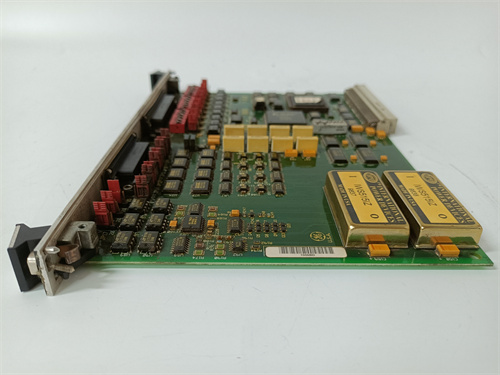
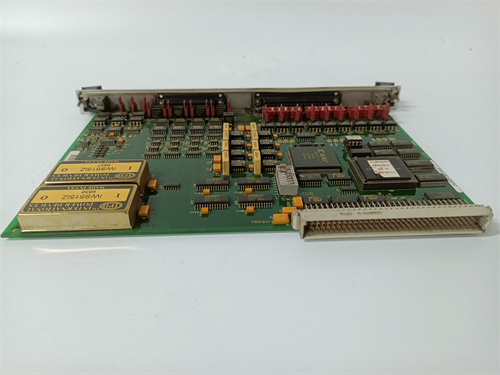
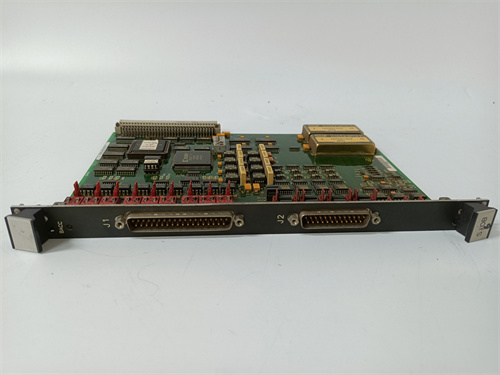
The DS200QTBAG1B is a quad-bank termination board for GE’s Mark V DS200 series, used in Speedtronic turbine control systems. It provides 32 field wiring positions across four independent banks, using screw-type terminals instead of cage clamps.
The “1B” suffix indicates screw terminals throughout—preferred in high-vibration environments where spring terminals can loosen over time. Each of the four banks has its own 24 VDC field power bus (10 A), per-channel fusing (1 A), and status LEDs. The board is electrically identical to the QTBAG1A but with a different terminal mechanism. This is the screw-terminal version of the quad-bank termination family.
Key Technical Specifications
| Parameter | Value |
|---|---|
| Number of field terminations | 32 (4 banks of 8 channels) |
| Bank A channels | 1–8 |
| Bank B channels | 9–16 |
| Bank C channels | 17–24 |
| Bank D channels | 25–32 |
| Terminal type | Screw clamp, rising cage, 10–24 AWG, nickel-plated |
| Terminal torque | 0.5–0.6 Nm (4.4–5.3 lb-in) |
| Fusing | Per-channel replaceable fuse, 1 A fast-blow, 5×20 mm |
| Fuse holder type | Screwdriver-release (slot drive) |
| Field power buses | 4 independent buses, each 24 VDC nominal at 10 A continuous, 15 A peak (5 sec) |
| Per-bank power indication | Green LED (power present) |
| Per-channel signal indication | Optional LED (jumper-selectable) |
| Reverse polarity protection | None (standard version) |
| Isolation (bank-to-bank) | 1500 VAC for 1 minute |
| Maximum voltage any terminal | 250 VAC / 125 VDC to ground |
| Dielectric strength | 1500 VAC between banks |
| Operating temperature | −30°C to +70°C |
| Storage temperature | −40°C to +85°C |
| Connection to I/O modules | Four 16-pin ribbon cables (included, 1 meter each) or single 64-pin backplane connector |
| Mounting | 35 mm DIN rail or panel mount (4 screws) |
| Dimensions | 280 mm x 200 mm x 45 mm |
| Accessories included | Fuse puller (screwdriver type), 8 spare fuses (1 A), 4 spare bus fuses (10 A), labeling strips, bank ID labels, torque card |
Key Selling Points & Differentiators
- Screw terminals for high vibration – Spring cage clamps can loosen in high-vibration environments (turbine decks, compressor skids). Screw terminals with locking inserts maintain clamping force. Torque to 0.6 Nm and they stay put.
- 32 channels on one board – Four independent banks. Replaces multiple single-bank termination boards. Saves cabinet space and reduces wiring time.
- Four isolated field power buses – Each bank has its own 24 VDC bus at 10 A. Power sensors from Bank A, solenoids from Bank B, indicators from Bank C. No cross-coupling.
- Per-channel fusing with transparent window – Each fuse holder has a window. Blown fuse visible instantly. No meter needed.
- Screwdriver-release fuse holders – No special tools. Any standard 3.5 mm flathead screwdriver opens the holder. Field replaceable in under 30 seconds.
- No firmware, no configuration – Passive termination. Works with any Mark V I/O module: digital input, digital output, analog input, relay output.
- QC includes screw torque verification on all terminals – Every screw is torqued to 0.55 Nm at the factory to verify thread integrity. Loose screws cause intermittent signals. We reject any terminal that doesn’t hold torque.
- 2-year warranty – Covers terminal breakage, fuse holder damage, trace damage, or any manufacturing defect.
Frequently Asked Questions (FAQ)
Q: What’s the difference between DS200QTBAG1A and DS200QTBAG1B?
A: Terminal type only. The 1A uses cage clamp (spring) terminals—no screws, faster wiring. The 1B uses screw terminals—slower to wire but more secure in high-vibration applications. Electrically, they are identical: same 32 channels, same 10 A per bus, same fusing, same ribbon cables. Choose 1B for turbine decks, compressor skids, or any location with continuous vibration.
Q: Can I replace a QTBAG1A with a QTBAG1B without changing my I/O modules?
A: Yes. The pinout, ribbon cables, and mounting holes are identical. However, you will need to re-land all field wires because the terminal blocks have different footprints. Allow 2–3 hours for re-terminating 32 channels. For emergency replacements, keep a 1A spare if your existing panel uses cage clamps.
Q: What torque should I use for the screw terminals?
A: 0.5–0.6 Nm (4.4–5.3 lb-in). Do not exceed 0.7 Nm—the brass threads will strip. We see over-torquing as the most common failure on screw terminal boards. Use a torque screwdriver. The included torque card lists settings for 10 AWG through 24 AWG.
Q: Do I need ferrules for stranded wire?
A: Recommended for 16 AWG and smaller. The screw terminals have a wire protector (a stainless steel plate under the screw head) that prevents strand breakage, but fine-stranded wire (Class 5 or 6) can still be damaged. For 18 AWG or 20 AWG stranded, use ferrules. For 14 AWG and larger, ferrules are optional.
Q: The board has 32 fuses. Are they all accessible with the board mounted?
A: Yes. The fuse holders are on the top edge of the board. With the board mounted on DIN rail, you have full access from above. Keep 50 mm clearance above the board for fuse access and replacement. Do not mount the board in a location where cables route directly over the fuse holders.
Q: Can I use this board with 120 VAC field signals?
A: Yes—the screw terminals are rated for 250 VAC. The fuses are 1 A fast-blow, acceptable for 120 VAC control circuits up to 100 VA. The power bus LEDs are DC-only and will not light with AC. For 120 VAC applications, ignore the LEDs entirely.
Q: What’s the maximum wire size for the 24 VDC bus feed?
A: 10 AWG solid or stranded. The bus input terminals (marked “BUS +” and “BUS -” per bank) accept 10–24 AWG. For 10 A continuous, 14 AWG is sufficient. For 15 A peak, use 12 AWG. We recommend 12 AWG for all bus feeds to minimize voltage drop.
Q: What QC tests do you run on the QTBAG1B?
A: Nine tests:
- Visual: Solder joints, terminal alignment, fuse holder operation.
- Continuity: Every terminal to its ribbon cable pin. Resistance <0.1Ω.
- Screw torque verification: All 32 field terminals and 8 bus terminals torqued to 0.55 Nm, logged.
- Bank-to-bank isolation: 1800 VAC for 5 seconds between each bank pair. Leakage <0.5 mA.
- Fuse holder grip test: Insert and remove test fuse. Extraction force 2–8 N.
- Power bus test: 24 VDC applied to each bus, 10 A load for 2 hours. Thermal camera confirms no hot spot >80°C.
- LED test (if populated): Verify each power LED illuminates at 24 VDC.
- Ribbon cable continuity: All four cables tested for shorts and opens.
- DIN rail clip test: Mount and unmount 20 times. No clip deformation.
Q: What shipping protection?
A: Anti-static bag with conductive foam. The four ribbon cables are coiled and secured. The screw terminals are covered with a protective plastic cap to prevent bending during transit. Accessories in separate small bag. Double-wall box with “FRAGILE” and “ESD SENSITIVE” labels. Each board ships individually to protect the screw terminals.
DS200SLCCG3ACC GE
DS200TCEAG1BSF
DS200TCEBG1ACD
DS200PTBAG1ADC GE
 Email: sales@plcfcs.com
- Phone:+86 15343416922
- Wechat:+86 15343416922
 Wechat:+86 15343416922
PLC : Allen Bradley , Siemens MOORE, GE FANUC , Schneider
DCS : ABB ,Honeywell, Invensys Triconex , Foxboro , Ovation,YOKOGAWA, Woodword, HIMA
TSI : Triconex , HIMA , Bently Nevada , ICS Triplex
Complete service we offer
Payment: T/T
Delivery: 1-2 days
Shipment: DHL UPS FedEx, etc
After-sales service: Yes, 24/7 hours