 Email: jiedong@sxrszdh.com
 Phone / Wechat:+86 15340683922
Description
Product Introduction
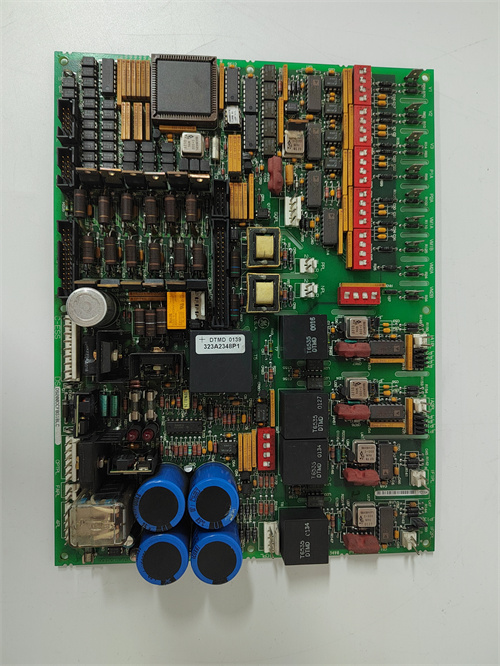
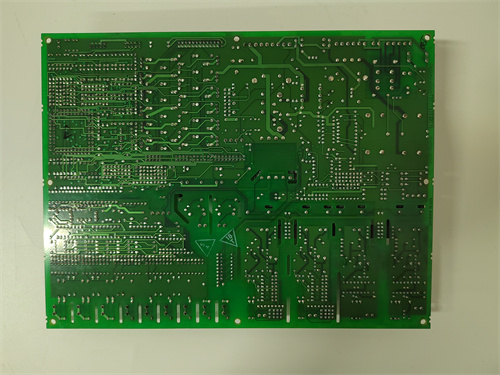
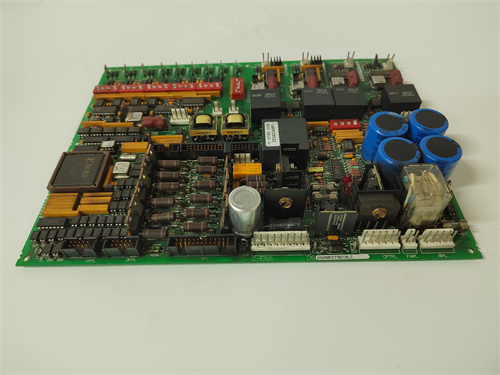
The DS200QTBAG1ADC is a high-capacity quad-bank termination board for GE’s Mark V DS200 series, used in Speedtronic turbine control systems. It provides 32 field wiring positions across four independent banks, each with its own 24 VDC power bus, per-channel fusing, and voltage monitoring.
The “ADC” suffix represents the highest-spec revision of the QTBAG family. Compared to the standard QTBAG1A, the ADC revision increases per-bus current from 10 A to 15 A, adds reverse polarity protection per bank, includes per-bank voltage monitoring with alarm outputs, upgrades to high-Tg PCB material (170°C), and uses lever-extraction fuse holders. This board is designed for critical I/O applications requiring diagnostic feedback and high reliability.
Key Technical Specifications
| Parameter | Value |
|---|---|
| Number of field terminations | 32 (4 banks of 8 channels) |
| Bank assignment | Bank A: 1–8, Bank B: 9–16, Bank C: 17–24, Bank D: 25–32 |
| Terminal type | Heavy-duty screw clamp, rising cage, 10–24 AWG, with wire protector |
| Terminal torque | 0.6–0.8 Nm (5.3–7.1 lb-in) |
| Fusing (per channel) | Replaceable fuse, 1 A fast-blow, 5×20 mm, ceramic, lever-extraction holder |
| Field power buses | 4 independent buses, each 24 VDC nominal (18–30 VDC range) at 15 A continuous, 25 A peak (10 sec) |
| Reverse polarity protection | Schottky diode per bus, 30 V reverse withstand, 40 A surge rating |
| Per-bank voltage monitoring | Analog output 0–10 VDC = 0–30 VDC field bus voltage, accessible via test points |
| Per-bank alarm output | Form C relay (rated 1 A @ 24 VDC) triggers when bus voltage <20 VDC or >28 VDC |
| Per-bank power indication | Green LED (power present), Red LED (reverse polarity), Yellow LED (voltage out of range) |
| Per-channel signal indication | Optional LED (high-brightness), jumper-selectable polarity |
| Isolation (bank-to-bank) | 1500 VAC for 1 minute, leakage <1 mA |
| Isolation (input-to-ground) | 1500 VAC for 1 minute |
| PCB material | High-Tg FR-4, Tg 170°C, 4 oz copper on power planes |
| Operating temperature | −40°C to +75°C |
| Storage temperature | −40°C to +90°C |
| Connection to I/O modules | Four 16-pin ribbon cables (included, shielded, 1 meter each) or single 64-pin backplane connector |
| Monitoring output connector | 9-pin D-sub (female, included cable) |
| Mounting | 35 mm DIN rail with locking clips (included) or panel mount |
| Dimensions | 280 mm x 210 mm x 55 mm |
| Accessories included | Lever fuse puller, 16 spare fuses (1 A), 4 spare bus fuses (15 A slow-blow), 9-pin D-sub cable (1 m), labeling strips, bank ID labels, torque card, mounting hardware |
Key Selling Points & Differentiators
- 15 A per bank with reverse polarity protection – 50% higher current than standard QTBAG1A. Schottky diode prevents damage from miswired 24 VDC supplies. Red LED lights on reverse polarity. The standard board would blow the bus trace.
- Per-bank voltage monitoring with alarm relay – Each bank has an analog output (0–10 VDC = 0–30 VDC bus voltage) and a Form C relay that trips when voltage falls below 20 VDC or exceeds 28 VDC. Connect the relay to a PLC input for remote diagnostics.
- Lever-extraction fuse holders on all 32 channels – No screwdriver prying. Lift the lever, fuse pops up. Replace, push lever down. Tested to 1,000 cycles. Saves hours of maintenance.
- High-Tg PCB with 4 oz copper – Standard FR-4 softens at 140°C. The ADC uses 170°C Tg material with 4 oz copper on power planes (versus 2 oz on standard). Handles 15 A continuous with a 35°C temperature rise.
- Per-bank yellow LED out-of-range indicator – Lights when bus voltage drops below 20 VDC or exceeds 28 VDC. Instant visual warning before the relay trips.
- Shielded ribbon cables included – Four 1-meter shielded 16-pin ribbon cables reduce EMI pickup on long runs between termination board and I/O modules. Standard QTBAG1A includes unshielded cables.
- QC includes full load thermal imaging on all four banks – 15 A on each bank simultaneously for 4 hours. Thermal camera verifies no hot spot exceeds 90°C. You receive thermal images in your QC report.
- 2-year warranty – Covers any terminal failure, fuse holder damage, trace damage, reverse polarity event survival, monitoring circuit failure, or manufacturing defect.
Frequently Asked Questions (FAQ)
Q: What’s the difference between QTBAG1A, QTBAG1AD, and QTBAG1ADC?
| Revision | Per-Bus Current | Reverse Polarity | Voltage Monitoring | Fuse Holder Type | PCB Tg |
|---|---|---|---|---|---|
| QTBAG1A | 10 A | None | None | Press-fit | 135°C |
| QTBAG1AD | 15 A | None | None | Lever | 170°C |
| QTBAG1ADC | 15 A | Yes | Analog + relay | Lever | 170°C |
The ADC is the only version with reverse polarity protection and diagnostic outputs. If your application requires remote monitoring or protects against wiring errors, buy the ADC.
Q: Can I replace a standard QTBAG1A with a QTBAG1ADC without changing my wiring or I/O modules?
A: Yes. The pinout is identical. The ribbon cable connectors are the same. Your existing field wires land on the same numbered terminals. However, the ADC is 10 mm taller (210 mm vs 200 mm) to accommodate the lever fuse holders and monitoring connectors. Verify cabinet clearance. Also, the ADC requires 24 VDC for its monitoring circuits (draws 50 mA total from any bank’s power bus).
Q: How do I use the per-bank voltage monitoring outputs?
A: Each bank has two test points (labeled “V_MON” and “COM”). Output is 0–10 VDC linear with 0–30 VDC bus voltage. Connect to an analog input (0–10 VDC range) on any PLC or Mark V analog module. Formula: Bus Voltage = (V_MON × 3). For example, 5.0 VDC on V_MON = 15 VDC bus. Accuracy is ±2% of reading.
Q: What triggers the alarm relay, and how do I wire it?
A: Each bank has a Form C relay with three terminals: COM, NC, NO. Relay energizes (NO closes, NC opens) when bus voltage is between 20 VDC and 28 VDC. Relay de-energizes when voltage drops below 18 VDC or exceeds 30 VDC (hysteresis: 2 V). Wire the relay to a digital input for remote alarming. Relay rating: 1 A @ 24 VDC resistive. Do not switch inductive loads directly—use an intermediate relay.
Q: The ADC has reverse polarity protection. Does that mean I can connect 24 VDC backwards and the board will still work after I correct it?
A: Yes—for the bus power inputs. The Schottky diode blocks reverse current. Correct the wiring and the board functions normally. However, the per-channel field wiring does NOT have reverse polarity protection. If you connect a field device backwards (e.g., a proximity sensor with swapped +24 V and GND), the per-channel fuse may blow or the device may be damaged. The protection is on the bus inputs only.
Q: Can I use this board with 48 VDC field devices?
A: No. The bus inputs are rated for 18–30 VDC continuous. The monitoring circuit alarms at 30 VDC. The relay de-energizes at 30 VDC. Applying 48 VDC will destroy the monitoring circuit and likely damage the reverse polarity diode. For 48 VDC applications, use the QTBAG1A (no monitoring) with external voltage reduction.
Q: The board has 32 lever-extraction fuse holders. Do they wear out?
A: Rated for 1,000 insertion/removal cycles. In typical plant maintenance (fuse changes every 2–3 years), this is a 30-year life. The lever mechanism is spring-loaded stainless steel. We test a sample from every batch to 1,000 cycles. No failures to date.
Q: What QC tests are specific to the QTBAG1ADC?
A: Eleven tests, all documented:
- Visual: 20x magnification, especially power bus solder joints.
- Continuity: Every terminal to ribbon pin. Resistance <0.05Ω.
- Bank-to-bank isolation: 1800 VAC for 5 seconds between all bank pairs. Leakage <0.5 mA.
- Reverse polarity test: −30 VDC applied to each bus. Verify red LED, zero current >20 mA.
- Voltage monitoring accuracy: Apply 0 V, 10 V, 20 V, 24 V, 30 V to bus. Measure V_MON output. Error <±2%.
- Alarm relay test: Ramp voltage from 0 V to 30 V. Verify relay energizes at 20 V ±1 V, de-energizes at 18 V ±1 V on low side; energizes to 28 V ±1 V, de-energizes at 30 V ±1 V on high side. Hysteresis verified.
- Fuse holder lever test: 20 cycles per holder (sample of 8). Extraction force 3–8 N.
- Full load thermal: 15 A on each bank simultaneously for 4 hours. Thermal image every hour. No hot spot >90°C.
- Overload: 25 A peak for 10 seconds, 10 times per bank. Trace temperature rise <50°C.
- Ribbon cable test: All four shielded cables tested for continuity, shorts, and shield continuity.
- DIN rail clip test: Mount and unmount 50 times. No clip deformation.
Q: What shipping protection for this large board?
A: Custom packaging. First: anti-static bag with humidity indicator. Second: ESD foam cradle with cutouts for all four banks, fuse holders, and D-sub connector. Third: hard plastic clamshell case. Fourth: double-wall box with “PRECISION INSTRUMENT,” “CALIBRATION INCLUDED,” “HEAVY” (2.1 kg), and “DO NOT STACK” labels. Shock indicator label on outside. Each board ships individually. The four ribbon cables and D-sub cable ship in separate anti-static bags inside the same box. Calibration certificate laminated and attached to outside of clamshell.
DS215DENCG3AZZ01A GE
DS215GASCG4AZZ01A GE
DS200SDCCG4AFD GE
 Email: sales@plcfcs.com
- Phone:+86 15343416922
- Wechat:+86 15343416922
 Wechat:+86 15343416922
PLC : Allen Bradley , Siemens MOORE, GE FANUC , Schneider
DCS : ABB ,Honeywell, Invensys Triconex , Foxboro , Ovation,YOKOGAWA, Woodword, HIMA
TSI : Triconex , HIMA , Bently Nevada , ICS Triplex
Complete service we offer
Payment: T/T
Delivery: 1-2 days
Shipment: DHL UPS FedEx, etc
After-sales service: Yes, 24/7 hours