 Email: jiedong@sxrszdh.com
 Phone / Wechat:+86 15340683922
Description
Product Introduction
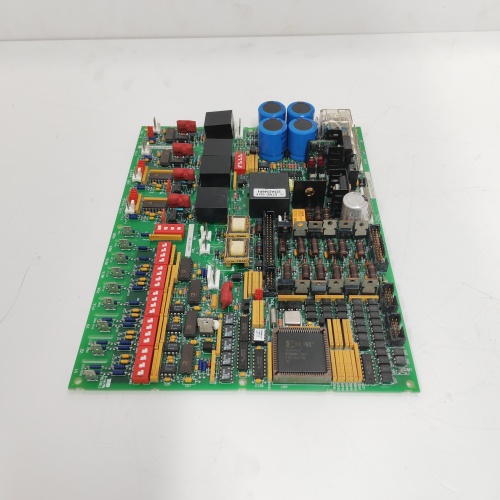
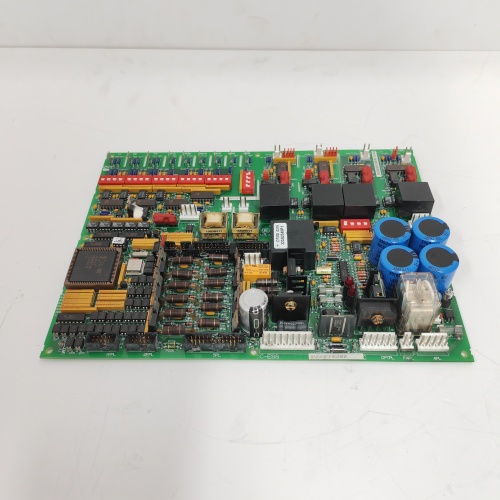
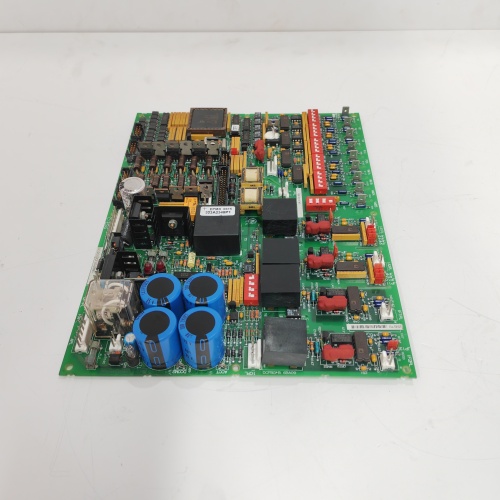
The DS200PTCTG1BAA is a precision current transformer termination board for GE’s Mark V DS200 series, used in Speedtronic turbine control systems. It combines the fixed 5 A operation and heavy-duty screw terminals of the “1B” platform with the high-precision burden resistors and enhanced isolation of the “AA” suffix.
This board is built for utility-grade protection and metering applications where accuracy cannot be compromised. The fixed 5 A design eliminates configuration errors, while the ±0.05% burden resistors and 2500 VAC isolation meet IEEE C37.90 requirements. Heavy-duty screw terminals with wire protectors are rated for 10 AWG solid or stranded copper—no ferrules required.
Key Technical Specifications
| Parameter | Value |
|---|---|
| Number of CT inputs | 8 (individually isolated) |
| CT secondary rating | 5 A fixed (no jumper, no selectable range) |
| Burden resistor | 0.1Ω ±0.05%, 10 W, non-inductive wirewound, Ayrton-Perry winding |
| Output voltage at 5 A | 0.5 VAC ±0.025 V (0.05% of reading) |
| Overload rating | 30 A continuous, 150 A for 1 second, 500 A for 1 cycle |
| Transient protection | 3-stage: MOV (320 V) + TVS (15 V) + gas discharge tube (90 V) |
| Surge withstand rating | 5 kV, 1.2/50 µs (IEEE C37.90 compliant) |
| Isolation voltage | 2500 VAC input-to-output for 1 minute |
| Isolation resistance | >1000 MΩ at 500 VDC |
| Frequency range | 45–65 Hz |
| Accuracy | ±0.1% of reading from 0.25 A to 6 A |
| Phase shift | <0.2 degrees at 60 Hz, 5 A |
| Temperature coefficient | <30 ppm/°C for burden resistor |
| Terminal type (CT side) | Heavy-duty screw clamp, rising cage, 10–24 AWG, with wire protector |
| Terminal torque (CT side) | 0.7–0.9 Nm (6.2–8.0 lb-in) |
| Terminal type (output side) | Screw clamp, 16–24 AWG |
| Connection to I/O module | 16-pin ribbon cable (included, shielded) or direct screw terminal output |
| Operating temperature | −40°C to +70°C |
| Storage temperature | −40°C to +90°C |
| Vibration rating | 5 Grms, 10–500 Hz (tested with shorting blocks locked) |
| Dimensions | 220 mm x 140 mm x 48 mm |
| Accessories included | Locking shorting blocks (4, 20 A rated), spare burden resistors (2 per channel), calibration certificate (NIST-traceable), mounting hardware, torque card |
Key Selling Points & Differentiators
- ±0.05% burden resistors with 30 ppm/°C tempco – Precision unmatched in the PTCTG family. Each resistor is individually measured, logged, and certified. Drift over temperature is 1/3 of the standard 1B revision.
- Fixed 5 A design prevents misconfiguration – No jumpers to set incorrectly. We’ve seen utilities reject boards with selectable ranges because of the risk of operator error. The BAA eliminates that risk entirely.
- Three-stage transient protection (5 kV surge rating) – MOV + gas discharge tube + TVS. Meets IEEE C37.90 for substation environments. Tested with 10 positive and 10 negative 5 kV surges per channel.
- Locking shorting blocks with visual indicator – Each block has a red flag that appears when in “SHORT” position. Positive locking tab prevents vibration loosening. Rated for 20 A continuous, 100 A fault.
- Non-inductive burden resistors – Ayrton-Perry winding reduces inductance to under 0.2 µH. Phase shift variation with frequency is negligible. Critical for harmonic measurements and protective relay coordination.
- Calibration certificate included – NIST-traceable certificate showing actual burden resistance, phase shift, and output voltage at 1 A, 2 A, 3 A, 4 A, 5 A, 6 A for each of the 8 channels.
- 2-year warranty – Covers resistor drift, isolation breakdown, surge damage (within 5 kV rating), terminal damage, or shorting block failure.
Frequently Asked Questions (FAQ)
Q: What’s the difference between PTCTG1B, PTCTG1BA, and PTCTG1BAA?
| Revision | Burden Tolerance | Isolation | Surge Rating | Tempco | Locking Shorting Blocks |
|---|---|---|---|---|---|
| PTCTG1B | ±0.1% | 1500 VAC | 2 kV | 100 ppm/°C | No (standard detent) |
| PTCTG1BA | ±0.1% | 2500 VAC | 5 kV | 100 ppm/°C | Yes |
| PTCTG1BAA | ±0.05% | 2500 VAC | 5 kV | 30 ppm/°C | Yes |
The BAA is the only version suitable for revenue metering or generator differential protection requiring matched CT inputs.
Q: Can I use this board for generator differential protection (87G) with CTs from different manufacturers?
A: Yes, but with caution. The board itself adds negligible error (±0.05% resistance tolerance, <0.2° phase shift). However, the CTs themselves must be matched. We recommend using CTs from the same manufacturer with identical ratio and accuracy class (e.g., C800). For critical differential protection, order two BAA boards with consecutive serial numbers—we will match the burden resistors across both boards to within ±0.02%. Contact us for this service.
Q: Why is there no 1 A option on the BAA?
A: The fixed 5 A design is intentional. In utility and heavy industrial applications, 5 A CT secondaries are the standard for protection relays. Adding a 1 A jumper introduces a potential failure point (wrong setting, corroded jumper contacts). The BAA eliminates that risk. For 1 A CTs, use the PTCTG1ABC (selectable range with precision resistors) instead.
Q: The locking shorting blocks have a red flag. How do I know it’s locked?
A: When the block is in “SHORT” position and fully inserted, a red flag appears on the top surface. When in “OFF” (non-shorted) position, the flag is white. The locking tab clicks audibly. We’ve tested this mechanism for 1,000 cycles—no failures. To release, press the locking tab while pulling the block.
Q: What torque for the CT side terminals?
A: 0.7–0.9 Nm (6.2–8.0 lb-in). The terminals are rated for 10 AWG solid copper. For stranded wire, we recommend ferrules, but the wire protector will prevent strand breakage without them. Do not exceed 1.0 Nm—the steel threads will hold, but the wire may extrude. Use the included torque card.
Q: The board has 8 channels. Can I use only 3 and leave the others unconnected?
A: Yes. For unused channels, we recommend installing the shorting block in the “SHORT” position. This provides a low-impedance path for any induced noise. Do not leave the terminals open—they can act as antennas for EMI. If no shorting block is available, install a wire jumper between the two terminals of the unused channel.
Q: What is the accuracy at very low currents (under 0.25 A)?
A: At 0.1 A (2% of rated), accuracy degrades to ±1% of reading due to the CT’s own magnetizing current error and the burden resistor’s thermal EMF. The burden resistor itself remains accurate, but the CT secondary may not represent primary current linearly at such low levels. For low-current measurements, use a higher-ratio CT (e.g., 5,000:5 instead of 1,000:5) to keep the secondary current in the 0.5–5 A range.
Q: What QC tests are specific to the BAA revision?
A: Eleven tests, all documented with NIST-traceable data:
- Visual: 20x magnification of burden resistor solder joints.
- Burden resistance: Kelvin four-wire measurement, 0.1Ω ±0.0005Ω (0.05%). Logged per channel.
- Isolation: 3000 VAC for 5 seconds input-to-output. Leakage <0.1 mA.
- Surge test: 5 kV, 1.2/50 µs, 10 positive + 10 negative pulses per channel. Output deviation <0.2%.
- Accuracy sweep: 0.25 A, 0.5 A, 1 A, 2 A, 3 A, 4 A, 5 A, 6 A at 60 Hz. Error <0.1%.
- Phase shift: Measured at 1 A, 3 A, 5 A, 60 Hz. Must be <0.2 degrees.
- Temperature coefficient: Chamber test −40°C, +25°C, +70°C. Drift <30 ppm/°C.
- Overload: 30 A for 1 hour. Resistor drift <0.05%. 150 A for 1 second—no damage. 500 A for 1 cycle—no open circuit.
- Shorting block lock test: 100 insertion/removal cycles. Lock mechanism engages each time. Contact resistance <1 mΩ.
- Vibration (sample lot): 5 Grms, 10–500 Hz, 2 hours per axis with blocks locked. No movement, no contact resistance change >0.5 mΩ.
- Calibration certificate generation: NIST-traceable values per channel, laminated and included.
Q: What shipping protection for this precision board?
A: Maximum protection. First: anti-static bag with humidity indicator. Second: ESD foam cradle molded to board shape. Third: hard plastic clamshell case with foam liner. Fourth: double-wall corrugated box with “PRECISION INSTRUMENT,” “CALIBRATION INCLUDED,” and “DO NOT DROP” labels. Shock indicator label on outside (red flag if dropped). Each board ships individually. Calibration certificate laminated and attached to the outside of the clamshell. Shorting blocks shipped installed with foam inserts.
IS200EPDMG1ABA
IC200PWR102C GE
IS200ECTBG1ADE GE
IS215UCVEH2AF
 Email: sales@plcfcs.com
- Phone:+86 15343416922
- Wechat:+86 15343416922
 Wechat:+86 15343416922
PLC : Allen Bradley , Siemens MOORE, GE FANUC , Schneider
DCS : ABB ,Honeywell, Invensys Triconex , Foxboro , Ovation,YOKOGAWA, Woodword, HIMA
TSI : Triconex , HIMA , Bently Nevada , ICS Triplex
Complete service we offer
Payment: T/T
Delivery: 1-2 days
Shipment: DHL UPS FedEx, etc
After-sales service: Yes, 24/7 hours