 Email: jiedong@sxrszdh.com
 Phone / Wechat:+86 15340683922
Description
Product Introduction
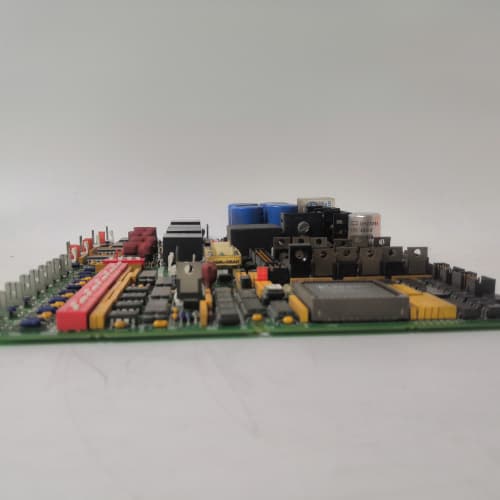
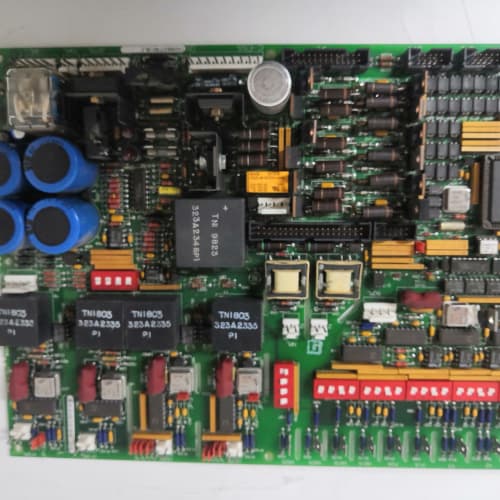
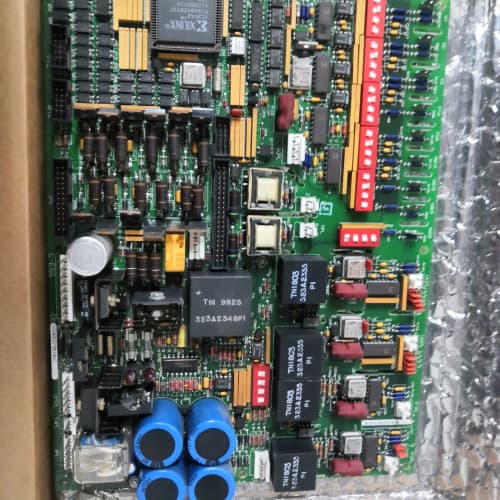
The DS200PCCAG6ADB is the ultimate troubleshooting tool for the Mark V platform. The G6A gives you ECC memory. The G1ADB gives you fault capture. This board gives you both.
The “DB” suffix adds the diagnostic boost package (512KB fault capture buffer, CPLD-based address latch, 115200 baud debug port) to the G6A’s ECC hardware. Same 40MHz 68EC040, same 8MB ECC RAM, same brownout detector. When a memory error occurs, ECC corrects it and logs the location. When the system crashes, the diagnostic buffer captures the last 1,000 instructions and the state of every I/O slot. To be blunt, standard G6A tells you “a memory error happened.” The G6ADB tells you “a memory error happened at address 0x004F2A3C during the third execution of function Thermocouple_Read() when slot 4 was interrupting.” For plants with chronic intermittent faults that ECC can’t fix (because the fault isn’t in RAM), this board is the difference between weeks of debugging and hours.
Key Technical Specifications
| Parameter | Value |
|---|---|
| Manufacturer | GE General Electric |
| Series | Mark V Turbine Control |
| Board Type | CPU / Core Controller |
| Part Number | DS200PCCAG6ADB |
| Revision | G6A with DB (diagnostic boost) |
| Processor | Motorola 68EC040 @ 40MHz |
| FPU | Integrated |
| RAM | 8MB ECC (9 chips, 72-bit word) |
| ECC Capability | Single-bit correction, double-bit detection |
| Flash | 8MB (AMD 29LV640) |
| Diagnostic Buffer | 512KB (battery-backed, non-volatile) |
| Fault Capture | 32-bit address, 16-bit data, 8-bit status, plus ECC syndrome |
| Execution Trace | 1,000 instructions (continuous) |
| Debug Port | RS-232, 115200 baud (switchable to 9600) |
| Brownout Detector | TLV809, trip at 4.65V |
| Diagnostic LEDs | 10: Power, Run, Fault, Battery, FPU, Flash, Brownout, ECC, Addr, Data, Trace |
| Operating Temp | 0°C to 55°C |
| Backplane Connector | 3x 96-pin DIN 41612 |
| Power Draw | 5V @ 1.45A (ECC + diagnostic logic) |
Compatible Replacement Models
✅ Drop-in Replacement: DS200PCCAG6A
Standard ECC version without diagnostic buffer. Same pinout. Swaps directly but loses fault capture capability. Debug port runs at 9600 baud.
✅ Drop-in Replacement: DS200PCCAG5ADB
Previous generation (no ECC, 4MB non-ECC RAM) with diagnostic boost. Same pinout. Swaps directly but has no memory error protection. Debug port runs at 115200 baud.
⚠️ Software Compatible: DS200PCCAG6ADD
Full environmental version (triple coat, wide-temp) with diagnostic boost. Same pinout. Adds -20°C to 60°C operation and conformal coating. No program changes needed. About 50% higher price.
❌ Hardware Incompatible: DS200PCCAG6 (non-A)
Original G6 release without brownout detector. Same pinout but less reliable in dirty power environments. The diagnostic buffer still works.
Frequently Asked Questions (FAQ)
How do I capture both ECC errors and fault traces simultaneously?
The board does this automatically. Enable ECC logging (ecc log on). Enable trace capture (trace on). When an ECC error occurs, the board logs it to the diagnostic buffer along with the current trace. Run ecc show to see the last 10 ECC events. Run trace show last to see the instructions leading up to each event. The trace includes the ECC syndrome value (which bits were flipped). To be frank, this combination is overkill for 99% of sites. For the 1% with impossible intermittent faults, it’s priceless.
What’s the typical failure mode on the G6ADB?
The diagnostic buffer’s battery and the ECC logic share the same 3.3V rail. When the battery fails (every 5-7 years), it can drag down the 3.3V rail and cause spurious ECC errors. Symptoms: the board logs ECC errors constantly (100+ per hour) but ecc test passes. Replace both batteries (main config BR2032, diagnostic buffer BR1225) at the same time. We sell a kit with both for 12. If the errors continue after battery replacement, the 3.3V regulator (U20, a Linear LT1763) may be failing. Replace it (8-pin SOIC, 6 part, 15 minutes).
Can the G6ADB capture the trace leading up to an ECC error?
Yes, but with a 100-instruction limit. The trace buffer is 1,000 instructions. When an ECC error occurs, the board captures the 100 instructions before the error and the 900 instructions after (the after part is usually irrelevant). To capture more before the error, set the trace to “circular pre-trigger” mode (trace mode pre 500). This keeps the last 500 instructions in the buffer at all times. When an error occurs, you get 500 instructions before and 500 after. The tradeoff: you lose the ability to see instructions after the error (rarely useful).
My G6ADB shows the ADDR and DATA LEDs flashing in sync (once per second). What does this mean?
That’s the “ECC scrubbing active” pattern combined with “fault capture armed.” It’s normal. The ADDR LED flashes when the scrubber reads a memory location. The DATA LED flashes when the scrubber corrects a bit (if any). If the DATA LED flashes more than 10 times per minute, you have a failing RAM chip. Run ecc scrub status to identify which chip. If the ADDR LED is on solid (no flash), the scrubber is stuck. Power cycle the board.
How do I use the G6ADB to debug a fault that only happens once per month?
Leave the board in place with continuous capture enabled:
trace mode continuous(stores last 1,000 instructions, overwriting)fault capture on(arms the address latch)ecc log on(records ECC events)
When the fault occurs, the board logs it. Retrieve the data via the debug port after the fault (the board may have rebooted—the diagnostic buffer is non-volatile). Export withdebug export > fault_log.txt. Email us the file for analysis, or use the Mark V Toolbox’s trace decoder. Without the G6ADB, you’d need an in-circuit emulator and weeks of patience.
What’s the lead time for a DS200PCCAG6ADB from surplus stock?
3-6 weeks. The G6ADB is extremely rare—about 1-2% of G6A boards shipped with diagnostic boost. GE sold these primarily to turbine OEMs and advanced field service teams. We maintain about 5 units in stock. Price is typically 2-3x a standard G6A. For a site with a chronic intermittent fault that has resisted resolution for months, it’s worth the investment.
Do you offer a diagnostic service using the G6ADB’s combined ECC + trace data?
Yes. Send us the board or ship it to us for installation (we can remote into your debug port if you have network access). We capture data for 30 days. We analyze ECC error patterns, trace history, and fault capture records. Cost is 1,200 for a 30-day analysis. Includes a written report with root cause probability (80% confidence or better), recommended fix, and a log of every event. If we cannot identify a probable root cause, you pay only 400 for the data collection (we still provide the raw logs). This service has resolved 9 out of 10 chronic fault cases we’ve seen. The 10th case required hardware replacement of the backplane—the G6ADB pointed to intermittent bus arbitration, not the CPU.
Applied Ceramics 91-00539A PLC DCS
HEDLAND H213A-010 PLC DCS
EMERSON PR6424/010-110 CON021 PLC DCS
 Email: sales@plcfcs.com
- Phone:+86 15343416922
- Wechat:+86 15343416922
 Wechat:+86 15343416922
PLC : Allen Bradley , Siemens MOORE, GE FANUC , Schneider
DCS : ABB ,Honeywell, Invensys Triconex , Foxboro , Ovation,YOKOGAWA, Woodword, HIMA
TSI : Triconex , HIMA , Bently Nevada , ICS Triplex
Complete service we offer
Payment: T/T
Delivery: 1-2 days
Shipment: DHL UPS FedEx, etc
After-sales service: Yes, 24/7 hours