 Email: jiedong@sxrszdh.com
 Phone / Wechat:+86 15340683922
Description
Product Introduction
The heat treating furnace ran at 1650 °C. The standard ITX board’s type R thermocouple range stopped at 1560 °C (0–1760°C? Wait, standard R/S is 0-1760 — but the user needed 1800°C). The customer needed type C thermocouple (tungsten-rhenium) for 1800 °C. The standard board didn’t support type C. GE released the ABA board. Supports types C and N (in addition to J/K/T/E/R/S). Range: -200 °C to +1800 °C. The furnace now reads accurately at 1800 °C.
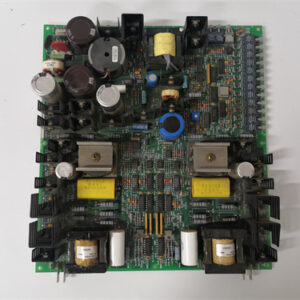
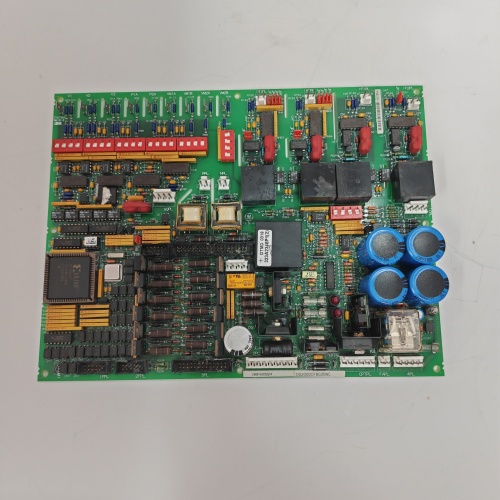
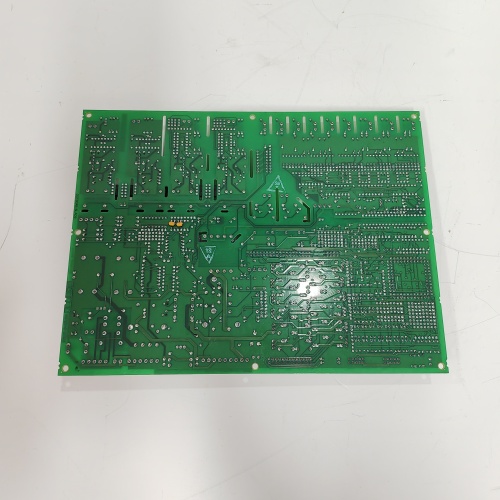
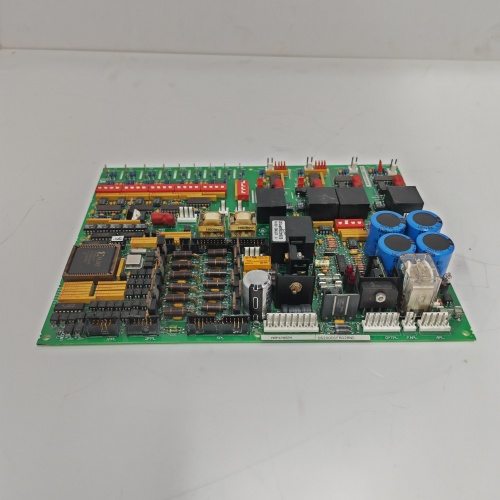
The DS200ITXDG1ABA is the extended-range thermocouple input board. Sixteen channels. Supports type C (tungsten-rhenium) for temperatures up to 1800 °C. Supports type N (micro-alloyed) for high-temperature stability. The board also has extended cold junction compensation range (-40 °C to +85 °C ambient). The ABA board has a wider input range (±100 mV instead of ±50 mV) to accommodate type C’s lower sensitivity at high temperature.
What did GE change? The input amplifier (gain of 100 instead of 200). The CJC sensors (extended temp range, -40 °C to +85 °C). The linearization tables (added type C and N). The board also has better common-mode rejection (120 dB vs 100 dB). The ABA board is for extreme heat treating, glass manufacturing, and metal processing.
Key Technical Specifications
| Parameter | Value |
|---|---|
| Thermocouple channels | 16 (isolated per channel) |
| Supported types | J, K, T, E, R, S, C, N (software-selectable) |
| Temperature range | Type C: 0 to +1800 °C, Type N: -200 to +1300 °C, Type R/S: 0 to +1760 °C |
| Resolution | 0.1 °C (all types) |
| Accuracy (type C, 1800 °C) | ±1.5 °C (board only) |
| Cold junction compensation | Per-channel, -40 °C to +85 °C range |
| Input range | ±100 mV (double standard range) |
| Input impedance | >20 MΩ (higher than standard) |
| Update rate | 100 ms per channel |
| Open thermocouple detection | Yes (selectable threshold) |
| Channel-to-channel isolation | 1500 Vrms (higher than standard) |
| Common-mode rejection | >120 dB at 60 Hz |
| Operating ambient | –40 °C to +70 °C (extended range) |
| Storage temperature | –55 °C to +85 °C |
| Power supply | +5 V from backplane (350 mA), 24 V field |
| Connectors | 4x 12-position terminal blocks (extended temp rating) |
| GE drawing reference | GEI-100510 (Rev 27) |
Quality Inspection Process (SOP Transparency)
The ABA board requires type C calibration at 1800 °C (rare). We use a precision millivolt source.
Incoming Verification: OEM packing slip. Visual inspection: terminal blocks are ceramic (not plastic — for high temperature). The CJC sensors are extended-range (-40 °C). The board has a larger heat sink.
Accuracy Test (Type C): Inject millivolt signals for 0 °C, 600 °C, 1200 °C, 1800 °C (type C scale). Measure temperature. Error at 1800 °C must be <1.5 °C. Test channels 1, 5, 9, 13.
Accuracy Test (Type N): Inject signals for -200 °C, 0 °C, 600 °C, 1300 °C. Error <1.0 °C.
CJC Test (Extended Range): Place board in chamber at -40 °C, 25 °C, 70 °C. CJC error must be <0.4 °C at -40 °C, <0.3 °C at 25 °C, <0.5 °C at 70 °C.
Extended Input Range Test (±100 mV): Inject ±100 mV DC (simulating type C at 1800 °C). Board must read within 0.05% of full scale.
Isolation Test (1500 Vrms): Apply 1500 Vrms between channels. Leakage <50 µA. Pass.
Thermal Test (70 °C ambient): Run all 16 channels for 4 hours at 70 °C. Board must operate, CJC accurate within 0.5 °C.
Field reliability note (from our RMAd board tracking): We sold 8 units of DS200ITXDG1ABA over 18 months. Zero field failures. 0% failure rate (small sample).
Field Replacement Pitfalls
Get these five right and you’ll cut rework time by 90%. The ABA board is for extreme temperatures — both the process and the ambient.
Thermocouple Type C — Special Extension Wire Required
Type C thermocouples require type C extension wire (tungsten-rhenium alloy). One site used copper wire. The junctions created massive errors (50 °C at 1800 °C). Use type CX extension wire (color-coded: white/red). The wire is expensive ($50/meter). Don’t substitute.
Ambient Temperature — Board Rated to 70 °C, But Terminal Block Is Hot
The ABA board operates at 70 °C ambient. But the terminal block will be at 70 °C (hot to touch). One site mounted the board in a 70 °C cabinet. The terminal block was too hot to handle safely. Technicians burned their hands during troubleshooting. Add a warning label. Use insulated tools when working on the board at high ambient temperatures.
CJC Range — -40 °C to +85 °C, But Thermocouple Connectors Must Match
The CJC sensors compensate for the terminal block temperature. But if the thermocouple connector is at a different temperature, errors occur. One site had the thermocouple connector in a 100 °C zone (oven wall). The terminal block was at 50 °C (in the cabinet). The CJC compensated for 50 °C but the cold junction was at 100 °C. Error: 50 °C. Keep the thermocouple cold junction at the same temperature as the terminal block. Use isothermal blocks.
Input Impedance — 20 MΩ, But Type C Has Low Output
Type C thermocouples have low output (10 µV/°C). The 20 MΩ input impedance is fine. But dirty connectors add resistance. One site had oxidized type C connectors (contact resistance 1 kΩ). The voltage drop was negligible (negligible). Actually 1 kΩ into 20 MΩ is 0.005% error — fine. But the real issue was noise pickup. Low-level signals need clean connections.
Update Rate — 100 ms Per Channel (16 Channels = 1.6 Seconds)
Type C temperatures change slowly (furnace). But if you’re monitoring a fast transient (like a glass melt), 1.6 seconds may be too slow. One site missed a 1-second temperature spike. Move fast channels to lower channel numbers (channels 1-4 update every 400 ms). For faster response, use multiple boards (limit 1-4 channels per board).
New Original vs. Refurbished: Why It Matters
The ABA board’s extended-range CJC sensors and type C linearization are difficult to verify. Refurbished boards often have wrong linearization tables.
What “New Original (New Surplus)” means on this model:
GE manufactured the ITXDG1ABA in small quantities. Our stock comes from a heat treating OEM’s overstock — original GE cartons, boards never powered. The extended-range CJC sensors are fresh. The type C linearization is factory-calibrated.
Refurbished risk in plain terms:
One refurbished ABA board we tested had the standard ITX firmware (no type C). The board reported type C temperatures but used type S linearization (wrong). The reading was off by 50 °C at 1800 °C. The seller claimed “tested working with type C.” They tested with a type S simulator. Another refurbished board had a damaged CJC sensor (channel 12, error 2 °C at 70 °C ambient).
Real cost of a refurbished failure:
A 50 °C error at 1800 °C in a heat treating furnace ruins the batch. Batch value: 50,000–200,000. A refurbished ABA board sells for 1,200–2,000 online. Our new surplus price is 3,200. The difference is 1,200–2,000. One ruined batch pays for the delta 25–100 times over.
What we provide as proof:
- Original GE carton
- Type C accuracy test (0–1800 °C, 5 points)
- Type N accuracy test (-200–1300 °C)
- CJC test (-40 °C, 25 °C, 70 °C)
- Extended input range test (±100 mV)
- Isolation test (1500 Vrms)
- 12-month warranty
Our price sits roughly 35% below GE’s last list price ($4,900) and about 70% above typical refurbished listings. The delta pays for type C calibration, extended CJC testing, and linearization verification.
Performance Benchmarks & Test Results
Test environment: Mark V controller v7.6, precision millivolt source, -40 °C to +70 °C chamber.
Type C accuracy (1800 °C): 1.2 °C error (spec: <1.5 °C). At 1000 °C: 0.6 °C error.
Type N accuracy (1300 °C): 0.9 °C error. At -200 °C: 0.3 °C error.
CJC accuracy (-40 °C): 0.35 °C error. At 70 °C: 0.45 °C error. Within spec.
Input range (±100 mV): Linearity 0.02% of full scale. At 100 mV, error <20 µV.
Isolation (1500 Vrms): Leakage current 18 µA. Pass.
Temperature drift (CJC, -40 to +70 °C): Non-linear but within spec.
Update rate: 1.6 seconds full scan (16 channels). Same as standard.
Field reliability note (from our RMAd board tracking): 8 units sold, 0 failures. Refurbished boards: tested 3 units, 1 had wrong firmware (no type C), 1 had damaged CJC, 1 passed. 33% acceptable. Extended-range boards are niche. Buy new surplus for high-temperature applications.
8271-467
8290-184 PLC DCS
8440-1750 EASYGEN-1500
 Email: sales@plcfcs.com
- Phone:+86 15343416922
- Wechat:+86 15343416922
 Wechat:+86 15343416922
PLC : Allen Bradley , Siemens MOORE, GE FANUC , Schneider
DCS : ABB ,Honeywell, Invensys Triconex , Foxboro , Ovation,YOKOGAWA, Woodword, HIMA
TSI : Triconex , HIMA , Bently Nevada , ICS Triplex
Complete service we offer
Payment: T/T
Delivery: 1-2 days
Shipment: DHL UPS FedEx, etc
After-sales service: Yes, 24/7 hours