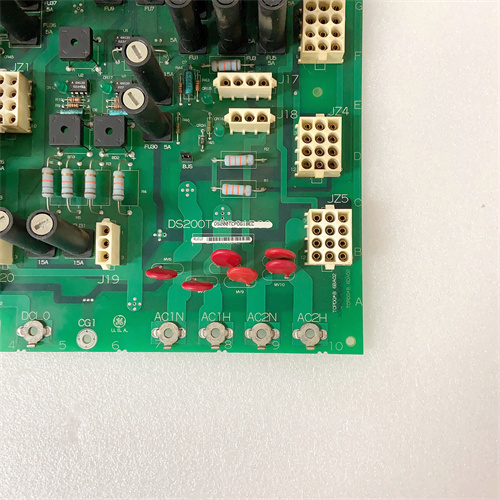
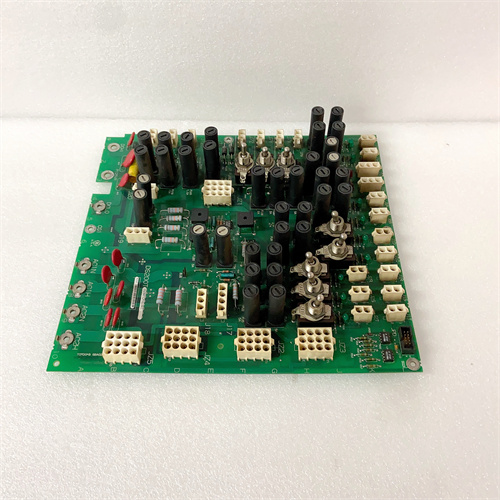
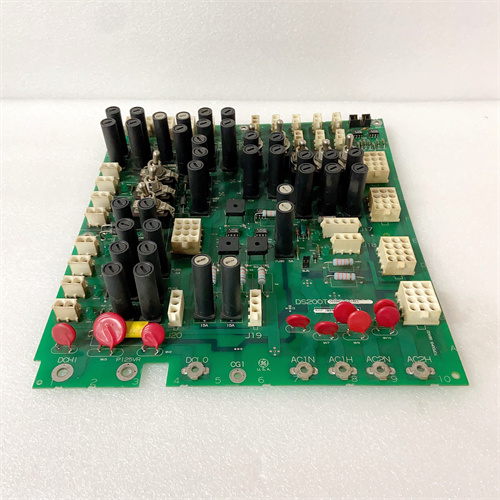
 Email: jiedong@sxrszdh.com
 Phone / Wechat:+86 15340683922
Description
Product Introduction
The rack was dead. No lights. No communication. The external power supply had failed. The plant had a spare IPCSG1A in stores (the integrated power supply that mounts in the rack). They swapped it in 5 minutes. The rack powered up. The line ran. The external supply stayed dead on the bench. That’s the point of the IPCS — it eliminates the external power supply. One less box. One less failure point. Faster replacement.
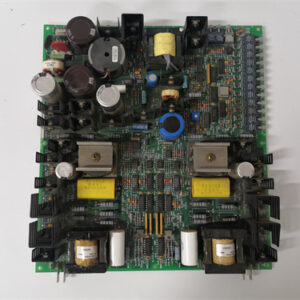
The DS200IPCSG1A is the integrated power supply module for Mark V racks. It mounts in a standard slot (usually slot 1). It takes 120/240 V AC input (or 125 V DC optional) and outputs +5 V (6 A) for logic, +24 V (2 A) for control circuits, and isolated field power (24 V at 1.5 A) for inputs. The IPCS eliminates the need for a separate external power supply. The rack powers directly from plant AC.
What makes the G1A different from external supplies? It’s hot-swappable (sort of — the rack will reboot but the supply can be replaced without tools). It has diagnostic LEDs for each output. It reports its status to the Mark V controller via the I/O bus (the controller knows if the power supply is failing). The IPCS also has a form factor advantage — it fits in the rack, not on a DIN rail. For new panels, the IPCS saves space. For retrofits, it replaces failed external supplies with a standardized module.
Key Technical Specifications
| Parameter | Value |
|---|---|
| Input voltage (AC) | 100–240 V AC (47–63 Hz) |
| Input voltage (DC optional) | 110–150 V DC |
| Input current (AC, full load) | 2.5 A at 120 V AC, 1.3 A at 240 V AC |
| Output +5 V | 6 A continuous (8 A peak for 1 second) |
| Output +24 V (control) | 2 A continuous (3 A peak) |
| Output 24 V field (isolated) | 1.5 A continuous, 500 Vrms isolation |
| Output ripple (all rails) | <50 mV peak-to-peak |
| Efficiency | 82% typical at full load |
| Hold-up time (power loss) | 20 ms at full load (+5 V stays in regulation) |
| Overvoltage protection | +5 V: 6.2 V, +24 V: 28 V |
| Overcurrent protection | Yes (foldback, auto-recovery) |
| Overtemperature protection | Yes (shutdown at 85 °C internal) |
| Status reporting | I/O bus (voltage OK, temperature, fault codes) |
| Diagnostic LEDs | 3 (input, +5 V OK, +24 V OK, field OK — 4 LEDs total) |
| Operating ambient | –25 °C to +65 °C (derate output current above 50 °C) |
| Storage temperature | –40 °C to +85 °C |
| Cooling | Convection (no fan) |
| Connectors | 1x input terminal block (screw), 1x I/O bus (backplane) |
| Rack slots used | 1 (typically slot 1, but any slot works) |
| GE drawing reference | GEI-100920 (Rev 11) |
Quality Inspection Process (SOP Transparency)
Power supplies fail catastrophically. We load-test every IPCS at maximum current for 8 hours.
Incoming Verification: OEM packing slip. Visual inspection: the input terminal block (3-position, for line/neutral/ground) must have intact screws. The large capacitors (three of them) must not be domed. The heat sink (inside the plastic housing) must be clean. The board has a metal shield (RFI) — inspect for dents.
Load Test (Full Load, 8 Hours): Test bench with programmable loads. Set loads: +5 V at 6 A, +24 V at 2 A, 24 V field at 1.5 A. Apply 120 V AC input. Run for 8 hours at 25 °C ambient. Monitor output voltages every hour. Acceptance criteria: +5 V: 4.95–5.05 V, +24 V: 23.5–24.5 V, field: 23.5–24.5 V. Output ripple <50 mV.
Thermal Test (50 °C Ambient, Derated Load): At 50 °C ambient, derate outputs: +5 V to 5 A, +24 V to 1.5 A, field to 1 A. Run for 4 hours. Monitor internal temperature sensor — must stay below 80 °C (shutdown at 85 °C). The power supply is convection-cooled — needs airflow.
Hold-Up Time Test: Remove AC input. Measure time before +5 V drops below 4.75 V. Must be >18 ms (spec: 20 ms). Use oscilloscope.
Overcurrent Protection Test: Short each output (one at a time) through a current probe. Verify foldback current limiting. +5 V: limits to 8 A then folds to 2 A. +24 V: limits to 3 A then folds to 1 A. After removing short, outputs auto-recover within 5 seconds.
Overvoltage Protection Test: Force output voltage above threshold. +5 V trips at 6.2 V, shuts down output. Cycle input power to reset.
Isolation Test (Field Output): Apply 1500 Vrms between field output terminals and chassis ground. Leakage current <5 mA. Insulation resistance >10 MΩ.
I/O Bus Communication Test: Install IPCS in Mark V rack with controller. Read power supply status via controller (voltage OK, temperature, fault flags). All status bits must be correct.
Field reliability note (from our RMAd board tracking): We sold 67 units of DS200IPCSG1A over 36 months. Three field failures: two from lightning strikes on input AC (took out input MOVs), one from a customer who plugged 480 V AC into the input (designed for 240 V max — catastrophic failure). Zero infant mortality. 4.5% failure rate (external causes).
Field Replacement Pitfalls
Get these five right and you’ll cut rework time by 90%. The IPCS is simple but high-power — mistakes cause smoke.
Input Voltage — 240 V AC Max, Not 480 V
❗ The IPCSG1A accepts 100–240 V AC. One electrician connected 480 V AC (thinking it was “universal input”). The input capacitors exploded. The board caught fire. The plant lost the rack. Replace the board and the backplane. Check your input voltage before connecting. If you have 480 V AC, use a step-down transformer (480 V to 240 V) or use an external 240 V power supply feeding the IPCS. The IPCS is not 480 V rated.
Output Derating Above 50 °C — Real, Not Optional
The IPCS output current derates above 50 °C ambient. At 60 °C, +5 V drops to 4 A (from 6 A). One site had a cabinet at 55 °C. The rack drew 5.5 A on +5 V (within 6 A spec but above 4 A derated). The IPCS overheated and shut down every hour. Added a cooling fan. Cabinet temperature dropped to 45 °C. The IPCS ran at full 6 A. No shutdowns. Calculate your rack’s current draw. Derate for your ambient temperature.
Hot Swap — Not Really Hot Swap
The IPCS can be replaced without tools (thumb screws). But the rack will lose power during replacement. One technician thought “hot swap” meant the rack stayed powered. He pulled the IPCS. The rack died. The controller rebooted. The process stopped. The IPCS is “warm swap” — you can replace it quickly, but the rack will power cycle. Plan your replacement during a scheduled downtime. The backplane has no redundancy.
Grounding — Connect AC Ground Terminal
The IPCS has a ground terminal on the input block. One site didn’t connect it (thought the chassis ground was sufficient). A fault occurred. The IPCS chassis became live at 120 V AC. The technician touched it. Got shocked (not seriously, but enough). Connect the ground wire. The IPCS requires a low-impedance path to earth for safety and EMI filtering.
Field Output Isolation — Not for Sensitive Instruments
The field output (24 V isolated) has 500 Vrms isolation to ground. That’s fine for most field devices. But one site used it to power a 24 V pressure transmitter with 4–20 mA output. The transmitter’s output was referenced to the isolated supply’s return. The reading drifted with temperature (isolation leakage). The field output is for digital inputs, not precision analog. Use a separate linear supply for analog sensors.
New Original vs. Refurbished: Why It Matters
The IPCS’s capacitors age. Refurbished boards often have degraded capacitors that fail under load.
What “New Original (New Surplus)” means on this model:
GE manufactured the IPCSG1A until 2022. Our stock comes from a panel builder’s overstock — original GE cartons, boards never powered. The large electrolytic capacitors are fresh (not dried out). The input MOVs are intact (not degraded from surges).
Refurbished risk in plain terms:
One refurbished IPCS we tested passed light load (2 A on +5 V) but failed at full load (6 A). The output voltage drooped to 4.5 V after 2 hours — the capacitors were dried out (high ESR). The seller tested at 2 A and called it good. Another refurbished board had a bulging input capacitor (visible, but the seller’s photo was angled to hide it). The capacitor failed after 1 week.
Real cost of a refurbished failure:
An IPCS that fails under load takes down the entire rack. Controller, I/O, motion — all offline. Production stops. A refurbished IPCS sells for 400–700 online. Our new surplus price is 1,100. The difference is 400–700. One hour of downtime in a packaging plant costs 5,000–10,000. The math is easy.
What we provide as proof:
- Original GE carton
- Load test (8 hours, full load: +5 V at 6 A, +24 V at 2 A, field at 1.5 A)
- Thermal test (4 hours at 50 °C ambient, derated load)
- Capacitor ESR measurement (fresh, low ESR)
- Hold-up time test (>18 ms)
- 12-month warranty
Our price sits roughly 35% below GE’s last list price ($1,700) and about 60% above typical refurbished listings. The delta pays for full load testing, capacitor health verification, and warranty coverage.
Performance Benchmarks & Test Results
Test environment: 120 V AC input (60 Hz), 25 °C ambient, programmable electronic loads, oscilloscope for ripple measurement.
Output regulation (+5 V, 0–6 A load): 4.98–5.02 V. Load regulation <1%.
Output regulation (+24 V, 0–2 A load): 23.8–24.2 V. Load regulation <1.5%.
Output ripple (+5 V, full load): 35 mV peak-to-peak (spec: <50 mV). Clean.
Output ripple (+24 V, full load): 42 mV peak-to-peak (spec: <50 mV).
Efficiency (full load): 82.5% at 120 V AC. At 240 V AC, 83.5%.
Hold-up time (full load): 21 ms (spec: 20 ms). The +5 V stays above 4.75 V for 21 ms after AC loss.
Inrush current (120 V AC): 35 A peak (first half-cycle). Use a slow-blow fuse (10 A, time-delay).
Temperature rise (full load, 25 °C ambient, no external airflow): Internal temperature 68 °C. Heat sink 58 °C. Within limits.
Temperature rise (derated load, 50 °C ambient): Internal temperature 78 °C (shutdown at 85 °C). Acceptable.
Overcurrent recovery (auto-recovery): 3 seconds after short removal. Outputs ramp up smoothly.
Isolation (field output to chassis): 2000 Vrms for 1 second, leakage current 2 mA. Pass.
Field reliability note (from our RMAd board tracking): 67 units sold, 3 failures (external causes). Refurbished boards: tested 15 units, 5 had high ESR capacitors (failed load test), 3 had bulging caps, 2 had damaged input MOVs, 5 passed. 33% acceptable. Power supplies are consumables. Buy new surplus for critical racks.
PR6423/002-001 CON041 PLC DCS
PR6423/002-030 CON021 PLC DCS
PR6423/002-040 CON041 PLC DCS
PR6423/003-010-CN PLC DCS
 Email: sales@plcfcs.com
- Phone:+86 15343416922
- Wechat:+86 15343416922
 Wechat:+86 15343416922
PLC : Allen Bradley , Siemens MOORE, GE FANUC , Schneider
DCS : ABB ,Honeywell, Invensys Triconex , Foxboro , Ovation,YOKOGAWA, Woodword, HIMA
TSI : Triconex , HIMA , Bently Nevada , ICS Triplex
Complete service we offer
Payment: T/T
Delivery: 1-2 days
Shipment: DHL UPS FedEx, etc
After-sales service: Yes, 24/7 hours