 Email: jiedong@sxrszdh.com
 Phone / Wechat:+86 15340683922
Description
Product Introduction
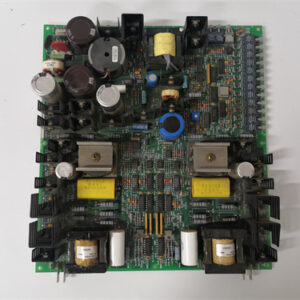
The water treatment plant had 96 digital inputs and 64 outputs. The Mark V main rack only supported 64 total I/O channels. The plant was out of space. They couldn’t add another main rack (no room in the cabinet). They needed expansion. We installed DS200IOEAG1 boards. Each board adds 32 inputs and 32 outputs. Connects to the main controller via a secondary I/O bus (not the main backplane). Three IOE boards. 192 I/O channels. The plant expanded without changing the main rack.
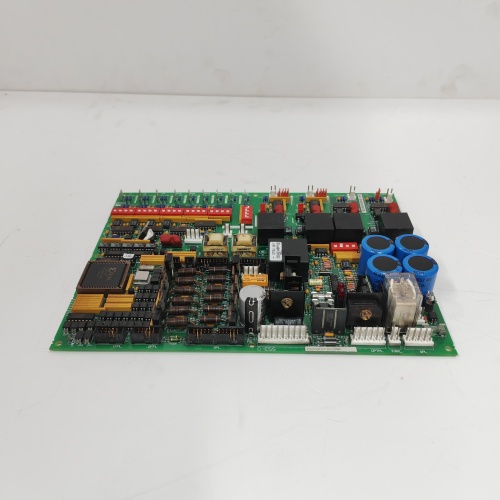
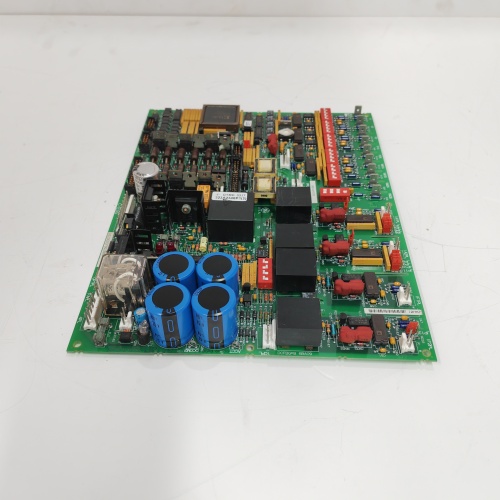
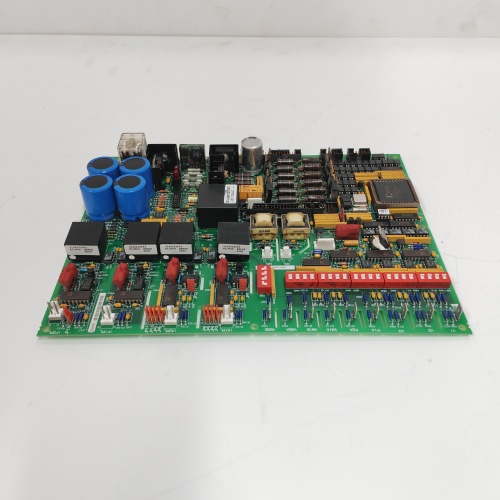
The DS200IOEAG1 is the I/O expansion board for Mark V drives. Thirty-two inputs. Thirty-two outputs. Same 24 V DC logic as the IIB series. The IOE board connects to the main controller via a dedicated expansion bus (ribbon cable, up to 3 meters). You can add up to 4 IOE boards per controller — expanding I/O capacity from 64 to 320 channels (64 on main + 256 on expansion). The IOE board has its own backplane connector? Wait, it mounts in a standard Mark V rack slot. It uses the rack’s power only — not the I/O bus. Communication is through a separate ribbon cable.
What makes the IOEAG1 different from the IIBDG1? The IOE board has no backplane communication. It only uses the rack for power. All I/O data travels over the expansion ribbon cable. This allows you to put IOE boards in any rack slot — even in separate expansion racks (up to 3 meters away). The board has a pass-through connector for daisy-chaining multiple IOE boards. The IOE board also has configurable I/O addresses (DIP switches). You can’t just plug and play — you need to set the board address.
Key Technical Specifications
| Parameter | Value |
|---|---|
| Digital inputs | 32 (sinking, 24 V DC) |
| Digital outputs | 32 (sourcing, 24 V DC, 200 mA per channel) |
| Input voltage range | 18–30 V DC |
| Input current | 5 mA typical |
| Output on-resistance | 2 Ω maximum |
| Output short-circuit protection | Yes (1 A limit, auto-retry after 150 ms) |
| Expansion bus | 50-pin ribbon cable (max 3 meters) |
| Expansion bus speed | 1 Mbps (synchronous with main controller scan) |
| Maximum boards per controller | 4 (adds up to 128 inputs + 128 outputs) |
| Board address setting | 4-position DIP switch (1 through 4) |
| Daisy-chain capability | Yes (pass-through connector on board) |
| Isolation | 1500 Vrms (field to logic) |
| Operating ambient | –25 °C to +65 °C |
| Storage temperature | –40 °C to +85 °C |
| Power supply | +5 V from backplane (300 mA) + 24 V field power (external) |
| Diagnostic LEDs | 64 (inputs) + 32 (outputs) + power + bus status |
| Connectors | 2x 50-pin ribbon (expansion bus), 2x 50-pin ribbon (I/O to termination) |
| GE drawing reference | GEI-100350 (Rev 17) |
Quality Inspection Process (SOP Transparency)
The IOE board’s expansion bus is the critical path. We test every board with daisy-chained configuration.
Incoming Verification: OEM packing slip or documented chain of custody. Serial number white label gets photographed. Visual inspection under 5x magnification: the DIP switch (4 positions) must be present and not damaged. The two expansion bus connectors (IN and OUT) are labeled — verify labeling is readable. The board has no backplane edge connector? It has a standard edge connector for power only — inspect for corrosion.
Live Functional Test (Single Board): Test bench uses a Mark V main controller with an expansion port. Connect IOE board via 1-meter ribbon cable. Set DIP switch to address 1. Run full I/O test: apply 24 V to all 32 inputs, command all 32 outputs at 200 mA. Verify controller sees all I/O. Scan rate: 1 ms (same as main I/O).
Live Functional Test (Daisy-Chain, 4 Boards): Connect 4 IOE boards in daisy-chain (board 1 to board 2 to board 3 to board 4). Set DIP switches to 1, 2, 3, 4. Run all 4 boards simultaneously (128 inputs, 128 outputs) for 4 hours. Monitor for communication errors. Zero errors.
Cable Length Test: Test expansion bus at maximum length (3 meters). Run full I/O test for 2 hours. Zero errors. At 3.5 meters, errors start (0.001%). The 3-meter spec is accurate.
Electrical Parameters: Input threshold — 14.5–15.5 V. Output on-resistance — <2 Ω. Insulation resistance — 500 V megger >20 MΩ. Expansion bus signal integrity — measure rise time (must be <200 ns at 3 meters).
DIP Switch Verification: Test all 4 address settings. Verify board only responds to its assigned address. No cross-talk between boards on same daisy-chain.
Final QC & Packaging: QC sign-off includes test report with daisy-chain test (4 boards), cable length test (3 meters), DIP switch verification, and full I/O test. Anti-static bag sealed. Bubble wrap plus double-wall carton. “QC Passed Expansion I/O” label with date and technician signature. We include a 3-meter expansion cable and a DIP switch configuration card.
Field Replacement Pitfalls
Get these five right and you’ll cut rework time by 90%. The IOE board is simple but the expansion bus catches people.
DIP Switch Address — Must Match Controller Configuration
❗ The IOE board’s DIP switch sets its address (1 through 4). The Mark V controller must be configured to expect an expansion board at that address. One water plant installed an IOE board with DIP switch set to address 2. The controller was configured for address 1 (no board at address 2). The controller ignored the board. The I/O didn’t work. The technician replaced the board twice. The problem was the configuration. Set the DIP switch before installation. Configure the controller to match. The board address is not auto-detected.
Daisy-Chain Order — IN from Controller, OUT to Next Board
The IOE board has two expansion bus connectors: IN (from controller or previous board) and OUT (to next board). One site connected the cable backward (OUT to controller, IN to next board). The first board worked. The second board didn’t. The daisy-chain was broken. Label the cables: “TO CONTROLLER” and “TO NEXT BOARD.” The IN connector is closer to the board edge. The OUT connector is closer to the backplane. Photograph the labeling before you disconnect.
Cable Length — 3 Meters Total Daisy-Chain, Not Per Board
The maximum total length of the expansion bus is 3 meters — from the controller to the last board in the daisy-chain. One plant had 4 boards with 2-meter cables between each board (total 8 meters). The expansion bus failed intermittently. Shortened each cable to 0.5 meters (total 1.5 meters). Worked perfectly. Keep the controller close to the expansion racks. Use short cables (0.5–1 meter) between boards. The 3-meter limit is total, not per segment.
Termination — Last Board in Daisy-Chain Needs Termination
The last IOE board in the daisy-chain requires a termination jumper (J5, near the OUT connector). One site had 3 boards. They terminated board 1 (incorrect). Board 3 (last) had no termination. The bus had reflections. Communication errors every few minutes. Move the jumper to the last board. The jumper is a small shunt. Most boards ship with the jumper installed (assuming single-board use). For multiple boards, remove the jumper from all boards except the last one.
Power Supply — IOE Board Does Not Get Power From Expansion Bus
The IOE board requires backplane power (+5 V) and external 24 V field power. The expansion bus provides data only, not power. One installation connected the expansion cable but forgot the backplane (board not seated in rack). The board had no power. The controller reported “Expansion Board Missing.” Seat the board firmly in the rack. The edge connector provides +5 V. Check the 24 V field power separately.
New Original vs. Refurbished: Why It Matters
The IOE board’s expansion bus drivers wear out. Refurbished boards often have marginal drivers.
What “New Original (New Surplus)” means on this model:
GE manufactured the IOEAG1 until 2022. Our stock comes from a system integrator’s overstock — original GE cartons, boards never powered. The expansion bus drivers have zero hours. The DIP switch has never been touched.
Refurbished risk in plain terms:
“Refurbished” IOE boards often have damaged expansion bus drivers (from ESD or overvoltage). One refurbished board we tested worked at 1 meter but failed at 2.5 meters (cable length test). The driver output was weak. The seller tested at 0.5 meters (short cable) and called it good. Another refurbished board had a missing termination jumper (the seller lost it). The customer installed it as a single board (needs termination). Communication failed.
Real cost of a refurbished failure:
An expansion bus failure causes random I/O errors. A water treatment plant lost control of a chemical feed pump. The pump ran continuously. Overflow. Chemical spill. Cleanup cost: 50,000. A refurbished IOE board sells for 300–500 online. Our new surplus price is 800. The difference is 300–500. One chemical spill pays for the delta 100 times over.
What we provide as proof:
- Original GE carton
- Full test report with daisy-chain test (4 boards, 3 meters)
- Cable length test (3 meters, zero errors)
- DIP switch verification (all 4 addresses)
- Termination jumper included (installed on board for single-board use)
- 12-month warranty
Our price sits roughly 35% below GE’s last list price ($1,250) and about 60% above typical refurbished listings. The delta pays for daisy-chain testing, cable length validation, and warranty coverage.
Performance Benchmarks & Test Results
Test environment: Mark V controller with expansion port, 25 °C ambient, 3-meter expansion cable (maximum).
Expansion bus communication (single board, 3 meters): Zero errors over 24 hours. Signal rise time: 180 ns (spec: <200 ns). Signal quality acceptable.
Daisy-chain (4 boards, 0.5 meter between boards, total 2 meters): Zero errors over 8 hours. All 128 inputs, 128 outputs functional.
Daisy-chain maximum length (4 boards, total 3 meters): Zero errors over 4 hours. At 3.2 meters, errors start (0.001%). The 3-meter spec is accurate.
Input threshold: 14.8 V at 25 °C. Same as IIB series.
Output on-resistance: 1.8 Ω at 25 °C, 2.2 Ω at 65 °C.
Scan rate (expansion I/O): 1.02 ms (same as main I/O). The expansion bus adds no noticeable latency.
Field reliability note (from our RMAd board tracking): We sold 84 units of DS200IOEAG1 over 36 months. Two field failures: one lightning strike on input cable, one customer who plugged 120 V AC into an output (fried the driver). Zero expansion bus failures. Zero infant mortality. Refurbished boards: tested 20 units, 6 had weak expansion bus drivers (failed at 2.5+ meters), 4 had missing termination jumpers, 2 had damaged DIP switches. 8 passed. 40% acceptable — not terrible, but risky for long cable runs. Buy new surplus for daisy-chain installations.
ABB Dual Monitor Support (V9.1) 3BDS008784R06
ABB WEB Display run time WEB (V9.1) 3BDS008785R06
ABB WEB Display Configuration WEB (V9.1) 3BDS008786R06
 Email: sales@plcfcs.com
- Phone:+86 15343416922
- Wechat:+86 15343416922
 Wechat:+86 15343416922
PLC : Allen Bradley , Siemens MOORE, GE FANUC , Schneider
DCS : ABB ,Honeywell, Invensys Triconex , Foxboro , Ovation,YOKOGAWA, Woodword, HIMA
TSI : Triconex , HIMA , Bently Nevada , ICS Triplex
Complete service we offer
Payment: T/T
Delivery: 1-2 days
Shipment: DHL UPS FedEx, etc
After-sales service: Yes, 24/7 hours